
REVIEW · MILAN
Share Your Pasta Love in a Local’s Home in Milan
Milan’s best food experiences do not always happen in a restaurant. This 90-minute class brings you into a local home, where you start with an Italian aperitivo, make pasta by hand, and sit down to eat what you prepared. I like the home setting and the chance to learn an actual family recipe, including the one Davide says came from his grandmother.
I also like the small group limit of 10, which should give you more time at the worktable than a large cooking school. Hosts have included Davide, Enrico, and Cristina, with a friendly, relaxed approach. The main consideration is time: at only an hour and a half, this is a compact introduction, not a long cooking course.
Key points to know before booking
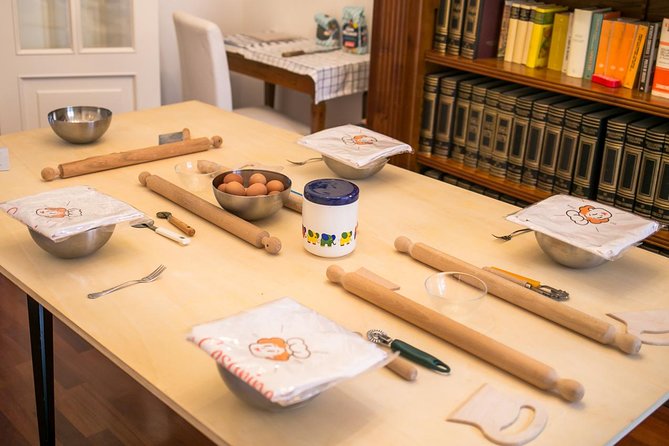
- A local home replaces a formal cooking school: You get a more personal setting, with the class held in an elegant Milanese home.
- The menu centers on fresh pasta: You may prepare tagliatelle, fettuccine, or ravioli, depending on the class.
- The food begins before the pasta: An aperitivo and small appetizer welcome you before the hands-on work starts.
- Your finished dish becomes lunch or dinner: Pasta, one bottle of wine per three people, and possibly dessert or espresso are included.
- The class is short and focused: Ninety minutes works well for a first taste, but leaves little room for a slow, elaborate meal.
- The meeting point is near Corso Vercelli: The activity begins and ends at Corso Vercelli, with public transportation nearby.
A pasta class inside a Milanese home
The setting is the heart of this experience. Instead of walking into a busy restaurant or a large school kitchen, you meet a local host at a home near Corso Vercelli. The class takes place in a living room and kitchen, with an informal, open arrangement described by one host as an al fresco style setup.
That detail matters. You are not only watching someone prepare pasta behind a counter. You are working in a domestic setting, where the class can feel more like being invited in for a meal. The style is relaxed rather than polished for show, which suits anyone who wants a closer look at everyday Italian food culture.
You should still keep your expectations sensible. This is a hosted home experience, not a tour of Milan’s food markets or a restaurant tasting crawl. The focus stays on pasta, conversation, and the meal that follows.
The hosts connected with this experience include Davide, Enrico, and Cristina. The exact host may vary, so you should treat the names as examples rather than a guarantee. Davide’s use of his grandmother’s recipe adds a personal touch, while Enrico and Cristina are described as a gracious pair who made the experience feel warm and welcoming.
A few more classes around Milan worth a look
- The Secrets to Learn Fresh Pasta and Tiramisù in a Glam Home
★ 5.0 · 1,182 reviews - Milan: Pasta and Tiramisu Cooking Class with Wine
★ 4.8 · 1,106 reviews - Gnocchi, Pasta, Tiramisù and Wine Class
★ 5.0 · 691 reviews
Starting with an aperitivo
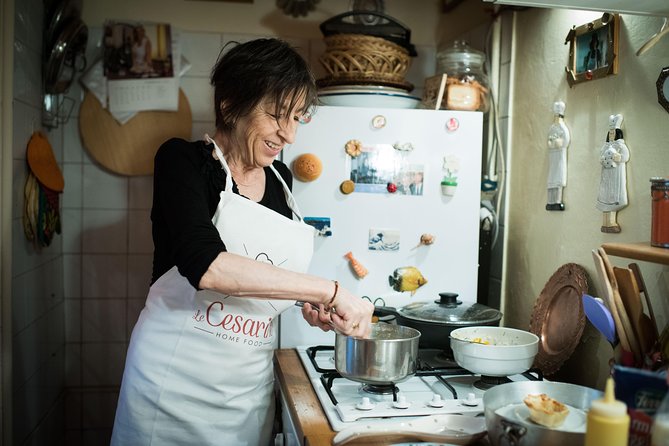
Your host begins with a small appetizer and an Italian aperitivo. This is a useful opening because it gives you time to settle in before flour starts flying. In Milan, an aperitivo is more than a drink before dinner. It is a social pause, a chance to talk, nibble, and ease into the evening.
The supplied details do not specify the exact appetizer or drink, so you should not expect a particular menu item. The important point is that the class does not begin at once with instructions and a mixing bowl. You receive a friendly welcome first, then move into the cooking.
I like this order. A pasta class can feel stiff if everyone immediately has to follow a recipe. The aperitivo creates room for introductions and stories, which is part of the appeal of cooking in a local home.
The small group limit also helps here. With no more than 10 people, you are likely to have a reasonable chance to hear the host and watch the steps. Still, 10 is not a private lesson. If you want one-on-one attention at every stage, a smaller booking would be worth seeking.
Mixing, kneading, and shaping fresh pasta
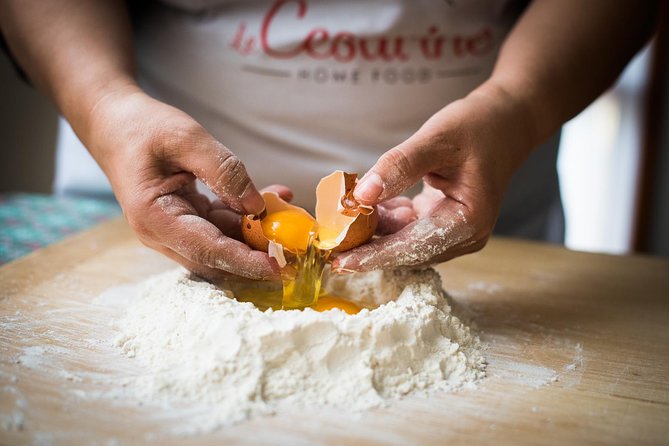
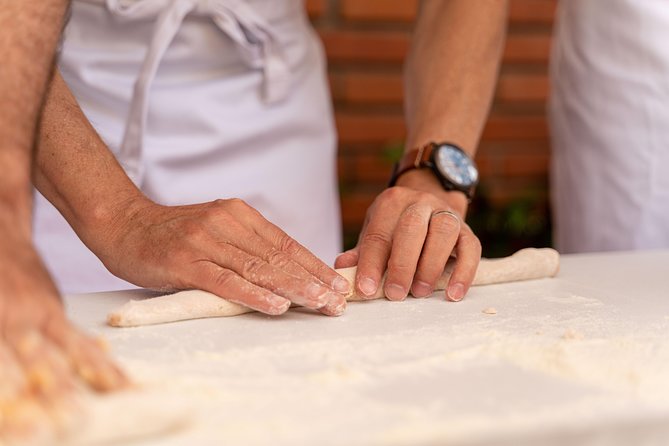
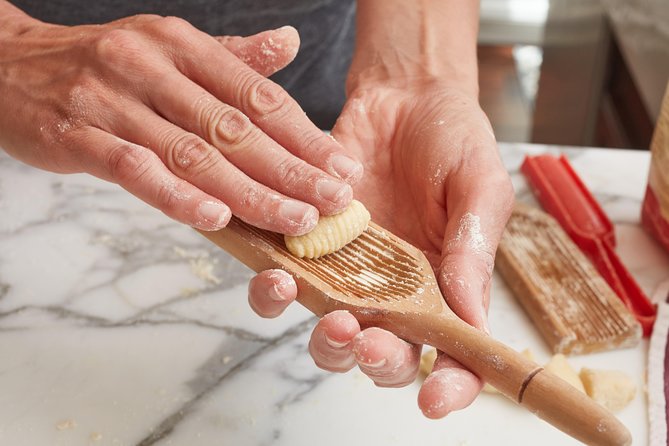
The practical work begins with fresh dough. Under the host’s direction, you mix ingredients, knead the dough, and shape the pasta by hand. The class may cover tagliatelle, fettuccine, or ravioli, all familiar forms that show different sides of Italian pasta-making.
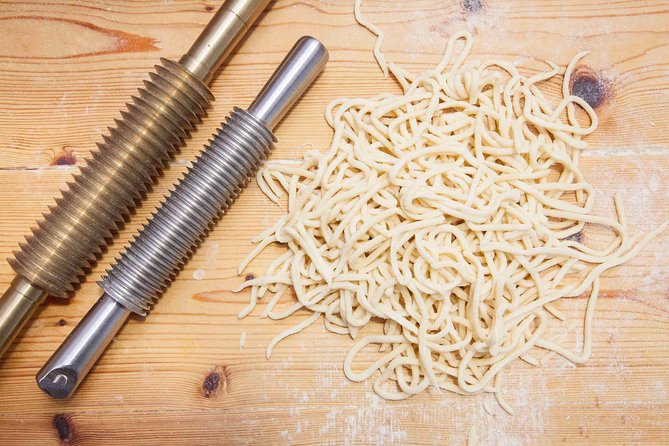
Tagliatelle and fettuccine are especially useful for a first lesson because you can see how dough becomes long ribbons. Ravioli adds another step, since you must fill and seal pieces carefully. The exact pasta depends on the class, so do not book expecting one guaranteed shape unless the provider confirms it.
This is the part that gives the experience value beyond a meal. You are not simply eating fresh pasta made by someone else. You are learning a basic recipe and a method that can be repeated at home. One review describes the recipe as simple enough to make again, which is good news for beginners who want a practical souvenir rather than a difficult culinary project.
The review details suggest that the class is friendly and approachable. You do not need to be a serious cook to take part. The workshop is designed around simple pasta-making, with the host showing each stage and helping you follow along.
At the same time, ninety minutes is not much time for a full lesson in Italian pasta. You will learn the basic process, but you may not cover every flour type, sauce, filling, or regional variation. If you already make pasta regularly, the class may feel introductory. If you are new to it, that short format is probably an advantage.
Northern Italian food in a Milan setting
Milan is often associated with fashion, design, grand buildings, and risotto alla Milanese. Its food traditions also belong to Northern Italy, where fresh egg pasta, butter, cheese, and filled pasta play an important role. This class gives you a small, hands-on connection to that cooking tradition without requiring a full day outside the city.
The experience does not promise a broad survey of Milanese cuisine. You will not be visiting several neighborhoods or sampling a long list of regional dishes. Instead, you get one useful skill and the setting in which that skill is traditionally shared: a home kitchen.
That narrow focus is a strength for a short city break. You can fit the class around sightseeing and still come away with a meal that feels connected to place. It is also a good choice if you would rather spend an evening talking with a local than sitting at a restaurant where the kitchen remains out of sight.
The home setting may be especially appealing after a day among Milan’s major sights. The class offers a change of pace, but it is not presented as a staged historical reenactment. It is simply a chance to prepare food with a host and share the result.
Same kitchen, a different thing to make:
- Milan: Pasta and Tiramisu Small Group Cooking Class with Wine
★ 5.0 · 660 reviews - Milan Cooking Class: Authentic Pizza & Gelato Making
★ 5.0 · 582 reviews - Milan: Fresh Pasta & Tiramisù Class in a Glamorous Home
★ 4.9 · 478 reviews - Milan Culinary Experience: Pasta & Gelato or Tiramisù Class
★ 5.0 · 337 reviews
Sitting down to eat what you made
After shaping the pasta, you sit down in the home and eat the dish you prepared. That transition from worktable to meal gives the class a satisfying finish. You can see the result immediately, and the food is not an afterthought added by a restaurant kitchen.
Wine is included, with one bottle provided for every three people. That is enough to accompany the meal, though the quantity is shared rather than one full bottle per person. If wine matters greatly to you, keep that ratio in mind when judging the price.
The information also allows for a homemade dessert or an authentic Italian espresso at the end. These are described as possible additions, not guaranteed courses, so you should view them as a pleasant extra rather than part of a fixed tasting menu.
The meal portion may feel brief because the full experience lasts about 1 hour and 30 minutes. You have the aperitivo, instruction, cooking, and eating all within that time. This makes the event efficient, but it also means you are unlikely to linger for several hours over multiple courses.
I like the fact that the class ends with your own pasta on the plate. Many cooking lessons rush through the food and leave you holding a recipe card. Here, the payoff is immediate and edible.
What the $63.88 price covers
At $63.88 per person, the experience sits above the cost of a basic pasta meal, but the comparison should not stop at the plate of food. You are also paying for instruction, the local setting, the aperitivo, the pasta ingredients, and wine shared at a stated ratio.
The price makes the most sense if you value personal contact and participation. You are buying an activity as well as dinner. A restaurant is likely to give you a longer meal, but it will not give you the same chance to knead dough, shape pasta, and ask a local host about home cooking.
For a first pasta class, the cost is reasonable if the home environment appeals to you. It is less compelling if you only want a quick meal or if you already have strong pasta-making skills. In that case, the short lesson may not offer enough new technique to justify the activity price.
The average booking lead time is seven days. That is not a strict booking rule, but it is a useful planning signal. If your Milan dates are fixed, booking about a week ahead is sensible, especially since the group is capped at 10 people.
Who will enjoy this most
I would recommend this class to food-focused visitors, couples, solo visitors who enjoy small-group activities, and families with an interest in cooking. It also suits anyone who wants an evening that feels less formal than a restaurant reservation.
It is a particularly good fit for beginners. The recipe is described as easy to repeat at home, and the class focuses on simple, hands-on work. You do not need to arrive with advanced knife skills or pasta experience.
The event may also work well as a birthday surprise. One booking was made for a husband’s birthday, and the occasion turned into a warm meal with Enrico and Cristina. That does not make the class a special-event package, but the home atmosphere can suit a personal celebration.
If you are vegan, contact the provider before booking. A review specifically raises the issue that vegan food is not common in this cuisine. The available information does not spell out the adaptation offered, so you should confirm what can be prepared rather than assume the standard menu will suit you.
I would be more cautious about booking this for someone who dislikes group participation, home-based activities, or shared wine. A maximum of 10 people is manageable, but it is still a social workshop. You also need to be comfortable entering a private home rather than a conventional commercial venue.
Timing, meeting point, and practical details
The class starts at Corso Vercelli in Milan and ends back at the same meeting point. Public transportation is nearby, which should make the location reasonably practical, though the supplied details do not identify the nearest station or give walking directions.
Allow enough time to find the meeting point. The address is in a city setting, and the activity takes place in a local home, so the exact entrance may matter. Your booking confirmation should provide the final meeting information.
The duration is approximately 90 minutes. That includes the welcome, aperitivo, pasta preparation, meal, and possible dessert or espresso. I would avoid scheduling a major attraction immediately afterward. The class is timed, but a home meal can be less predictable than a quick restaurant stop.
A mobile ticket is accepted, and confirmation is provided when you book. The experience has free cancellation if you cancel at least 24 hours before the local start time. Cancellations or changes made less than 24 hours before the start are not refunded or accepted.
The main strengths and limitations
The strongest feature is the personal setting. Cooking in a local home changes the mood of the activity. You are not only following a demonstration; you are sharing a small part of the host’s food routine.
The second strength is the recipe’s practicality. A lesson is more useful when you can repeat it at home, and the pasta method is described as simple enough to do again. Davide’s family recipe also gives the cooking a personal connection that a generic class may lack.
The main limitation is the compressed schedule. Ninety minutes is enough for a friendly introduction, but not enough for a broad course in Italian cooking. You may leave with a good basic method, but not a detailed education in sauces, regional pasta shapes, or advanced technique.
The other limitation is some uncertainty around the exact menu and host. You may meet Davide, Enrico, Cristina, or another host connected with the provider. You may receive dessert or espresso, but the core promise is the pasta, aperitivo, and shared wine.
Should you book this Milan pasta experience?
Book it if you want to cook rather than only eat, and if a local home sounds more appealing than a formal culinary school. The small group, family-style recipes, and shared meal give it a personal feel, while the 90-minute format keeps it easy to fit into a Milan itinerary.
Skip it if you want a long, technical workshop, a guaranteed vegan menu, or a full restaurant-style dinner with several courses. For most food lovers, though, the mix of simple instruction, aperitivo, fresh pasta, and conversation offers good value at $63.88. Confirm dietary needs first, then reserve about a week ahead if your schedule is firm.
FAQ
Where does the pasta-making experience begin?
It begins at Corso Vercelli, Milano MI, Italy.
Where does the activity end?
The activity ends back at the meeting point.
How long does the experience last?
The experience lasts approximately 1 hour and 30 minutes.
How much does the experience cost?
The listed price is $63.88 per person.
How many people can join the class?
The activity has a maximum of 10 travelers.
Is the experience held in a local home?
Yes. The pasta class takes place in an elegant local Milanese home.
What happens before making the pasta?
Your host welcomes you with a small appetizer and an Italian aperitivo.
What kinds of pasta might I make?
The class may include tagliatelle, fettuccine, or ravioli.
Is wine included?
Yes. A bottle of wine is provided for every three guests.
Can the booking be canceled for a refund?
Yes. You can cancel at least 24 hours before the experience start time for a full refund. Cancellations made less than 24 hours before the start are not refunded.
Just added around Milan
- Small group Pasta and Tiramisu class in Milan by Cesarine★ 5.0 · 25 reviews
- Milano The Art of Making Pasta with Italian Chef★ 5.0 · 40 reviews
- Cesarine: Pasta & Tiramisu Class at Local’s Home in Milan★ 5.0 · 52 reviews
- Rockin kitchen : Fresh Pasta lesson with Music Aperitif Dinner★ 5.0 · 28 reviews
- Pizza and Gelato Cooking Class in Milan Small Group Only★ 5.0 · 3 reviews
- Pasta and Tiramisu Cooking Class at Come Na Vorta Navigli Milan★ 5.0 · 16 reviews
- Milan: The Ultimate Pasta Mastery Workshop★ 4.0 · 21 reviews
- Easily Make Pasta, Bruschetta & Tiramisù★ 5.0 · 14 reviews
Milan Pasta Classes, compared.
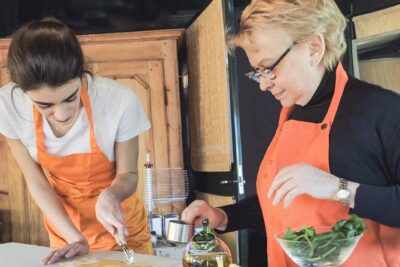
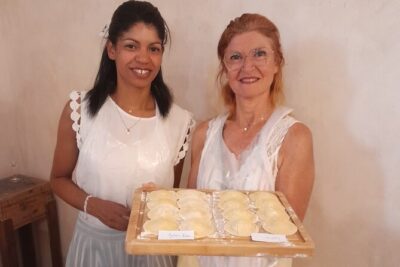
The Secrets to Learn Fresh Pasta and Tiramisù in a Glam Home
Read our review →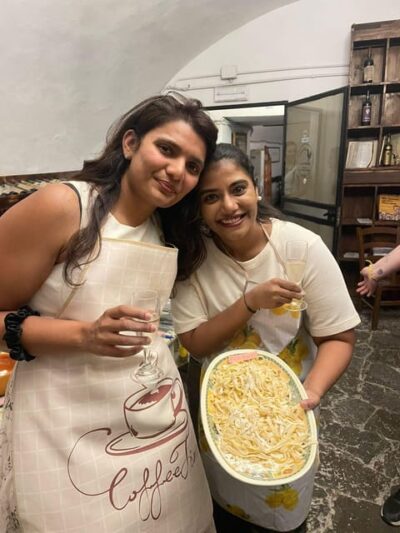
Pasta and Tiramisu Small Group Cooking Class with Wine
Read our review →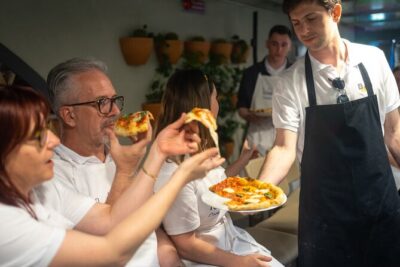
Milan Cooking Class: Authentic Pizza & Gelato Making
Read our review →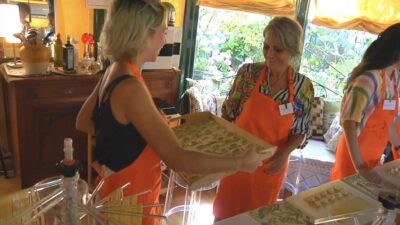
Fresh Pasta & Tiramisù Class in a Glamorous Home
Read our review →
Milan Culinary Experience: Pasta & Gelato or Tiramisù Class
Read our review →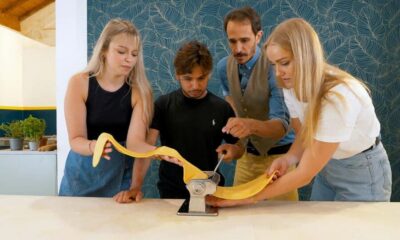
Pasta, Ravioli, and Gelato Class in a Glamorous Home
Read our review →Browse the lists this tour appears in