
REVIEW · PARMA
Traditional Pasta Making Class in Parma
Parma’s pasta tradition gets wonderfully hands-on here. You’ll work with fresh dough, shape tagliatelle and handmade ravioli, and see how a few simple ingredients become the center of an Italian meal. The class meets at Borgo Scacchini, 7, in the heart of Parma, though one recent session was moved to Calestano in the countryside.
I like the small maximum group of 12, which gives the cooking a personal feel, and I like the choice between taking your pasta home or sitting down to eat it with antipasti, truffle sauce, fresh truffle, wine, and tiramisu. The main point to consider is that the countryside relocation may affect your plans, especially if you are relying on the central Parma meeting point or public transportation.
Key points at a glance
- Make two classic pastas: Prepare tagliatelle and filled ravioli by hand.
- Choose your finish: Take home the pasta you make, or select the tasting option and eat it during a relaxed meal.
- Try Parma flavors: The tasting includes Italian aperitivo dishes, fresh pasta with truffle sauce and fresh truffle, and homemade tiramisu.
- Small-group format: The class accepts a maximum of 12 people, a useful size for a practical cooking lesson.
- English-language instruction: The experience is offered in English and comes with a mobile ticket.
- Allow for a possible change of setting: A session was relocated from Parma to Calestano, giving access to countryside scenery but adding a planning wrinkle.
Why pasta makes sense in Parma
Parma is widely regarded as one of Italy’s great food cities. It is known for products such as Parmigiano Reggiano and Prosciutto di Parma, so a pasta lesson fits the city rather than feeling like a generic cooking activity dropped into the schedule.
I like classes that explain a place through an everyday skill. Pasta is not just something you eat in Parma. It is something families make, shape, fill, cook, and share. You get a more useful connection to local food culture when your hands are busy with dough instead of simply watching a demonstration.
The class lasts about two hours, so it fits neatly into a morning or afternoon in the city. That short format is helpful if you are building a full Parma day around food, churches, museums, and wandering the center. It also means the session stays focused. You are not signing up for a full-day culinary program with several unrelated stops.
The information provided does not name the individual instructor, so you should not expect a celebrity chef presentation. The appeal is the direct, practical work of making pasta in a small group, with an English-language format that removes much of the guesswork.
More Fresh Pasta Workshops in Italy:
- Rome: Pasta Making Class with Wine, Limoncello, and Dessert
★ 4.9 · 3,177 reviews - Pastamania – Florence Pasta Making Class
★ 5.0 · 3,050 reviews - Enjoy Spritz and Pasta Making in Piazza Navona
★ 5.0 · 1,681 reviews
Meeting at Borgo Scacchini, 7
The listed meeting point is Borgo Scacchini, 7, 43121 Parma, in the central part of the city. You meet directly at the address, and the activity ends back there. That simple out-and-back arrangement makes the class easy to pair with other plans in Parma.
You should pay attention to any message sent before the class. One session was relocated to Calestano in the Parma countryside. That change was not presented as a problem for the person attending, who enjoyed the scenery on the way, but it does change the practical side of the outing.
If your class is moved, check exactly how you are expected to reach the new setting. The supplied information confirms the relocation happened, but it does not provide a standard transfer service or a fixed transport arrangement. Do not assume that a central Parma meeting point guarantees a city-center venue on every date.
The countryside setting can add a pleasant change of pace. It may give you a more relaxed place for lunch and a better sense of the area beyond the city. The tradeoff is clear: you need to protect extra time for getting there, and cool weather can make an outdoor terrace less useful. One recent session found the site lovely but too cold to make the terrace especially comfortable.
Rolling dough into tagliatelle
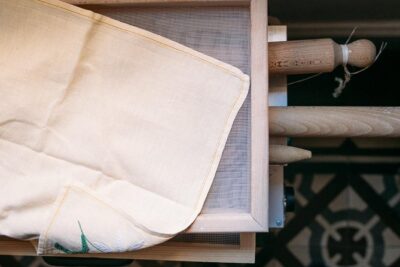
The cooking starts with fresh pasta made from scratch. You will learn the basic process, then shape different pasta types, including tagliatelle. This is the part of the class where you get the most lasting value, since the method can be repeated at home after your trip.
Tagliatelle is a good pasta for a short class. It shows how dough changes under your hands and how cutting creates long, even ribbons. You are not simply watching someone prepare a finished dish. You are taking part in the steps that give the pasta its shape.
The details of the recipe, equipment, and exact workstations are not specified, so I would not promise a particular rolling method or a set of take-home tools. What is clear is that the class is practical and that you make the pasta yourself.
The small group matters here. With no more than 12 people, the lesson should feel less crowded than a large demonstration. You still share the experience with other people, but the class is built around participation rather than sitting at the back and trying to see a single work surface.
Filling and shaping handmade ravioli
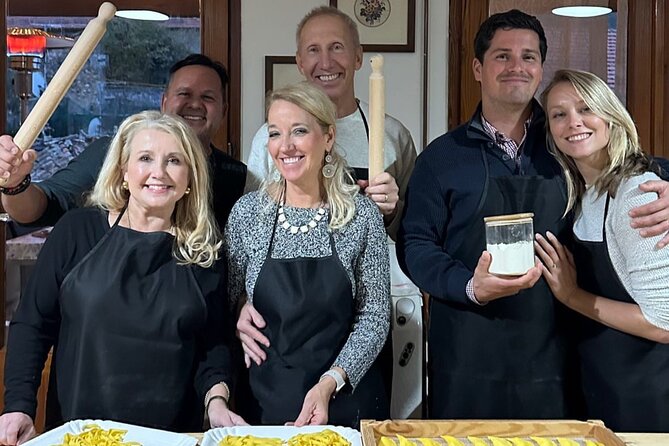
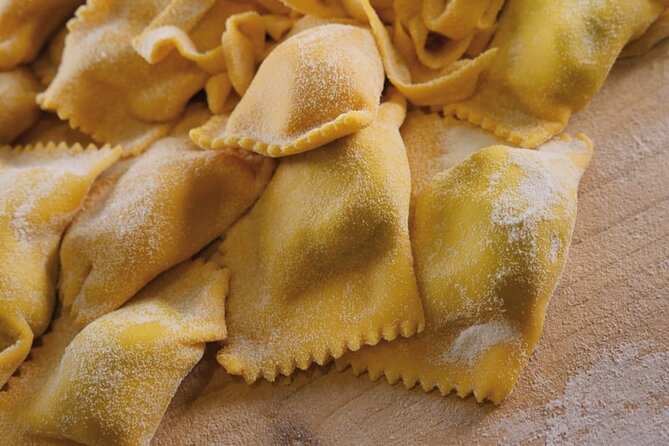
Ravioli adds a second skill. Instead of cutting long strips, you will prepare filled pasta and shape it by hand. The filling uses carefully selected seasonal ingredients, though the exact filling can vary and is not specified in advance.
That seasonal approach is a useful sign for anyone interested in how Italian cooking works. The filling is not described as a fixed international menu item. It is tied to ingredients available at the time, so the contents may change with the season.
You should expect to follow the instructor’s method closely. Filled pasta needs care around the edges, and the class gives you a chance to learn how to form the pieces rather than buying a ready-made product. If your ravioli are not perfectly identical, that is part of the charm. Handmade pasta is allowed to look handmade.
The activity is a good match for couples, families, and food-focused friends who enjoy doing something together. It is less suited to someone who wants a quiet meal with no participation. You will be working with dough before you sit down to eat.
A few more classes around Italy worth a look
- Florence: Pasta Cooking Class with Unlimited Wine
★ 4.9 · 10,285 reviews - 3 in 1 Cooking Class near Navona: Fettuccine, Ravioli & Tiramisu
★ 5.0 · 7,376 reviews - Florence Pizza or Pasta Class with Gelato Making at a Tuscan Farm
★ 5.0 · 6,801 reviews - Florence: Pasta & Tiramisu Cooking Class with Unlimited Wine
★ 4.9 · 6,708 reviews
Two ways to finish the class
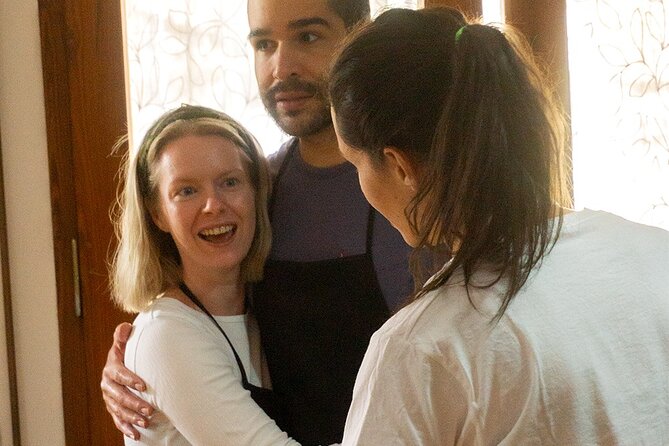
The experience offers two versions. The pasta-making-only option focuses on the cooking, and you take home all the pasta you have made together. This is the better choice if you want to practice the technique later, have a full meal planned elsewhere, or prefer to keep the class short and practical.
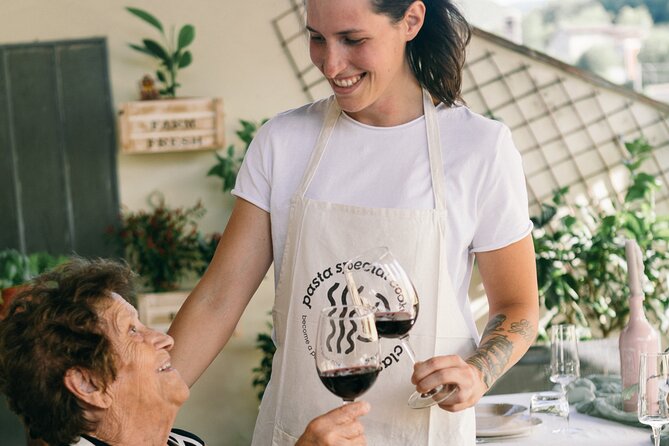
The pasta-making-with-tasting option turns the lesson into a shared meal. After cooking, you sit down for an Italian aperitivo, taste local products, eat the fresh pasta you prepared, and finish with homemade tiramisu. A glass of wine is also included in the tasting experience.
Read the option carefully when booking. The two formats serve different purposes. The class-only choice gives you a useful edible souvenir, while the tasting choice gives you the social side of Italian food culture. If you want the complete meal, make sure you select the version that includes tasting rather than assuming it is part of every booking.
A class followed by lunch can also be a better use of time than trying to find a separate restaurant immediately afterward. You have already made the main course, and you know exactly where the ingredients came from. That said, the tasting format may take more time in practice if the meal is relaxed, so leave a little breathing room before your next fixed appointment.
The tasting menu, from aperitivo to tiramisu
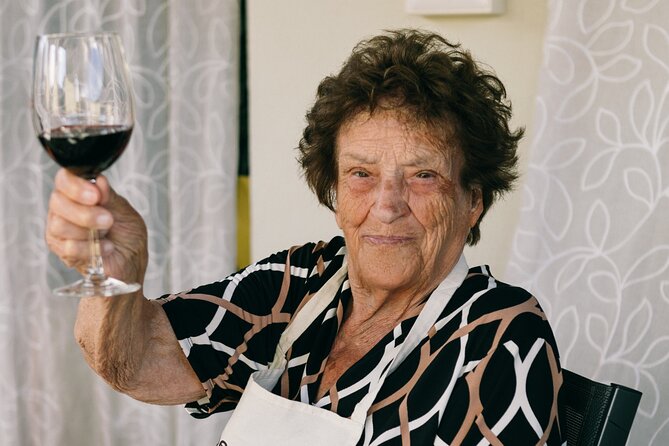
The tasting begins with an Italian aperitivo. The menu description says you can taste different dishes prepared by the instructor, along with local products. The exact selection is not listed, so you should expect the contents to depend on what is available rather than a rigid printed menu.
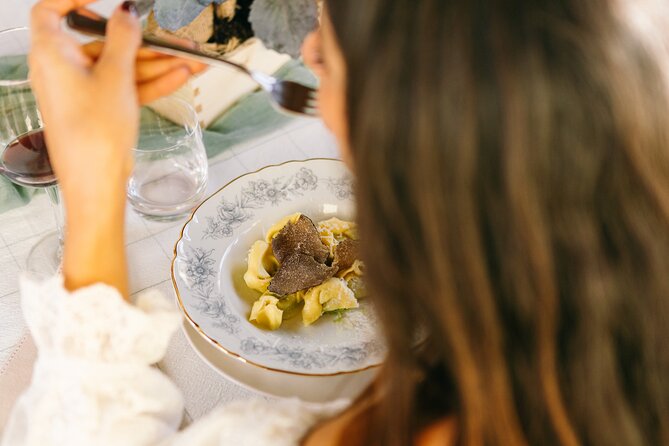
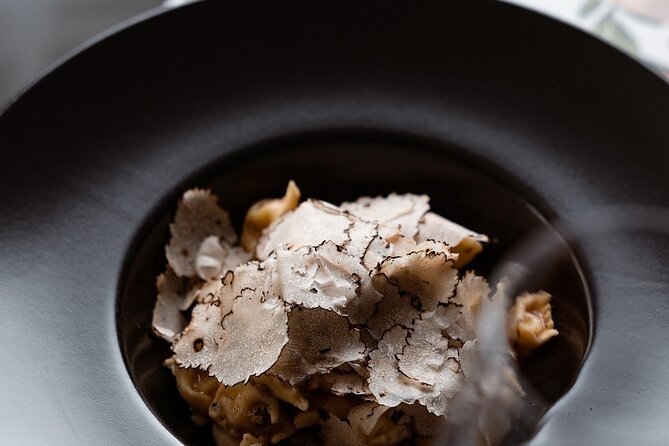
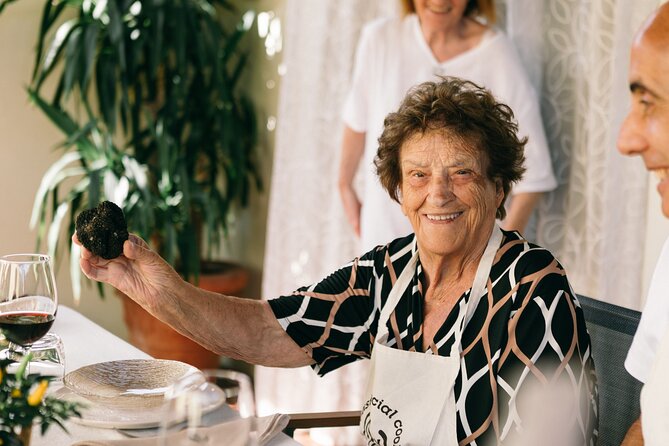
The main course is your fresh pasta, seasoned with truffle sauce and fresh truffle. This is the most distinctive food detail in the experience. Truffle gives a simple pasta dish a strong aroma and a special-occasion feel, while eating the pasta you just made keeps the focus on your work.
Dessert is homemade tiramisu. It is a familiar Italian finish, but it also gives the class a clear beginning, middle, and end: a small aperitivo, handmade pasta as the main dish, and a traditional dessert.
Wine is included with the tasting option. The supplied information does not specify the wine type or quantity, so you should think of it as a modest pairing rather than a wine lesson. If you do not drink alcohol, check the arrangements directly before booking, since no nonalcoholic alternative is stated.
The meal is one of the strongest reasons to choose the tasting version. You do not simply leave with dough in a bag. You sit down and share the result, which makes the class feel more like a local food gathering than a technical workshop.
What the $71.35 price means
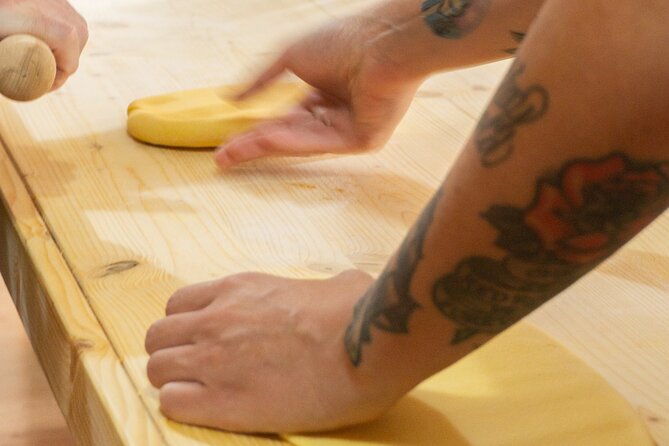
At $71.35 per person, the value depends on which version you choose. For the class-only option, you are paying for instruction, ingredients, hands-on preparation, and the pasta you take home. That can make sense if you value the skill and plan to cook again.
For the tasting option, the price also covers an aperitivo, local products, a glass of wine, fresh pasta with truffle sauce and fresh truffle, and homemade tiramisu. Compared with paying separately for a meal and a cooking class, that combination gives the price a stronger case.
I would not book this only as a way to save money on lunch. The appeal is the activity itself, plus the chance to eat the food you made. If your main aim is simply a cheap plate of pasta, a restaurant may be more direct. If you want a practical Parma memory and a meal built around your own work, the cost is easier to justify.
The maximum group size of 12 also helps the value. You are not paying for an enormous classroom where you barely touch the ingredients. The group is still large enough to have a social feel, but small enough to keep the cooking central.
Timing, group size, and practical planning
The class takes about two hours. Since the activity ends at its starting point, you can plan another central Parma activity before or after it if the meeting point remains in the city.
It is offered in English and uses a mobile ticket. Confirmation is sent at booking, and service animals are allowed. The meeting point is near public transportation, according to the provided information, though no specific bus or train route is given.
The class requires a minimum number of participants. If that minimum is not reached and the experience is canceled, you are offered another date or experience, or a full refund. This is worth knowing if you are planning the class around a tight itinerary.
Free cancellation applies when you cancel at least 24 hours before the start time. Inside that 24-hour window, the payment is not refunded and changes are not accepted. The deadline follows local Parma time, so make the decision before the final day rather than waiting until the last minute.
The experience is booked, on average, about 20 days ahead. That does not guarantee that every date sells out, but it is a sensible clue for planning. If your Parma visit is fixed, booking early is safer than leaving the class until the day before.
Who should book this Parma class?
I would recommend it to you if food is one of the main reasons you are visiting Emilia-Romagna. It also suits anyone who prefers a hands-on activity to a standard sightseeing stop, especially if you want to learn something you can repeat at home.
Families and couples should find the format appealing, provided everyone is happy to participate. The ravioli and tagliatelle give you two different tasks, so the session has enough variety for a short class.
The tasting option is best for you if you want a complete social experience with local products, wine, truffle pasta, and tiramisu. Choose the class-only option if you already have lunch plans or want to carry your pasta away for another meal.
You may want to reconsider if your schedule cannot absorb a possible move to Calestano. The countryside setting sounds pleasant, but the listed Parma address and the reported relocation show that the venue can matter. Contact the provider if the exact meeting location is essential to your day.
Should you book it?
Book this class if you want to make Parma’s food tradition part of your day, not just eat it from a menu. The small group, English instruction, tagliatelle and ravioli preparation, and optional tasting make it a well-rounded choice for food-minded visitors.
Choose the tasting version for the strongest overall value, since it adds local aperitivo dishes, truffle pasta, wine, and tiramisu. Choose the cooking-only version if taking home your pasta matters more than sitting down for lunch.
The one point to confirm is the venue. The experience is listed in central Parma, but a session was moved to Calestano. If you are comfortable with that possibility and can allow flexibility, this is a practical, flavorful way to spend two hours in Parma.
FAQ
Where does the pasta class start?
The listed meeting point is Borgo Scacchini, 7, 43121 Parma, Italy. The activity ends back at the meeting point.
How long does the experience last?
The class lasts approximately two hours.
How much does the experience cost?
The listed price is $71.35 per person.
Is the class offered in English?
Yes. The experience is offered in English.
What kinds of pasta will I make?
You will make fresh pasta from scratch, including tagliatelle and handmade ravioli.
What is included in the tasting option?
The tasting includes an Italian aperitivo with different prepared dishes and local products, the fresh pasta you make with truffle sauce and fresh truffle, a glass of wine, and homemade tiramisu.
What is the cancellation policy?
You can cancel at least 24 hours before the start time for a full refund. Cancellations or changes made less than 24 hours before the start time are not refunded or accepted.
Just added around Italy
- Volterra: Fresh Pasta Cooking Class at a Tuscan Farmhouse★ 5.0 · 33 reviews
- Verona: Tortellini Cooking Class and Lunch with Mamma Ivana★ 5.0 · 20 reviews
- Vicenza: Pasta & Tiramisu Cooking Class at a Local’s Home★ 5.0 · 5 reviews
- Verona: My Granny’s secrets making gnocchi★ 5.0 · 7 reviews
- Verona: Prosecco and Pasta Making Class at a Local’s Home★ 5.0 · 10 reviews
- Verona: Pasta Cooking Class with Wine Tasting★ 5.0 · 4 reviews
- Verona: Pasta & Tiramisu Cooking Class at a Local’s Home★ 5.0 · 16 reviews
- Valnerina/Pasta cooking class in a 12th century location★ 4.8 · 9 reviews
Parma Pasta Classes, compared.
Pasta, Truffle and Wine: hands-on class in a medieval town
Read our review →
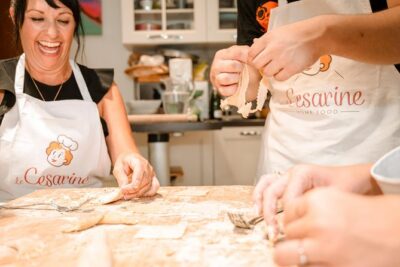
Cesarine: Small group Pasta and Tiramisu class in Parma
Read our review →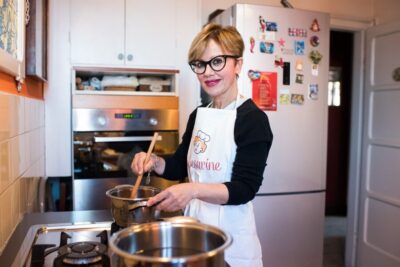
Private pasta-making class at a Cesarina’s home with tasting in Parma
Read our review →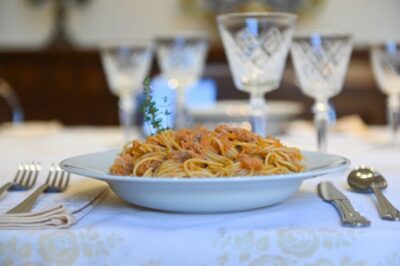
Browse the lists this tour appears in