
REVIEW · PARMA
Homemade Pasta in a Peaceful Medieval Village
The best part of this experience is that you cook inside a real family home in Calestano, a quiet medieval village in the Parma hills. Virginia and her mother, Mamma Nadia, teach you to make tagliatelle and stuffed ravioli by hand, then serve the meal on their terrace with local wine and views across the countryside.
I like the small-group feel and the useful, practical instruction. Virginia demonstrates each step, watches your technique, and offers corrections, so you leave with a better chance of making pasta at home. I also like the transfer option from Parma, since reaching a hill village without a car can be a nuisance. The main drawback is the setting itself: you may need to climb 54 steps to the apartment, and the class is not suitable for children under seven or people with gluten intolerance.
Key points at a glance
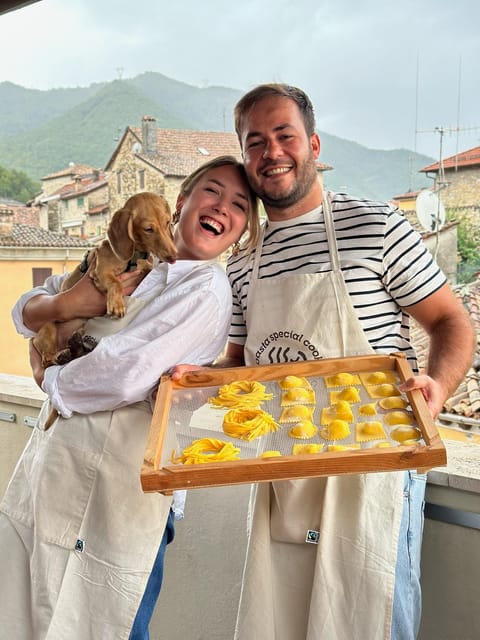
- Handmade pasta in a family kitchen: Make soft ravioli and silky tagliatelle from scratch with Virginia and Mamma Nadia.
- A scenic escape from Parma: Calestano is about 40 minutes from the city, with a peaceful village setting and wide views from the terrace.
- A full meal, not just a lesson: Your pasta is served with antipasti, wine, tiramisu, coffee or tea, and other homemade dishes.
- Small groups help with technique: The class is described as limited to eight in the overview and up to ten in the booking details, so confirm the expected size when reserving.
- Cats are part of the welcome: Cesare and Cindy may supervise the cooking from nearby.
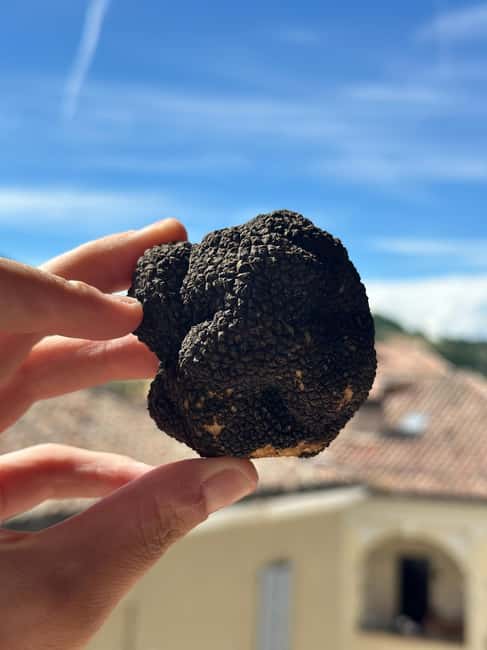
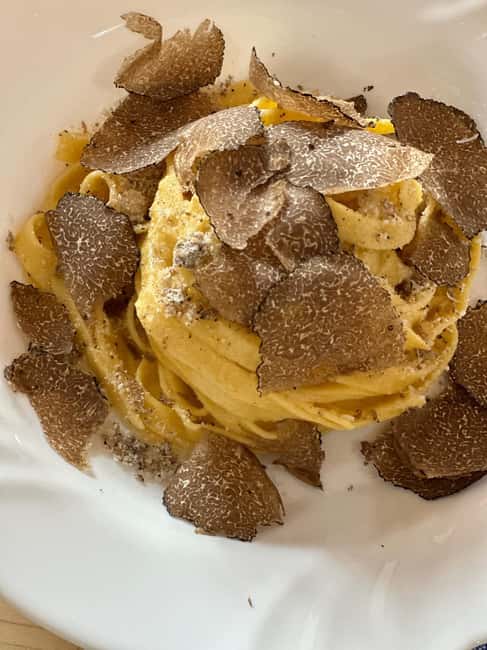
- Optional black truffle: You can add freshly foraged local truffle for an extra cost.
From Parma to Calestano, a quieter side of Emilia-Romagna
Parma is famous for food, but its best culinary moments do not always happen in the city. This class takes you about 40 minutes into the province, to Calestano, where the pace is slower and the setting feels distinctly rural.
The village is medieval and peaceful, with the Parma hills opening out around it. That change of setting matters. You are not sitting in a polished restaurant kitchen built for a steady stream of visitors. You are entering the home of Virginia and her mother, Nadia, where the meal and the lesson share the same family setting.
If you need transportation, the stated meeting point is Hotel Maria Luigia in Parma. The provider can arrange a private transfer, but you should request it when booking. Hotel pickup and drop-off are not part of the included package, so ask clearly about the transport cost and meeting details before you commit.
Driving yourself gives you more freedom around Parma, but you will receive the exact class address only if you are coming by car. This is one of those experiences where sorting out the ride in advance makes the day far easier.
More Fresh Pasta Workshops in Italy:
- Rome: Pasta Making Class with Wine, Limoncello, and Dessert
★ 4.9 · 3,177 reviews - Pastamania – Florence Pasta Making Class
★ 5.0 · 3,050 reviews - Enjoy Spritz and Pasta Making in Piazza Navona
★ 5.0 · 1,681 reviews
Learning pasta from Virginia and Mamma Nadia
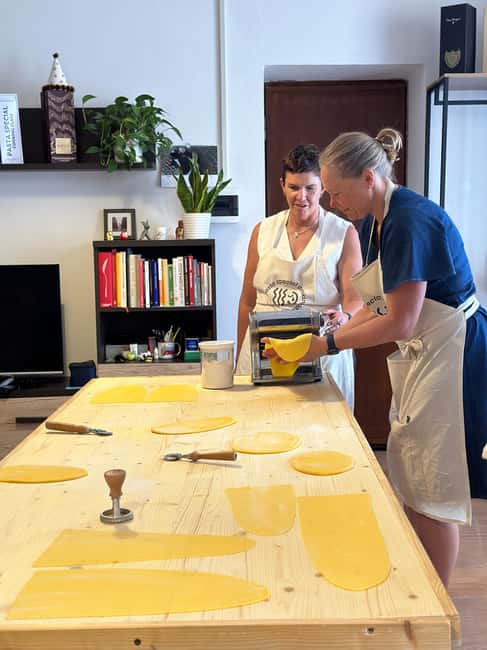
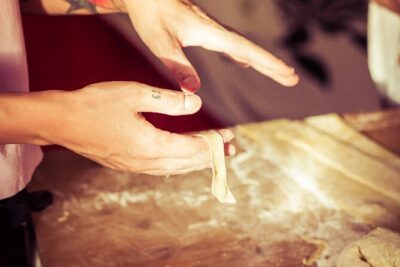
The class focuses on two basic but important Emilia-Romagna pasta shapes: tagliatelle and stuffed ravioli. You work with the dough by hand, learning how it should feel as you mix, roll, and shape it.
Virginia leads the teaching, explaining the process and showing each stage before you try it. Her approach is practical rather than showy. She corrects your technique when needed, which is useful because pasta dough can look simple until you try to get the texture and thickness right.
You are not simply watching a demonstration and then eating someone else’s work. Your effort becomes part of the meal. That gives the class more value than a standard cooking demonstration, especially if you want to repeat the recipes in your own kitchen.
Mamma Nadia adds the family side of the lesson. Her tomato sauce received special praise, and her traditional methods give the class a link to home cooking rather than restaurant production. The emphasis is on techniques passed through the family, along with the small tips that can make fresh pasta easier.
One practical limitation is that the available information does not promise that you will prepare every part of the meal. At least one participant specifically wished to be involved in making the sauce. If sauce preparation matters to you, ask Virginia in advance what parts of the menu you will make and what she will prepare.
What you eat after the class
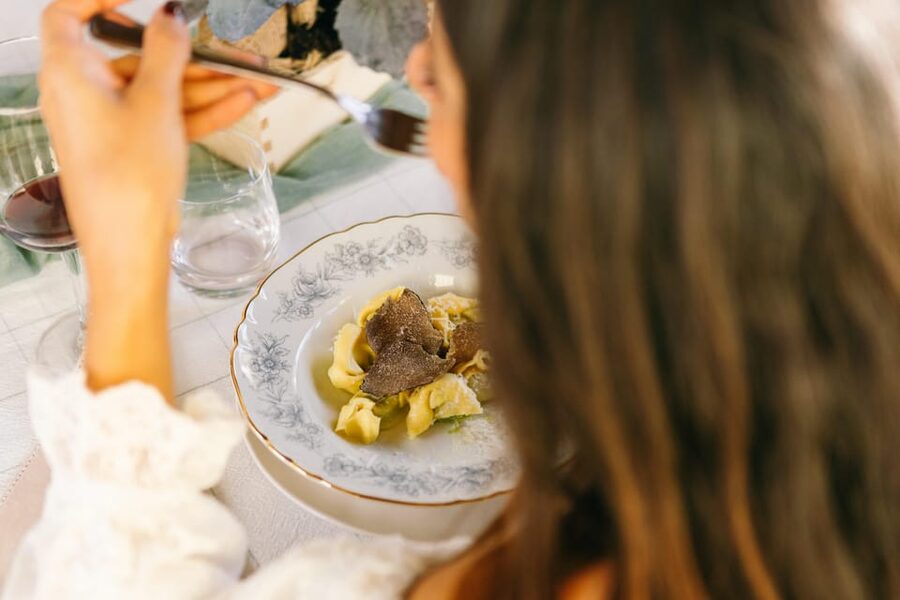
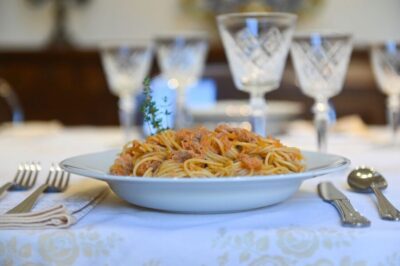
Once the pasta is ready, you sit down for a generous meal. The included food covers an appetizer, your freshly made pasta, dessert, and drinks. Local wine, bottled water, coffee or tea are included, and the experience is described as including lunch or dinner depending on the scheduled time.
The meal usually begins with antipasti, giving you something to eat while the final pasta preparations are completed. Then come the tagliatelle and ravioli you helped make. This order makes sense: you get to taste the result while the techniques are still fresh in your mind.
The homemade tiramisu provides the sweet finish. It is a small detail, but it helps turn the class into a complete food experience rather than a two-hour lesson followed by a quick snack.
The terrace is a major part of the appeal. You eat outside with views over the village and surrounding Parma hills, weather permitting. Several details make this setting especially useful for a first visit to Emilia-Romagna: the meal is relaxed, the wine is already part of the plan, and you have time to talk with Virginia and Nadia instead of being rushed out for the next seating.
A real home, with Cesare and Cindy nearby
The home setting is central to the experience. Virginia, Nadia, and their cats, Cesare and Cindy, welcome you into a personal space, so this is not the right choice if you prefer a formal cooking school with a professional demonstration kitchen.
The cats are part of the charm for many people, particularly if you enjoy animals. They are described as curious and fond of watching the cooking, though the available information does not promise that they will sit with you or take part in the class. If you have allergies, keep that household detail in mind.
The atmosphere also requires a little flexibility. You are sharing a home, a kitchen, and a meal with other people. That can lead to easy conversation and a more personal afternoon, but it may feel less private than a class in a commercial venue.
The group is intended to be small. The experience description gives a maximum of eight participants, while the booking information says the group may reach ten. That difference is worth checking when you reserve. Even at ten, it remains much more personal than a large food tour, but a group of six or eight will give you more direct attention at the work surface.
A few more classes around Italy worth a look
- Florence: Pasta Cooking Class with Unlimited Wine
★ 4.9 · 10,285 reviews - 3 in 1 Cooking Class near Navona: Fettuccine, Ravioli & Tiramisu
★ 5.0 · 7,376 reviews - Florence Pizza or Pasta Class with Gelato Making at a Tuscan Farm
★ 5.0 · 6,801 reviews - Florence: Pasta & Tiramisu Cooking Class with Unlimited Wine
★ 4.9 · 6,708 reviews
The terrace view comes with stairs
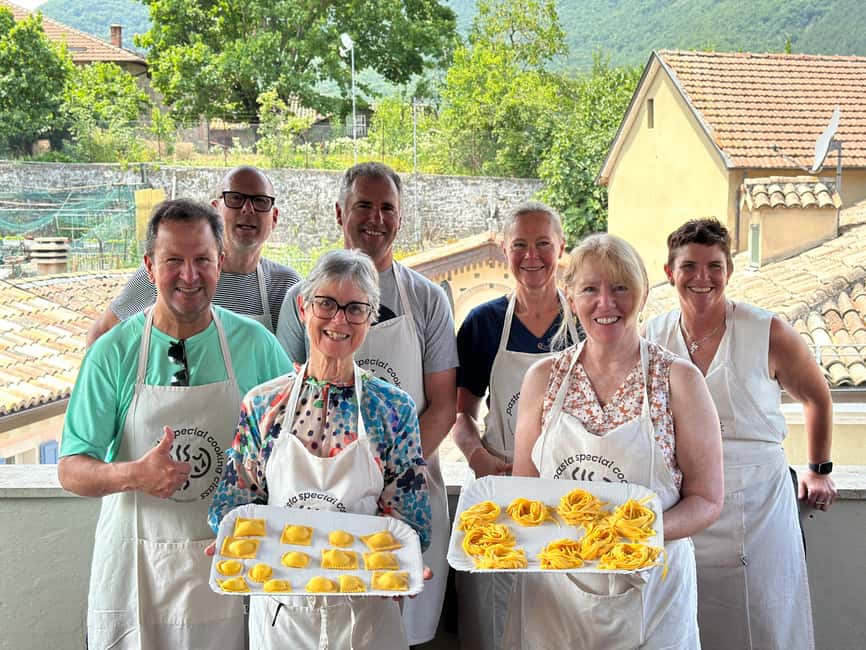
One useful detail appears in the practical feedback: reaching the apartment may involve 54 steps to the third floor. That is a serious consideration for anyone with limited mobility, knee trouble, or heavy luggage.
The experience information does not describe an elevator or an alternative entrance. You should contact the provider before booking if stairs may be a problem. The location is presented as a home apartment, not as an accessible public venue.
Once upstairs, the terrace is one of the strongest parts of the day. You get a broad view from the village rather than a boxed-in dining room. The setting also helps explain why this class takes place outside Parma. The ride and climb are part of the tradeoff for a quieter home meal with countryside views.
Is $105 a fair price?
At $105 per person, this is not the cheapest way to eat pasta in Emilia-Romagna. It is also more than a simple cooking lesson. The price covers a three-hour experience, instruction, ingredients, a full meal, wine and other drinks, dessert, and the setting of a private family home.
The value is strongest if you would otherwise need to arrange separate transport, lunch, and a pasta class. You are combining all three into one half-day outing. The transfer itself is not included in the listed inclusions, so calculate that cost separately before comparing the total with a class in central Parma.
I think the price works best for people who care about personal instruction and a meal with a strong sense of place. You are paying for access to a family kitchen, not only for flour, eggs, and a plate of pasta.
There is also an optional black truffle addition, freshly foraged from nearby woods, at extra cost. That could suit a serious food lover, but it is not needed to make the core class worthwhile. The pasta lesson, antipasti, wine, terrace meal, and tiramisu are already included.
Who will enjoy this most?
This class is a good fit for couples, solo visitors, and small groups who want food instruction with a personal connection. Going alone is not a problem. The class brings people together around the work table, and the small format gives you an easy way to meet others without joining a large organized tour.
It is also useful for anyone who has tried pasta classes before but wants to sharpen technique. One experienced pasta student found new tips here, which suggests that the lesson is not limited to complete beginners.
Families should read the age rule carefully. Children under seven are not accepted, though an eight-year-old was able to enjoy the class according to one account. The experience may suit older children who can follow instructions and take part at the table.
You should skip it if you have gluten intolerance, since the central activity is making and eating wheat pasta. The stated age restriction also excludes people over 95. These rules are clear, but they are easy to overlook when planning a larger family trip.
What to confirm before booking
A few questions are worth settling early:
- Ask for the exact transfer cost if you need the ride from Parma.
- Confirm whether you should meet at Hotel Maria Luigia or drive directly to Calestano.
- Check the expected group size, since the published limits differ.
- Ask about the stairs if you have mobility concerns.
- Tell the provider about any dietary needs, keeping in mind that gluten intolerance is not accommodated.
- If you want to help make the sauce, ask what kitchen tasks are included.
- Request recipe notes if you want written instructions to use at home.
That last point is especially practical. The teaching is designed to help you repeat the pasta at home, but written recipes are not specifically listed among the inclusions. Do not assume you will receive them automatically.
Free cancellation is available up to 24 hours before the experience for a full refund, and you can reserve now and pay later. Those terms help if your Parma plans are still shifting, but they do not replace the need to arrange transportation ahead of time.
Should you book this Calestano pasta class?
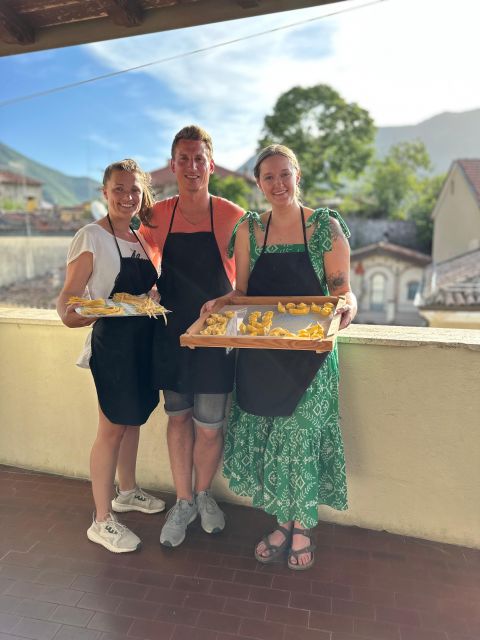
Book it if you want more than a quick cooking activity. You will make two classic pasta shapes, eat a full homemade meal, meet the family behind the food, and spend time above a quiet medieval village rather than in central Parma.
I would especially recommend it to couples, solo food lovers, and anyone who values patient instruction. Virginia’s hands-on corrections and Nadia’s home cooking are the heart of the day. The terrace, wine, and tiramisu make the experience feel generous for the price, provided your transport budget allows for the extra ride.
Think twice if stairs are difficult, if you need a gluten-free meal, or if you want to prepare every part of the menu yourself. Also confirm the group size and transfer arrangements before paying.
For the right person, this is a practical pasta lesson wrapped in a relaxed family meal. You leave with new cooking skills, a taste of rural Parma, and a better sense of why Emilia-Romagna’s food traditions are learned most naturally at the kitchen table.
FAQ
How long does the pasta class last?
The experience lasts three hours, including the pasta workshop and the meal afterward.
Where does the experience take place?
It takes place in Calestano, in the province of Parma, about 40 minutes from Parma city center, at Virginia and Mamma Nadia’s home.
Where do I meet if I need transportation?
Hotel Maria Luigia in Parma is the meeting point for participants who require transportation. You should request the transport service when booking.
What pasta will I learn to make?
You will learn to make fresh tagliatelle and stuffed ravioli by hand.
Is food and wine included?
Yes. The inclusions cover an appetizer, lunch or dinner, alcoholic beverages, bottled water, coffee or tea, and the pasta you make during the class. Homemade tiramisu is also part of the meal.
Can I add black truffle?
Yes. A black truffle option is available for an extra cost, using truffles freshly foraged from the surrounding woods.
Is the experience suitable for children and people with gluten intolerance?
Children under seven are not accepted, and the experience is not suitable for people with gluten intolerance.
Just added around Italy
- Volterra: Fresh Pasta Cooking Class at a Tuscan Farmhouse★ 5.0 · 33 reviews
- Verona: Tortellini Cooking Class and Lunch with Mamma Ivana★ 5.0 · 20 reviews
- Vicenza: Pasta & Tiramisu Cooking Class at a Local’s Home★ 5.0 · 5 reviews
- Verona: My Granny’s secrets making gnocchi★ 5.0 · 7 reviews
- Verona: Prosecco and Pasta Making Class at a Local’s Home★ 5.0 · 10 reviews
- Verona: Pasta Cooking Class with Wine Tasting★ 5.0 · 4 reviews
- Verona: Pasta & Tiramisu Cooking Class at a Local’s Home★ 5.0 · 16 reviews
- Valnerina/Pasta cooking class in a 12th century location★ 4.8 · 9 reviews
Parma Pasta Classes, compared.
Pasta, Truffle and Wine: hands-on class in a medieval town
Read our review →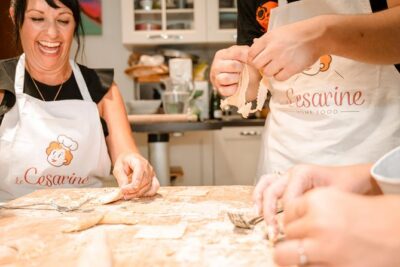
Cesarine: Small group Pasta and Tiramisu class in Parma
Read our review →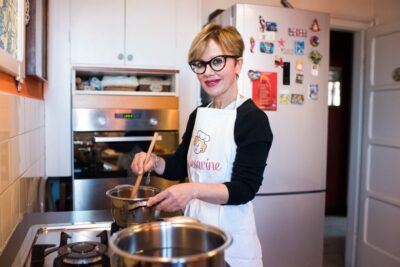
Private pasta-making class at a Cesarina’s home with tasting in Parma
Read our review →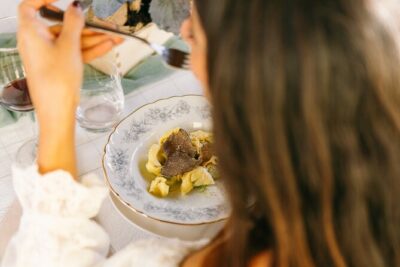
Browse the lists this tour appears in