
REVIEW · NAPLES
Real Neapolitan Pizza Class in a Historic Pizzeria
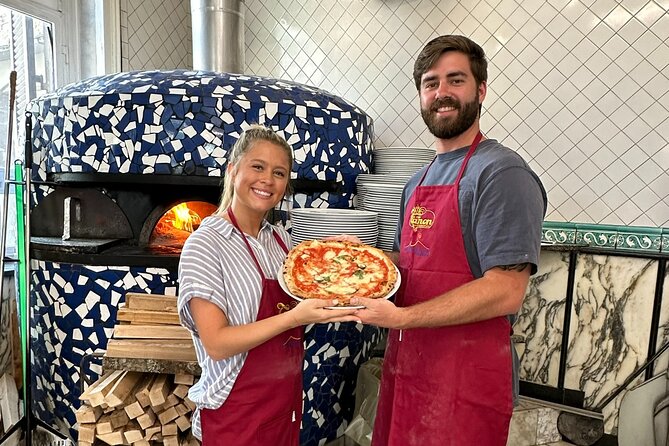
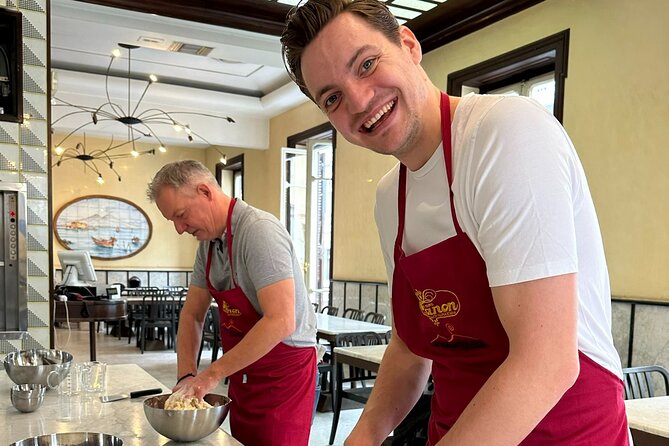
At Pizzeria Trianon, you do not simply watch someone stretch dough and hand you a slice. You make the pizza yourself, starting with flour and water and ending with your own pie in a traditional wood-fired oven. The class takes place in a Naples institution founded in 1923, famous for its huge cart-wheel pizzas.
I like two things right away: the class is limited to eight people, and Alessandro provides translation while the pizza makers demonstrate their craft in Italian. I also like that lunch is the pizza you prepare, not a separate meal served to you. The main consideration is the price, $154.79 per person, which is high for a cooking class and may not suit casual pizza fans.
Key points at a glance
- You make the entire pizza yourself, from mixing the dough to shaping, topping, launching, and turning it in the oven.
- Pizzeria Trianon dates to 1923, giving the class a real working-pizzeria setting rather than a staged cooking studio.
- Alessandro acts as host and translator, helping you follow the Italian-speaking pizza masters.
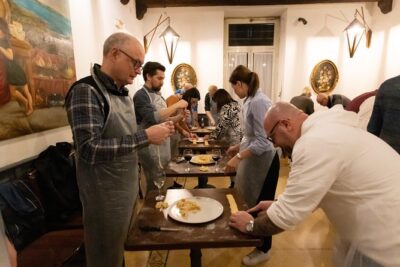
- The group can include no more than eight people, though the class may feel almost private if attendance is low.
- Your pizza becomes your lunch, with coffee or tea, soft drinks, and wine included.
- The lesson lasts about 2 hours and 45 minutes, beginning at 11:00 a.m. and ending back at the meeting point.
Why this is more than a pizza lunch
Naples treats pizza as everyday food, but the best Neapolitan pizza depends on small choices that are easy to miss from a restaurant table. How wet should the dough be? How gently should you handle it? How much tomato is enough? When is the oven ready?
This class puts those decisions in your hands. You work through the stages instead of simply receiving a finished pizza. That makes the experience useful for anyone who already cooks at home, especially if you have tried to reproduce Neapolitan pizza and want to see how a professional handles the process.
The setting adds weight to the lesson. Pizzeria Trianon was founded in 1923 and is known for its large cart-wheel pizza, a thin, broad pie that reaches well beyond the edge of the plate. You are learning inside a long-running pizzeria, not in a generic room with a few decorative Italian props.
I also like the balance between instruction and pleasure. You get practical work with the dough, then sit down to eat what you made. Coffee, tea, soft drinks, and wine are included, so the class works as a late-morning activity that naturally turns into lunch.
More Pizza Making Classes in Naples
- Naples: Pizza-Making Workshop with Drink and Appetizer
★ 4.9 · 5,411 reviews - Authentic Pizza Making Class in Naples with Appetizers and Drink
★ 5.0 · 3,178 reviews - Naples: Neapolitan Pizza and Tiramisù Making Class
★ 4.8 · 839 reviews
Meeting the pizza makers at 11:00 a.m.
The experience starts at 11:00 a.m. in Naples. The stated meeting location is in Naples, and the activity finishes back at the meeting point. Pickup is offered, and private transportation is listed as included, but the exact pickup arrangement is not fully detailed. I would confirm the meeting instructions before the day of the class, especially if you expect hotel collection.
If you have trouble finding the site, the contact number provided is +39 333 964 969. The location is near public transportation, which gives you another way to reach it if you are making your own way across the city.
Arrival includes coffee, and you receive a white apron for the lesson. One especially nice touch is the special apron given as a gift. It is a small thing, but it turns the class into a keepsake rather than just another paid activity.
Alessandro is the key link between you and the pizzeria team. The pizza masters speak Italian, while Alessandro helps translate the instructions into English. That matters because pizza making is physical and visual, but details still count. You need to understand what the chef is correcting, not simply copy a hand movement and hope for the best.
From flour and water to workable dough
The class begins with the foundation of the pizza: the dough. You work with the ingredients needed to prepare it and learn how the mixture changes as it comes together.
The important lesson here is restraint. Neapolitan dough is not treated like a ball of bread dough that needs aggressive handling. You learn to work it into a smooth form and prepare it for shaping. The class is hands-on, so you should expect to get involved rather than stand back while the instructor does the difficult parts.
For home cooks, this is one of the most useful sections. A restaurant pizza can look simple because the finished dough is already prepared. Making it yourself shows why the crust has its soft, elastic texture and why handling affects the final shape.
The available information does not give a full recipe, fermentation schedule, or exact ingredient measurements. If those details matter to you, ask Alessandro or the pizza maker during the lesson. The experience clearly teaches the process from the beginning, but it is not presented as a written technical course with a recipe booklet.
Shaping the famous cart-wheel pizza
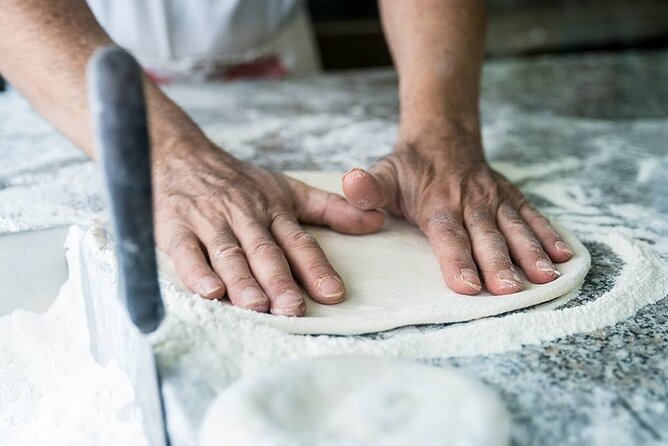
Once the dough is ready, you shape it by hand. This is where the class connects directly to Pizzeria Trianon’s style. The pizza is known for its wide cart-wheel shape, with a thin center and a generous rim that can spread across the plate.
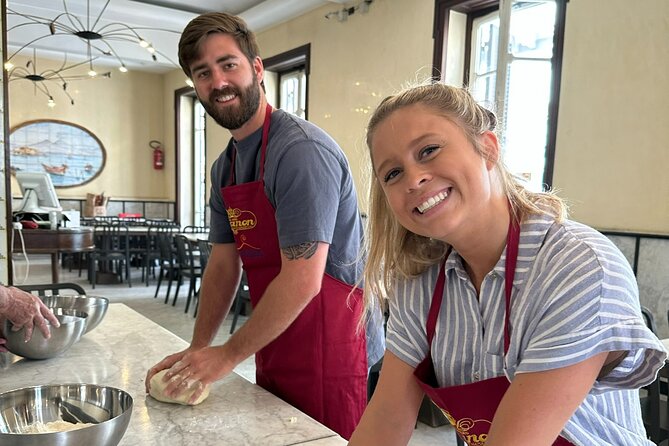
You will need a light touch. Pressing too hard can flatten the edge, while pulling the dough too quickly can create weak spots. The purpose of guided practice is to let you feel the dough and see how the professionals move it.
This is also the point where group size matters. With a maximum of eight people, the instructor has a better chance of seeing what you are doing and offering a correction. The class may be larger than the two-person session described by one couple, but it is still far more personal than a large demonstration.
Do not expect every pizza to look identical. You are there to make your own, and the handmade result is part of the fun. A slightly uneven shape does not mean you failed. It means you handled the dough yourself.
Same kitchen, a different thing to make:
- Naples: Pasta Making Class with Starter and Drink
★ 4.9 · 1,060 reviews - Naples Pasta Class: Fettuccine & Ravioli with Grandma’s Recipe
★ 5.0 · 506 reviews - Naples: Pasta Cooking Class with Tiramisù and a Drink
★ 4.6 · 415 reviews - Naples: Premium Pizza Class From Dough to Dessert & Wine
★ 4.9 · 346 reviews
Tomato, buffalo mozzarella, basil, and oil
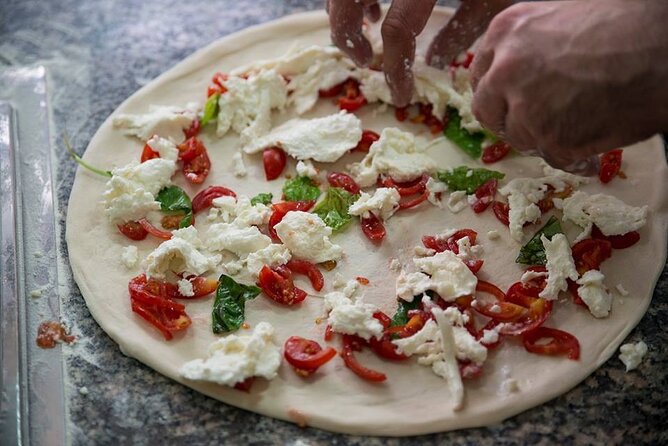
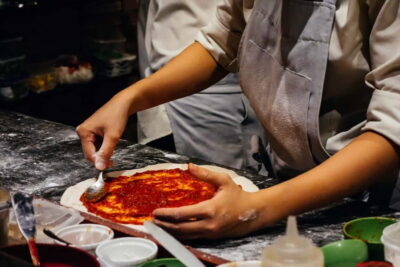
The topping stage keeps things classic. Your pizza is finished with tomato, Campania buffalo mozzarella, fresh basil, and olive oil.
That short list is deliberate. Neapolitan pizza is not meant to be buried under a mountain of toppings. The tomato brings acidity, the buffalo mozzarella adds softness and creaminess, basil supplies fragrance, and olive oil ties the flavors together.
Campania buffalo mozzarella is especially important to the regional character of the pizza. You are not just adding cheese because the recipe calls for it. You are using an ingredient associated with the area around Naples and with the style you are learning.
The class gives you a chance to see how much topping is enough. Too much moisture can affect the crust, and too much cheese can weigh down the center. These are practical lessons you can use later if you try the recipe at home.
The wood-fired oven is the main event
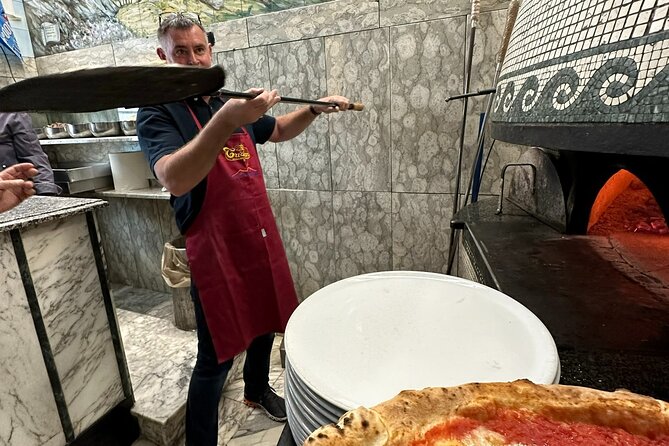
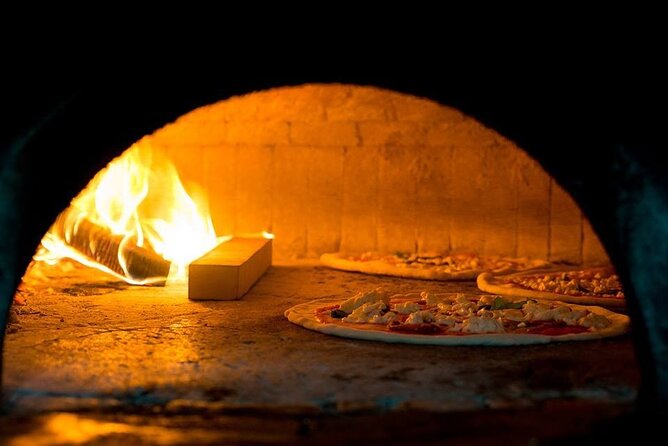
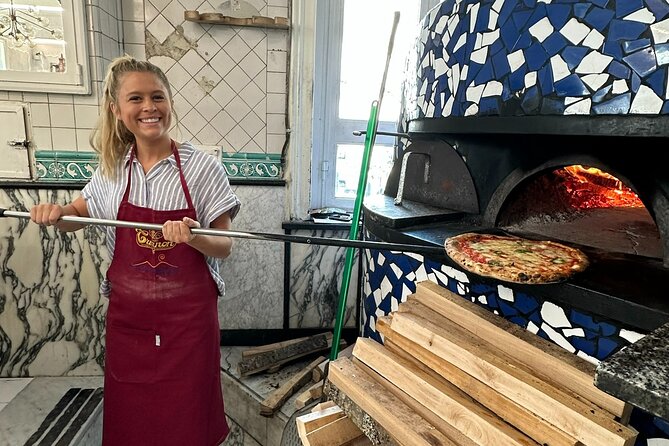
The most memorable technical step is baking your pizza in a traditional wood-fired oven. You do not simply place the pizza on a tray and wait for a timer. You learn how to launch it into the oven and turn it as it cooks.
That part requires confidence. The pizza needs to slide from the peel without folding, and the cook must watch the crust closely. Turning it helps it bake properly in the intense heat. The process is quick, so you need to pay attention to the pizza maker’s instructions.
This is also where the class feels most different from a standard cooking demonstration. You are handling the finished pizza at the moment it becomes lunch. The oven, the movement of the peel, and the brief cooking time show why a professional pizzeria can produce a soft, lightly charred pizza so quickly.
The provided information does not state the oven temperature or exact baking time, so I would not book this expecting a technical masterclass in heat management. You will learn the essential handling and baking steps, but the focus is a lively, practical experience rather than a professional certification course.
Lunch with your own pizza
After baking, you eat the pizza you made. That sounds obvious, but it changes the whole experience. Your lunch is tied to the work you just completed, so you notice the crust, toppings, and texture differently.
Coffee or tea and soft drinks are included. A glass of local wine is also part of the experience, adding a relaxed Neapolitan touch after the hands-on work. An ice cream dessert has also been included in the welcome provided during the experience, though it is not listed as part of the formal sample menu. If dessert matters to you, confirm what will be served on your date.
I like the meal format because you do not lose time moving to another restaurant. The class begins in the late morning and turns into lunch, making it easy to fit into a sightseeing day. You finish at the same meeting point, so you are not left to arrange another transfer after eating.
The meal is simple by design. The central dish is pizza, not a multi-course tasting menu. If you want a long restaurant lunch with several regional dishes, this is not the right choice. If you want to eat a fresh pizza made with your own hands, it makes much more sense.
What the small group means for you
The group limit is eight people. That is a useful middle ground. You get some social energy, but the class should not feel like a crowd gathered around one distant demonstration.
A small group is especially valuable during dough shaping and oven work. Those are the stages where a quick correction can improve the result. You can also ask questions through Alessandro without waiting behind a large line of participants.
The experience can feel even more personal when attendance is low. A two-person session has been described, with the pizzeria owner, Giuseppe, taking part. Giuseppe is a fourth-generation owner, and his presence adds a direct connection to the pizzeria’s family story.
You should not assume every date will be private or that Giuseppe will personally teach every step. The maximum is eight, and the named host is Alessandro. Still, the small format gives you a better chance of speaking with the people who run and work in the pizzeria.
The language question
The activity is offered in English, with Alessandro serving as host and translator. The pizza makers speak Italian, so you may hear the working language of the kitchen while receiving explanations in English.
I see this as a strength, not a problem. You get access to the real pizzeria team rather than a fully English-speaking performance created only for tourists. Alessandro helps make the instructions clear, while the Italian-speaking pizza makers bring the practical authority of people who work with the oven and dough every day.
If you need every explanation to be delivered in polished English by the chef, this could feel less direct. If you are comfortable watching demonstrations and using translation support, the arrangement should work well. The class is intended for English speakers, and the translation is part of how the experience operates.
Is $154.79 a fair price?
At $154.79 per person, this is not a bargain meal. You can eat pizza in Naples for far less, and a basic cooking class elsewhere may cost less too.
The value depends on what you are buying. The price includes a roughly 2-hour-45-minute lesson, the ingredients and equipment, your own pizza for lunch, coffee or tea, soft drinks, wine, a white apron, translation, and a small-group setting. You are also paying for instruction inside a pizzeria founded in 1923, with access to working pizza makers and, depending on the day, the fourth-generation owner.
For someone who simply wants to eat a famous pizza, the cost is hard to justify. For someone who makes pizza at home, studies dough, or wants a serious hands-on food experience, the premium is easier to understand. The class is designed to teach you the full path from dough to oven, not just provide a fun topping activity.
I would compare the price with your wider Naples budget. If you are already planning several expensive tours, this may be the activity to skip. If food is one of the main reasons you came to Naples, it could be worth spending more for an experience that gives you a skill and a memory to take home.
Who should book this class?
I would recommend it most strongly to:
- Home cooks who make pizza and want direct instruction from professional pizzaioli
- Couples looking for a shared activity that ends with lunch
- Food-focused visitors who care about traditional Neapolitan methods
- People who prefer small groups over large cooking demonstrations
- Anyone who wants a structured morning activity near public transportation
It also suits beginners. You do not need to arrive with pizza-making experience. The instruction begins with the dough, and the class takes you through each stage.
I would be more cautious if you have celiac disease. The experience is specifically not recommended for people with celiac disease. You should also think twice if you dislike flour, prefer a quiet restaurant meal, or want a broad menu rather than pizza.
The class is available to most participants, but the supplied information does not give detailed accessibility guidance. If you have specific mobility or access needs, contact the provider before booking.
Timing, booking, and cancellation
The start time is 11:00 a.m., and the full activity lasts about 2 hours and 45 minutes. Since you eat your pizza during the experience, you can treat it as lunch and plan your afternoon afterward.
This activity is often booked well ahead, with an average booking time of 46 days before the date. That is useful to know if your Naples schedule is fixed, especially in a busy travel season.
Confirmation is normally received at booking. If you book within four days of departure, confirmation can take up to 48 hours and remains subject to availability. Free cancellation is available until 24 hours before the start time. After that, the amount paid is not refunded, and changes made inside that 24-hour window are not accepted.
Should you book the Pizzeria Trianon class?
Book it if you want to learn the working method behind Neapolitan pizza, not just eat one. The strongest reasons are the historic pizzeria setting, the full hands-on process, Alessandro’s translation, and the chance to launch and turn your own pizza in a wood-fired oven.
The price is the main obstacle. You are paying much more than the cost of lunch, so the experience needs to matter to you. I would choose it for a couple who makes pizza at home, a food-focused visitor, or anyone who values direct instruction and a small group.
Skip it if you want the cheapest way to taste Naples, need gluten-free or celiac-safe food, or prefer a broad cooking menu. For everyone else, this offers a clear connection between Naples’ pizza culture and your own hands, which is exactly what makes the morning worthwhile.
FAQ
Where does the pizza class take place?
The class takes place in Naples at Pizzeria Trianon, a pizzeria founded in 1923 and known for its cart-wheel pizza.
What time does the experience start?
The class starts at 11:00 a.m.
How long does the pizza class last?
The activity lasts approximately 2 hours and 45 minutes.
Is pickup available?
Pickup is offered, and private transportation is listed as included. The provided details do not specify the exact pickup area, so confirm the arrangement before the class.
How many people can join the class?
The group has a maximum of eight participants.
Is the class offered in English?
Yes. Alessandro serves as host and translator, while the pizza makers provide instruction in Italian.
What food and drinks are included?
You eat the pizza you prepare. Coffee or tea and soft drinks are included, and a glass of local wine is part of the experience.
Is the class suitable for people with celiac disease?
No. The experience is not recommended for celiac travelers.
More Heritage Tours in Naples
- Italian Pasta & Dessert Class in Historic Center (3-Course Meal)
★ 5.0 · 2 reviews - Make Tagliatelle & Tiramisù at a Historic Villa (3-Course Meal)
★ 5.0 · 2 reviews
Just added around Naples
- Naples Hands-on Cooking Class: Gnocchi, Ravioli, Tiramisu & Wine★ 4.5 · 18 reviews
- Private Pasta & Tiramisu Class at a Cesarina’s home with tasting in Ercolano★ 5.0 · 2 reviews
- Pizza Making Experience★ 4.0 · 4 reviews
- Pasta Fresca Gnocchi and Ravioli a Napoli★ 5.0 · 2 reviews
- Pasta and Tiramisu Cooking Class with Local Chef in Naples★ 5.0 · 58 reviews
- Naples Pizza and Tiramisu Homemade Edition★ 5.0 · 9 reviews
- Private Fettuccine Alfredo and Ravioli Class Grandma recipe★ 4.0 · 2 reviews
- 2-Hour Authentic Italian Pizza Making Class in Naples★ 4.5 · 14 reviews
Naples Pasta Classes, compared.
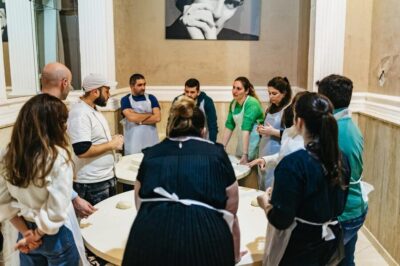
Pizza-Making Workshop with Drink and Appetizer
Read our review →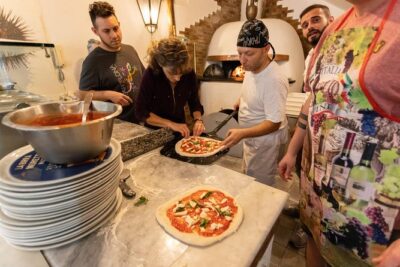
Authentic Pizza Making Class in Naples with Appetizers and Drink
Read our review →
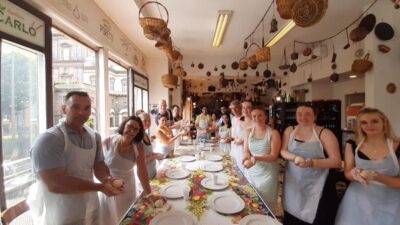
Naples Pasta Class: Fettuccine & Ravioli with Grandma’s Recipe
Read our review →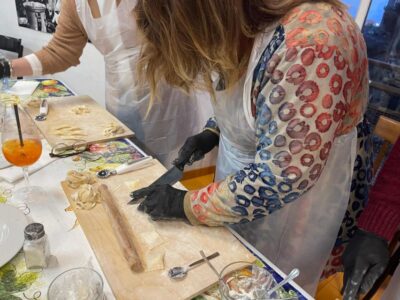
Premium Pizza Class From Dough to Dessert & Wine
Read our review →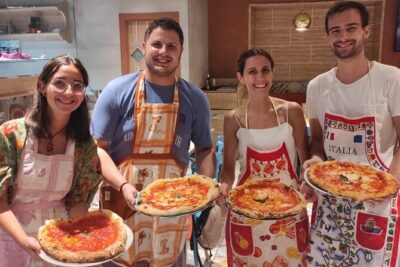
Semi-Private Pizza Making Experience in Naples with Drink
Read our review →Browse the lists this tour appears in