REVIEW · NAPLES
Naples: Premium Pizza Class From Dough to Dessert & Wine
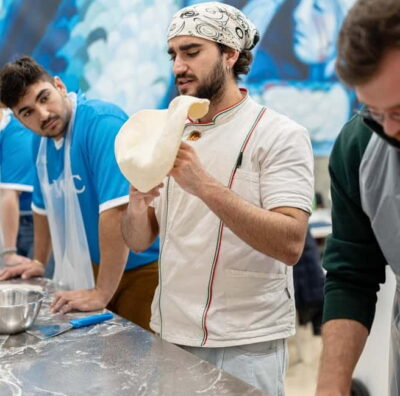
Naples takes pizza seriously, and this class shows you why. You begin with only water, flour, salt, and yeast, then learn how those plain ingredients become a soft, elastic Neapolitan base. You shape your own pizza, watch it bake in a wood-fired oven, and eat it while it is still hot.
I like the individual workstation for every participant, which keeps this from becoming a cooking demonstration where you only watch. I also like the way the class uses the same dough for both a savory Margherita and a sweet fried dessert. The main consideration is that the work can get floury, and some sessions rely on translation between an English-speaking guide and an Italian-speaking pizzaiolo.
Key points at a glance
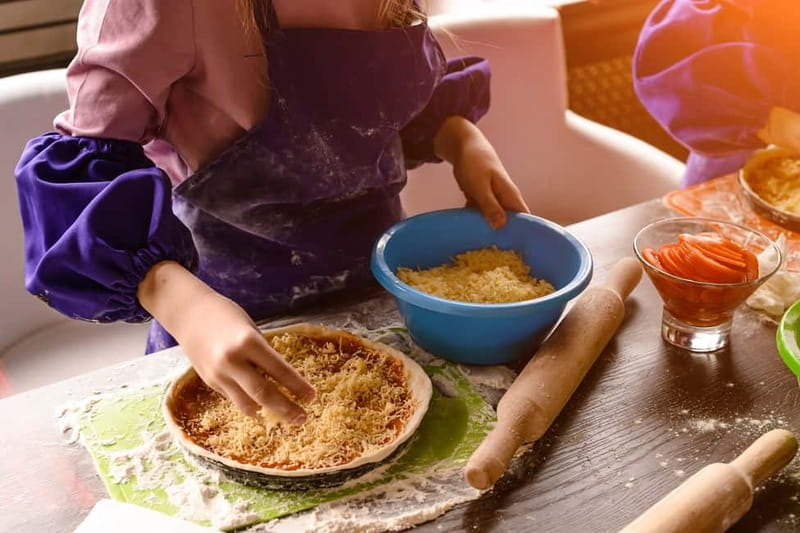
- Learn staglio by hand: Practice the old technique of dividing dough into smooth balls, called panetti.
- Cook in a 2017 World Pizza Champion pizzeria: This is a working pizza setting, not a generic tourist kitchen.
- Make a full meal: Your class includes a Margherita, sweet fried dough filled with chocolate spread, a drink, and limoncello.
- Work at your own station: Small groups and private options give you more time with the dough.
- Expect friendly instruction: Guides such as Lucia, Francesca, Sabrina, and Riccardo have been praised for clear explanations and warm handling of families.
- Bring home the method: A digital recipe is included, though one participant had to follow up after the class to receive it.
Starting with four ingredients in Naples
The best part of this experience is its simplicity. You are not handed a long list of specialty products or asked to prepare an elaborate menu. The class focuses on the core of Neapolitan pizza: flour, water, salt, and yeast, followed by good toppings and careful handling.
The instructor demonstrates how to combine and knead the dough, then explains what you are trying to feel in your hands. This matters because pizza dough is not just a recipe with fixed steps. It needs the right texture, and the class gives you a chance to notice how it changes as you work it.
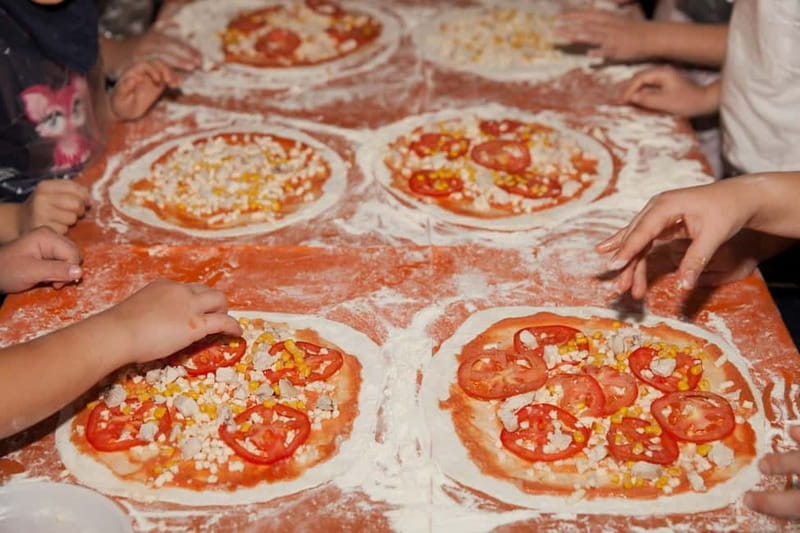
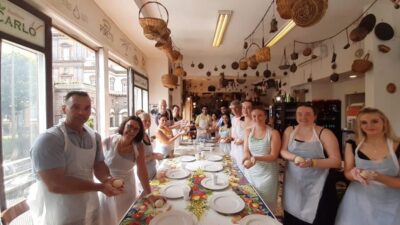
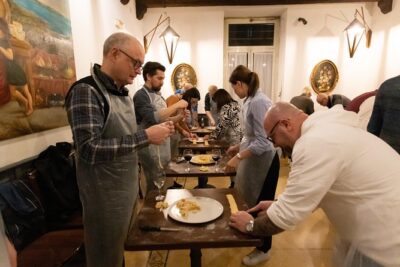
You will prepare dough at your own workstation rather than standing behind a single chef. That setup is useful for first-time cooks, since you can make mistakes, ask questions, and correct your technique before the dough reaches the oven.
No cooking background is required. The instruction is built around demonstrations and repetition, so families and teenagers can take part. Children must be at least six years old because of the work area and hot oven.
More Pasta Classes with Wine in Naples
- Naples: Pizza and tiramisu making class with unlimited wine
★ 4.8 · 56 reviews - Pizza-Making Workshop by night with glass of wine
★ 4.9 · 45 reviews - Naples Pizza-Making: From Dough to Dessert & Wine at Pizzeria
★ 5.0 · 40 reviews
Practicing staglio and shaping the panetti
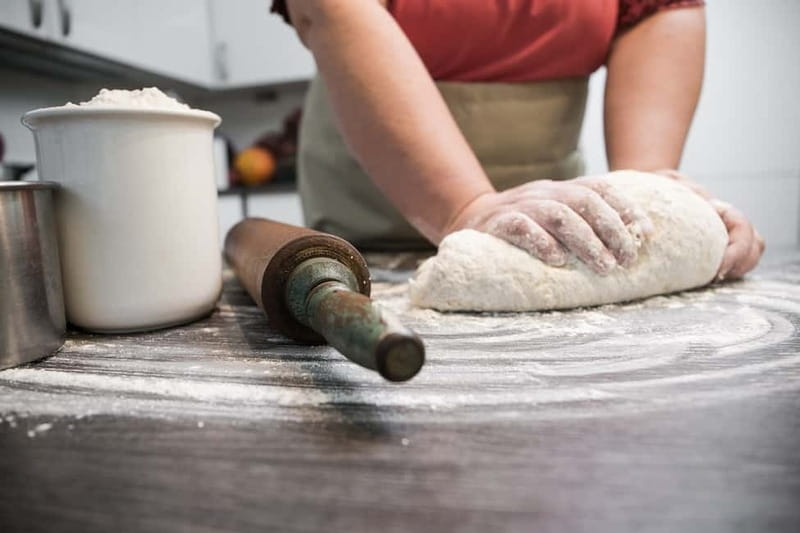
One of the more interesting technical lessons is staglio, the traditional method of dividing a larger mass of dough into individual portions. These portions are shaped into smooth balls called panetti, which later become the bases for your pizzas.
This step looks simple when a professional does it. It is less simple when you try it yourself. The goal is to create a neat, well-shaped piece without tearing or crushing the dough. Your instructor demonstrates the movement, then helps you adjust your hands and pressure.
This is where the small group format pays off. In a larger class, you might watch one person make the panetto and then move on. Here, you get a personal attempt and direct help. Some sessions have had only four participants, while private classes are also available for families or couples wanting more control over the pace.
The dough may not have enough time to prove fully during the two to three-hour class. One practical solution used during a session was to turn some of the dough into bread rather than pretend it was ready for a perfect pizza. That is a useful reminder that professional pizza depends on timing as much as technique.
Turning the dough into a Margherita
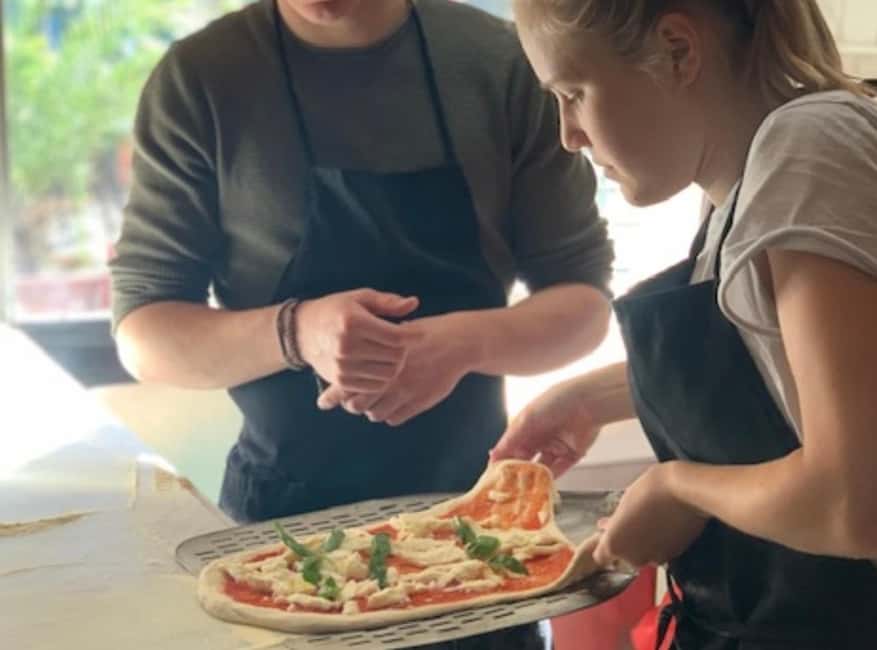
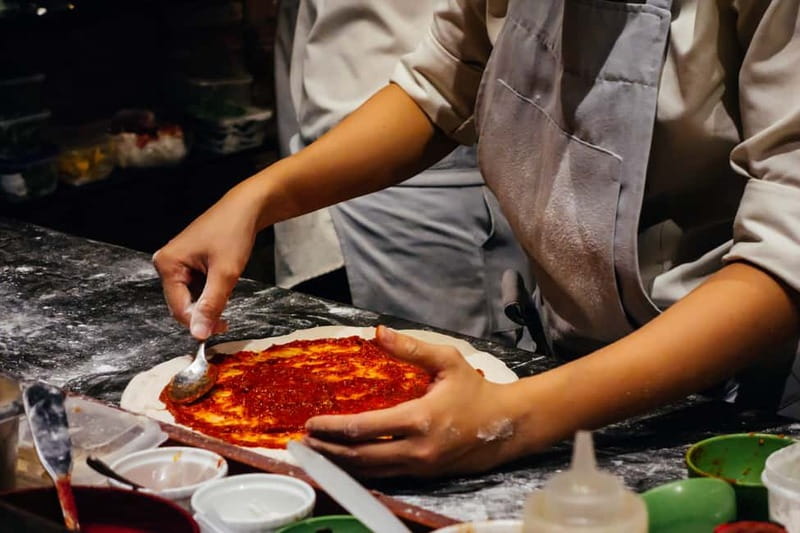
Once the dough is ready, you learn to stretch it by hand. The aim is a thin center with a thicker rim, not a flat cracker. You then add the classic ingredients: San Marzano tomatoes, buffalo mozzarella, basil, and DOP extra virgin olive oil.
The topping stage is deliberately restrained. You are not piling on meat, vegetables, or a dozen sauces. Neapolitan pizza depends on proportion, and too much topping can weigh down the dough and hide its flavor.
You will likely hear about the role of each ingredient as you work. The tomato provides brightness, the mozzarella adds richness, basil gives a fresh note, and the olive oil ties everything together. The lesson is less about memorizing a formula and more about seeing why a short ingredient list demands good products.
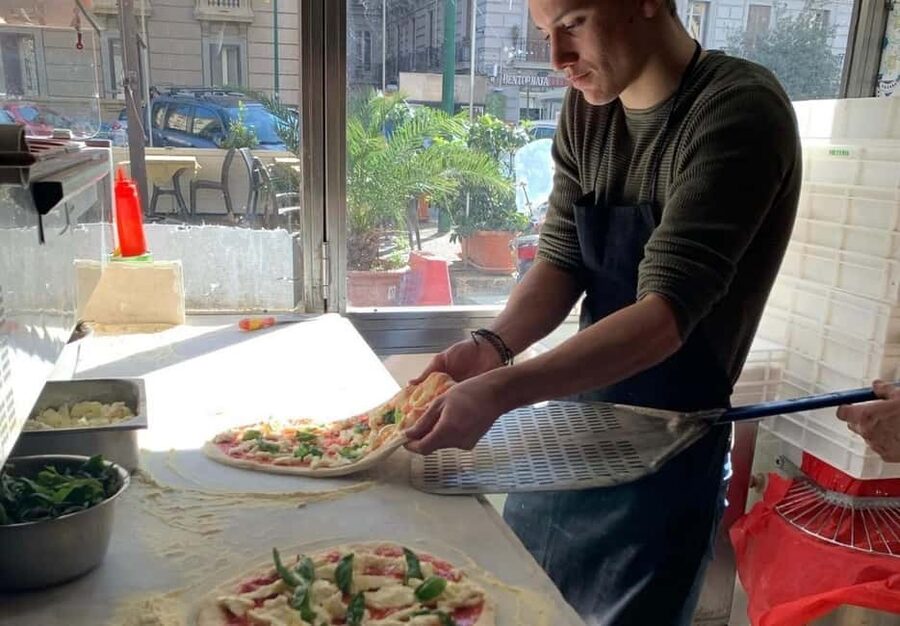
The finished pizza goes into a traditional wood-fired oven. The chef handles the oven work, but you still get to see how the pizza behaves inside it. One useful tip shared during a class involved working the pizza while it was in the oven, a detail that helps explain how professional pizzaioli manage an uneven bake.
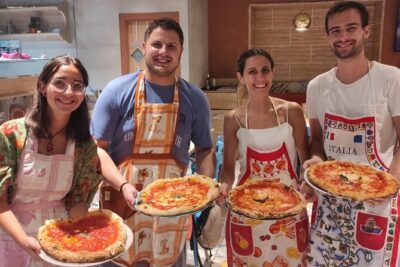
You then eat the Margherita you made. That immediate payoff is important. You are not taking a dough class and waiting until later for the food. The pizza becomes your meal, and you can judge the crust, sauce, and topping balance for yourself.
The sweet course: fried pizza dough and chocolate
The class has a playful second act. Instead of ending with the Margherita, the pizzeria uses pizza dough for a sweet preparation. The dough is fried into crisp pieces, often described as little angels, and filled with the world’s best-known chocolate spread.
This is a local-style street-food idea rather than a polished pastry course. The result is warm, crisp, rich, and filling. If you have already eaten a whole Margherita, the dessert may feel like a lot. One participant thought a smaller sweet course might have been easier after the main meal.
Still, I think the fried dough is one of the most memorable parts of the class because it shows how flexible the dough can be. You see the same basic ingredient move from a savory oven-baked dish to a sweet fried bite. It also gives you something different from the usual gelato or tiramisu finish.
The meal includes one glass of wine, water, or beer, plus limoncello. Some sessions have included Neapolitan beer, and limoncello is served at the end. The drinks help turn the lesson into dinner rather than a stand-alone cooking workshop.
More Pizza Making Classes in Naples
- Naples: Pizza-Making Workshop with Drink and Appetizer
★ 4.9 · 5,411 reviews - Authentic Pizza Making Class in Naples with Appetizers and Drink
★ 5.0 · 3,178 reviews - Naples: Neapolitan Pizza and Tiramisù Making Class
★ 4.8 · 839 reviews - Semi-Private Pizza Making Experience in Naples with Drink
★ 5.0 · 324 reviews
The people guiding the class
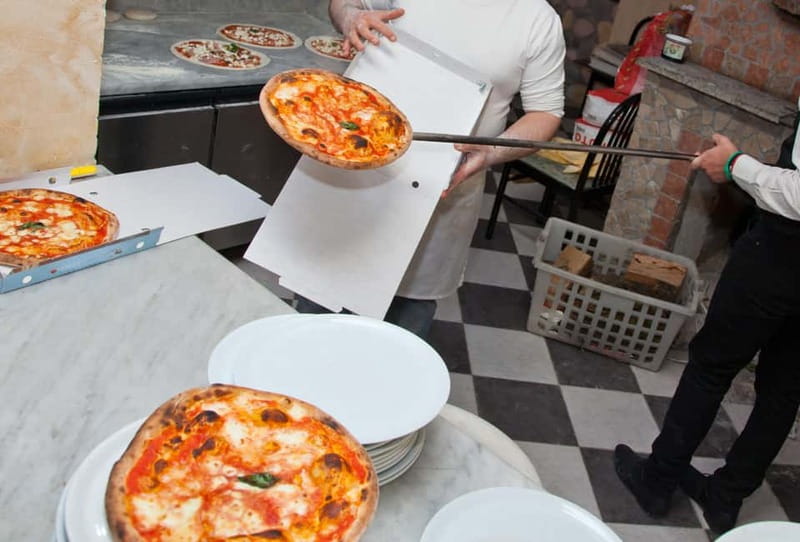
The teaching style can vary slightly from one session to another, but the names that come up include Lucia, Francesca, Sabrina, Riccardo, Alessandro, Maurizio, Lorenzo, and other members of the pizzeria team. The guides often handle English explanations while the pizzaiolo demonstrates in Italian.
Lucia has been especially praised for clear explanations, warmth, and patience. Francesca has guided groups through both the pizza process and the background of Neapolitan pizza. Sabrina has worked as a translator and guide beside the chef, helping participants follow each stage and ask questions.
This language arrangement is worth understanding before you book. It can add a few pauses when the chef speaks Italian and the guide translates into English. One multilingual session was a little challenging, but the class still worked well because the practical demonstrations made the technique easy to follow.
I see this as part of the experience rather than a serious flaw. A working pizzaiolo does not need to turn into a polished English-speaking presenter. The guide bridges the gap, and you get to watch the craft in its natural setting.
What the pizzeria setting adds
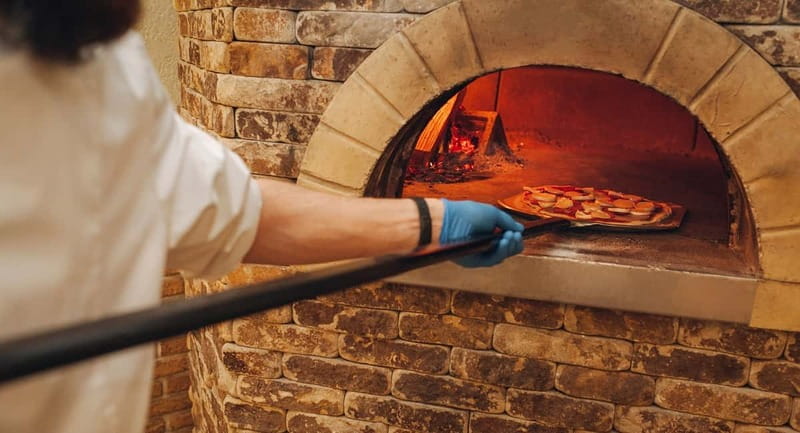
The class takes place at a pizzeria that won the World Pizza Championship in 2017. That detail matters because you are learning in a place where pizza is the main business, not in a temporary classroom designed only for visitors.
You also get a glimpse of how the pizzeria operates around the lesson. One participant noted that the restaurant opened about an hour after the class began, allowing the group to leave belongings safely at the table while making pizza nearby. Exact arrangements can vary, so follow the meeting instructions for your booking.
The setting is warm and informal. You are likely to spend part of the session standing at your station, handling flour, and moving between preparation and the oven area. Wear clothes that can tolerate a dusting of flour. Aprons are not guaranteed, and one participant wished one had been provided.
The oven zone is off-limits to children under six. That rule is about safety, not fussiness, and families should take it seriously. Children aged six and older can participate, making this a practical choice for families with older children who enjoy hands-on activities.
How much food and value you get for $70

At $70 per person, this is not the cheapest way to eat pizza in Naples. You can buy a Margherita for far less. The value comes from combining dinner with instruction, a look at professional technique, a second dough-based course, drinks, and a recipe to use later.
The package includes the hands-on class, your savory pizza, the sweet fried dough, one glass of wine, beer, or water, additional water, limoncello, and a digital recipe. If you are already planning a meal, the included food makes the price easier to justify.
I would book it for the experience rather than for the amount of food alone. You are paying to work with the dough, receive help from a pizzaiolo, and understand why Neapolitan pizza behaves as it does. The recipe also extends the value beyond the evening, even though a digital recipe was not delivered promptly in at least one case.
There is another practical limit. A home oven will not behave like a traditional wood-fired pizza oven. You can reproduce the ingredients and dough method, but you may not duplicate the same heat or speed. The class still gives you a much better starting point than simply copying a list of quantities from a website.
Who will enjoy this most
This class suits you if you want a meal with an activity attached to it. It is especially good for first-time visitors to Naples, families with children aged six and older, couples, and anyone who enjoys learning by doing rather than watching a chef from a distance.
It also works well for people who already like pizza but want to understand the base. The lesson on kneading, shaping, and stretching can improve your results at home even if your oven cannot reach professional temperatures.
Private sessions make sense for families with different ages or for a group celebrating something together. Small-group sessions offer a more social evening and can be good for solo visitors who want to meet other people over food.
I would think twice if you dislike flour on your clothes, standing for parts of a class, or eating a substantial meal in the middle of an activity. The fried dough dessert is delicious but may be too much after a full pizza. Also, if you need every explanation in English directly from the chef, ask about the language arrangement before booking.
Timing, meeting details, and booking flexibility
The class lasts about two to three hours, with starting times depending on availability. That is long enough to cover the dough, shaping, toppings, baking, meal, dessert, and drinks without turning the session into an all-day commitment.
The meeting point can vary by the option you book. Check the exact location and allow extra time to reach it, especially if you are coming from another part of Naples or relying on public transport. A few participants arrived late because of transport or weather, and the staff handled those situations kindly, but punctuality remains the safer plan.
Private and small-group options are available. Instruction is offered in Italian and English. You can cancel up to 24 hours before the activity for a full refund, and the reserve-now, pay-later option gives you some flexibility while your plans are still changing.
My call: book it if pizza is part of your Naples plan
I would book this class if you want more than another restaurant meal and you like the idea of learning a skill in the city where pizza became a defining food. The individual workstations, experienced pizzaioli, wood-fired oven, full meal, and sweet fried dough make the $70 price fair for a two to three-hour experience.
Go in expecting flour, some translation, and a dough process that cannot be rushed. If that sounds fine, you will leave with a full stomach, a clearer sense of how Neapolitan pizza works, and a recipe you can try at home. Families should confirm that every child is at least six, and anyone with dietary restrictions should ask the provider about accommodations before booking.
FAQ
How long does the pizza class last?
The activity lasts approximately two to three hours. Starting times depend on availability.
How much does the class cost?
The listed price is $70 per person.
What ingredients do I use?
You work with water, flour, salt, and yeast to prepare the dough. Toppings include San Marzano tomatoes, buffalo mozzarella, basil, and DOP extra virgin olive oil.
Do I make my own pizza?
Yes. Each participant has an individual workstation and takes part in kneading, shaping, stretching, topping, and baking a Neapolitan pizza.
What food is included?
The class includes a savory pizza and a sweet preparation made from pizza dough. The sweet course consists of fried dough filled with chocolate spread.
Are drinks included?
Yes. The package includes one glass of wine, water, or beer, along with water and limoncello.
Is the class suitable for children?
Children must be at least six years old. Children under six cannot participate or enter the work area and oven zone.
Is the class taught in English?
Instruction is available in Italian and English. In some sessions, an English-speaking guide translates the pizzaiolo’s Italian demonstrations.
Are private classes available?
Yes. You can choose a private session or a small-group option, depending on availability.
Is a recipe included?
A digital recipe is included so you can try making the pizza at home.
Can I cancel the booking?
You can cancel up to 24 hours in advance for a full refund. A reserve-now, pay-later option is also available.
More Dessert Stops in Naples
- Rome: Pasta Making Class with Wine, Limoncello, and Dessert
★ 4.9 · 3,177 reviews - Florence: Handmade Pasta & Dessert Class with Unlimited Wine
★ 4.8 · 788 reviews - Florence: Pasta Class with Wine, Limoncello and Dessert
★ 4.9 · 674 reviews - Rome Cooking Class: Make Pizza and Pasta with Wine & Dessert
★ 4.5 · 651 reviews
More Wine Tastings in Naples
- Naples: Making ravioli and scialatielli with fresh pesto and wine
★ 4.6 · 34 reviews - Naples Hands-on Cooking Class: Gnocchi, Ravioli, Tiramisu & Wine
★ 4.5 · 18 reviews - Naples: Pasta, Wine & Authentic Food Tour
★ 4.8 · 5 reviews - Florence: Pasta Cooking Class with Unlimited Wine
★ 4.9 · 10,285 reviews
Just added around Naples
- Private Pasta & Tiramisu Class at a Cesarina’s home with tasting in Ercolano★ 5.0 · 2 reviews
- Naples Hands-on Cooking Class: Gnocchi, Ravioli, Tiramisu & Wine★ 4.5 · 18 reviews
- Pizza Making Experience★ 4.0 · 4 reviews
- Pasta Fresca Gnocchi and Ravioli a Napoli★ 5.0 · 2 reviews
- Pasta and Tiramisu Cooking Class with Local Chef in Naples★ 5.0 · 58 reviews
- Naples Pizza and Tiramisu Homemade Edition★ 5.0 · 9 reviews
- Private Fettuccine Alfredo and Ravioli Class Grandma recipe★ 4.0 · 2 reviews
- 2-Hour Authentic Italian Pizza Making Class in Naples★ 4.5 · 14 reviews
Naples Pasta Classes, compared.
Pizza-Making Workshop with Drink and Appetizer
Read our review →
Authentic Pizza Making Class in Naples with Appetizers and Drink
Read our review →
Naples Pasta Class: Fettuccine & Ravioli with Grandma’s Recipe
Read our review →
Semi-Private Pizza Making Experience in Naples with Drink
Read our review →