
REVIEW · LECCE
Small group Pasta and Tiramisu class in Lecce
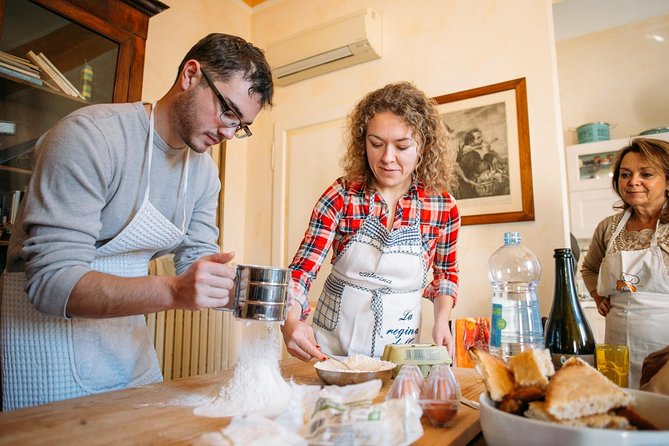
The best part of this Lecce cooking class is the setting: you cook in a local home, not a polished restaurant school. A Cesarine host such as Katia, Pierangela, Francesca, Matilde, or Carlo teaches you to make two fresh pastas and tiramisu, then you sit down to eat what you made.
I like the small maximum of 12 people, which keeps the lesson more personal than a large group class. I also like the generous food around the lesson, including aperitivo, local wine, bruschetta, calzone, and sometimes ingredients from the host’s own garden. The main caution is the price: at $155.68 per person, you should want the family-home setting, not just a quick pasta lesson.
Key points at a glance
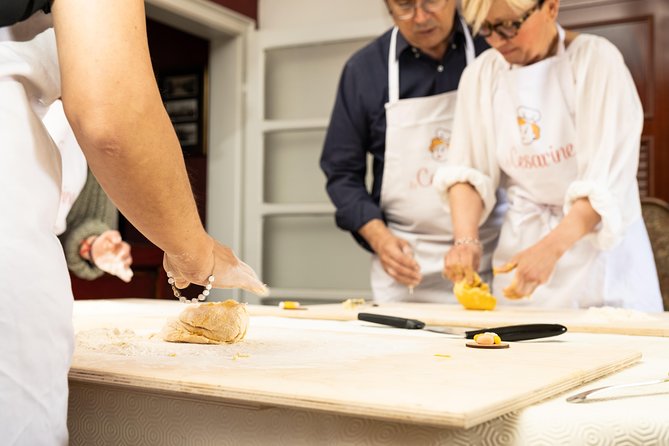
- Two pasta shapes from scratch: You may work with Puglian favorites such as orecchiette, cavatelli, or tagliatelle.
- A real home kitchen: The class takes place in a selected local home, with hosts welcoming you into their daily setting.
- Tiramisu is part of the meal: You prepare the dessert yourself and eat it after the pasta.
- Small-group format: The class accepts no more than 12 people, though the exact feel depends on the group and host.
- More than a lesson: Aperitivo, wine, family conversation, garden produce, and stories may be part of the visit.
- Plan for about three hours: The class begins and ends at the meeting point in Lecce, with some homes located outside the city center.
What cooking in a Lecce home is really like
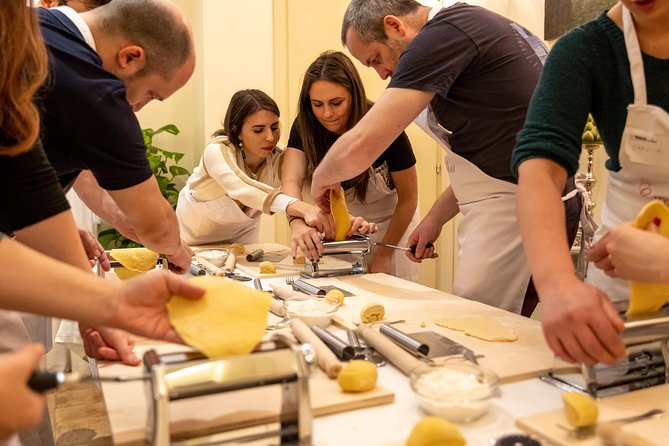
This is not a chef demonstration where you watch from the back of a room. The point is to handle the dough, shape pasta, prepare tiramisu, and share a meal in somebody’s home.
The host is called a Cesarine, a local home cook who passes on family recipes and cooking habits. That matters in Puglia, where pasta is not just a restaurant dish. It is a daily food, often made by hand, with shapes and methods passed from one generation to the next.
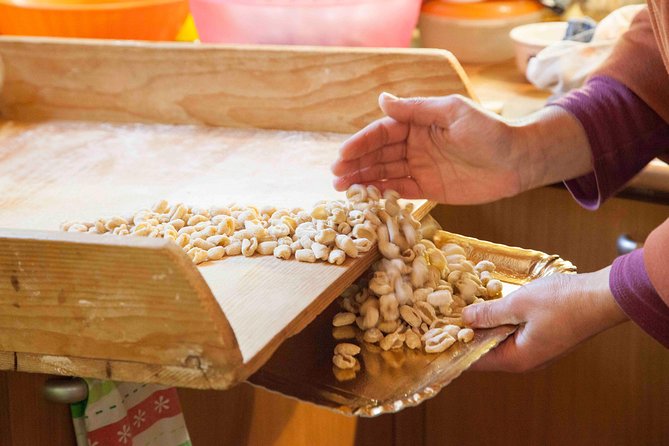
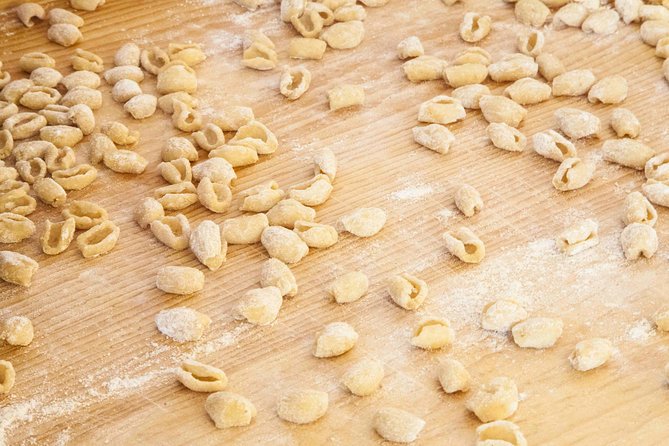
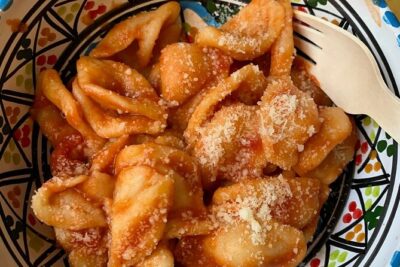
You may work with orecchiette, the small ear-shaped pasta strongly linked with Puglia, along with cavatelli or another fresh shape. Some sessions have included tagliatelle, risotto, zucchini appetizers, calzone, or parmigiana. The exact menu can vary by host, so treat the listed pasta and tiramisu as the core of the class rather than a fixed restaurant menu.
The atmosphere also changes from one home to another. Katia has welcomed people with family members around and kept the meal relaxed. Pierangela has taught beginners the very basics, then served the handmade pasta with aperitivo and local red wine. Matilde has hosted classes in a villa or countryside home, sometimes followed by a look around the grounds.
That variation is part of the appeal. It also means you are booking a style of experience rather than one single kitchen, recipe card, or host personality.
More Tiramisu Classes in Italy:
- 3 in 1 Cooking Class near Navona: Fettuccine, Ravioli & Tiramisu
★ 5.0 · 7,376 reviews - Florence: Pasta & Tiramisu Cooking Class with Unlimited Wine
★ 4.9 · 6,708 reviews - Rome: Pasta & Tiramisu Class with Fine Wine by the Vatican
★ 4.9 · 4,852 reviews
The pasta lesson: simple ingredients, real handwork
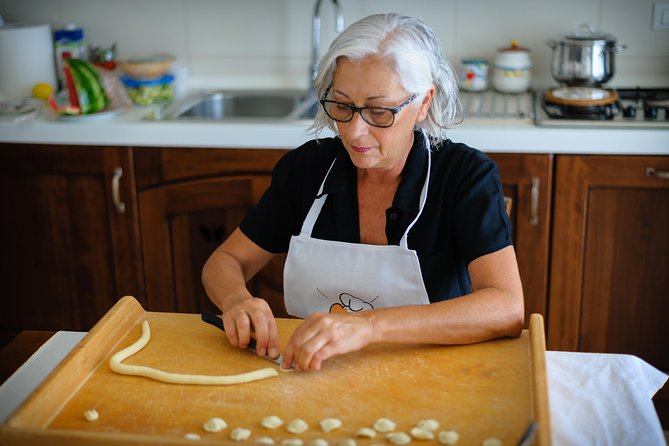
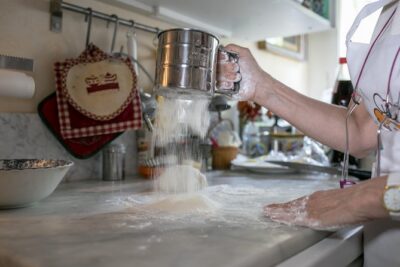
The pasta portion is where the class earns its place in a Puglia itinerary. You are not simply told how pasta is made. You work through the process with help from someone who learned these methods in a home kitchen.
If you are new to cooking, do not worry about arriving with skill. Pierangela has worked with people who had little or no cooking experience, starting with the basics and showing them how to handle the dough. That makes this a good pick for beginners, couples, and families who want to make something together without feeling tested.
The shapes may not come out perfectly. That is fine. In fact, imperfect orecchiette or cavatelli are part of the fun. The goal is to learn the movement and understand the dough, not to produce factory-perfect pasta on your first try.
You can expect the lesson to focus on the pasta itself more than on a long professional cooking curriculum. Sauces and final cooking steps may receive less hands-on attention. One person found the sauce work and actual cooking limited, so if you want a full technical course covering every component, this may feel light for the cost.
For most people, the value is elsewhere: you learn a method you can repeat at home, and you make it in the same kind of social setting where the food is normally prepared.
Tiramisu gives the class a sweet finish
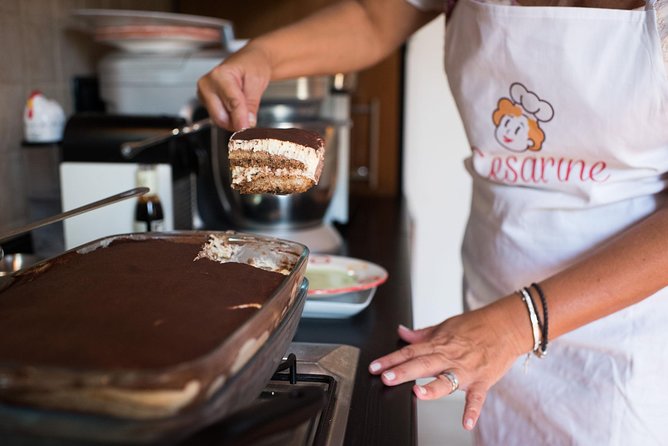
The tiramisu portion breaks up the pasta work and gives you a recipe to take home in your head. Participants have described the finished dessert as light, creamy, and a satisfying end to the meal.
As with the pasta, you should expect a practical demonstration and participation rather than a pastry-school course. The dessert is part of the shared meal, so you do not leave with a boxed souvenir. You leave knowing how the dish was put together and having tasted the result alongside your pasta.
That combination is useful for home cooks. Pasta can seem intimidating, while tiramisu is often easier to repeat in your own kitchen. Making both in one sitting gives you two Italian dishes with very different techniques.
The meal matters as much as the lesson
A major strength of this class is the food served around the cooking. Several hosts have prepared an aperitivo before or during the lesson, with items such as bruschetta, calzone, vegetables, and other homemade dishes. Local wine may also be offered.
This turns the class into a meal with a lesson attached, rather than three hours of standing over a work surface. You may eat the pasta and tiramisu you prepared, along with food the host has made in advance.
Carlo and Matilde, for example, have welcomed people into a countryside villa where the meal followed pasta making and included a look around the grounds. Other hosts have used produce from their gardens, creating a farm-to-table element that adds meaning to the recipes.
You should keep your expectations sensible. The standard menu identifies pasta and tiramisu, not a guaranteed multi-course feast, garden tour, or wine tasting. The extra food and setting depend on the host. Still, the available accounts make it clear that generous hospitality is a central part of the format.
More Small Group Classes in Italy:
- Milan: Pasta and Tiramisu Small Group Cooking Class with Wine
★ 5.0 · 660 reviews - Florence Small-Group Pasta Class with Seasonal Ingredients
★ 5.0 · 532 reviews - Rome: Pizza Making Class Small Group Experience
★ 5.0 · 487 reviews - Bologna: Pasta and Tiramisu Small Group Cooking Class with Wine
★ 5.0 · 409 reviews
Why the small group size helps
The maximum group size is 12. That is small enough for a personal welcome, but not necessarily an intimate private lesson.
A group of 12 can still feel lively, especially when people are shaping pasta at the same time. You may have to share work space or wait for help during a tricky step. On the other hand, a group adds conversation and can make the meal more social.
For the best chance at individual attention, ask about the expected group size when you book or contact the host if you need help with mobility, dietary needs, or language. English is the offered language, and some hosts have included family members to help with translation or conversation.
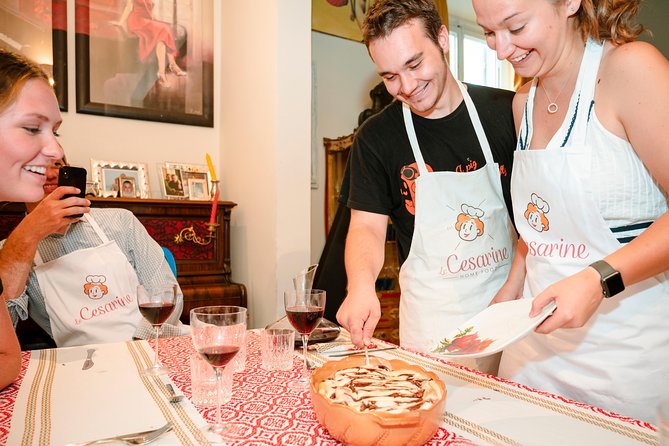
The class also works well for couples and family groups. One couple celebrated a wedding anniversary there, while another family group enjoyed learning from two generations of women in the household. The setting gives you something to talk about long after the pasta is eaten.
Local homes, villas, and the meeting point
The activity begins at 73100 Lecce, in the Province of Lecce, and ends back at the meeting point. It is near public transportation, but the exact home may not feel like a shopfront business in central Lecce.
Some sessions take place in homes in or near the city. Others have been about 15 minutes outside Lecce, including a countryside house or villa. That distance can change the practical side of the outing, so read the arrival instructions carefully and allow time to find the correct place.
One group had a location mix-up and was collected by the host and her husband. That is a kind gesture, but you should not plan on it. Make sure you have the host’s contact details and clear directions before setting out.
The setting is a key part of what you pay for. An old country house, family dining room, paintings, garden, or home kitchen gives the class a sense of place that a standard cooking studio cannot copy. If you prefer an easy central meeting point and a tightly controlled schedule, the home format may feel less predictable.
Is $155.68 good value?
At $155.68 per person, this is not a bargain cooking lesson. The price makes more sense if you count the full package: instruction, ingredients, two pastas, tiramisu, a sit-down meal, aperitivo, possible wine, and time with a local family.
I would compare it with the cost of a good dinner plus a separate cooking lesson. The class can offer both at once, with the added value of a private home setting and personal contact. For a special occasion, such as an anniversary, it may feel justified.
Still, the value depends heavily on what you want from the day. If your priority is intensive instruction about sauces, pasta machines, knife skills, and restaurant technique, you may find the class too basic. If you want to learn a few Puglian methods and enjoy a welcoming meal, the price is easier to defend.
The strongest hosts make the visit feel much bigger than the recipe list. People have spent hours talking with Katia’s family, practicing Italian with Pierangela, hearing about local food traditions from Carlo, and enjoying the gardens around a countryside home. Those moments are not easily priced, but they are also not guaranteed in exactly the same form for every booking.
What this class suits best
I would choose this for you if you want food to be a doorway into local life. It suits first-time pasta makers, couples, families, small friend groups, and anyone who enjoys a long meal with conversation.
It is especially good for visitors who have already seen Lecce’s churches and baroque streets and want an activity that feels less like sightseeing. You get to spend time in a home, meet the people behind the food, and learn dishes you can try again after returning home.
It also suits beginners. Hosts have shown patience with people who had never made pasta by hand, and the relaxed tone keeps the experience from feeling like an exam.
I would hesitate if you dislike shared meals, are paying mainly for advanced technique, or need a strictly fixed menu. The class is personal and varied, but that also means it is less standardized than a professional culinary school.
Timing, booking, and cancellation
The class lasts about three hours. That is enough time for instruction, pasta making, tiramisu, and eating without turning the outing into an all-day commitment.
It is often booked about 34 days ahead, so reserve early if your Lecce dates are fixed. Confirmation is provided at booking, and the class is offered in English.
You can cancel for a full refund up to 24 hours before the start time. Changes or cancellations inside that 24-hour window are not refunded. The class also needs a minimum number of participants, and if that minimum is not reached, you will be offered another date or experience, or a full refund.
My verdict on the Lecce pasta and tiramisu class
I like this class because it gives you more than a recipe. You make fresh pasta with a local cook, sit down to eat it, and get a glimpse of how food fits into family life in Puglia.
The main thing to decide is how much you value the home setting. At $155.68, you are paying for hospitality and cultural contact as much as for flour, eggs, and mascarpone. Book it if you want a warm, social meal and simple hands-on cooking with a Cesarine host. Skip it if you want a highly technical course or a guaranteed private session with a fixed menu.
For most visitors who want one memorable food activity in Lecce, this is a strong choice. Just confirm the meeting instructions, allow for the possibility of a home outside the center, and arrive ready to eat as well as cook.
FAQ
Where does the cooking class take place?
The activity begins at 73100 Lecce, in the Province of Lecce. The cooking takes place in a selected local home, and some hosts have welcomed people in homes or villas outside Lecce.
How long does the experience last?
The class lasts approximately three hours and ends back at the meeting point.
What food will I make?
The core menu includes pasta and tiramisu. You make two pastas from scratch, while the exact pasta shapes and additional dishes can vary by host.
Is the class taught in English?
Yes. The experience is offered in English.
How many people can join?
The activity has a maximum of 12 participants.
Is the class suitable for beginners?
Yes. Hosts have taught people with little or no cooking experience, including the basic steps of making pasta by hand.
Can I cancel for a refund?
You can cancel at least 24 hours before the start time for a full refund. Cancellations or changes made less than 24 hours before the experience are not refunded.
Just added around Italy
- Volterra: Fresh Pasta Cooking Class at a Tuscan Farmhouse★ 5.0 · 33 reviews
- Verona: Tortellini Cooking Class and Lunch with Mamma Ivana★ 5.0 · 20 reviews
- Vicenza: Pasta & Tiramisu Cooking Class at a Local’s Home★ 5.0 · 5 reviews
- Verona: My Granny’s secrets making gnocchi★ 5.0 · 7 reviews
- Verona: Prosecco and Pasta Making Class at a Local’s Home★ 5.0 · 10 reviews
- Verona: Pasta Cooking Class with Wine Tasting★ 5.0 · 4 reviews
- Verona: Pasta & Tiramisu Cooking Class at a Local’s Home★ 5.0 · 16 reviews
- Valnerina/Pasta cooking class in a 12th century location★ 4.8 · 9 reviews
Lecce Pasta Classes, compared.
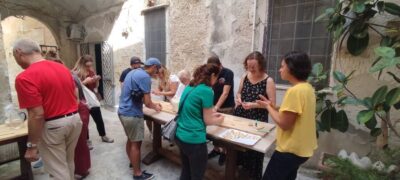
Pasta Making Class in 1400s-Era Courtyard with Wine
Read our review →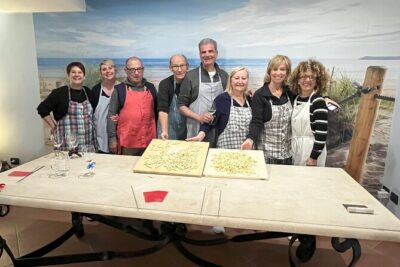
Make pasta, drink wine. Cooking class with transported included!
Read our review →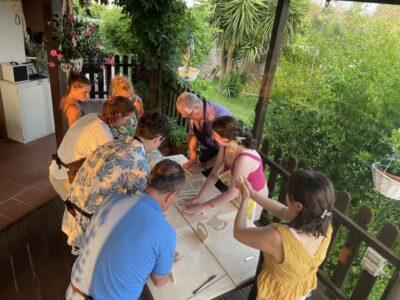
Private Cooking Class in Lecce (Corigliano): Handmade pasta
Read our review →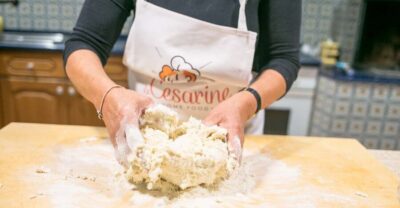
Pasta & Tiramisu Cooking Class at a Local’s Home
Read our review →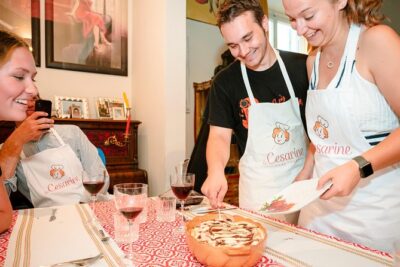
Share your Pasta Love: Small group Pasta and Tiramisu class in Otranto
Read our review →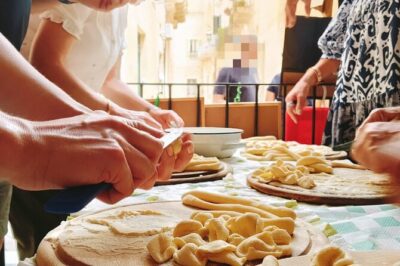
Private Pasta & Tiramisu Class at a Cesarina’s home with tasting in Lecce
Read our review →Browse the lists this tour appears in