
REVIEW · ROME
Rome Trastevere Pasta Making Class with Eating Europe
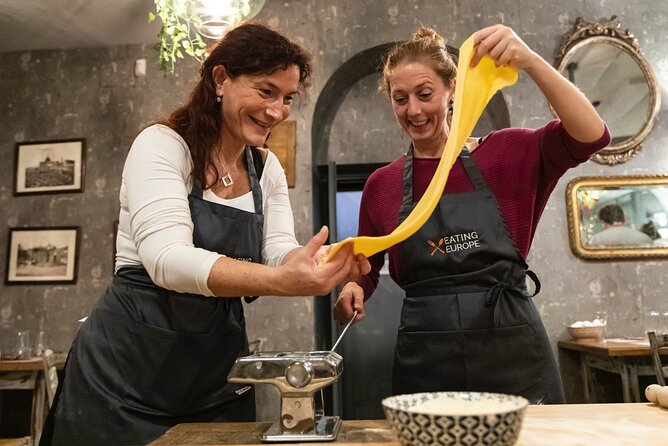
Rome’s best food lessons often begin away from the classroom. This Trastevere pasta tour starts at a traditional delicatessen, continues through local food streets, and then puts you at a table with flour, eggs, ricotta, and a pasta roller. You eat what you make, with wine alongside it.
I like the small groups, capped at 12, and the way the food walk gives the cooking class a local setting. I also like the generous spread: porchetta, pizza bianca, cheese, pasta, wine, and gelato. The tradeoff is simple: if you prefer a longer market tour with more tasting stops, the two-hour pasta session may feel like it takes time away from sampling.
The guides make a real difference. Past hosts including Valter, Arianna, Domenico, Dario, Sarah, Toni, and Valentina have been praised for clear instruction, neighborhood stories, and practical restaurant advice. Come hungry, and do not plan a large meal afterward.
Key points at a glance
- Porchetta before the pasta: Begin at La Norcineria di Iacozzilli with pizza bianca, roast pork, and wine while ingredients are selected for class.
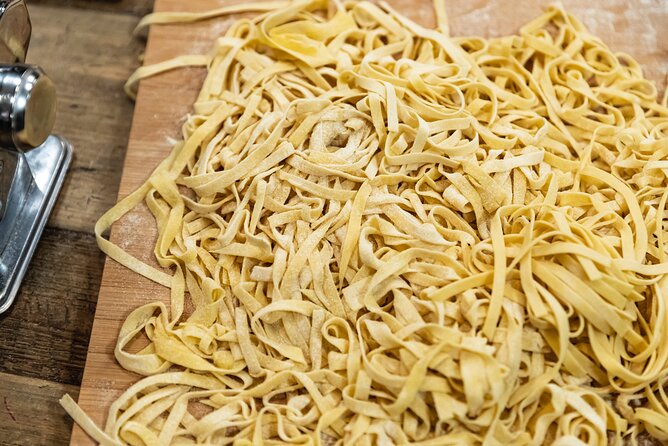
- Hands-on Roman cooking: Make fettuccine and ravioli, then eat pasta chitarra with amatriciana and ricotta-lemon ravioli with butter and sage.
- A true small-group format: The class accepts no more than 12 people, with a minimum of two needed to operate.
- Trastevere beyond the postcard streets: The route includes local food shops and San Cosimato market, giving you a closer look at everyday Roman eating.
- Gelato with a lesson: Finish at Fatamorgana and learn how to tell traditional gelato from commercial imitations.
- Good value for a food-focused outing: At about $100.37 per person, the price covers tastings, the class, wine, a full meal, gelato, and an English-speaking guide.
Why this Trastevere food tour works
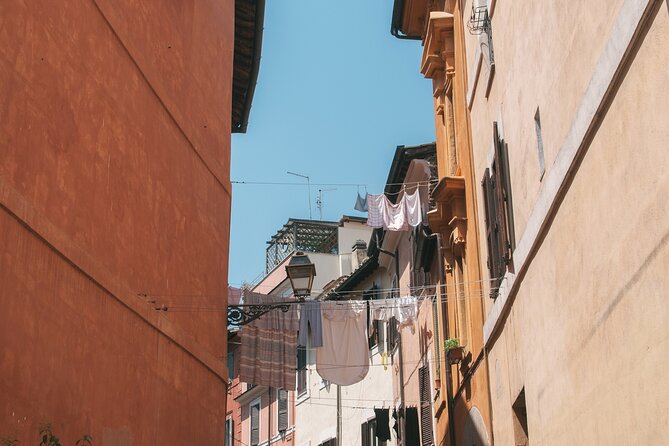
Many cooking classes ask you to arrive at a restaurant, tie on an apron, and begin. This one gives you some context first. You start in Trastevere, a neighborhood with a strong food identity, and visit a working delicatessen before entering the kitchen.
That first stop matters because it shows you the ingredients as local products rather than anonymous items on a prep table. Your guide selects eggs, Parmigiano, and sheep ricotta for the class, while you taste porchetta tucked into pizza bianca. The food is immediate and simple, but it also gives you a sense of the Roman habit of eating well without making every meal formal.
The format is social without being huge. With up to 12 people, you have enough company for conversation but should still get a chance to work with the guide. Several hosts have been singled out for remembering names, helping with pasta technique, explaining regional food customs, and suggesting places to eat later in the trip.
The route also makes this more than a stand-alone cooking lesson. You see shops, food counters, and neighborhood streets before sitting down to eat. If you want Rome through its kitchens and markets rather than only its monuments, this is a smart use of three hours.
More Fresh Pasta Workshops in Rome
- Rome: Pasta Making Class with Wine, Limoncello, and Dessert
★ 4.9 · 3,177 reviews - Enjoy Spritz and Pasta Making in Piazza Navona
★ 5.0 · 1,681 reviews - Pasta Making & Wine Tasting with Dinner in Frascati from Rome
★ 5.0 · 1,326 reviews
Porchetta and pizza bianca at La Norcineria di Iacozzilli
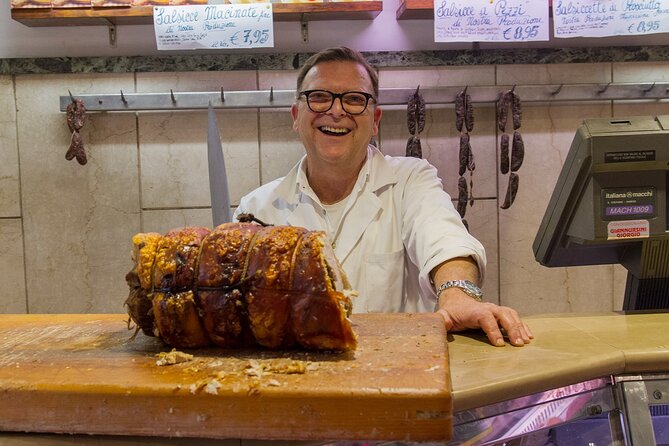
The first stop is La Norcineria di Iacozzilli, a traditional Roman delicatessen on Via Natale del Grande. The visit lasts about 15 minutes, so it is a tasting and ingredient-shopping stop, not a full market visit.
You can expect pizza bianca filled with savory porchetta, plus a glass of wine. Porchetta is seasoned roast pork, usually prized for its crisp exterior and tender interior. Here, it gives you an early taste of Roman street food before the pasta work begins.
While you eat, the guide gathers fresh eggs, grated Parmigiano, and fresh sheep ricotta. This is one of the most useful parts of the outing for anyone who cooks at home. You see the raw materials that go into the meal, and the guide can explain how they fit into Roman cooking.
Do not expect a long lesson at the butcher shop. The stop is short, and offerings can change by season or day. Still, it provides a strong opening because you are tasting from a real neighborhood business, not simply being handed a prearranged snack.
The guide’s manner is important here. Domenico, for example, has been praised for introducing people to local vendors and explaining the Italian greetings used when entering a shop. Small details like saying hello and thank you properly can make your later food stops feel less like a transaction.
The San Cosimato market and local food culture
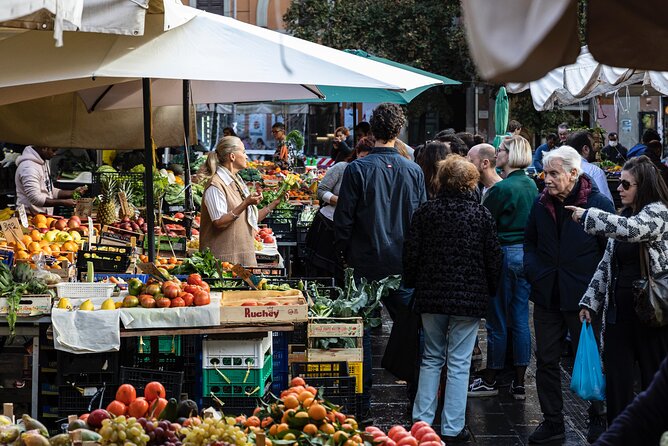
The route includes San Cosimato food market and other local food stops, although the exact selection may change. You might taste porchetta, cheese, cured meats, baked goods, or other Roman specialties depending on the day.
That flexibility is worth understanding before you book. You are not buying a fixed list of every item mentioned in the description. You are buying a guided food walk with a changing selection of local flavors. The company notes that stops and tastings can vary by season.
The market setting gives the guide room to explain food customs, regional differences, and how Roman shops operate. Past guides have also shared advice on bars, restaurants, groceries, pharmacies, and nearby places to visit. That kind of practical information can be especially useful early in your stay.
Some people may prefer more time walking and tasting. One person who joined the outing would have chosen additional food stops instead of the cooking portion. That is a fair point. If your main goal is to sample as many foods as possible, a dedicated food tour may suit you better.
For me, the blend is the appeal. You are not just eating a dish and moving on. You are seeing ingredients, learning how Romans use them, then applying that knowledge in the kitchen.
Making fettuccine and ravioli at Rione XIII
The main part of the experience takes place at Rione XIII, described as a classic old-school Roman trattoria. You spend about two hours here, including the pasta lesson, cooking, eating, and wine.
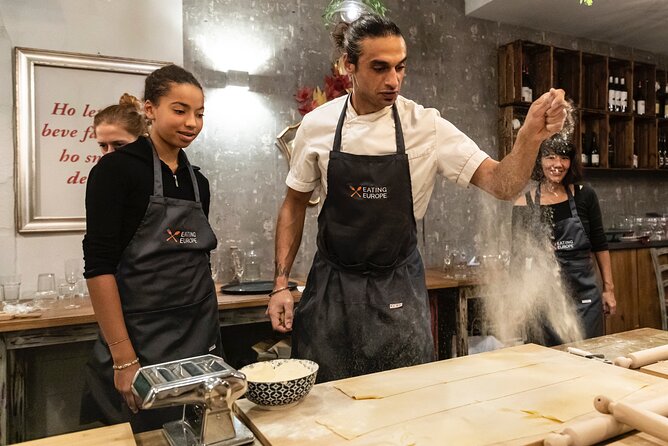
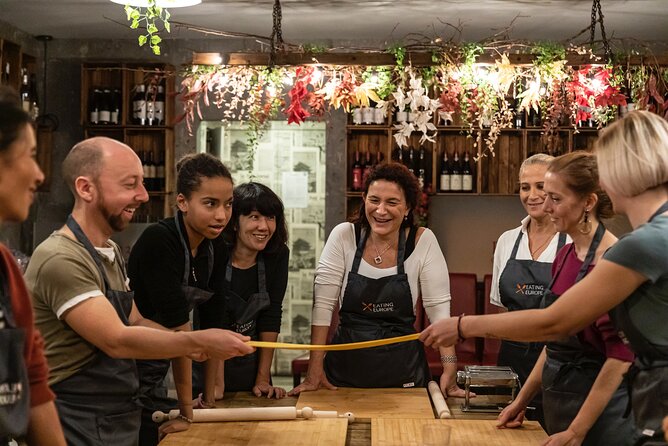
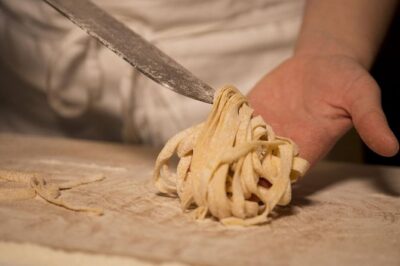
A local guide or chef walks you through the dough and helps you shape fresh pasta. The planned dishes include fettuccine and ravioli, with the hands-on work focused on rolling, cutting, and filling. The group format means you can watch a demonstration, try the technique yourself, and ask for help as you go.
The class is designed for participation, not observation. Even people who rarely cook can take part, though you should expect flour, handling dough, and some repetition while everyone works through the steps. The pace is meant to be fun and social rather than a professional culinary course.
Valter has received especially strong praise for giving individual feedback and helping each person get better results. Loriana has also been noted for showing the group how to make the dough, use the pasta roller, and cut the fettuccine. Your specific host may differ, but the guide is central to the quality of the class.
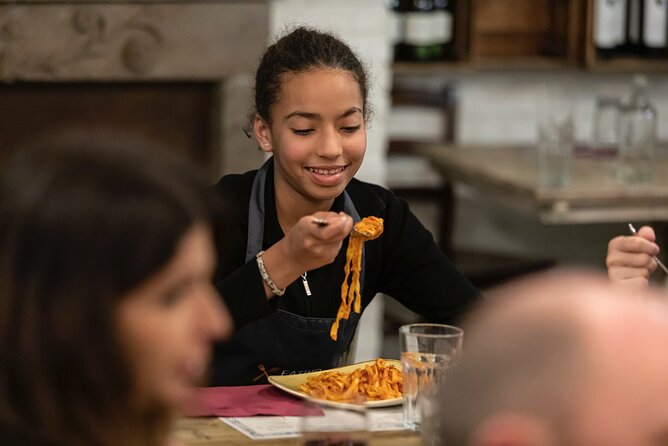
The dishes are substantial. You sit down to pasta chitarra with amatriciana sauce and ravioli filled with sheep ricotta and lemon zest, served with butter and sage sauce. The contrast is useful: amatriciana brings the bold tomato and cured-pork character associated with Rome, while the ravioli is softer and more delicate.
Wine accompanies the meal, and alternative drinks are available for children and people who do not drink alcohol. Extra drinks are not included, so keep that distinction in mind if you expect several glasses or other beverages.
The class is not only about getting a good lunch or dinner. You learn a method you can repeat at home. The ingredients are familiar, the equipment is basic, and the guide can explain why the dough behaves as it does. You leave with a recipe memory rather than just a restaurant memory.
Same kitchen, a different thing to make:
- 3 in 1 Cooking Class near Navona: Fettuccine, Ravioli & Tiramisu
★ 5.0 · 7,376 reviews - Rome: Pasta & Tiramisu Class with Fine Wine by the Vatican
★ 4.9 · 4,852 reviews - Rome Cooking Class: Make Pasta and 3 Spritz Cocktails
★ 5.0 · 2,937 reviews - Rome: 3-in-1 Fettuccine, Ravioli, and Tiramisu Cooking Class
★ 4.9 · 2,704 reviews
Gelato and the Fatamorgana lesson
After the savory food, the route ends at Fatamorgana, a gelateria known for organic gelato. The stop lasts about 20 minutes and supplies a sweet finish without adding another full meal.
The useful part is the short lesson on spotting real gelato from mass-produced imitations. You may learn to look at texture, storage, color, and presentation rather than choosing a shop only because the display looks dramatic. Bright colors and tall piles are not always signs of quality.
This stop is also a relief after the pasta meal. You can enjoy a small portion, compare flavors, and finish the outing at an easy pace. Gelato is familiar to most people visiting Rome, but a guide can help you pay attention to what you are eating.
As with the other stops, the exact offering may change. The company says food selections and stops can vary by day or season, so do not treat a particular flavor as guaranteed.
Is $100.37 a fair price?
At approximately $100.37 per person, this is not a cheap snack tour. It is also more than a basic pasta class where you pay for instruction and perhaps one dish.
The value comes from combining several services:
- A guided walk through Trastevere
- Tastings at local food businesses
- Porchetta and pizza bianca
- Ingredients selected for the class
- Hands-on fettuccine and ravioli preparation
- A sit-down meal with sauces
- Wine, with alternatives for non-drinkers
- Gelato at the end
- An English-speaking guide and food advice
If you paid separately for a meal, gelato, wine, and a cooking class, the total could easily approach this price. The small group also matters. A 12-person limit gives the guide a better chance to correct your pasta technique and keep the outing personal.
The price makes less sense if you are not interested in cooking. You will spend roughly two-thirds of the activity at the trattoria, so someone who only wants to walk and sample food may find the format less efficient.
Group discounts are available, which may help families or friends booking together. Children under four can join free, but food is not included for them. Paid tickets with food are available from age four.
Timing, meeting points, and practical details
The experience lasts about three hours. It starts at Via Natale del Grande, 46, in Trastevere, and finishes at Via Roma Libera, 11. Since the start and finish are different, plan your onward route rather than assuming you will return to your starting point.
The meeting area is near public transportation. Hotel pickup and drop-off are not included, so you need to reach the starting point yourself and arrange your own way back afterward.
The activity is offered in English. A mobile ticket is accepted, and confirmation is provided at booking. Service animals are allowed, and most people can participate.
The minimum group size is two. If that number is not reached, the company will contact you about rescheduling or a refund. You can cancel for a full refund up to 24 hours before the start time. Changes or cancellations made inside that window are not accepted.
Tell the company about dietary needs when booking or by email. Vegetarian and gluten-free requests may be accommodated where possible, but severe or life-threatening allergies are not suitable for this experience. The company does not accept responsibility for food allergies or intolerances.
Who should book this experience?
I would choose this for a first or second visit to Rome, especially if you want a neighborhood introduction that does not depend on ancient monuments. It works well for couples, families with older children, solo visitors who enjoy meeting people, and friends who want a shared activity.
It is also a good choice if you want to learn one useful Roman cooking skill. Making fresh pasta is hands-on but not intimidating, and the meal gives you an immediate reward for the work.
You may want something else if you are looking for a serious culinary course, a long market tour, or a very quiet meal. The group is small, but it is still a group. The guide has to balance different cooking speeds, and the tasting stops can change.
Come with room in your stomach. Several food stops, pasta, wine, and gelato add up quickly. If you book this early in your trip, the neighborhood advice from guides such as Arianna, Domenico, Dario, Sarah, and Valter may help shape the rest of your Rome visit.
Should you book the Trastevere pasta class?
Book it if you want food, local streets, and cooking in one outing. The porchetta stop gives the tour a strong start, the pasta lesson is the central event, and the gelato finish keeps the afternoon or evening light and pleasant.
Skip it if you would rather spend three hours moving from shop to shop with no cooking session. At this price, the class needs to be a real part of what you want, not an obligation between tastings.
For most food-minded visitors, the combination is the point. You get a meal, a lesson, neighborhood context, and practical Rome advice in a group small enough for the guide to pay attention.
FAQ
How long does the Rome Trastevere pasta class last?
The experience lasts approximately three hours, including the food stops, pasta-making session, meal, wine, and gelato.
Where does the experience start and end?
It starts at Via Natale del Grande, 46, 00153 Rome, and ends at Via Roma Libera, 11, 00153 Rome. Hotel pickup and drop-off are not included.
How many people can join the class?
The group is limited to a maximum of 12 people. At least two guests are required for the experience to operate.
What food is included?
The experience includes pizza bianca with porchetta, tastings at local food stops, handmade pasta dishes, wine, and gelato. Exact tastings and stops can vary by day or season.
Can children join the tour?
Children under four can join without a ticket, but food is not included for them. Paid tickets with food are available for children aged four and up.
Can vegetarian or gluten-free guests participate?
You can email the company or add dietary needs when booking, and the company will try to accommodate vegetarian, gluten-free, and other requests where possible. The experience is not suitable for severe or life-threatening food allergies.
What is the cancellation policy?
You can cancel at least 24 hours before the start time for a full refund. Cancellations or changes made less than 24 hours before the start time are not accepted.
Just added around Rome
- Rome: Pasta and tiramisu class with wine pairing at Come Na Vorta★ 5.0 · 30 reviews
- Spritz and Pasta! Spritz, Fettuccine & Tiramisù★ 5.0 · 2 reviews
- Rome: Vespa Tour with Photographer and Tiramisu treat★ 4.5 · 61 reviews
- Walking Tour & Pizza Making★ 4.0 · 2 reviews
- Trastevere Food Tour with Pasta-Making Class★ 5.0 · 5 reviews
- Rome: Private Vespa Tour and Professional Photoshoot★ 5.0 · 22 reviews
- Traditional Pasta Cooking Class with Tiramisu Small Group★ 5.0 · 7 reviews
- Tiramisu and Gelato Creation in Authentic Roman Dessert Workshop★ 4.5 · 3 reviews
Rome Pasta Classes, compared.
3 in 1 Cooking Class near Navona: Fettuccine, Ravioli & Tiramisu
Read our review →
Pasta & Tiramisu Class with Fine Wine by the Vatican
Read our review →
Pasta Making Class with Wine, Limoncello, and Dessert
Read our review →
Rome Cooking Class: Make Pasta and 3 Spritz Cocktails
Read our review →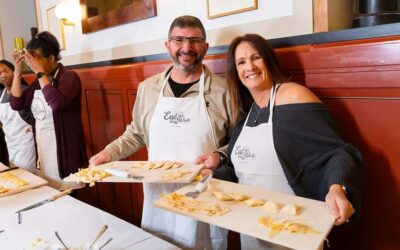
3-in-1 Fettuccine, Ravioli, and Tiramisu Cooking Class
Read our review →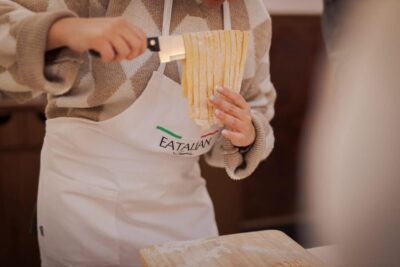
Fettuccine Pasta Cooking Class in Rome’s City Center
Read our review →
Learn to Make Pasta & Tiramisu with Wine and Limoncello Included
Read our review →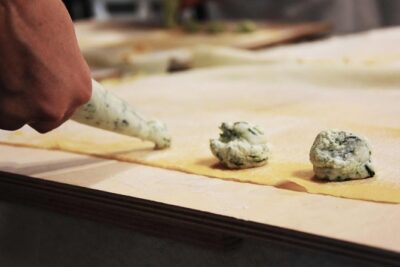
Become a Masterchef in Rome: Pasta, Ravioli and Tiramisù Class
Read our review →Browse the lists this tour appears in