
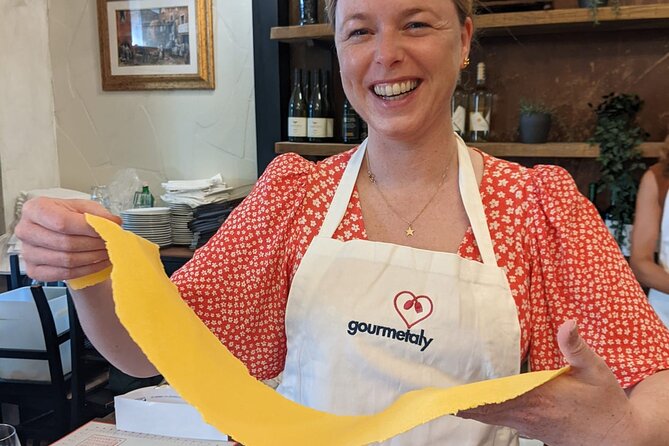
REVIEW · ROME
Rome: Pasta Cooking Class, Dinner & Wine in Authentic Restaurant
The star here is not just the pasta. It is the setting: a 12th-century eatery in Rome’s Jewish Ghetto, where Chef Gabriele teaches recipes he learned from his grandmother. You make pasta from scratch, cook sauces, fry a seasonal Roman specialty, then sit down to eat with wine and water.
I like the small limit of 10 people, which gives the chef and English-speaking host time to help at the stove. I also like the local flavor, from fried artichoke or zucchini flowers to ricotta and sour-cherry cake. The main consideration is dietary: this is not a kosher class, and gluten, milk, eggs, soya, mustard, and nuts may be present.
Key points to know before booking
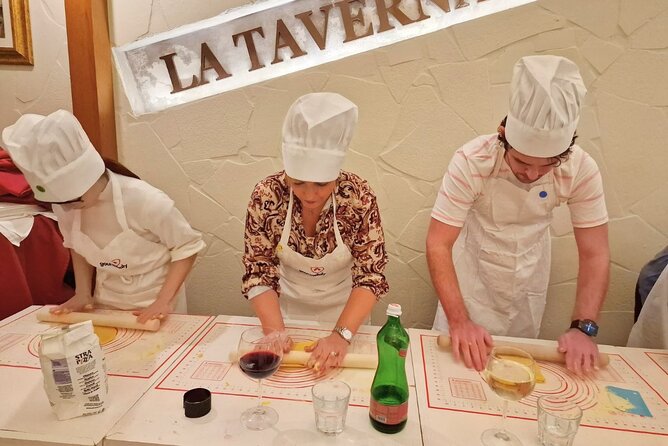
- A hands-on Roman menu: Make fresh pasta and sauces, then eat what you cook for a full dinner.
- A historic Jewish Ghetto setting: Meet at Piazza Mattei and learn about the district’s food traditions and stories.
- Chef Gabriele leads the kitchen: English-speaking hosts such as Lisa, Daniela, and Anastasia translate and keep the class moving.
- Seasonal fried food changes: Expect stuffed zucchini flower in summer or fried artichoke in winter.
- Small group, generous drinks: The class is limited to 10 people, with wine and water served throughout.
- Not suited to every diet: Vegan and vegetarian requests are welcomed, but the kitchen is not kosher and cannot guarantee special food requirements.
Cooking Roman pasta inside the Jewish Ghetto
This two-and-a-half-hour class begins at Via del Portico d’Ottavia 8, near Piazza Mattei. The meeting point puts you right in the old Jewish Ghetto, one of Rome’s most distinctive food areas.
Your host helps with introductions, translates the chef’s instructions, and adds stories about the neighborhood. The exact host may vary. Lisa, Daniela, Benedetta, and Anastasia are among the English-speaking guides who have led recent sessions, and each brings a slightly different touch.
That translation matters. Cooking classes can become awkward when the chef and class speak different languages, but here the host stays with you through the full experience. You can ask questions, follow the technique, and hear explanations about the district without trying to catch every Italian word.
The setting adds more than a pretty backdrop. The Jewish Ghetto has its own cooking traditions, especially fried vegetables and ricotta-based desserts. You are not simply making generic Italian food in a rented classroom. The menu connects the meal to the part of Rome where the class takes place.
The restaurant has also appeared in Stanley Tucci’s Searching for Italy. That may appeal to food television fans, but the useful point is simpler: you cook and eat in a functioning, historic eatery rather than a modern studio built only for demonstrations.
More Pasta Classes with Wine in Rome
- Rome: Pasta & Tiramisu Class with Fine Wine by the Vatican
★ 4.9 · 4,852 reviews - Rome: Pasta Making Class with Wine, Limoncello, and Dessert
★ 4.9 · 3,177 reviews - Rome Cooking Class: Make Pasta and 3 Spritz Cocktails
★ 5.0 · 2,937 reviews
From fresh dough to a Roman dinner
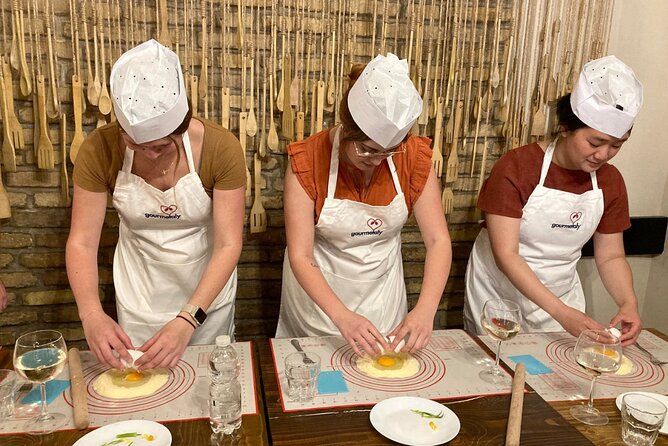
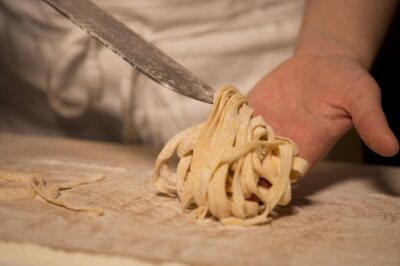
The class is designed to be hands-on. You begin by making homemade pasta from scratch, with the chef showing you how to work the dough and prepare it for cooking.
The supplied details do not specify the exact pasta shape every session will use, but the menu centers on traditional Roman dishes. One commonly featured pasta is tonnarelli, a thick, square-cut noodle that works well with strong sauces.
You then prepare two sauces from fresh ingredients. The signature pair is cacio e pepe and amatriciana. Cacio e pepe is built around Pecorino Romano and black pepper. It sounds simple, but getting the cheese, pasta water, and heat into the right balance takes care. The class gives you a chance to see that technique rather than simply receiving a finished bowl.
Amatriciana combines tomato, Pecorino Romano, and guanciale. It is a richer, pork-based sauce with a clear Roman identity. For people who do not eat pork, the menu also includes tonnarelli all’arrabbiata, a tomato, chili, and parsley sauce.
You may also work with the chef to prepare more than the two headline sauces. One family of five described making all four main Roman pasta styles and tasting several desserts, while the formal menu specifically lists cacio e pepe, amatriciana, and arrabbiata. The exact number of recipes may depend on the session, so book this for the cooking experience rather than a guaranteed checklist of four complete pasta dishes.
The best part is the final test. You cook the pasta under the chef’s supervision, then sit down and eat your own work. That changes the class from a demonstration into a practical lesson. You see how fresh pasta behaves, how sauce clings to it, and how quickly a Roman meal comes together when the preparation is organized.
Fried artichokes, zucchini flowers, and seasonal cooking
Before or alongside the pasta, you prepare a seasonal fried specialty known as fritto romano. In summer, that may be a zucchini flower stuffed with mozzarella and anchovy. In winter, it is fried artichoke.
These are not decorative extras. They show the Roman fondness for crisp fried vegetables and make the meal feel tied to the calendar. The zucchini flower is especially fun to prepare because it is delicate and needs careful handling. The artichoke offers a different lesson, with more trimming and preparation before frying.
The seasonal switch is worth noting if you have your heart set on one dish. You cannot assume zucchini flowers will be served in every month, and the winter version will not be the same experience as the summer appetizer.
This part also gives the class more variety. You are not spending the whole evening at the pasta board. You handle vegetables, prepare a fried course, and learn how ingredients change with the season.
Wine, dessert, and enough food for dinner
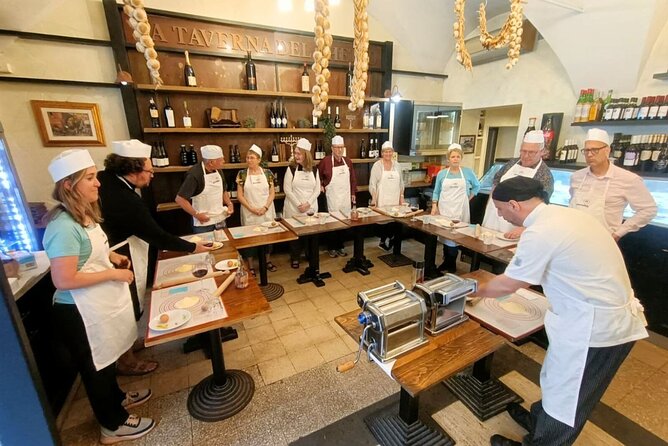
Wine and water are served throughout the cooking class. That makes the $104.25 price easier to assess, since you are paying for instruction, ingredients, equipment, a full meal, and drinks rather than a short pasta demonstration followed by an extra restaurant bill.
The meal includes fresh homemade pasta, the seasonal fried course, and dessert. The chef’s gift is torta di ricotta e visciole, a Roman Jewish cake made with ricotta and black sour-cherry jam. It is described as a tasting portion, so do not expect a large dessert course, but it gives you a taste of a local specialty that is less familiar than tiramisu or gelato.
The portion of food is intended to cover dinner. That is useful when planning your evening, especially if you have a later reservation or evening performance. I would not schedule another major meal afterward.
Free-flowing wine can also make the experience feel relaxed, but remember that you are working in a kitchen. If you want to stay sharp for the cooking, pace yourself and use the water provided. The class is social, and some sessions have included singing and plenty of joking, but the main focus remains the food.
Same kitchen, a different thing to make:
- 3 in 1 Cooking Class near Navona: Fettuccine, Ravioli & Tiramisu
★ 5.0 · 7,376 reviews - Rome: 3-in-1 Fettuccine, Ravioli, and Tiramisu Cooking Class
★ 4.9 · 2,704 reviews - Rome: Fettuccine Pasta Cooking Class in Rome’s City Center
★ 4.8 · 2,414 reviews - Learn to Make Pasta & Tiramisu with Wine and Limoncello Included
★ 5.0 · 2,345 reviews
Why the small group matters
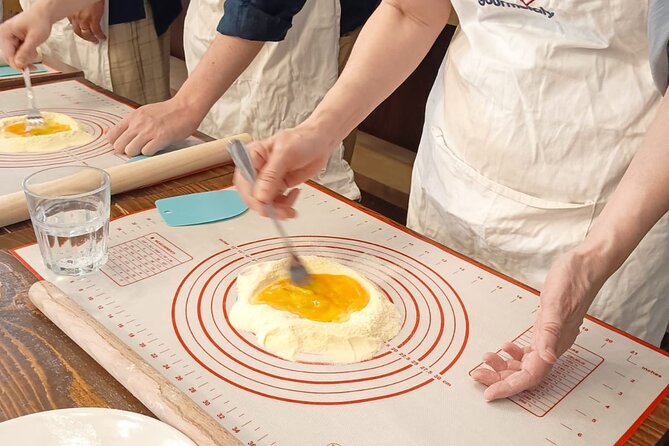
The maximum group size is 10. That is a strong feature for a practical cooking class because you need access to the work surface and enough time to ask questions.
A smaller group also helps if you are nervous about making pasta. You can watch the chef, try the technique, and receive corrections before the dough or sauce goes too far. The host can move between the language translation, neighborhood information, and cooking help without managing a large crowd.
The class can work well for families. Children are welcome, and one family described the evening as memorable for all five members. Still, a two-and-a-half-hour kitchen session requires attention, so very young children may not enjoy every stage equally.
The experience also suits couples, solo food fans, and small groups celebrating a birthday. One guide helped make a birthday especially personal, and the combination of a shared meal, wine, and a souvenir apron gives the occasion some ceremony without making it formal.
The role of the English-speaking host
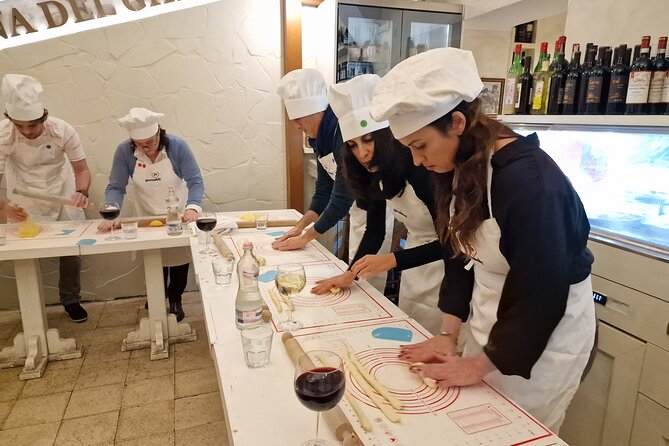
The chef is the cooking expert, but the host is central to how the evening works. The host translates instructions, answers questions, explains the Jewish Ghetto, and helps the class move from one task to the next.
Lisa has been praised for taking care of the group and making the language difference feel unimportant. Anastasia has been singled out for translation and for sharing extra information about Rome and Italian life. Daniela has been described as personable and good at making a family group feel welcome. Benedetta has also combined cooking help with stories about the district.
Those names give you a sense of the format, but you should not assume a particular guide will lead your date. The important point is that an English-speaking host is part of the experience, not a remote contact who only meets you at the start.
The neighborhood commentary is an unexpected bonus for people who book mainly for food. You learn about the Jewish Ghetto and its distinct cooking style while preparing dishes that belong to Rome’s wider food culture. If you have not explored the area before class, arrive with enough time to look around Piazza Mattei.
Value at $104.25 per person
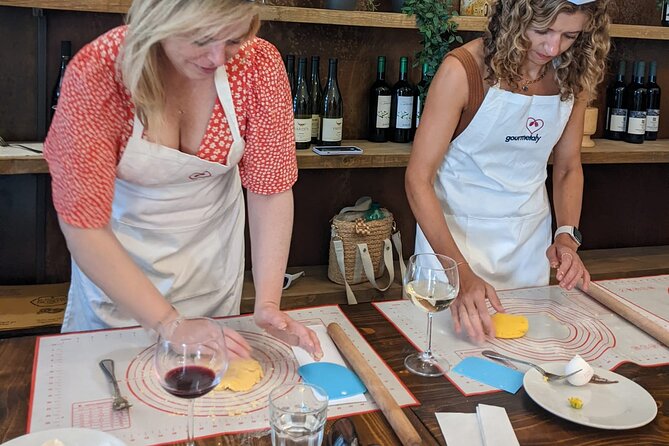
At $104.25, this is not Rome’s cheapest meal or cooking lesson. The price makes more sense if you value several parts together: a small class, a professional chef, ingredients, kitchen equipment, a seasonal appetizer, multiple pasta preparations, dessert, wine, water, an apron, and a cookbook with restaurant guides.
The cotton apron is a useful souvenir because it connects directly to what you did. You also receive a free cookbook, which gives the evening some value after you return home. If you enjoy recreating meals from a trip, that may matter more than another small Roman trinket.
The setting adds value, too. You are eating in a historic restaurant in a central district rather than commuting to a distant cooking school. The location near public transportation makes it practical to reach, and the activity ends where it begins.
The fair comparison is not simply class price versus the cost of a plate of pasta. Compare it with a dinner, a guided neighborhood introduction, drinks, and an activity lasting about two and a half hours. For someone who wants a food-centered evening, that package is reasonably priced. If you only want to learn one sauce quickly, it may feel expensive.
Dietary limits you should take seriously
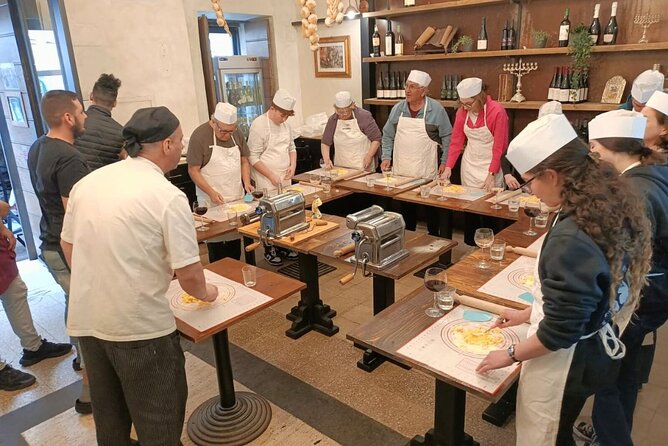
The class welcomes vegetarians and vegans, and the arrabbiata sauce provides a no-pork option. You should still state your needs when booking and remind the host at the start.
The operator does not guarantee special food requirements. The kitchen may contain milk, eggs, soya, mustard, nuts, and gluten, and the class is not recommended for people allergic to gluten.
This is also not a kosher cooking class. That point matters especially because the location is Rome’s Jewish Ghetto. The neighborhood has Jewish cultural connections, but the restaurant and menu should not be treated as kosher.
The standard menu includes Pecorino Romano, guanciale, mozzarella, anchovy, and ricotta, so dairy and animal products are part of the meal. Vegetarians can use the meat-free pasta option, while vegans should confirm exactly what they can eat rather than assume every course can be adapted.
Practical timing and what to bring
The experience lasts about 2 hours and 30 minutes. It operates in all weather, since the cooking takes place indoors, though you should dress appropriately for getting to and from the meeting point.
You do not need to bring kitchen equipment. Equipment and ingredients are included, and an apron is provided. The meeting and ending point is Via del Portico d’Ottavia 8, 00186 Rome, with Piazza Mattei used as the host meeting area.
The activity is offered in English and confirmation is provided when you book. It is often reserved well ahead, with an average booking lead time of 86 days, so popular dates may disappear early. Free cancellation is available up to 24 hours before the start time for a full refund. Changes or cancellations made inside that window are not refunded.
Who should book this Roman cooking class?
I would choose this for someone who wants a social evening with real participation, not just a chef demonstration. It is especially suitable if you enjoy learning a dish well enough to repeat it at home.
It also works for families, couples, birthday groups, and food-focused visitors who want a neighborhood experience alongside dinner. The small group and host translation make it less intimidating than a large international cooking workshop.
I would think twice if you have a serious food allergy, require kosher preparation, dislike shared kitchen work, or want a quiet meal. The wine, conversation, translation, and hands-on tasks create an active evening rather than a calm restaurant sitting.
Should you book it?
Book it if you want to make Roman pasta, eat the results, and learn about the Jewish Ghetto at the same time. The strongest reasons are the small group, Chef Gabriele’s practical instruction, the English-speaking hosts, and the seasonal Roman dishes.
Skip it if your dietary needs are strict or if you are looking for a short, inexpensive lesson. For most food-minded visitors, though, the apron, recipes, wine, dinner, and neighborhood setting make this a well-rounded Rome evening rather than just another meal.
FAQ
How long does the pasta cooking class last?
The experience lasts approximately 2 hours and 30 minutes.
Where does the class meet?
The meeting point is Via del Portico d’Ottavia 8, 00186 Rome, Italy. The host meets you in the area of Piazza Mattei in the Jewish Ghetto.
Where does the activity end?
The activity ends back at the meeting point.
What language is the class offered in?
The class is offered in English. An English-speaking host assists with translation and explanations during the cooking session.
How many people can join the class?
The maximum group size is 10 participants.
What food will I prepare?
The class includes homemade pasta, cacio e pepe, amatriciana, and tonnarelli all’arrabbiata. You also prepare a seasonal fried specialty, such as stuffed zucchini flower in summer or fried artichoke in winter.
Is dinner included?
Yes. The meal includes fresh homemade pasta, a seasonal fried dish, and ricotta and sour-cherry tart. The food is intended to cover dinner.
Are wine and water included?
Yes. Italian wine and water are served throughout the cooking class.
Are children, vegetarians, and vegans welcome?
Children are welcome, and the class can accommodate vegetarians and vegans. Special food needs are not guaranteed, so you should provide details when booking.
Is the class kosher or suitable for people with gluten allergies?
No. The restaurant and food are not kosher, and the class is not recommended for people allergic to gluten. Milk, eggs, soya, mustard, nuts, and gluten may be present.
More Wine Tastings in Rome
- Fettuccine & Tiramisù: Cooking Class with Wine & Limoncello
★ 4.9 · 2,103 reviews - Rome Pasta and Tiramisu Class: Ravioli, Fettuccine & Fine Wine 5*
★ 5.0 · 1,319 reviews - Rome Cooking Class: Make Pasta, Dine & Drink Wine With Local Chef
★ 5.0 · 1,263 reviews - Rome: Combo Pizza and Pasta Cooking Class with Wine
★ 4.6 · 1,180 reviews
More Classes with Dinner in Rome
- Pasta Making & Wine Tasting with Dinner in Frascati from Rome
★ 5.0 · 1,326 reviews - Rome: Pasta Making with Wine Tasting and Dinner in Frascati
★ 4.9 · 979 reviews - Night Tour of Rome with Local Pizza Dinner and Gelato Experience
★ 4.5 · 780 reviews - Pasta&Tiramisu Workshop: Craft Your Dinner with Free Flowing Wine
★ 5.0 · 121 reviews
Just added around Rome
- Rome: Pasta and tiramisu class with wine pairing at Come Na Vorta★ 5.0 · 30 reviews
- Spritz and Pasta! Spritz, Fettuccine & Tiramisù★ 5.0 · 2 reviews
- Rome: Vespa Tour with Photographer and Tiramisu treat★ 4.5 · 61 reviews
- Walking Tour & Pizza Making★ 4.0 · 2 reviews
- Trastevere Food Tour with Pasta-Making Class★ 5.0 · 5 reviews
- Rome: Private Vespa Tour and Professional Photoshoot★ 5.0 · 22 reviews
- Traditional Pasta Cooking Class with Tiramisu Small Group★ 5.0 · 7 reviews
- Tiramisu and Gelato Creation in Authentic Roman Dessert Workshop★ 4.5 · 3 reviews
Rome Pasta Classes, compared.
3 in 1 Cooking Class near Navona: Fettuccine, Ravioli & Tiramisu
Read our review →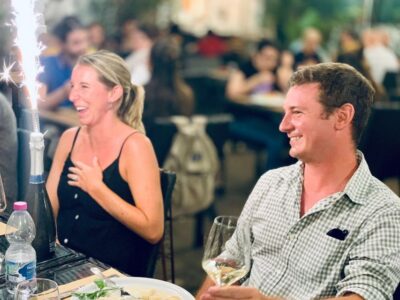
Pasta & Tiramisu Class with Fine Wine by the Vatican
Read our review →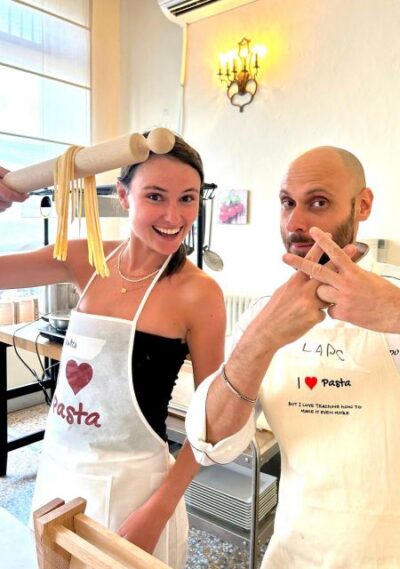
Pasta Making Class with Wine, Limoncello, and Dessert
Read our review →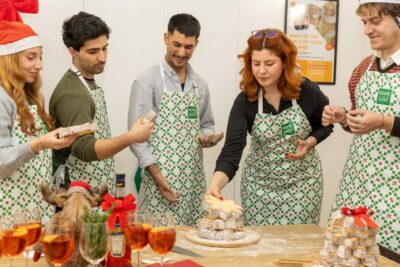
Rome Cooking Class: Make Pasta and 3 Spritz Cocktails
Read our review →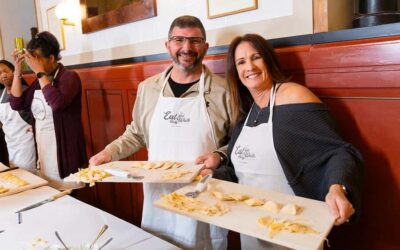
3-in-1 Fettuccine, Ravioli, and Tiramisu Cooking Class
Read our review →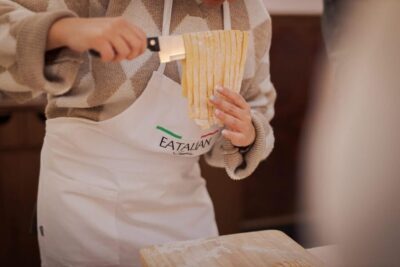
Fettuccine Pasta Cooking Class in Rome’s City Center
Read our review →
Learn to Make Pasta & Tiramisu with Wine and Limoncello Included
Read our review →
Become a Masterchef in Rome: Pasta, Ravioli and Tiramisù Class
Read our review →Browse the lists this tour appears in