
REVIEW · PISA
Private Pasta & Tiramisu Class at a Cesarina’s home with tasting in Pisa
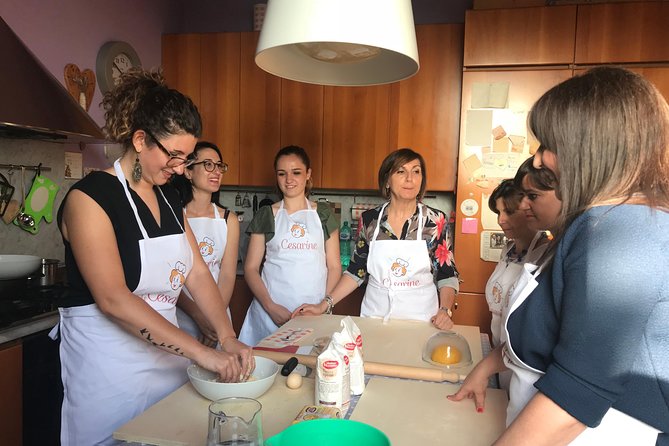
The best part of this Pisa cooking class is the setting: you leave the tourist trail and enter a local home kitchen, where pasta is treated as daily life rather than a restaurant performance. Over about three hours, you prepare two pasta dishes and tiramisu, then sit down to eat what you made.
I like the private format, since your group gets the host’s attention instead of sharing a large demonstration. I also like the clear mix of hands-on work and a proper meal, with hosts such as Flora, Claudio, and Elena guiding visitors through fresh pasta, lasagna, ravioli, and tiramisu. The main consideration is the price, $171.60 per person, which is a serious spend for a cooking lesson. It makes the most sense if you value personal contact and a meal, not just a quick recipe class.
Key points at a glance
- A private Pisa kitchen: You meet a Cesarina in a carefully selected local home, and only your group takes part.
- Two pasta dishes plus tiramisu: The lesson covers a full Italian meal, not just one bowl of pasta.
- Hosts with a personal touch: Flora, Claudio, and Elena are among the named hosts associated with this class.
- A seated tasting follows the lesson: You eat the dishes you prepare rather than leaving with recipes alone.
- English-language instruction: The class is offered in English and suits all experience levels.
- Simple timing and cancellation: The class lasts about three hours, starts and ends in Pisa, and allows free cancellation up to 24 hours ahead.
Cooking Italian food inside a Pisa home
Pisa is famous for its leaning tower, but the city is also a useful place to slow down and spend an afternoon around a table. This class gives you that change of pace. Instead of adding another church, museum, or crowded square to your day, you work with food in a private home.
The host, known as a Cesarina, welcomes you into a real domestic setting and teaches family cooking methods. That matters because Italian cooking often depends on small habits that are hard to pick up from a printed recipe: how dough should feel, how ingredients are handled, and when a dish is ready by sight rather than by a timer.
You should expect an informal lesson rather than a professional culinary-school session. The focus is on taking part, following clear instructions, and enjoying the finished dishes. You do not need advanced cooking skills. The class is designed for all levels, making it a good choice for families, couples, and groups with mixed abilities.
The private setup gives the afternoon a more personal shape. Your group does not share the activity with other bookings, so the pace can feel less hurried. It also means you can ask questions as you work, which is useful if you are not familiar with making pasta from scratch.
More Tiramisu Classes in Italy:
- 3 in 1 Cooking Class near Navona: Fettuccine, Ravioli & Tiramisu
★ 5.0 · 7,376 reviews - Florence: Pasta & Tiramisu Cooking Class with Unlimited Wine
★ 4.9 · 6,708 reviews - Rome: Pasta & Tiramisu Class with Fine Wine by the Vatican
★ 4.9 · 4,852 reviews
What happens during the three-hour lesson
The exact menu can vary, but the structure is clear. You prepare two pasta dishes and a traditional tiramisu, then taste the food together at the host’s home.
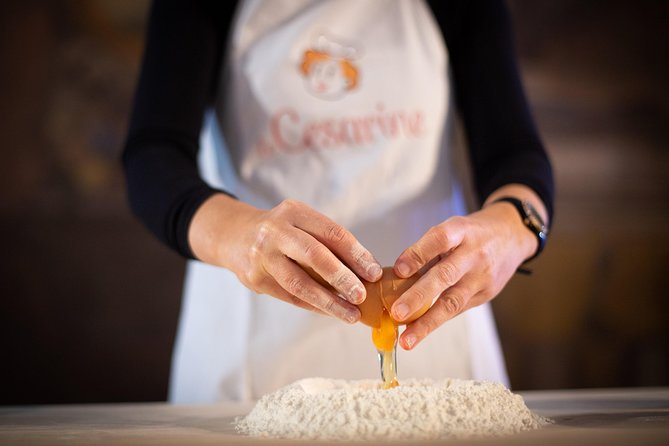
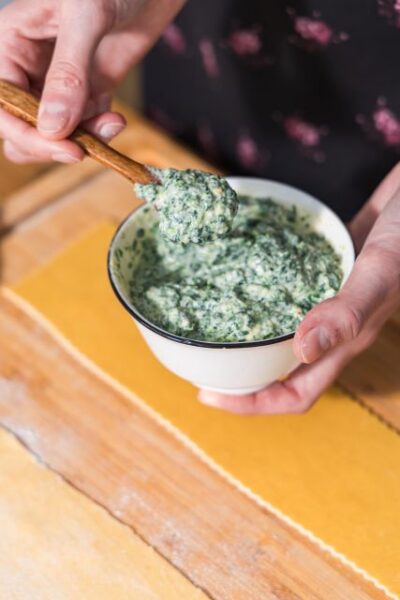
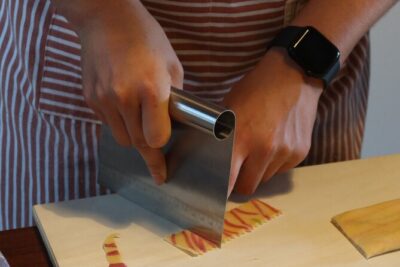
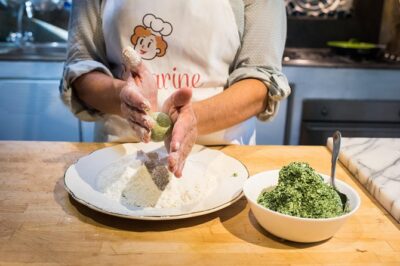
The pasta portion is likely to be the main event. In one session, Flora and Claudio showed how to make fresh pasta, lasagna, and tiramisu. Another class with Elena included lasagna, ravioli, and tiramisu. These examples show that the pasta course may include more than one shape or preparation, rather than a single basic noodle recipe.
That variety is useful for you as a learner. Lasagna teaches a different style of preparation from ravioli, and both require different handling from a simple fresh pasta sheet. You get to see how one basic idea can lead to several classic dishes.
The class is hands-on. You are not simply watching a host work at the counter. You take part in preparing the food, following directions as the dish comes together. This makes the experience more memorable, though it also means you should be ready to work at the kitchen’s pace and pay attention to each step.
Tiramisu provides a good finish to the cooking portion. It is a familiar Italian dessert, but making it yourself gives the final meal a personal connection. You see the dessert as part of the cooking process rather than as something ordered after the main course.
The lesson ends with a seated tasting. This is an important part of the value. You are not rushed out after the last instruction, and you do not have to find a restaurant immediately afterward. You sit down and eat the food prepared during the class.
In one session, the meal was paired with wine. Wine is not listed as a guaranteed feature, so you should treat that as something that may depend on the host rather than as part of the fixed promise. The reliable elements are the pasta dishes, tiramisu, and tasting.
Why the host matters more than the recipe
A recipe can tell you what to mix, but a local host gives the meal a sense of place. The Cesarine host you meet is not just an instructor hired to deliver a set speech. The format is built around welcoming you into a home and sharing family cooking secrets.
Flora and Claudio are described as sharing their home and kitchen with visitors. Their approach included fresh pasta, lasagna, and tiramisu, followed by a meal with wine. The experience with Elena focused on clear explanations, easy-to-follow directions, and fresh accompaniments for the dishes.
Those details point to the strongest part of this class: hospitality. You get a chance to speak with a local person in a setting that feels more personal than a standard restaurant lesson. That can be especially welcome after a busy morning at Pisa’s main sights.
The host also helps shape the mood for different groups. A parent and daughter can enjoy the shared task without needing the same skill level. A couple can make the class part of a special day. A family can treat it as a practical activity where everyone has something to do.
The tradeoff is that a home class may not feel as polished or predictable as a professional cooking studio. The setting is personal, and the host’s style may vary. That is part of the point, but it also means you should choose this experience for contact with a local household, not for a uniform, restaurant-style production.
A meal you help create from start to finish
Many food tours give you a plate and explain where it came from. Here, you work toward that plate yourself. The difference is small on paper but important in practice.
You handle the pasta process, prepare two main dishes, and make tiramisu before sitting down to eat. The meal becomes the payoff for the work. You can taste how the ingredients come together and remember the steps more easily because you took part in them.
The menu is also broad enough to feel like a proper lunch or dinner rather than a snack. Pasta forms the main course, while tiramisu supplies dessert. If your host adds wine or other accompaniments, the meal may feel even more complete, but those extras are not promised in the basic description.
I particularly like this format for people who want to bring home a skill rather than only a photograph. You may not reproduce every dish perfectly in your own kitchen, but you will leave with a better feel for Italian pasta preparation and a clearer sense of how tiramisu fits into a meal.
The activity also works well as a break in a sightseeing-heavy schedule. Pisa can be covered quickly by visitors who focus only on the main monuments. A three-hour cooking session asks you to stop moving and spend time with food, conversation, and the rhythm of a local home.
More Home Cooking Classes in Italy:
- Catania: Pistachio Ravioli, Pasta Home Cooking Class w/ Wine
★ 4.7 · 204 reviews - Cesarine: Small group Pasta and Tiramisu class in Varenna
★ 5.0 · 195 reviews - Cesarine: Small group Pasta and Tiramisu with Mamma in Lucca
★ 4.5 · 181 reviews - Cesarine: Small group Pasta and Tiramisu class in Bologna
★ 5.0 · 172 reviews
The private format and who gets the most from it
This is a private tour for your group only. That is one of its strongest practical features. You do not have to compete for counter space or wait through questions from a large class.
Private does not mean silent or formal. It gives you more room to set a comfortable pace within the lesson. If one person in your group is confident in the kitchen and another is starting from scratch, the host can give attention where it is needed.
The class suits:
- Families with children or teenagers who enjoy practical activities
- Couples looking for a shared food experience in Pisa
- Friends who want a social afternoon away from monuments
- Beginners who prefer personal instruction
- Experienced home cooks who enjoy learning local methods
The description says the class is suitable for all ages and skill levels. That is useful, but it does not provide detailed information about age limits, dietary restrictions, kitchen access, or physical accessibility. If any of those points matter to you, ask the provider before booking rather than assuming the home setup can meet a specific need.
The private format can also make the $171.60 price easier to understand. You are paying for more than ingredients and instruction. The fee includes a personal host, a private setting, hands-on work, and a seated tasting. It is still not a budget meal, especially for a larger family, but it offers more than a short group demonstration.
What the $171.60 price really buys
At $171.60 per person, this is a premium afternoon activity. If your goal is simply to eat pasta in Pisa, you can do that for far less at a local restaurant. If your goal is to learn a few techniques while meeting a local host in a private home, the comparison changes.
You are receiving about three hours of attention, two pasta preparations, tiramisu, and the chance to eat the food you made. The value is strongest when you care about the setting and the personal exchange.
The price is less convincing if you are looking for a formal certificate, an advanced technical course, or a guaranteed list of exact dishes. The menu examples show lasagna and ravioli, but the class description only promises pasta and tiramisu in general. You should book for the experience and the meal, not for one particular pasta shape unless the provider confirms it.
For a special day in Pisa, the cost may be reasonable. It can replace a meal and add an activity, though the food itself is only one part of what you are buying. For a budget-focused visitor, it may be better reserved for a birthday, family outing, or a trip where local food is a main priority.
Timing, meeting point, and practical planning
The class lasts about three hours. It begins in Pisa and ends back at the meeting point, so you do not need to arrange a separate return transfer after the tasting.
The meeting information gives Pisa, Province of Pisa, Italy, as the start point. The activity is near public transportation, which makes it easier to fit into a day without a car. The exact home address is not included in the provided details, so check the confirmed booking information for the precise location and allow enough time to reach it.
A mobile ticket is provided, and confirmation arrives at booking. Keep the ticket available on your phone, but the most important thing is to read the meeting instructions carefully. A home-based experience may not use the same obvious entrance as a hotel or restaurant.
Plan this as a dedicated half-day activity. Do not schedule a major timed attraction immediately afterward unless you leave a good cushion. The class includes cooking, a meal, and a return to the meeting point, so the full experience can use the stated three hours and may feel more relaxed than a tightly timed museum visit.
The class is offered in English. That removes a major concern for English-speaking visitors, though cooking still involves watching, copying, and handling food. You will not need to rely on spoken instructions alone, but attentive participation will help.
Free cancellation is available if you cancel at least 24 hours before the local start time. Cancellations made within 24 hours are not refunded, and late changes are not accepted. That policy is worth noting before you commit, especially if your Pisa schedule depends on train connections or uncertain arrival times.
Is this a good break from Pisa sightseeing?
Yes, especially if your day has been built around looking rather than doing. A cooking lesson gives you a different way to spend time in the city and lets you meet someone in a personal setting.
It is also a good choice in poor weather, when an outdoor walk may be less appealing. The private home setting offers a practical indoor plan, though the listing does not provide a separate weather policy.
Families may find the class easier to enjoy than another formal cultural visit. Children can take part in the preparation, while adults get a meal and a chance to speak with the host. Since the class is private, your group does not have to worry about keeping pace with strangers.
Couples should consider the tone. This is not presented as a fancy restaurant dinner or a romantic tasting menu. It is more hands-on and domestic. If you like making things together, that is a strength. If you want a quiet meal with no work involved, choose a restaurant instead.
Who should skip this class?
You may want to pass if you dislike cooking, have a very tight schedule, or consider $171.60 too high for an afternoon activity. The class requires active participation, so it is not the best fit for someone who wants only to watch a chef.
You should also confirm food-related needs before booking. The provided information does not state whether vegetarian, vegan, gluten-free, allergy-friendly, or other menus are available. Do not assume that a traditional pasta and tiramisu class can adjust its recipes without advance notice.
Likewise, the information does not spell out accessibility details inside the private home. If stairs, seating, kitchen access, or mobility support are important, ask before paying.
Should you book the Pisa pasta and tiramisu class?
Book it if you want a private, personal food experience rather than another standard restaurant meal. The combination of a local home, English instruction, two pasta dishes, tiramisu, and a seated tasting gives you a full three-hour activity with a clear beginning and end.
I would give it extra consideration for families and couples. The class is private, welcoming, and practical, and the named hosts Flora, Claudio, and Elena show the warm, personal style you can expect from the Cesarine format.
I would hesitate only if your budget is tight, your schedule is uncertain, or you need a guaranteed menu or special dietary arrangement. For everyone else, this is a worthwhile Pisa splurge when you want to trade a few hours of sightseeing for food, conversation, and a meal you helped make.
FAQ
How long does the cooking class last?
The experience lasts approximately three hours.
Where does the activity take place?
The class takes place in a carefully selected local home in Pisa, in the Province of Pisa, Italy.
Where does the experience end?
The activity ends back at the meeting point in Pisa.
Is the class private?
Yes. Only your group participates in the activity.
What will I cook?
You will prepare two pasta dishes and traditional tiramisu. Examples associated with the class include lasagna, ravioli, and fresh pasta.
Will I eat the food I prepare?
Yes. The cooking lesson ends with a seated tasting of the dishes you have made.
Is the class offered in English?
Yes. The experience is offered in English.
Is this class suitable for beginners?
Yes. The activity is described as suitable for all ages and experience levels.
How much does the experience cost?
The listed price is $171.60 per person.
Can I cancel for a full refund?
Yes, if you cancel at least 24 hours before the experience start time. Cancellations made less than 24 hours in advance are not refunded, and changes within that period are not accepted.
More Food and Drink Tours in Italy
- Bologna Food & Market Tour with 6 Tastings, Pasta, Wines & More
★ 5.0 · 1,328 reviews - Pasta Making & Wine Tasting with Dinner in Frascati from Rome
★ 5.0 · 1,326 reviews - Rome: Pasta Making with Wine Tasting and Dinner in Frascati
★ 4.9 · 979 reviews - Pizza School with Wine and Limoncello Tasting in a Local Farm
★ 5.0 · 845 reviews
More Private Cooking Classes in Italy
- Rome: Pasta Making Class with Tiramisu & Wine PRIVATE OPTION
★ 4.8 · 404 reviews - Semi-Private Pizza Making Experience in Naples with Drink
★ 5.0 · 324 reviews - Godfather vs Mafia Tour & Pasta Lunch (Small Group or Private)
★ 5.0 · 304 reviews - From Taormina: Private/Guided Godfather with appetizer and Pasta
★ 5.0 · 233 reviews
Just added around Italy
- Volterra: Fresh Pasta Cooking Class at a Tuscan Farmhouse★ 5.0 · 33 reviews
- Verona: Tortellini Cooking Class and Lunch with Mamma Ivana★ 5.0 · 20 reviews
- Vicenza: Pasta & Tiramisu Cooking Class at a Local’s Home★ 5.0 · 5 reviews
- Verona: My Granny’s secrets making gnocchi★ 5.0 · 7 reviews
- Verona: Prosecco and Pasta Making Class at a Local’s Home★ 5.0 · 10 reviews
- Verona: Pasta Cooking Class with Wine Tasting★ 5.0 · 4 reviews
- Verona: Pasta & Tiramisu Cooking Class at a Local’s Home★ 5.0 · 16 reviews
- Valnerina/Pasta cooking class in a 12th century location★ 4.8 · 9 reviews
Pisa Pasta Classes, compared.
Share your Pasta Love: Small group Pasta and Tiramisu class in Pisa
Read our review →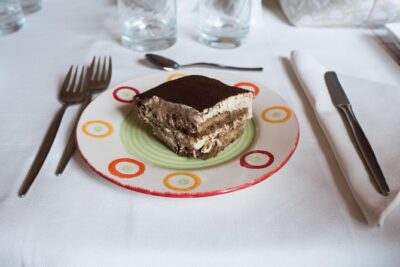
Private Pizza & Tiramisu Class at a Cesarina’s home with tasting in Pisa
Read our review →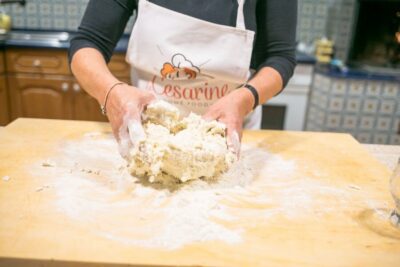
Browse the lists this tour appears in