
REVIEW · ROME
Private Cooking Class in the Heart of Rome 3 types of Pasta and Wine
The best part of this Rome experience is the hands-on work: you make fettuccine, gnocchi, and cavatelli from scratch, then sit down to eat what your group prepared. Chef Christian guides the dough, shaping, pasta machine, and sauces without a language barrier.
I like the private format, which gives you room to ask questions and work at your own pace. I also like the practical follow-up: recipes, cooking tips, and, in some cases, photos and videos help you repeat the meal at home. The main drawback is the location. Despite the title, the current meeting point is outside the historic center near Via Ardeatina, not in Trastevere, so allow time for the journey.
Key points
- Three pasta shapes in one class: Make fettuccine, gnocchi, and cavatelli rather than learning only one basic recipe.
- Private instruction with Chef Christian: Your group participates directly instead of watching a large demonstration.
- A full Italian meal: Bruschetta, three pasta courses, wine, water, bread, and homemade dessert are included.
- Flexible dietary options: Vegetarian and gluten-free preparations are available, including a dedicated gluten-free course.
- A useful souvenir: Recipes and cooking advice can help you make pasta again at home.
- Check the address carefully: The experience moved from a Trastevere venue to Via Ardeatina, near the Appia Antica Archaeological Park.
Making Three Pastas Instead of Just One
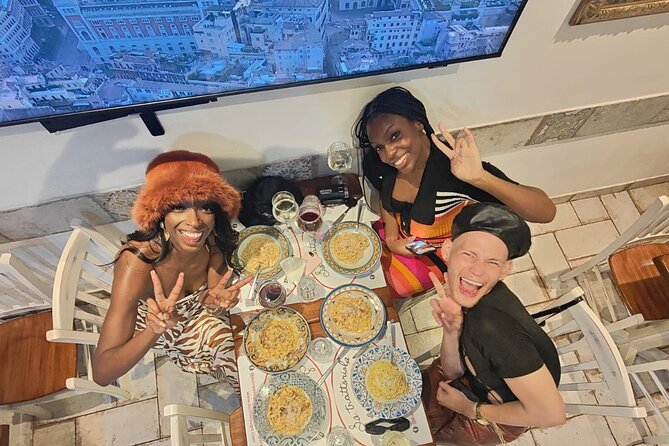
Many cooking classes in Italy teach a single dish, often fresh tagliatelle or a simple pasta sauce. This one gives you a wider look at the subject. You work with three forms: fettuccine, gnocchi, and cavatelli.
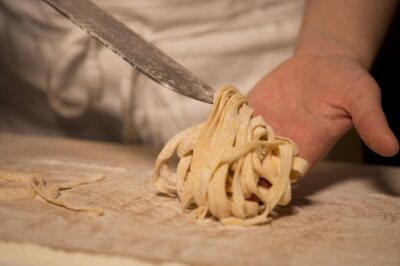
That variety matters because each pasta teaches a different skill. Fettuccine introduces dough, rolling, and cutting. Gnocchi requires a softer mixture and a lighter touch. Cavatelli brings in shaping by hand, with the goal of creating a little groove that catches sauce.
You are not simply handed a bowl of dough and told to copy the chef. Christian explains how to make the dough correctly, why the ingredients behave as they do, and how to use the pasta machine. That kind of explanation is far more useful than a quick demonstration followed by a rushed turn at the table.
The class is built around cooking as a shared activity. You mix, shape, and prepare the food as a group. Christian then handles the final cooking and plating so the meal arrives at the table in good condition. You get the satisfaction of making the pasta without having to manage every burner and pan at once.
The published description sometimes refers to a two-hour course, while the overall experience is listed at approximately two and a half hours. Plan your day around the longer figure. The extra time is helpful because this is meant to be a meal as well as a lesson.
More Pasta Classes with Wine in Rome
- Rome: Pasta & Tiramisu Class with Fine Wine by the Vatican
★ 4.9 · 4,852 reviews - Rome: Pasta Making Class with Wine, Limoncello, and Dessert
★ 4.9 · 3,177 reviews - Rome Cooking Class: Make Pasta and 3 Spritz Cocktails
★ 5.0 · 2,937 reviews
What You Actually Eat at the Table
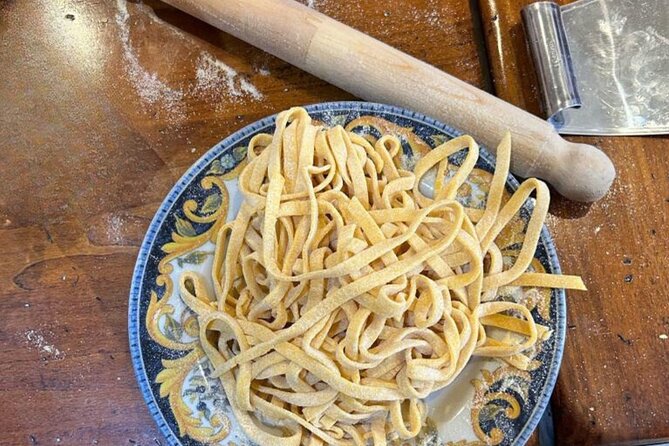
The meal begins with two bruschettas based on seasonal Italian ingredients. Bruschetta is simple food, but it gives the class a pleasant opening while the main pasta work gets underway. It also adds a crisp, savory contrast to the softer fresh pasta that follows.
The main course is unusually generous for a cooking lesson. You eat three first courses: the fettuccine, gnocchi, and cavatelli prepared during the class. Sauces are selected from traditional Italian options, and the kitchen can adapt the meal for vegetarian diners.
One particularly appealing option mentioned by diners is wild boar sauce, described as a specialty of the restaurant in one version of the experience. This is not a guaranteed sauce choice for every date, so ask what is available when you book or arrive. The important point is that you are not limited to plain buttered pasta after doing all that work.
A glass of wine, water, and bread are included. Adults who are at least 18 years old under Italian law can receive the wine. Anyone under that age will not be served alcohol, so families should plan on soft drinks or water for younger participants.
Dessert is a homemade sweet selected from the day’s choices. A lemon sorbet has been served on one occasion, and gelato from a nearby small shop has also been part of the ending for some groups. The exact dessert is not fixed, but you can expect a sweet finish rather than an abrupt goodbye after the pasta.
Come hungry. The meal includes three pasta courses, not three sample bites. Families with children especially need to know this, since the generous portions can turn a pleasant lunch into a very full afternoon.
Chef Christian’s Teaching Style
Christian is the central reason this class works. He teaches the process step by step, from mixing and kneading to rolling and shaping. The tone is informal and social, with time for questions, travel conversation, and local stories.
The private setup is a real advantage. Your group is the only group participating, so you do not have to wait behind a large class or fight for a turn with the pasta machine. If one person needs extra help with gnocchi or has never handled fresh dough, Christian can spend time on that point.
This also makes the activity suitable for mixed-age groups. Children around 12 and 14 have enjoyed the class, and younger cooks can take part in shaping and cutting with adult help. It is more active than a restaurant meal, but not so technical that beginners are left behind.
The class appears to place real value on practical results. You learn how to choose and combine ingredients, how dough should feel, and how to work with the machine. You may also receive a recipe book or written recipes, along with tips for making the dishes at home. In some cases, Christian documents the key steps with photos and videos and sends them afterward.
That last detail is useful. You can concentrate on the dough instead of stopping to take pictures. It also gives you a record of the shapes and techniques, which is handy when your first home attempt does not look exactly like the chef’s.
The Private Format and Group Size
This is sold as a private activity, meaning only your group participates. That is a strong feature for families, couples, and small groups of friends who want a relaxed meal without strangers at the same table.
The private format also changes the pace. You can ask why a dough feels too wet, how thin to roll the fettuccine, or how to keep gnocchi from becoming heavy. Christian can make adjustments for dietary needs instead of giving one fixed demonstration to a room full of people.
A small-group setting does not automatically mean a quiet or polished restaurant-style lesson. Flour, dough, and several dishes are involved, and one early account found the organization a little loose. I would treat that as a fair expectation: the appeal is personal instruction and participation, not a carefully choreographed culinary show.
You should also tell the provider about dietary needs in advance. Vegetarian and gluten-free versions are available, and a separate gluten-free course is advertised. Still, clear advance communication is the sensible way to make sure the correct ingredients and equipment are ready.
Same kitchen, a different thing to make:
- 3 in 1 Cooking Class near Navona: Fettuccine, Ravioli & Tiramisu
★ 5.0 · 7,376 reviews - Rome: 3-in-1 Fettuccine, Ravioli, and Tiramisu Cooking Class
★ 4.9 · 2,704 reviews - Rome: Fettuccine Pasta Cooking Class in Rome’s City Center
★ 4.8 · 2,414 reviews - Learn to Make Pasta & Tiramisu with Wine and Limoncello Included
★ 5.0 · 2,345 reviews
The Location: Trastevere, Santa Maria, and Via Ardeatina
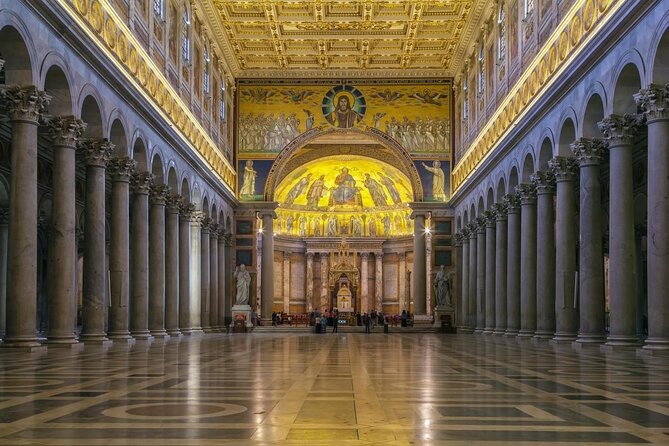
The location needs careful attention because the information connected with this activity has changed. The original route refers to Basilica di Santa Maria in Trastevere and the Trastevere neighborhood, which are among Rome’s most pleasant areas for a walk, an aperitivo, and people watching.
The current meeting point is given as Via Ardeatina, 237, 00179 Rome. The provider explains that the class moved from a temporary Trastevere venue to a larger facility near or inside the Appia Antica Archaeological Park. This is not the same setting as a kitchen in the historic Trastevere district.
That means you should not book this expecting to step out of the class directly into the lanes around Santa Maria in Trastevere. The title suggests a central location, but the current address is farther out. One account described the journey as about 30 minutes by Uber from the city, while the provider says buses from areas such as Piazza Venezia or the Palatine can reach the entrance in about 20 minutes. Your actual time depends on traffic, the starting point, and the precise entrance.
Check the meeting point again shortly before the class. This is the single most important practical tip. Do not rely on an old confirmation, a map pin saved months ago, or the phrase heart of Rome in the title. The address printed for your booking should guide you.
The newer setting may have advantages. A larger kitchen can be more comfortable for a private cooking lesson, and the Appia Antica area offers a quieter Roman setting than the crowded center. But it is not a sightseeing stop included in the cooking lesson. If you want time for the basilica and Trastevere, plan those separately.
Is the $94.92 Price Fair?
At about $94.92 per person, this is not the cheapest way to eat pasta in Rome. It is also more than the price of a casual plate of carbonara or cacio e pepe. You are paying for instruction, ingredients, a private session, three pasta courses, wine, bruschetta, dessert, and the time of a dedicated chef.
The value improves if you would otherwise book a separate meal and a separate food activity. Here, the lesson becomes lunch or dinner. You eat the dishes you helped make, rather than paying for a short demonstration followed by a small tasting.
The price is especially reasonable for a private family group. A large public class may cost less per person, but it may offer fewer chances to touch the dough, ask questions, or receive corrections. If Christian provides recipes and follow-up photos or videos, those are useful extras that continue to pay off after you leave Rome.
The location affects the value calculation. If you expect a central Trastevere experience, the transfer to Via Ardeatina may feel like a cost in time and transport. If you are comfortable making the trip and want a quieter kitchen with personal attention, the location is less of a concern.
I would compare the price with your priorities. For a quick food tasting, it is too much. For a substantial meal plus a skill you can use at home, it is a fair price.
Who Will Enjoy This Most
I would recommend this class to people who want to participate rather than watch. You should be willing to handle dough, shape pasta, and sit down to a large meal afterward.
It works particularly well for:
- Families with children who enjoy practical activities
- Couples looking for a shared experience beyond sightseeing
- Small groups who prefer private instruction
- Beginners who want simple techniques they can repeat at home
- Diners with vegetarian or gluten-free requirements
- Food lovers who want three pasta styles in one session
It may be less suitable if you have a tight sightseeing schedule or dislike traveling outside central Rome for an activity. It is also not ideal if you want a polished, silent cooking demonstration. The class is social, hands-on, and somewhat informal.
The wine makes it a natural fit for adults, but families are welcome. Younger participants can enjoy the pasta work and meal, with no alcohol served to anyone under 18.
Small Details That Make the Experience Better
Wear something comfortable and practical. You will be working with dough and flour, so clothing that can tolerate a small kitchen mishap is wiser than your best Roman dinner outfit.
Do not schedule a major museum or timed attraction immediately afterward. The class lasts around two to two and a half hours, and the meal is substantial. Add transport time from Via Ardeatina, especially if you are coming from central Rome.
Ask about the day’s sauces and dessert if you have strong preferences. The menu offers choices, but the exact seasonal bruschetta, homemade sweet, and sauce selection can vary.
Also, confirm the current venue before setting out. The former Trastevere details and the current Via Ardeatina address can create confusion, particularly for anyone who booked well in advance.
Finally, leave room in your luggage or kitchen plans for the recipes. The strongest souvenir here is not a trinket. It is the ability to make a plate of fresh pasta for friends after returning home.
Should You Book This Rome Pasta Class?
Book it if you want a private, filling, hands-on food experience and do not mind leaving the historic center. Chef Christian’s patient instruction, three pasta shapes, flexible dietary options, and practical recipes give this class more substance than a simple tasting.
Skip it if your main goal is a cooking lesson in Trastevere itself, or if you have only a narrow gap between central Rome appointments. The location has changed, and the title can give an overly central impression.
For most food-focused visitors, families, and couples, I think the experience is worth considering at $94.92. Just verify the Via Ardeatina meeting point, arrive hungry, and treat the class as both a lesson and a full Italian meal.
FAQ
Where does the cooking class meet?
The meeting point is Via Ardeatina, 237, 00179 Roma RM, Italy. The current venue is associated with the Appia Antica area rather than the former Trastevere location.
How long does the experience last?
The activity is listed as approximately 2 hours and 30 minutes. The cooking course itself is also described as lasting about 2 hours.
What pasta will I make?
You will prepare fettuccine, gnocchi, and cavatelli during the class.
Is the class private?
Yes. Only your group participates in this activity.
What food is included?
The meal includes two bruschettas, three pasta courses made during the class, bread, water, a glass of wine for eligible adults, and a homemade dessert.
Can the class accommodate gluten-free diners?
Yes. A gluten-free course is available, and vegetarian preparations can also be arranged.
Is wine included for children?
No. Under Italian law, alcohol is not served to anyone under 18. Water is included.
Is the experience offered in English?
Yes. The activity is offered in English.
Can I cancel for a full refund?
You can cancel at least 24 hours before the start time for a full refund. Cancellations or changes made less than 24 hours before the experience are not accepted for a refund.
More Wine Tastings in Rome
- Fettuccine & Tiramisù: Cooking Class with Wine & Limoncello
★ 4.9 · 2,103 reviews - Pasta Making & Wine Tasting with Dinner in Frascati from Rome
★ 5.0 · 1,326 reviews - Rome Pasta and Tiramisu Class: Ravioli, Fettuccine & Fine Wine 5*
★ 5.0 · 1,319 reviews - Rome Cooking Class: Make Pasta, Dine & Drink Wine With Local Chef
★ 5.0 · 1,263 reviews
More Private Cooking Classes in Rome
- Rome: Pasta Making Class with Tiramisu & Wine PRIVATE OPTION
★ 4.8 · 404 reviews - Cooking Class: Pasta & Tiramisu with a Private Italian Chef
★ 5.0 · 46 reviews - Pasta and Tiramisu Semi-Private Cooking Class with a MasterChef
★ 5.0 · 35 reviews - Private Pasta & Tiramisu Cooking Class with Unlimited Wine
★ 5.0 · 26 reviews
Just added around Rome
- Rome: Pasta and tiramisu class with wine pairing at Come Na Vorta★ 5.0 · 30 reviews
- Spritz and Pasta! Spritz, Fettuccine & Tiramisù★ 5.0 · 2 reviews
- Rome: Vespa Tour with Photographer and Tiramisu treat★ 4.5 · 61 reviews
- Walking Tour & Pizza Making★ 4.0 · 2 reviews
- Trastevere Food Tour with Pasta-Making Class★ 5.0 · 5 reviews
- Rome: Private Vespa Tour and Professional Photoshoot★ 5.0 · 22 reviews
- Traditional Pasta Cooking Class with Tiramisu Small Group★ 5.0 · 7 reviews
- Tiramisu and Gelato Creation in Authentic Roman Dessert Workshop★ 4.5 · 3 reviews
Rome Pasta Classes, compared.
3 in 1 Cooking Class near Navona: Fettuccine, Ravioli & Tiramisu
Read our review →
Pasta & Tiramisu Class with Fine Wine by the Vatican
Read our review →
Pasta Making Class with Wine, Limoncello, and Dessert
Read our review →
Rome Cooking Class: Make Pasta and 3 Spritz Cocktails
Read our review →
3-in-1 Fettuccine, Ravioli, and Tiramisu Cooking Class
Read our review →
Fettuccine Pasta Cooking Class in Rome’s City Center
Read our review →
Learn to Make Pasta & Tiramisu with Wine and Limoncello Included
Read our review →
Become a Masterchef in Rome: Pasta, Ravioli and Tiramisù Class
Read our review →Browse the lists this tour appears in