
REVIEW · ROME
Pizza and Tiramisu Cooking Class in Rome, Piazza Navona
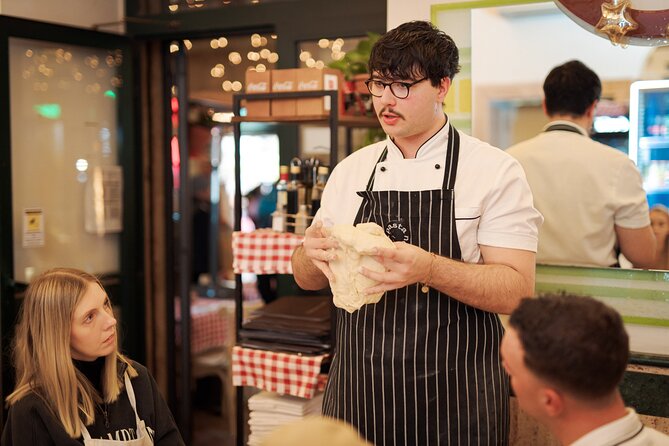
Making pizza beside Piazza Navona is the main event here, but the wood-fired oven adds a real Roman trattoria feel. You prepare tiramisu, work with pizza dough, and finish with a meal in the restaurant where the class takes place. Guides have included Sara, Luca, Simone, Anna, Daniel, and others.
I like the small groups of no more than 10 and the easy English instruction. I also like the location: you can pair the 5:30 pm class with a walk around Piazza Navona before or after. The main thing to check is how hands-on the class will be on your date, since dough resting times and oven safety can limit what you cook alone.
Key points to know before booking

- Pizza dough is prepared in advance: The dough has rested for 24 to 48 hours, which helps produce better pizza but may reduce the amount of dough preparation you do yourself.
- Tiramisu comes first in some sessions: It needs time to chill, so making it early lets you eat it later in the class.
- The pizza cooks in a wood-fired oven: The pizzaiolo handles the oven, both for safety and to manage uneven heat.
- Drinks are included: You can ask for wine or beer with the meal, soft drinks if you do not drink alcohol, and coffee, tea, or limoncello afterward.
- The class is social: You eat with the rest of the group, and several classes have included only a few couples or families.
- Dietary limits matter: There is no gluten-free or lactose-free option, and regular sugar is used in the tiramisu.
Pizza and tiramisu beside Piazza Navona
The meeting point is Antica Trattoria Agonale at Corsia Agonale 9, right by Piazza Navona. That setting makes this more than a meal inside a cooking school. You are in one of central Rome’s most famous squares, with Bernini’s Fountain of the Four Rivers and the long oval piazza close at hand.
I would arrive early. The restaurant can be difficult to spot, especially when the square is busy and you are watching street numbers instead of signs. The class starts at 5:30 pm, so give yourself time to find the trattoria, settle in, and enjoy the square before the cooking begins.
The class lasts about two and a half hours. It is offered in English, and the group is capped at 10 people. That is a useful size for a demonstration and usually small enough for the instructor to correct your technique or answer questions.
The teachers vary. Names appearing in the class experience include Sara, Sarah, Luca, Simone, Anna, Daniel, Danielle, Mary, Alessandra, Matt, and Patricio. The strongest accounts describe instructors who keep the pace lively, explain why each step matters, and bring children and adults into the work.
More Pizza Making Classes in Rome
- Cooking Class in the Heart of Rome: Pizza and Tiramisu Making
★ 5.0 · 1,330 reviews - Rome: Combo Pizza and Pasta Cooking Class with Wine
★ 4.6 · 1,180 reviews - Rome: Pizza & Tiramisu Class with Free Flowing Fine Wine
★ 5.0 · 973 reviews
Starting with tiramisu and resting dough
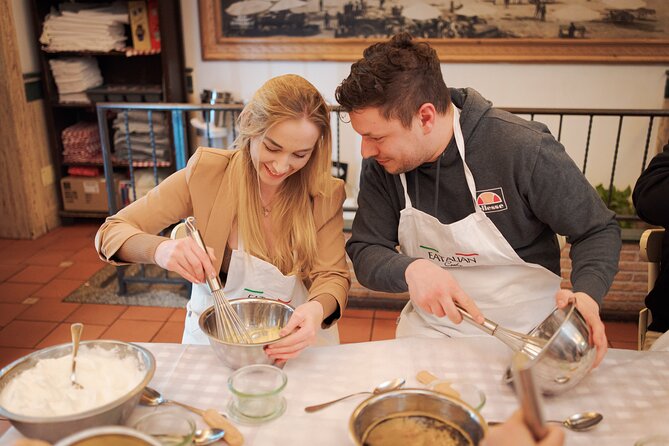
Tiramisu is often made before the pizza because it needs time in the refrigerator. You prepare the coffee and mascarpone dessert, then let it chill while you work on the main course. That order is sensible, even if it means dessert comes before the pizza in the cooking schedule.
The dish uses regular sugar, so this class is not a good fit if you need a diabetic-friendly recipe. The ingredients also include dairy, and no lactose-free alternative is offered. Anyone with lactose intolerance should skip this activity rather than hope for a last-minute substitution.
The pizza dough has already rested for 24 to 48 hours. That is an important detail. Properly rested dough is easier to stretch and usually gives a better result, but it means you may not mix a fresh batch from flour and yeast during the class.
Some sessions have used dough that needed about eight more hours of resting, with prepared dough supplied for the pizzas eaten that evening. This explains a point that can surprise people: you may help make dough, but the pizza you eat may not be made from that exact portion. If your main goal is to learn the full process from measuring flour through baking, ask about the current format before booking.
This is also where expectations matter. Some participants describe a very hands-on class, while others wanted more measuring, mixing, and cooking by themselves. The dough timetable is the practical reason for that difference, not necessarily a lack of interest from the instructor.
Stretching pizza and working with the pizzaiolo
The pizza section is the most appealing part for families and first-time cooks. You shape the dough, add the toppings, and learn the basics of producing an Italian-style pizza at home. The session has been especially popular with children, including families with children from age 6 through 14.
The restaurant uses a traditional wood-fired, beehive-style oven. A pizza can cook in roughly five minutes, but the heat is not perfectly even across the oven floor. Pizzas closer to the hottest area may brown faster than those farther away.
You should not expect to operate the oven yourself. The pizzaiolo may take over the final stretching or loading, and the staff handles the fire for safety. That can feel disappointing if you want complete control, but it is the sensible trade-off in a working restaurant with a live flame.
The best way to view this part is as a guided cooking workshop, not a private pizza station. You take part in the preparation, then the professional manages the oven. If you want every pizza to emerge evenly cooked, this approach is also more reliable than leaving a group of beginners to handle a hot wood oven.
Still, speak up if you want more involvement. Ask the instructor to let you measure, stretch, or add toppings when possible. One complaint about the class came from feeling that staff completed too many steps. The experience is likely to be better if you make your preference clear early.
Eating what you made at the trattoria
Once the pizzas are cooked, you sit down in the restaurant and eat with the group. This turns the class into dinner, not just a demonstration followed by a quick taste.
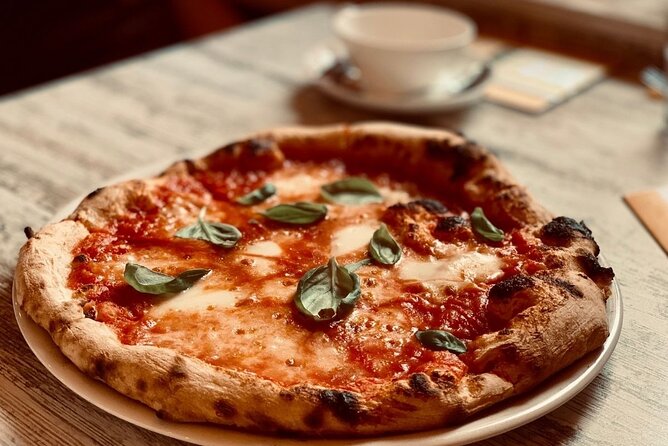
The meal includes the pizza and tiramisu prepared during the session, along with selected drinks. You can ask for wine or beer with the meal, or soda if you do not drink alcohol. Afterward, coffee or tea is available, and limoncello may be offered as another choice.
The timing can be relaxed. That is pleasant if you want to chat with the other people at the table, but it can feel slow if you expect the class to end exactly at the two-and-a-half-hour mark. Restaurant service continues around the class, so there may be a wait before the tiramisu arrives.
A few thoughtful touches have appeared in some sessions, including a welcome drink, limoncello at the end, and certificates. These details may vary, so I would not book solely for them. The dependable value is the cooking lesson, the food, and the included drink choices.
One important limitation: food or drinks beyond what is included must be paid for at the restaurant. Ask what is covered before ordering extras, particularly if you want additional wine, bottled water, or another dish.
More Tiramisu Classes in Rome
- 3 in 1 Cooking Class near Navona: Fettuccine, Ravioli & Tiramisu
★ 5.0 · 7,376 reviews - Rome: Pasta & Tiramisu Class with Fine Wine by the Vatican
★ 4.9 · 4,852 reviews - Rome: 3-in-1 Fettuccine, Ravioli, and Tiramisu Cooking Class
★ 4.9 · 2,704 reviews - Learn to Make Pasta & Tiramisu with Wine and Limoncello Included
★ 5.0 · 2,345 reviews
What makes the class work for families
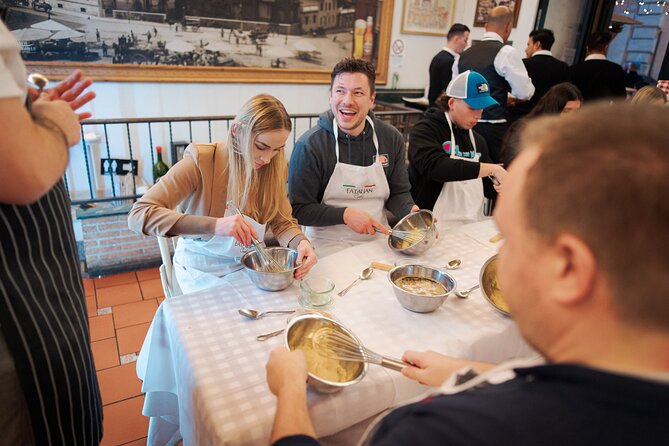
This is one of the better Rome activities for a family that needs a break from walking. You sit for much of the experience, and the tasks are familiar enough for children to understand. The pizza gives younger cooks an immediate goal, while tiramisu adds a second dish and a bit of variety.
The class also suits couples and small groups of friends. You get an evening activity that is more social than a standard dinner and less demanding than a full-day food tour. The group size creates a chance to meet people from elsewhere, which has been part of the appeal for families and couples attending together.
I would be more cautious with very young children who cannot safely work around a busy restaurant or hot oven. The supplied information does not set a minimum age, so confirm age rules if that affects your booking.
For experienced home cooks, the class may be enjoyable but not technically advanced. You will learn useful basics and get a chance to work with a traditional pizza format, but the focus is on a fun meal and accessible instruction rather than professional-level training.
The location adds real value
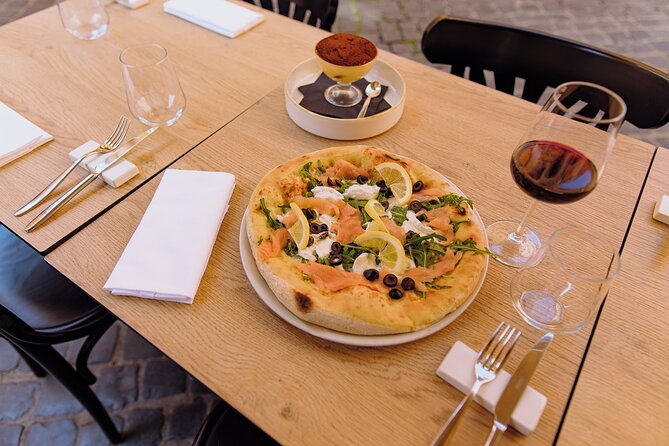
Piazza Navona is a strong setting for an evening class. You can spend the afternoon exploring central Rome, arrive for the cooking session, then step back into the square after dinner. That makes the experience easy to fit into a sightseeing day without crossing the city.
The restaurant is near public transportation, though the meeting point is on a side street by the piazza and can take a little effort to find. I would save the address in your phone and arrive early rather than try to locate it at the last minute.
The setting also affects the price. At $87.11 per person, this is not cheap if you compare it with a simple pizza dinner. But the price includes a cooking workshop, a pizza, tiramisu, and selected drinks in one of Rome’s prime central locations.
A dinner at the same restaurant would not include the lesson. If you would happily pay for pizza, dessert, wine, and a central Rome table anyway, the class adds a reasonable experience on top. If you only want an inexpensive meal, a regular pizzeria will cost less and involve far less waiting.
Drinks, dietary needs, and practical limits
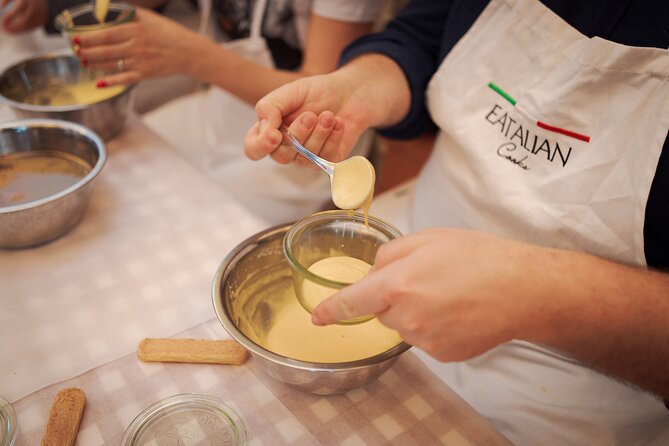
The included drinks are a useful part of the package. Alcoholic options include wine or beer, while soda is available for anyone avoiding alcohol. After the meal, coffee, tea, or limoncello can be requested.
Water and drink service should be clarified at the start if you need it during the cooking portion. One participant felt drinks were not offered soon enough, while the provider says water and other included drinks are available. Asking early removes that uncertainty.
There is no gluten-free or lactose-free option. The class is not recommended for people with gluten or lactose intolerance. Regular sugar is used in the tiramisu, so it also may not suit someone who needs a reduced-sugar dessert.
This is not the place to count on substitutions. The format is built around a shared meal in a restaurant, and the supplied details do not promise alternative ingredients. If you have a serious allergy, contact the provider before paying.
How the value compares with a standard dinner
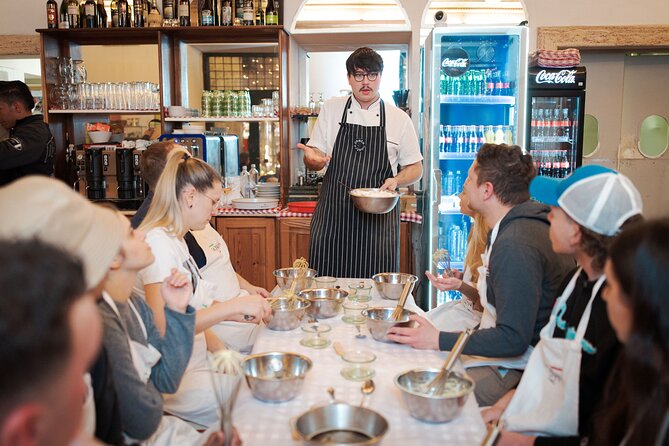
The price makes more sense when you separate the meal from the activity. You receive an English-speaking instructor, a small-group lesson, pizza, tiramisu, and selected drinks. You also spend about two and a half hours at a well-placed restaurant rather than simply ordering dinner and leaving.
The value is strongest for first-time visitors who want one distinctly Italian activity with food included. It is also strong for families, since one booking combines entertainment and dinner.
The value is weaker if you are mainly after a polished restaurant meal. The cooking class has moving parts: dough may be prepared in advance, the oven may cook pizzas at slightly different rates, and service may not move at the speed of a private dining experience.
I would treat the class as a social workshop with dinner, not as a restaurant tasting menu. That framing matches the best experience you can reasonably expect from the price.
Cancellation and timing details
You can cancel for a full refund up to 24 hours before the 5:30 pm start time. Changes made inside 24 hours are not accepted, and cancellations within that period are not refunded.
The class requires a minimum number of participants. If that minimum is not reached and the activity is canceled, you are offered another date or experience, or a full refund.
The activity ends back at the restaurant meeting point. Since the stated duration is approximate, avoid scheduling a tightly timed attraction immediately afterward.
Who should book this Rome cooking class?
Book it if you want to learn basic pizza and tiramisu techniques, eat in a central trattoria, and spend an evening meeting a small group. It is a particularly good fit for families, couples, and anyone who wants a seated activity after a day of sightseeing.
I would also recommend it to people who value location. Being beside Piazza Navona lets you combine the class with one of Rome’s best-known squares without adding a separate cross-city journey.
Think twice if you need gluten-free, lactose-free, or reduced-sugar food. You should also reconsider if your main goal is to make every part of the pizza from scratch and bake it entirely yourself.
Should you book it?
I would book this class if I wanted a friendly, food-centered evening in central Rome, especially with children or a small group. The strongest parts are the English instruction, the wood-fired pizza, the included drinks, and the chance to eat your own work in a real trattoria.
I would book with realistic expectations about the hands-on work. Rested dough and oven safety mean the instructor or pizzaiolo may handle some key steps. If that sounds like a fair trade for better pizza and a safer class, this is a good-value Rome activity. If you want a full technical baking lesson, look for a class that promises fresh dough made entirely during the session.
FAQ
Where does the pizza and tiramisu class take place?
The class takes place at Antica Trattoria Agonale, Corsia Agonale 9, 00186 Rome, beside Piazza Navona.
What time does the class start?
The scheduled start time is 5:30 pm.
How long does the experience last?
The activity lasts approximately two hours and 30 minutes.
Is the class taught in English?
Yes. An English-speaking instructor leads the class.
How many people can join the class?
The maximum group size is 10 people.
Are drinks included?
Yes. Included choices include wine or beer, soda, and coffee or tea after the meal. Limoncello may also be requested after the meal.
Is there a gluten-free or lactose-free option?
No. The class does not offer gluten-free or lactose-free options and is not recommended for people with those intolerances.
Is the class suitable for someone with diabetes?
Regular sugar is used in the tiramisu, so the class may not suit someone who needs a sugar-restricted dessert.
What is the cancellation policy?
You can cancel up to 24 hours before the start time for a full refund. Cancellations or changes made less than 24 hours before the class are not refunded or accepted.
Just added around Rome
- Rome: Pasta and tiramisu class with wine pairing at Come Na Vorta★ 5.0 · 30 reviews
- Spritz and Pasta! Spritz, Fettuccine & Tiramisù★ 5.0 · 2 reviews
- Rome: Vespa Tour with Photographer and Tiramisu treat★ 4.5 · 61 reviews
- Walking Tour & Pizza Making★ 4.0 · 2 reviews
- Trastevere Food Tour with Pasta-Making Class★ 5.0 · 5 reviews
- Rome: Private Vespa Tour and Professional Photoshoot★ 5.0 · 22 reviews
- Traditional Pasta Cooking Class with Tiramisu Small Group★ 5.0 · 7 reviews
- Tiramisu and Gelato Creation in Authentic Roman Dessert Workshop★ 4.5 · 3 reviews
Rome Pasta Classes, compared.
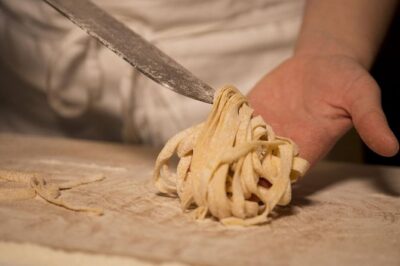
3 in 1 Cooking Class near Navona: Fettuccine, Ravioli & Tiramisu
Read our review →
Pasta & Tiramisu Class with Fine Wine by the Vatican
Read our review →
Pasta Making Class with Wine, Limoncello, and Dessert
Read our review →
Rome Cooking Class: Make Pasta and 3 Spritz Cocktails
Read our review →
3-in-1 Fettuccine, Ravioli, and Tiramisu Cooking Class
Read our review →
Fettuccine Pasta Cooking Class in Rome’s City Center
Read our review →
Learn to Make Pasta & Tiramisu with Wine and Limoncello Included
Read our review →
Become a Masterchef in Rome: Pasta, Ravioli and Tiramisù Class
Read our review →Browse the lists this tour appears in