
REVIEW · FRESH PASTA WORKSHOPS
Ostuni: Orecchiette in a masseria – pasta making and tasting
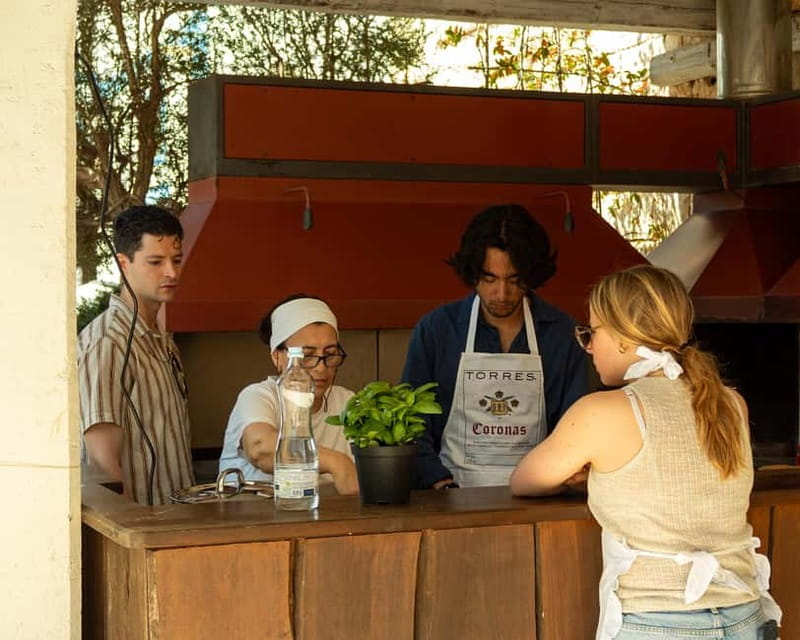
Making pasta by hand in a historic masseria is the real draw here. At Masseria Casina Vitale, you work in the old courtyard where rural life once centered on farming and food production, then eat the orecchiette you shaped yourself.
I like the warm teaching style, especially the patient guidance from Maria and the clear explanations offered in English. I also like that lunch includes far more than pasta: expect local cheeses, focaccia, cured meats, wine, and sometimes dessert. The one thing to watch is the timing. The advertised 2.5 hours may stretch to three or even five hours once lunch and conversation get rolling.
Key points at a glance
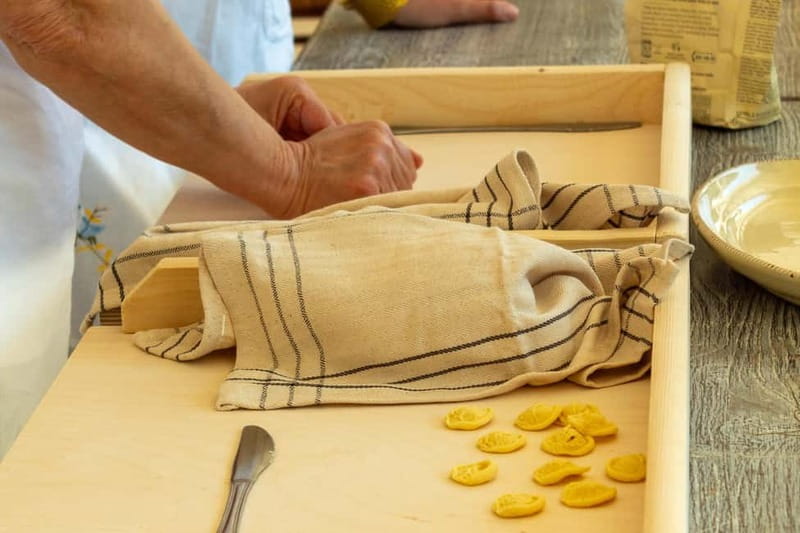
- Hand-shaped orecchiette: Learn the flour, dough, and finger technique behind Puglia’s famous ear-shaped pasta.
- Masseria Casina Vitale: Cook in a historic farmhouse courtyard surrounded by old stone walls.
- Maria and the local team: Expect patient instruction, with Fabio and other hosts helping create a relaxed group mood.
- More than a pasta class: The meal can include mozzarella, ricotta, focaccia, cured meats, tomato sauce, dessert, wine, and water.
- Small-group feel: Groups may be intimate, giving you more direct help with your first imperfect pasta shapes.
- Plan for extra time: The hands-on class is listed at 2.5 hours, but lunch and conversation can extend the visit.
Why this Ostuni pasta class feels different
Many cooking classes take place in a modern kitchen or a city apartment. This one happens at Masseria Casina Vitale, a traditional Apulian farmhouse once used as a center for agricultural work and food processing.
That setting matters. You are not simply following a recipe at a counter. You are sitting in an old courtyard, working with basic ingredients in a place tied to the region’s farming culture. The stone walls and outdoor setting give the class a slower, more social rhythm.
I like this kind of activity after a busy day of sightseeing in Ostuni. The White City is easy to admire from a viewpoint, but food tells you more about daily life in Puglia. Orecchiette is not fancy restaurant pasta. It is a practical local shape, made with simple dough and formed quickly by hand.
The experience also has a friendly, communal side. You work alongside couples, families, and groups of friends, then share a meal at the end. It is a good way to meet people without the forced feeling that can come with a formal group tour.
More Ravioli and Gnocchi Classes in Italy:
- 3 in 1 Cooking Class near Navona: Fettuccine, Ravioli & Tiramisu
★ 5.0 · 7,376 reviews - Rome: 3-in-1 Fettuccine, Ravioli, and Tiramisu Cooking Class
★ 4.9 · 2,704 reviews - Rome: Fettuccine Pasta Cooking Class in Rome’s City Center
★ 4.8 · 2,414 reviews
Arriving at Masseria Casina Vitale
The activity begins and ends at Masseria Casina Vitale. The information provided does not include hotel pickup or transportation, so you should check the meeting details carefully before booking and plan your route to the farmhouse.
Wear comfortable clothes and shoes. You will be handling dough, moving around during the class, and eating outdoors or in the courtyard setting. This is not a dress-up meal, and you will be happier in clothing suited to a hands-on activity.
The masseria itself is part of the experience. Rather than treating the building as a backdrop, the class uses its courtyard as the cooking space. You can expect old stone walls, an open-air atmosphere, and a setting that connects the meal to traditional farm life in Apulia.
The venue is wheelchair accessible, which makes this a useful option for people who need step-free access. You should still confirm any personal access needs in advance, since the class involves working at a table and eating in a historic property.
Learning the shape of Apulian orecchiette
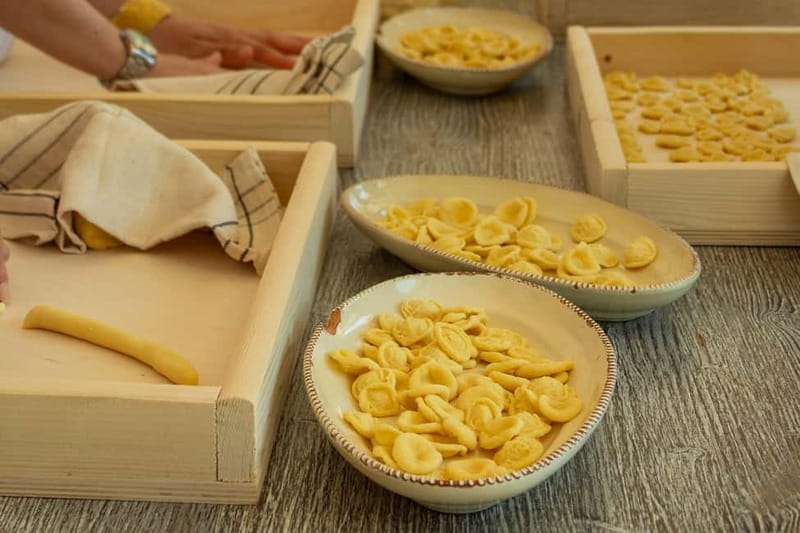
The class starts with the basics: choosing flour, making the dough, and kneading it. From there, your guide demonstrates how to roll the dough into strips and cut and shape the pieces into the small curved form known as orecchiette.
The name refers to the pasta’s ear-like shape. The technique looks simple when an experienced pasta maker does it. Your first pieces may be uneven, too thick, or not curved enough. That is part of the fun, and the hosts are there to help you correct the motion rather than take over.
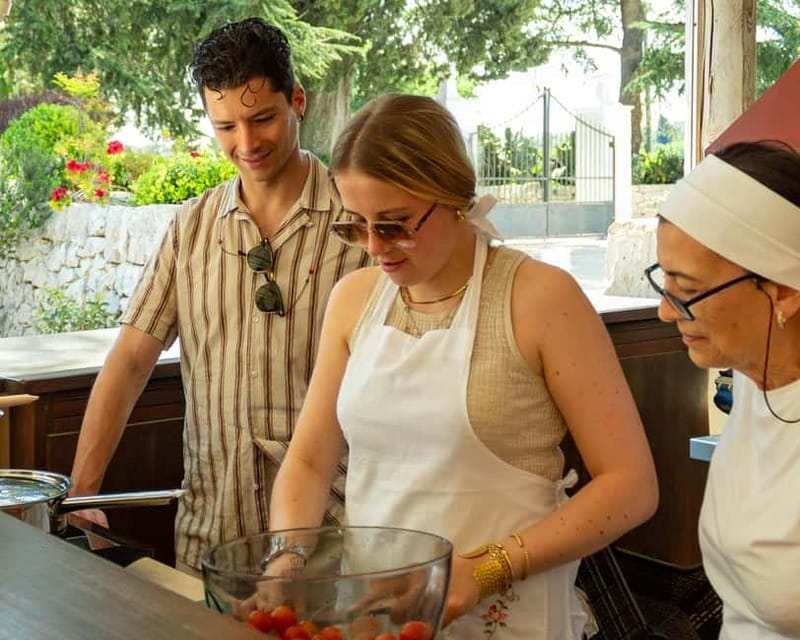
Maria is the guide most closely associated with the class in the available details. She is described as a patient teacher who makes the process feel like cooking with family. Fabio is also praised for explaining things clearly and keeping the mood light. Other members of the team, including Francesco and Graziella, help make sure the session runs smoothly.
Language should not be a major barrier. The class is offered in English and Italian, and the technique is shown by hand, so you can watch the movement as well as listen to the explanation. One participant found the method easy to follow even with a language gap because Maria demonstrated each step so clearly.
The balance is well judged. You get instruction, but you are then allowed to make the pasta yourself. That matters. A demonstration-only class can be pleasant to watch, but it does not give you the satisfaction of producing a plate of pasta with your own hands.
What the hands-on work is really like
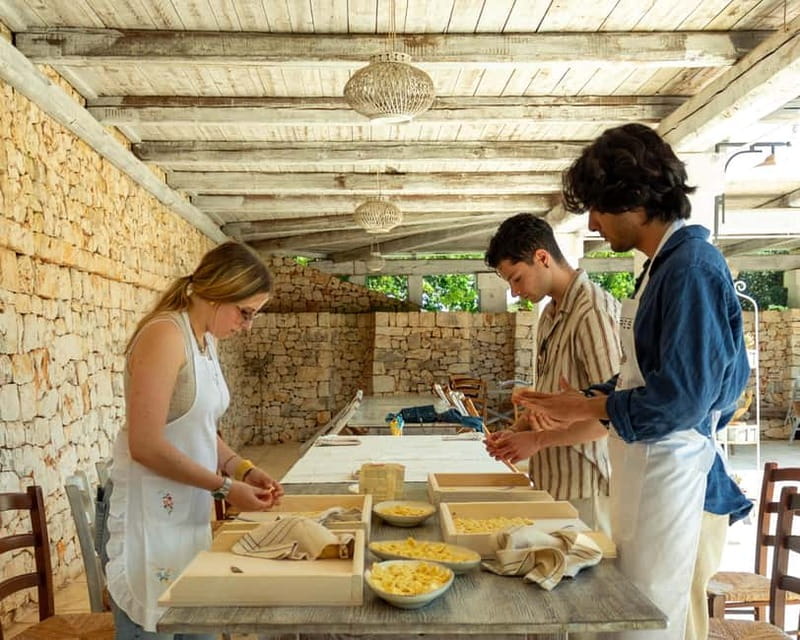
The class is suitable for beginners. You do not need previous cooking experience, and the activity is designed for families, couples, and groups of friends.
Families should find the format especially approachable. Children old enough to handle dough can take part, and the activity has a playful element when everyone compares their shapes. It is also a good choice for teenagers who might not want another standard sightseeing stop.
The supplied details include families with children and groups of five adults taking part together. The strongest praise centers on the personal attention people received when their early attempts went wrong. That is exactly the sort of help you want in a pasta class: enough guidance to improve, without being made to feel clumsy.
Group size can vary. One session had only seven people, which allowed plenty of instruction. A smaller group will usually give you more time with the guide, but the activity remains social rather than private. If you want a one-on-one lesson, do not assume that is included. Private attention may happen only when the group is small or when the booking happens to be quiet.
At the end of the practical lesson, you receive a recipe book. That is a useful extra because the true value of a cooking class is being able to repeat the dish after your holiday. Keep in mind that your home kitchen may not have the same flour, ingredients, or rolling surface, but the basic method is straightforward enough to try again.
More Fresh Pasta Workshops in Italy:
- Rome: Pasta Making Class with Wine, Limoncello, and Dessert
★ 4.9 · 3,177 reviews - Pastamania – Florence Pasta Making Class
★ 5.0 · 3,050 reviews - Enjoy Spritz and Pasta Making in Piazza Navona
★ 5.0 · 1,681 reviews - Pasta Making & Wine Tasting with Dinner in Frascati from Rome
★ 5.0 · 1,326 reviews
The tasting is a full Apulian meal
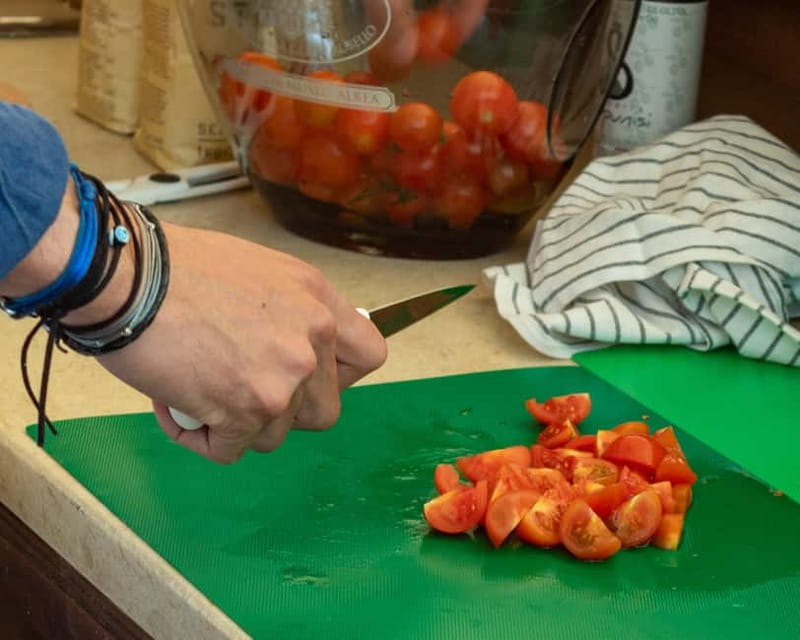
The pasta you make is served with a traditional sauce, often described in the experience details as tomato sauce. That gives you the best possible test of your work: you get to eat the finished dish rather than simply take it home.
The meal does not stop with orecchiette. The tasting includes typical local products and may include mozzarella, fresh ricotta, focaccia, Italian ham, and other starters. A small dessert has also been included in the meal described by one family. The exact selection can change, so think of the meal as a regional tasting rather than a fixed restaurant menu.
Wine is included, along with water. The wine is local and Apulian, which makes sense with the farmhouse setting and the food. You do not need to buy an extra wine pairing package to make the meal feel complete.
I like the way the meal turns the class into a proper afternoon. You are not rushed out after shaping the pasta. Instead, you sit down, taste the local products, and talk with the hosts and the rest of the group.
That relaxed pace is also the reason the activity can run longer than advertised. The listed duration is 2.5 hours, but the practical session, cooking, lunch, and conversation may keep you at the masseria for three to five hours. If you have a train, beach reservation, or timed attraction afterward, leave plenty of space.
The value of $71 per person
At $71 per person, this is not the cheapest meal you can find in Ostuni. You are paying for a lesson, the use of cooking equipment, an apron, a recipe book, the pasta ingredients, a generous tasting, local products, wine, water, and time with the hosts.
The value is strongest if you want an activity rather than just lunch. A meal alone may cost less, but it will not give you the pasta-making lesson or the memory of working in a masseria courtyard. You also avoid the risk of booking a class that ends with a token snack. Here, the meal is a central part of the experience.
The price is easier to justify for families and groups because everyone takes part. Couples who enjoy food and hands-on activities should also find it worthwhile. If you are mainly looking for a quick cooking demonstration, the longer meal and social pace may feel like more than you need.
The included recipe book adds practical value. You leave with a method you can use at home, not just a photograph and a full stomach.
Who should book this experience
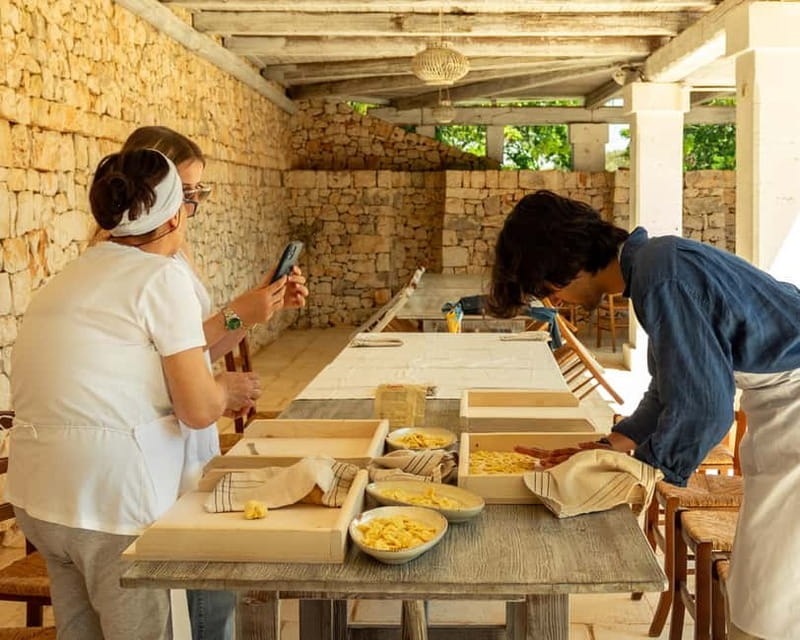
I would choose this for anyone who wants a taste of everyday Puglian culture rather than another formal monument visit. It suits you particularly well if you:
- Enjoy cooking, eating, and talking with local hosts
- Want an activity that works for adults and children
- Prefer a relaxed group experience to a private, polished demonstration
- Like traditional buildings and outdoor settings
- Have several free hours around Ostuni
- Want to learn a dish you can attempt at home
It is also a smart choice for a rainy-day alternative only if the venue can confirm how the class operates in poor weather. The description focuses on the historic courtyard, so you should not assume that every part moves indoors.
This is less suitable if you have food restrictions. The activity is not recommended for people with food allergies, gluten intolerance, or allergies to insects or animals. You should tell the provider about any intolerances in advance, but the listed restrictions mean this is not a good pick for everyone.
Pets are not allowed, though assistance dogs are permitted.
Timing, language, and practical details
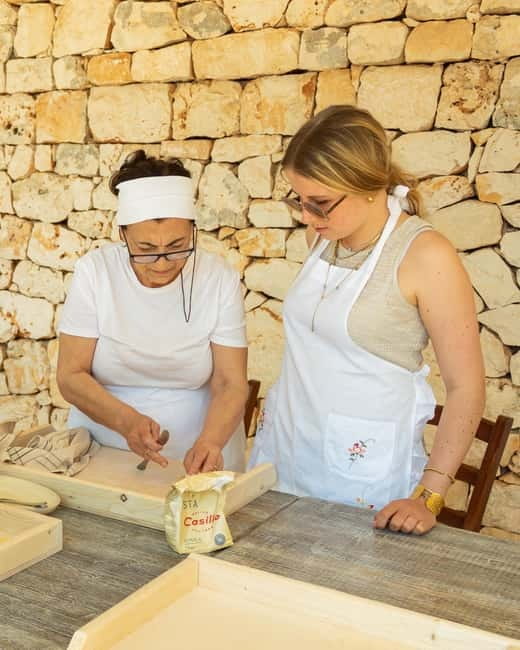
The live guide speaks English and Italian. Some content may be presented in its original language, but the cooking process is visual and hands-on, and the guides demonstrate each movement directly.
The official duration is 2.5 hours. In practice, you should treat that as the minimum scheduled block, not a guaranteed end time. Lunch and conversation can add a great deal of time, which is pleasant if you are free but awkward if you have another booking.
The activity is wheelchair accessible. Comfortable shoes and comfortable clothing are recommended, and an apron and cooking utensils are supplied.
Free cancellation is available up to 24 hours before the activity for a full refund. You can also reserve now and pay later, which helps if your Puglia plans are still shifting.
What makes the hosts important
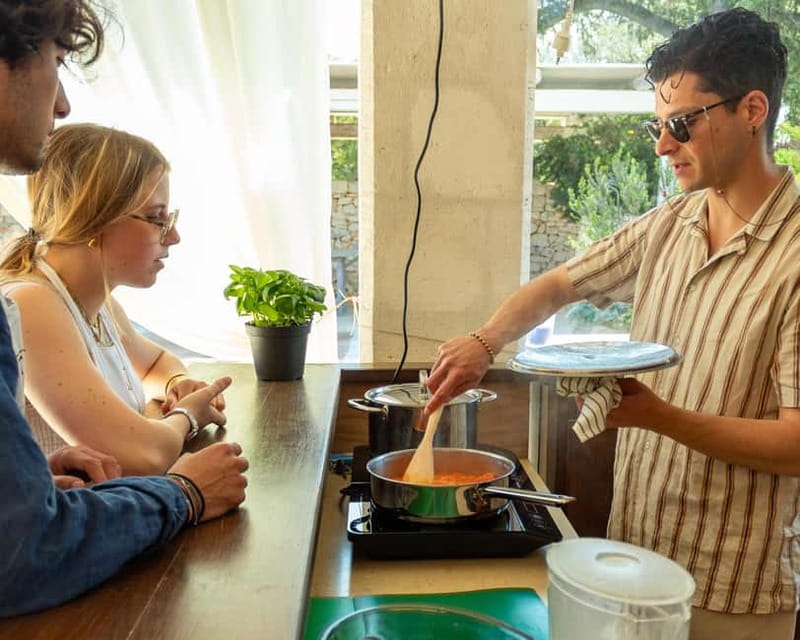
The pasta technique is simple enough to demonstrate from a recipe. The people teaching it are what give the class its character.
Maria is repeatedly singled out for her warmth, patience, and skill with the dough. Fabio is described as relaxed, funny, and clear in his explanations. Francesco and Graziella are also part of the host team, helping create the welcoming atmosphere around the meal.
That human contact is the strongest part of the experience. The hosts do not simply put ingredients on a table and walk away. They watch your hands, correct your shapes, answer questions, and then sit in the shared mood of the meal.
I also like that the experience does not pretend pasta making is effortless. Your pieces may look rough at first. The point is to learn the hand motion, laugh at the mistakes, and eat the result. In Puglia, rustic pasta is part of the appeal.
Should you book it?
Yes, if you have the time and want a meal with a story behind it. The historic masseria, patient local instruction, generous tasting, and included wine make this a strong-value activity at $71, especially for families and food-focused visitors.
Book it with two cautions. First, expect the visit to run well beyond 2.5 hours. Second, do not book if gluten, food, animal, or insect allergies could make the meal unsafe.
For a quick class, this is too leisurely. For a relaxed afternoon of pasta, local food, wine, and friendly conversation in an old Apulian farmhouse, it is an excellent choice near Ostuni.
FAQ
Where does the pasta-making experience take place?
The activity takes place at Masseria Casina Vitale in the Ostuni area of Apulia. The class is held in the historic masseria’s courtyard.
How long does the experience last?
The scheduled duration is 2.5 hours. You should allow extra time because lunch and conversation may extend the visit to three or even five hours.
Which languages are available?
Live guides are available in English and Italian. Some content may be shown in its original language.
What food and drinks are included?
You receive the orecchiette you make with traditional sauce, a tasting of typical local products, wine, and water. The meal may also include items such as mozzarella, ricotta, focaccia, cured meats, and dessert.
Is the activity suitable for children?
Yes. The experience is described as suitable for families, couples, and groups of friends. Children can take part in the hands-on pasta-making activity with their group.
What should I bring, and are there any restrictions?
Wear comfortable clothes and shoes. Pets are not allowed, although assistance dogs are permitted. The activity is not suitable for people with animal allergies, food allergies, gluten intolerance, or insect allergies. You should report any food intolerances in advance.
More Food and Drink Tours in Italy
- Bologna Food & Market Tour with 6 Tastings, Pasta, Wines & More
★ 5.0 · 1,328 reviews - Rome: Pasta Making with Wine Tasting and Dinner in Frascati
★ 4.9 · 979 reviews - Pizza School with Wine and Limoncello Tasting in a Local Farm
★ 5.0 · 845 reviews - Super Fun Pasta & Gelato Class by Vatican with Wine + Oil Tasting
★ 5.0 · 726 reviews
Just added around Italy
- Volterra: Fresh Pasta Cooking Class at a Tuscan Farmhouse★ 5.0 · 33 reviews
- Verona: Tortellini Cooking Class and Lunch with Mamma Ivana★ 5.0 · 20 reviews
- Vicenza: Pasta & Tiramisu Cooking Class at a Local’s Home★ 5.0 · 5 reviews
- Verona: My Granny’s secrets making gnocchi★ 5.0 · 7 reviews
- Verona: Prosecco and Pasta Making Class at a Local’s Home★ 5.0 · 10 reviews
- Verona: Pasta Cooking Class with Wine Tasting★ 5.0 · 4 reviews
- Verona: Pasta & Tiramisu Cooking Class at a Local’s Home★ 5.0 · 16 reviews
- Valnerina/Pasta cooking class in a 12th century location★ 4.8 · 9 reviews
Fresh Pasta Workshops, compared.
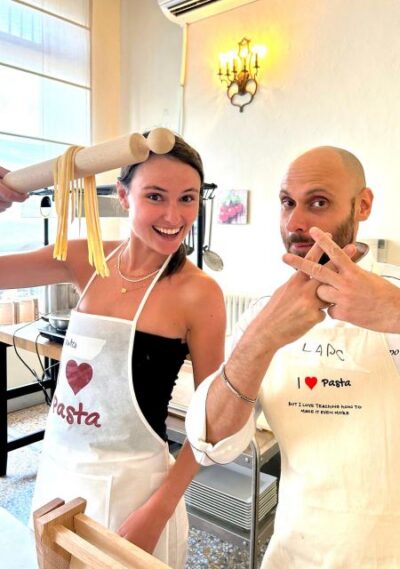
Pasta Making Class with Wine, Limoncello, and Dessert
Read our review →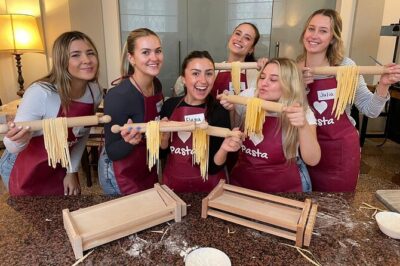
Enjoy Spritz and Pasta Making in Piazza Navona
Read our review →
The Secrets to Learn Fresh Pasta and Tiramisù in a Glam Home
Read our review →
Pasta Making with Wine Tasting and Dinner in Frascati
Read our review →
Handmade Pasta & Dessert Class with Unlimited Wine
Read our review →Browse the lists this tour appears in