
REVIEW · NAPLES
Naples: Hands-On Pasta Class Making Gnocchi & Tagliatelle
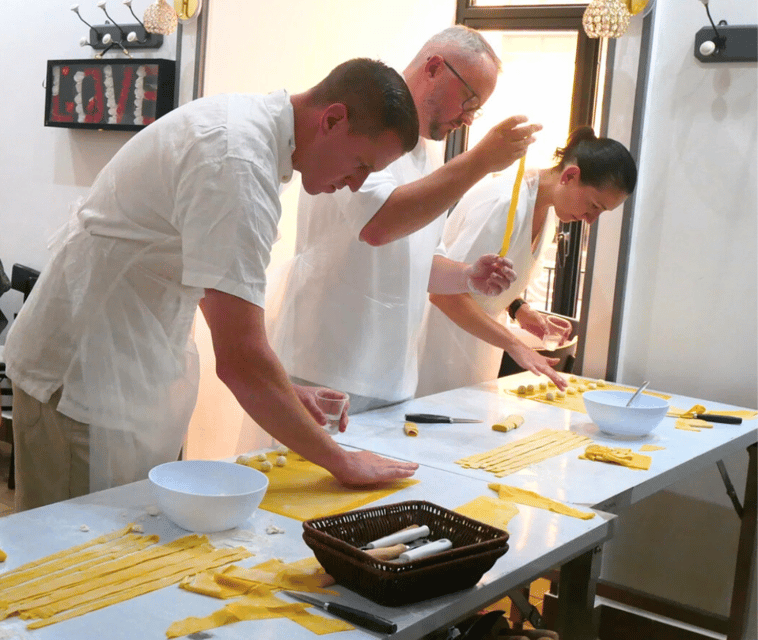
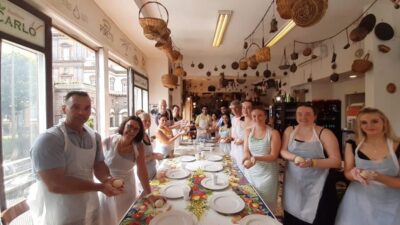
The best part of this Naples class is that you do not just watch a chef work. You turn potatoes, flour, eggs, and tomatoes into a proper meal, then sit down and eat what you made. The class focuses on soft potato gnocchi and fresh tagliatelle or fettuccine, with traditional tools and plenty of time at the worktable.
I like the hands-on format, since you keep moving instead of sitting through a long demonstration. I also like the simple local meal: an appetizer, a drink, and pasta with homemade tomato sauce for $41. The main thing to check is the pasta listed in the details, since the description refers to gnocchi and tagliatelle, while the included items also mention ravioli.
The two-hour class suits a free morning or evening in Naples. Chefs such as Daniele, Lucas, and Alex bring different personalities to the kitchen, but the tone is clear and social. One small drawback is that the class is not wheelchair accessible, and participants under 18 must attend with a parent or legal guardian.
Key points to know before booking
- Make two kinds of pasta by hand: Prepare soft potato gnocchi, then mix, knead, roll, and cut fresh pasta into long ribbons.
- Eat the food you prepare: The class includes a local appetizer, one alcoholic or non-alcoholic drink, and a pasta meal.
- Cook with San Marzano DOP tomatoes: The sauce uses tomatoes, extra virgin olive oil, basil, and sea salt.
- Meet near the Duomo: Naplesbay Cooking Lab sits in the historic center, a short walk from Naples Cathedral.
- Expect an active, social class: You will work at the table, ask questions, and cook alongside the other participants.
- Bring your recipe notebook: The chefs explain practical tricks that you can repeat at home, including the texture secrets behind good gnocchi.
Starting near Naples Cathedral
Your class begins at Naplesbay Cooking Lab in the heart of the city’s historic center. The meeting point is a short walk from the Duomo Cathedral, so it is easy to pair the activity with time around central Naples.
That location matters. You do not need to arrange transport to a distant cooking school or spend half the afternoon crossing the city. You can visit the cathedral area before class, then reach the kitchen on foot. The activity lasts about two hours, making it easy to fit into a busy Naples schedule.
The setting is a cooking lab rather than a restaurant meal where you simply order from a menu. You receive an apron and chef’s hat, and the kitchen tools are provided. Those small touches help make the experience feel like a proper class rather than a pasta tasting.
The class is offered in English, Spanish, French, and Italian. If you are booking for a mixed-language group, check that your preferred language is available at the starting time you choose. The available instructor names in the experience feedback include Daniele, Lucas, and Alex.
More Fresh Pasta Workshops in Naples
- Naples: Pasta Making Class with Starter and Drink
★ 4.9 · 1,060 reviews - Learn To Make Fresh Pasta With Love in Naples
★ 5.0 · 77 reviews - Hands-On Pasta Making and Traditional Tiramisu Workshop
★ 4.5 · 71 reviews
Beginning with an appetizer and a drink
The meal starts before the pasta reaches the table. You receive a local appetizer and one drink, which can be alcoholic or non-alcoholic. This gives you something to enjoy while the class gets organized and the cooking begins.
That is a useful feature for two reasons. First, it makes the class feel like a meal with a lesson attached, not a paid demonstration followed by an extra restaurant bill. Second, it gives the group a relaxed start before everyone begins handling dough and potatoes.
The drink is described as a glass of local wine in the main experience details, with a non-alcoholic choice also available. Since the exact drink selection is not specified, choose the option that suits you when you arrive. If you have dietary restrictions, ask the staff about the appetizer and sauces before the food is served.
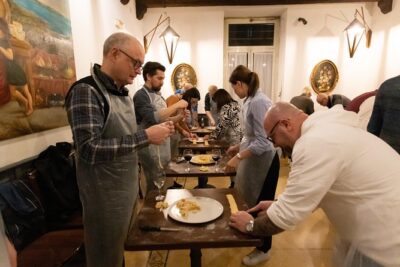
The class has a social side, too. You eat with the other participants after cooking, and the shared work creates an easy reason to talk. This can be a good choice for couples, families, and solo visitors who want an activity with some company built in.
Making soft potato gnocchi from scratch
Gnocchi is the main lesson, and the class places real attention on texture. You work with simple ingredients and learn how to make the potato mixture light, tender, and firm enough to hold its shape.
That balance is the tricky part of gnocchi. Too much flour can make it heavy. Too little structure can make it fall apart during cooking. A local chef can show you how the mixture should feel, which is more useful than reading a recipe that gives only fixed measurements.
You will shape the dough into small pieces, using the class technique to form the familiar gnocchi shape. The details are practical: how much to knead, how to avoid a dense result, and how to prepare pieces that will catch the sauce.
I like this part for home cooks because gnocchi looks simple but often goes wrong in the kitchen. A short lesson on texture can save you from making a plate of rubbery dumplings. You also get the immediate reward of eating the finished dish instead of waiting until you return home to see if you understood the recipe.
The class is not described as a formal culinary school course, and that is probably a benefit for most people. The chef keeps the process approachable. Pekka specifically noted that Chef Daniele used humor and kept the pace moving without making the lesson too technical. If you want advanced restaurant training, this may feel light. If you want a useful Naples activity that teaches a dish you can repeat, the level should be comfortable.
Rolling and cutting fresh pasta
After the gnocchi, you move to fresh pasta dough. You mix and knead the dough, roll it out, and cut it into long ribbons. The experience uses the names tagliatelle and fettuccine in different places, while the included items also mention ravioli.
The safest way to understand this is that you will prepare a second fresh pasta dish, but the exact shape may vary by class format or listing detail. If making ravioli is important to you, confirm that point before booking. The core lesson remains the same: combine the ingredients, develop the dough, roll it thin, and cut it into pasta.
This is where the traditional tools matter. Fresh pasta changes as you work it. You can feel the dough become smoother and more elastic, and you learn how thin to roll it before cutting. A printed recipe cannot show you that as clearly.
The finished ribbons are cooked for the meal. Fettuccine or tagliatelle gives you a direct contrast with gnocchi: one is soft and pillowy, the other is silky and chewy. Preparing both in one sitting also makes the $41 price easier to assess, since you are learning two different pasta techniques rather than repeating one recipe.
This part is active. You are not just standing behind a chef while someone else rolls the dough. You handle the ingredients and tools yourself, with the instructor available to answer questions. Louis praised Chef Alex for being attentive and available, while Thomas highlighted the clear explanations and the chance to make the pasta again at home.
More Ravioli and Gnocchi Classes in Naples
- Naples Pasta Class: Fettuccine & Ravioli with Grandma’s Recipe
★ 5.0 · 506 reviews - Naples: Making ravioli and scialatielli with fresh pesto and wine
★ 4.6 · 34 reviews - Cooking Class – Gnocchi like an Italian Grandma
★ 4.9 · 20 reviews - Naples Hands-on Cooking Class: Gnocchi, Ravioli, Tiramisu & Wine
★ 4.5 · 18 reviews
Building a Neapolitan tomato sauce
The sauce keeps things simple. You use San Marzano DOP tomatoes, extra virgin olive oil, basil, and a little sea salt. The ingredients are familiar, but the point is to understand how good pasta sauce depends on quality and restraint.
As the sauce cooks, the kitchen fills with the smell of tomatoes, olive oil, and basil. This is not a complicated sauce with a long ingredient list. It is a lesson in letting a few good items do the work.
San Marzano DOP tomatoes are associated with the Campania region, so this part connects the meal to the area around Naples. The sauce also gives you a practical recipe to take home. You can make it without searching for unusual ingredients or buying special equipment.
The tomato sauce is used with the pasta you prepare. The supplied details describe the gnocchi and fresh ribbon pasta being served with warm homemade sauce, though the exact sauce pairing for each type is not fully specified. Expect the meal to center on fresh pasta and tomato sauce rather than a large choice of separate entrées.
Sitting down to eat your own meal
The class ends at the table with the food you have prepared. You receive your gnocchi and fresh pasta as a lunch or dinner, along with the included drink. That final meal is more satisfying because you have handled every stage yourself.
The payoff is not only the food. You see how a few basic ingredients become two very different pasta dishes, and you can judge the texture for yourself. The gnocchi should be soft and tender, while the fresh ribbons should have the bite that dried pasta cannot quite copy.
The shared table also gives the class a pleasant finish. Cooper described eating fresh fettuccine with tomato sauce and a glass of wine alongside the other participants, while Nikolaos liked that the meal followed a session where everyone had been actively working. This is a good choice if you want a social evening rather than a quiet restaurant dinner.
You should not book this expecting a long, multi-course feast. The included meal is centered on the pasta you prepare, with an appetizer and drink. For many people, that is enough. You get a complete food experience without paying separately for a restaurant meal afterward.
What the chefs add to the experience
The chefs are an important part of the class because pasta making is about feel and timing. Daniele is described as funny and energetic, keeping the group engaged without turning the class into a lecture. Lucas received praise for family-friendly instruction, while Alex was noted for answering questions and staying attentive.
These details suggest that the experience depends partly on the instructor leading your session. The common thread is an informal approach with clear directions and a good pace. You can expect stories about Neapolitan cooking traditions as you work, including methods passed through local families.
The language choices are helpful for international groups. Instruction is available in Italian, Spanish, French, and English. If your group includes children or first-time cooks, the relaxed tone may be more useful than a highly technical lesson.
The chef diploma at the end is a small souvenir. It will not replace the recipes or the meal, but it gives families and children something tangible to take home. The free luggage deposit is also useful if you have bags with you and do not want to carry them around the historic center during the activity.
Is $41 a fair price?
At $41 per person, the class offers a strong amount of food and instruction for a two-hour activity. The fee includes kitchen tools, an apron, a chef’s hat, the pasta lesson, an appetizer, one drink, the meal, a diploma, and luggage deposit.
The real value is the combination of class and lunch or dinner. If you would otherwise pay for a restaurant meal, part of the cost is already replacing that expense. You are also paying for a local instructor, the ingredients, the kitchen, and the chance to learn two pasta methods.
It is less attractive if you mainly want to eat and have no interest in cooking. A restaurant will give you a wider menu and less work. This class asks you to knead, shape, roll, and cut before you sit down, so you should see the preparation as part of the entertainment.
For families, the price can work well because children have a job to do instead of waiting at a table. Keep in mind that anyone under 18 must have a parent or legal guardian with them. For solo visitors, the social format may offer more value than a standard meal, since you share the kitchen and table with other participants.
Who should book this Naples class?
I would choose this experience if you enjoy food, want a practical activity in central Naples, or need a plan for a rainy day. Andreas specifically found the class a good lift during heavy rain, and that makes sense: you spend two warm hours indoors with food, conversation, and a clear task.
It also suits first-time pasta makers. You do not need to arrive with professional skills, and the chefs explain the process as you work. The gnocchi lesson is especially useful if you have tried making it before and ended up with doughy or heavy results.
Families should consider it, provided the adults are ready to take part with younger participants. Couples can share the work and meal, while solo visitors can meet people without having to arrange a group in advance.
I would be more cautious if you need step-free access, since the activity is not wheelchair accessible. I would also confirm the second pasta shape if ravioli is a priority, as the details use several names for the fresh pasta portion. That is a small but worthwhile check before you pay.
Booking is flexible, with free cancellation up to 24 hours before the experience and a reserve-now, pay-later option. Starting times vary, so check availability when planning your Naples days.
Should you book the gnocchi and pasta class?
Book it if you want to do more than eat in Naples. You will learn two useful pasta techniques, prepare a simple Campania-style tomato sauce, enjoy an appetizer and drink, and finish with a meal you helped make.
The strongest reasons to choose it are the active format, the central location near the Duomo, and the fair price for a two-hour class with food included. The main cautions are the accessibility limit and the unclear wording around tagliatelle, fettuccine, and ravioli.
For a relaxed, practical food experience with a local chef, I would put this high on your Naples list. Just confirm the exact pasta shapes if that detail matters to you, then arrive ready to work with your hands.
FAQ
How long does the pasta class last?
The class lasts two hours. Starting times vary, so check availability for the date you want.
Where does the class meet?
It meets at Naplesbay Cooking Lab in the historic center of Naples, a short walk from the Duomo Cathedral.
What kinds of pasta will I make?
The main description covers soft potato gnocchi and fresh tagliatelle or fettuccine. The included information also mentions ravioli, so confirm the exact second pasta shape if that is important to you.
Is food and a drink included?
Yes. The class includes a local appetizer, one alcoholic or non-alcoholic drink, and a lunch or dinner featuring the pasta you prepare.
Which languages are available?
Instruction is available in Italian, Spanish, French, and English.
Can children join the class?
Participants under 18 may join only when accompanied by a parent or legal guardian. The activity is not wheelchair accessible.
Just added around Naples
- Private Pasta & Tiramisu Class at a Cesarina’s home with tasting in Ercolano★ 5.0 · 2 reviews
- Naples Hands-on Cooking Class: Gnocchi, Ravioli, Tiramisu & Wine★ 4.5 · 18 reviews
- Pizza Making Experience★ 4.0 · 4 reviews
- Pasta Fresca Gnocchi and Ravioli a Napoli★ 5.0 · 2 reviews
- Pasta and Tiramisu Cooking Class with Local Chef in Naples★ 5.0 · 58 reviews
- Naples Pizza and Tiramisu Homemade Edition★ 5.0 · 9 reviews
- Private Fettuccine Alfredo and Ravioli Class Grandma recipe★ 4.0 · 2 reviews
- 2-Hour Authentic Italian Pizza Making Class in Naples★ 4.5 · 14 reviews
Naples Pasta Classes, compared.
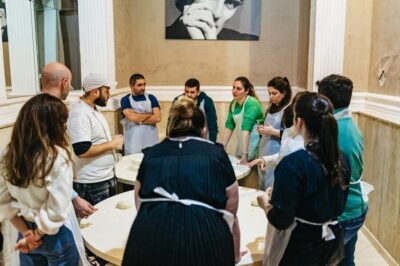
Pizza-Making Workshop with Drink and Appetizer
Read our review →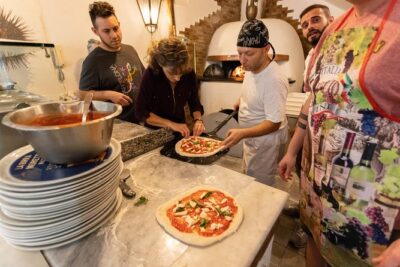
Authentic Pizza Making Class in Naples with Appetizers and Drink
Read our review →
Naples Pasta Class: Fettuccine & Ravioli with Grandma’s Recipe
Read our review →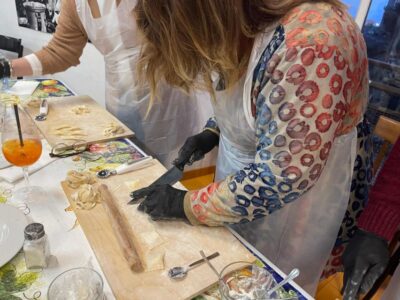
Premium Pizza Class From Dough to Dessert & Wine
Read our review →
Semi-Private Pizza Making Experience in Naples with Drink
Read our review →Browse the lists this tour appears in