
REVIEW · SARDINIA
Cagliari Cooking Class: Sardinian Ravioli, Wine & Local Flavors
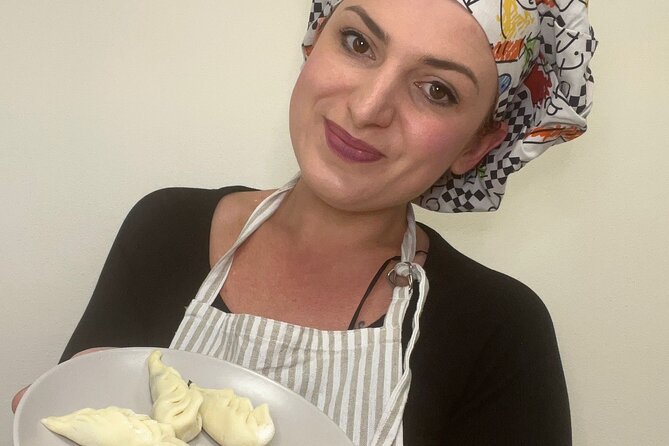
Sardinian pasta is the star here. You’ll shape culurgiones, the island’s distinctive ravioli filled with potato and mint, then make fresh tagliatelle from local flour. Giulia teaches step by step, and the small maximum of six means you get real help rather than a quick demonstration from across the room.
I like two things right away: you eat the pasta you make, and the meal includes more than noodles. Sardinian cheeses, cured meats, honey, wine, dessert, and homemade Mirto turn the lesson into a full taste of the island. The main consideration is the meeting point, which is in Sestu at Via G. Matteotti 34, not at a central Cagliari landmark.
Key points at a glance
- Two pasta shapes in one class: Make both culurgiones and fresh tagliatelle, not just one basic dough.
- A true small-group setting: The class accepts a maximum of six people, allowing for one-on-one guidance.
- A complete Sardinian meal: Start with cheeses, cured meats, and honey, then eat the pasta you prepared.
- A local finish: Dessert and homemade Mirto provide a proper Sardinian ending.
- Useful take-home material: Digital recipes help you repeat the dishes after returning home.
- Plan the meeting point: The class begins and ends at Via G. Matteotti 34 in Sestu, with public transportation nearby and easy parking noted.
Two Sardinian pastas, not one ordinary cooking lesson
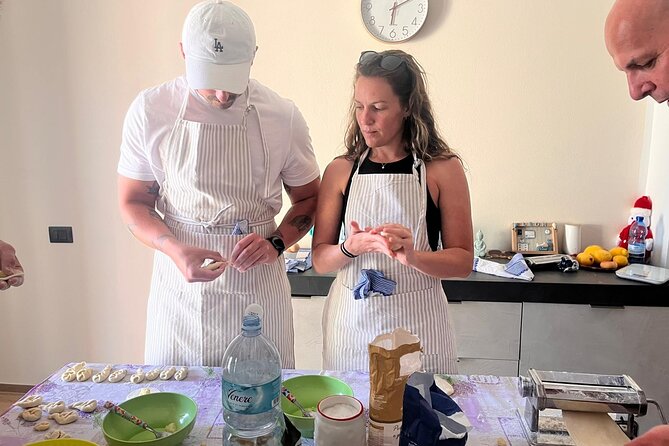
Many Italian cooking classes center on one familiar pasta shape. This one gives you two very different jobs. Tagliatelle teaches you the basics of fresh dough and cutting. Culurgiones asks for more patience, since the filled pasta must be sealed in its traditional form.
That variety matters. You get a simple pasta you can make again without much fuss, plus a more distinctive Sardinian specialty. Culurgiones are especially useful to learn in Sardinia because they are closely tied to the island’s food traditions, with the potato and mint filling giving them a flavor far removed from standard meat or cheese ravioli.
Giulia demonstrates each stage before you work with the dough yourself. The structure is friendly to beginners, and you do not need previous cooking experience. Still, do not expect a passive food demonstration. You will be handling dough, shaping pasta, and relying on direct instruction.
The class lasts about three hours. That is enough time for cooking, eating, and conversation without turning the activity into an all-day commitment. If your Sardinia schedule is tight, it can fit neatly into a morning or afternoon, though the exact meal timing is not specified.
More Ravioli and Gnocchi Classes in Italy:
- 3 in 1 Cooking Class near Navona: Fettuccine, Ravioli & Tiramisu
★ 5.0 · 7,376 reviews - Rome: 3-in-1 Fettuccine, Ravioli, and Tiramisu Cooking Class
★ 4.9 · 2,704 reviews - Rome: Fettuccine Pasta Cooking Class in Rome’s City Center
★ 4.8 · 2,414 reviews
Making culurgiones with potato and mint
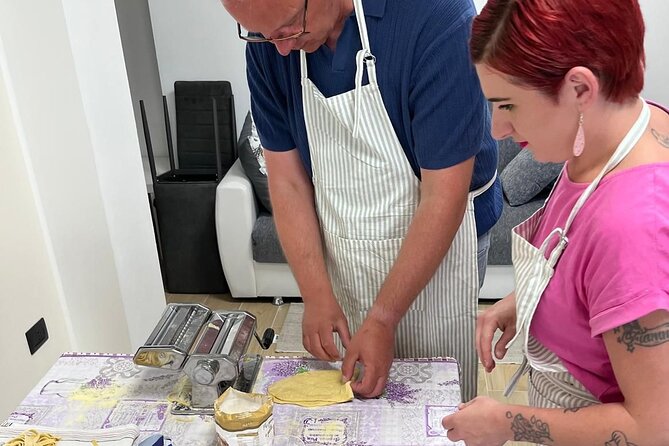
Culurgiones are the most special part of this activity. They look like ravioli, but their identity comes from the filling and the way they are sealed. The potato and mint combination is humble, fragrant, and strongly associated with Sardinian cooking.
You will first make the dough, then prepare the filling and form the individual pieces. This is where the small group helps. A maximum of six people gives Giulia room to watch your hands, correct a fold, or show you the motion again when your first few pieces look less than perfect.
That personal help is one of the strongest reasons to choose this class over a larger workshop. Pasta making is tactile. A written recipe can tell you what to do, but it cannot always show you how soft the dough should feel or how firmly to press a seam. One-on-one guidance fills that gap.
Do not worry if your first culurgiones look uneven. Handmade pasta has a little personality. The point is to learn the method, understand the filling, and get enough practice to repeat it later. The digital recipes give you a useful reference once the flour has been swept away.
Fresh tagliatelle and the pleasure of simple dough
The tagliatelle portion brings the lesson back to a familiar Italian classic. You will work with fresh dough and local flours, then cut the pasta into ribbons. This is a good counterpoint to culurgiones because it shows how one basic dough can produce a very different dish.
I like this pairing for practical reasons. Tagliatelle is easier to recreate at home, while culurgiones gives you a special Sardinian project. Together, they offer both an everyday skill and a regional specialty.
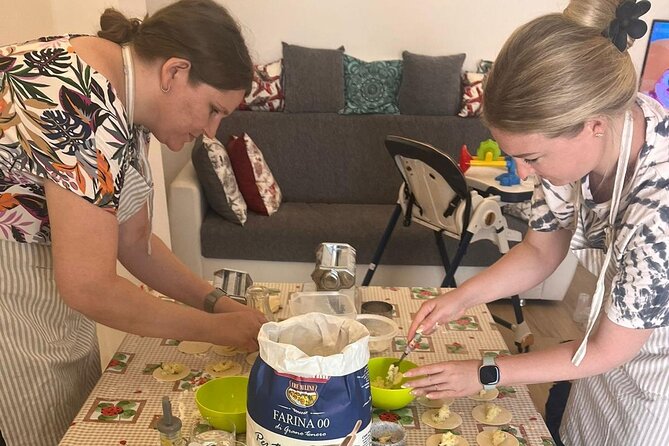
The information provided does not specify the equipment used or the exact flour blend, so you should not arrive expecting a particular type of pasta machine or a formal kitchen-school setup. The setting is a real home kitchen, which is part of the appeal. You are learning in a personal space rather than a commercial classroom.
That home setting also shapes the mood. The class is not only about measurements and technique. It is built around cooking together, sitting down afterward, and sharing food in a relaxed setting. If you want a polished, highly structured professional demonstration, this may feel informal. If you want contact with home-style Sardinian cooking, that informality is a plus.
From antipasti to a full homemade meal
The meal begins with a traditional antipasto spread. Expect Sardinian cheeses, cured meats, and local honey, accompanied by regional wine. This opening course gives you a chance to taste the island’s pantry before your pasta reaches the table.
The honey is a nice detail because it adds a sweet counterpoint to the savory cheese and cured meat. You are not simply filling time while pasta cooks. The starter introduces several local flavors and makes the meal feel like a proper Sardinian table.
Next come the two pasta preparations you made during the class. The dishes are served with traditional sauces, though the specific sauces are not named. That means the meal remains connected to local cooking, but you should not book this expecting a fixed menu with every recipe listed in advance.
The class includes lunch or dinner, depending on the schedule, with three courses overall. The pasta makes up the central course, while the antipasti and dessert give the meal a fuller shape. Regional wine and water are included during the meal.
For many people, this shared table is as important as the cooking. You get to see how the pasta behaves after boiling, taste the result of your work, and talk with Giulia in a home setting. It also removes one common problem with cooking classes: finishing the lesson hungry and then having to find a restaurant.
More Pasta Classes with Wine in Italy:
- Florence: Pasta Cooking Class with Unlimited Wine
★ 4.9 · 10,285 reviews - Florence: Pasta & Tiramisu Cooking Class with Unlimited Wine
★ 4.9 · 6,708 reviews - Florence: Pasta Cooking Class with Unlimited Wine
★ 5.0 · 6,413 reviews - Rome: Pasta & Tiramisu Class with Fine Wine by the Vatican
★ 4.9 · 4,852 reviews
Dessert and homemade Mirto finish the evening
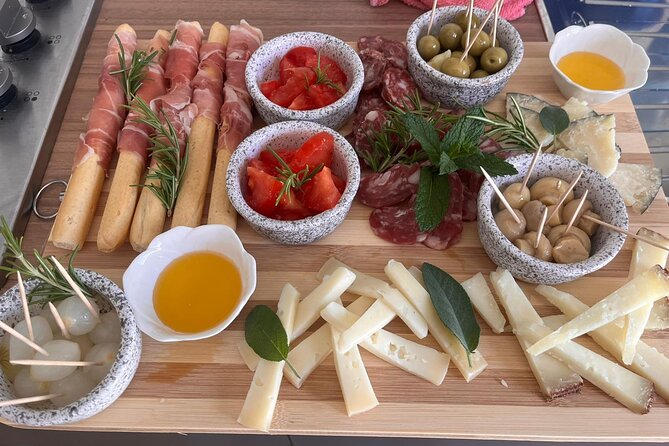
The final course is a traditional Sardinian dessert, followed by homemade Mirto. Mirto is a myrtle liqueur associated with Sardinia, and it is a fitting way to close a meal built around island ingredients.
The inclusion of homemade Mirto gives the activity a local detail that a standard pasta class might skip. It is not just another glass of generic digestif. You get to try a drink with a clear connection to Sardinian food culture.
You should remember that Mirto is alcoholic. The provided details do not name the dessert or describe nonalcoholic alternatives, so tell the host about any dietary or drink-related needs before the class. Food allergies should also be reported in advance.
A small group makes a real difference
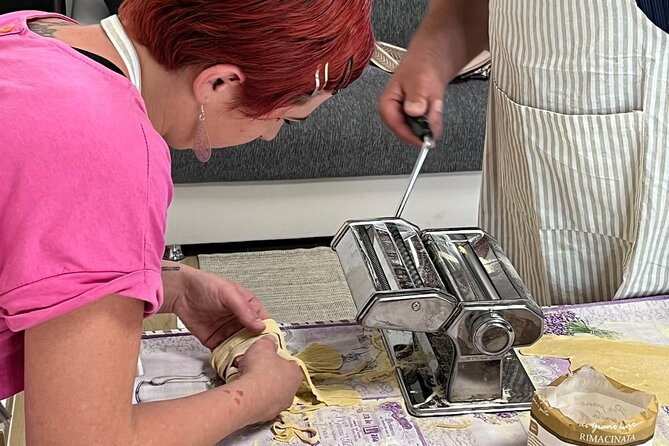
The maximum group size is six. That number changes the feel of the class in useful ways. You are more likely to get direct help, ask questions without interrupting a large crowd, and keep up with the pace of the lesson.
Small groups also make the meal more social. The activity includes a shared table rather than a quick plate eaten at your workstation. If you enjoy chatting over food, the format should suit you well. If you prefer a private class just for your own party, the supplied details do not promise that arrangement.
The teacher’s role is a major part of the experience. Giulia is described as patient, skilled, and cheerful, with a talent for both cooking and teaching. That combination matters. A great cook is not automatically a good instructor, but this class is designed around clear demonstrations and individual assistance.
The tone appears relaxed and good-humored. You can expect a hands-on session rather than a stiff lecture. That is especially helpful if you are nervous about making pasta for the first time.
The Sestu meeting point and practical planning
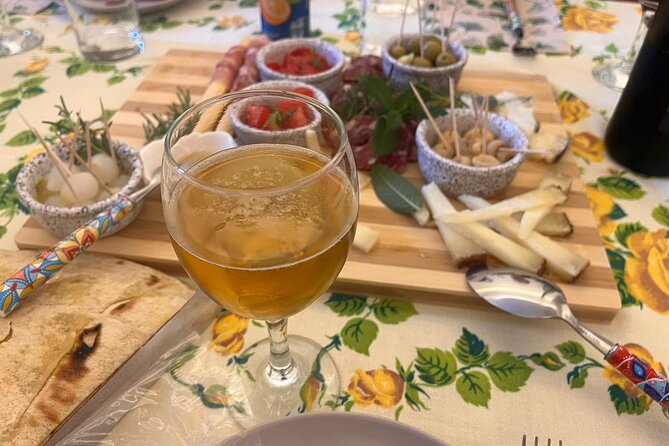
The activity starts and ends at Via G. Matteotti 34, 09028 Sestu CA, Italy. Sestu is the key detail to note when planning your day. The general description places the experience in the Cagliari area, but the specific meeting address is in Sestu, so check your route before booking.
Public transportation is nearby, and easy parking has been noted at the home. That makes the class workable for people using different forms of transport. The supplied information does not give exact travel times from central Cagliari, so you should allow enough time to reach the address and avoid treating it as a walk-up activity from a central tourist sight.
The experience ends back at the meeting point. You do not need to arrange a separate return location, and the three-hour length makes it easier to pair with another plan. Still, a substantial meal, wine, and Mirto may make this better suited to a relaxed part of your day than to a rushed transfer.
Service animals are allowed. Food allergies should be reported to the provider, and the class is offered in English.
Is $94.82 a fair price?
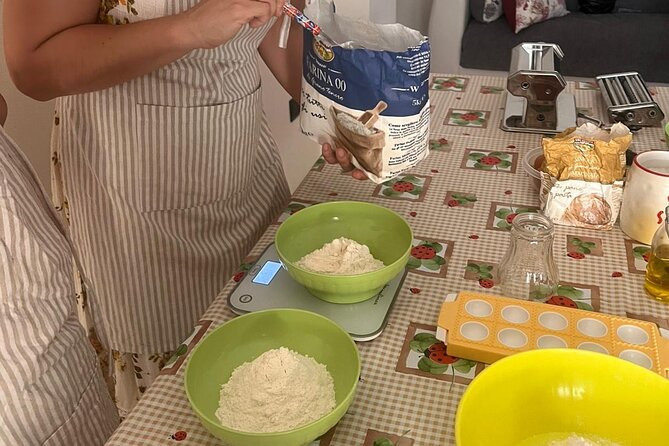
At $94.82 per person, this is not the cheapest way to eat pasta in Sardinia. It is also more than a short demonstration or a basic market tasting. The value comes from the combination of instruction, two pasta types, a full meal, drinks, dessert, and the small group size.
You are paying for more than the ingredients. You receive hands-on teaching, direct assistance, digital recipes, and a meal that includes regional products. The class also replaces one restaurant meal, although you should not compare the price only with the cost of a plate of pasta.
The maximum of six improves the value. In a large class, the same price could feel steep if you spent most of the time watching. Here, the format gives you a better chance to practice both recipes and receive corrections.
The price makes the most sense if you want an activity as well as dinner. Food lovers, curious beginners, and people who enjoy bringing home a skill will likely get more from it than someone looking only for a cheap meal.
The activity is often booked about 21 days ahead. That suggests you should not leave it until the last minute if the date matters to you, especially since the group is limited to six people.
Who should book this class?
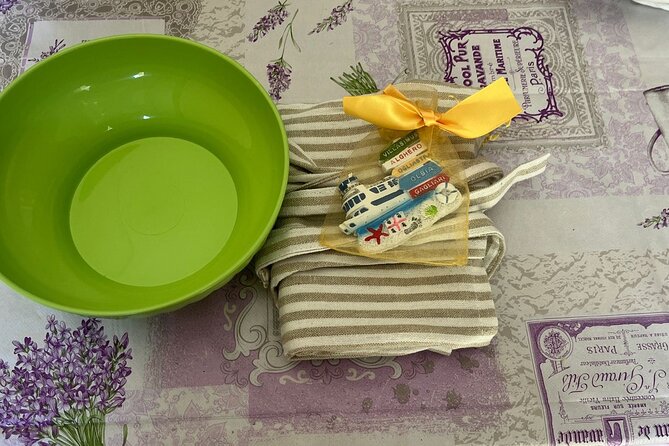
I would choose this for anyone who wants a direct connection with Sardinian food rather than a general Italian cooking lesson. Culurgiones are the big reason to book. They give you a regional dish that may be difficult to encounter in a typical pasta class elsewhere in Italy.
It also works well for couples, families, and small groups of friends who enjoy cooking together. Beginners are welcome, and the one-on-one guidance reduces the pressure of getting everything right immediately.
The class may be less suitable if you dislike shared meals, have strict dietary needs that cannot be accommodated, or want a lesson focused on advanced culinary technique. The menu includes cheese, cured meats, honey, wine, and Mirto, so check with the provider before booking if you have allergies or restrictions.
You should also think about the meeting point. If you are staying in central Cagliari without a car, confirm that the nearby public transportation works for your schedule. If you are driving, parking is a useful advantage.
Cancellation and booking details
You can cancel for a full refund up to 24 hours before the experience starts. Cancellations made less than 24 hours before the start time are not refunded, and changes inside that same window are not accepted. The cut-off follows local time.
Confirmation is received at booking. Since the activity is offered in English and has a six-person maximum, check the date, language, meeting address, and allergy information before paying.
Should you book the Sardinian pasta class?
Book it if you want to make two traditional pastas, eat a complete Sardinian meal, and spend time in a small home kitchen with Giulia. The combination of culurgiones, tagliatelle, regional products, wine, dessert, and Mirto gives you a lot for a three-hour activity.
I would be especially keen to book it early if culurgiones are new to you. The dish is the class’s most distinctive feature, and the chance to learn its potato-and-mint filling and handmade shape is more memorable than another generic pasta lesson.
Skip it if Sestu is inconvenient, if you need a highly customized menu, or if you want a short tasting with no cooking. For everyone else, the small group, full meal, and take-home recipes make this a strong food experience at a fair price.
FAQ
Where does the cooking class meet?
The class starts and ends at Via G. Matteotti 34, 09028 Sestu CA, Italy.
How long does the experience last?
The cooking class lasts approximately three hours.
What pastas will I make?
You will make traditional Sardinian culurgiones with a potato and mint filling, along with fresh tagliatelle.
Is previous cooking experience required?
No. The activity is designed for beginners and includes step-by-step instruction with individual guidance.
What food and drinks are included?
The meal includes Sardinian antipasti with cheeses, cured meats, and honey, the fresh pasta you prepare, traditional sauces, a Sardinian dessert, regional wine, water, and homemade Mirto liqueur.
How many people can join the class?
The activity has a maximum of six participants.
Can I cancel for a full refund?
Yes. You can cancel at least 24 hours before the start time for a full refund. Cancellations or changes made less than 24 hours before the start time are not accepted for a refund.
More Wine Tastings in Italy
- Rome: Pasta Making Class with Wine, Limoncello, and Dessert
★ 4.9 · 3,177 reviews - Learn to Make Pasta & Tiramisu with Wine and Limoncello Included
★ 5.0 · 2,345 reviews - Florence: Cooking Class Pasta & Tiramisu Making Unlimited Wine
★ 5.0 · 2,234 reviews - Fettuccine & Tiramisù: Cooking Class with Wine & Limoncello
★ 4.9 · 2,103 reviews
Just added around Italy
- Volterra: Fresh Pasta Cooking Class at a Tuscan Farmhouse★ 5.0 · 33 reviews
- Verona: Tortellini Cooking Class and Lunch with Mamma Ivana★ 5.0 · 20 reviews
- Vicenza: Pasta & Tiramisu Cooking Class at a Local’s Home★ 5.0 · 5 reviews
- Verona: My Granny’s secrets making gnocchi★ 5.0 · 7 reviews
- Verona: Prosecco and Pasta Making Class at a Local’s Home★ 5.0 · 10 reviews
- Verona: Pasta Cooking Class with Wine Tasting★ 5.0 · 4 reviews
- Verona: Pasta & Tiramisu Cooking Class at a Local’s Home★ 5.0 · 16 reviews
- Venice: Share Your Pasta Love in a Local’s Home★ 4.8 · 20 reviews
Sardinia Pasta Classes, compared.
Alghero Home Cooking Pasta Class at a Farmhouse with Wine
Read our review →
Cooking Class in a Secret Courtyard – Culurgiones (Sardinian Pasta)
Read our review →
Small group Pasta and Tiramisu at Local Home in Olbia
Read our review →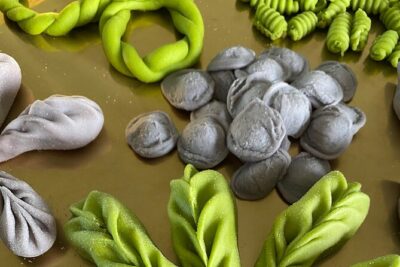
Cagliari: Pasta art Cooking Class with 3-Course Dinner
Read our review →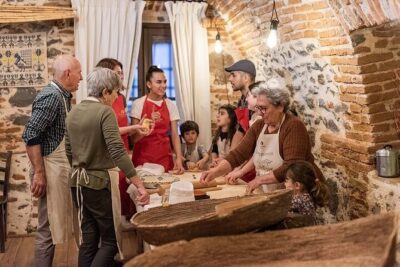
Blue Experience – Cooking Lesson ” Make Pasta , Live Longer “
Read our review →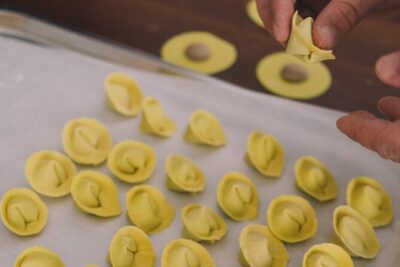
Browse the lists this tour appears in