
REVIEW · ROME
Best of Rome Walking Tour and Master of Pizza Class
The best part of this four-hour experience is the switch from ancient monuments to hands-on pizza making. You begin at Piazza di Spagna, walk through the historic center, and finish at a restaurant where a pizzaiolo helps you make a thin Roman pie from scratch.
I like two things here: the walking tour gives first-time visitors a quick map of central Rome, and the cooking class turns lunch or dinner into an activity. Guides such as Nina, Sara, Chris, and Simone have earned especially warm praise for making the history clear and keeping children interested.
The main caution is that the cooking portion has not always gone exactly as planned. Illness, scheduling mix-ups, or a change from pizza to pasta have affected some departures, and communication has been a serious problem in a few cases.
Key points at a glance
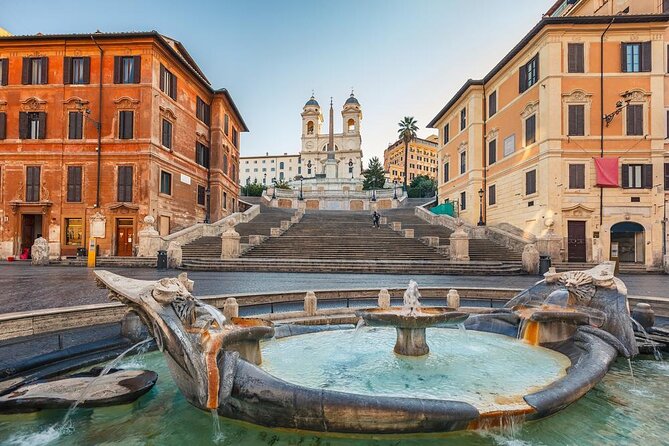
- A fast first look at central Rome: See Piazza di Spagna, the Pantheon, Trevi Fountain, Piazza Navona, and other important sights without spending all day on your feet.
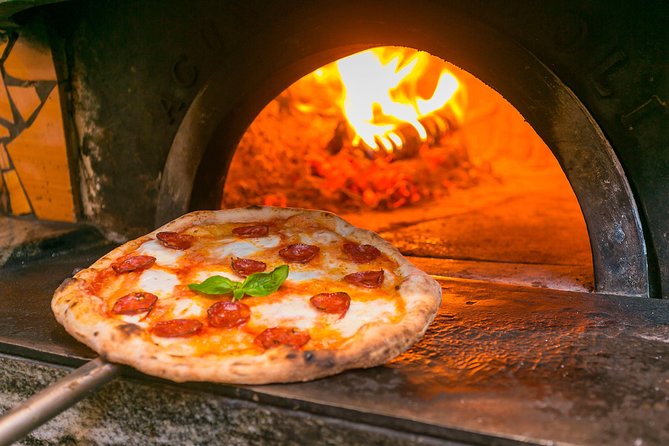
- Pizza made from fresh dough: Stretch the dough very thin, add sauce and toppings, and bake your own pizza in a traditional oven.
- Good for families: Children as young as 9 and 10 have enjoyed the class, and older children and teens get a welcome break from sightseeing.
- Guide quality matters: Nina, Sara, Chris, Simone, and others have been praised for clear explanations, local tips, and friendly conversation.
- A small group, up to 20 people: Some departures have been much smaller, including private family groups and groups of six or seven.
- Allow for changes: The class may move to another restaurant or switch to pasta if the chef is unavailable.
Why this works as a first day in Rome
Rome can feel like a museum without walls. You walk a few minutes and meet a temple, fountain, palace, or church that deserves more time than you have. This tour gives you a useful first pass through the center, then rewards you with a meal you help prepare.
I especially like the balance. A guide provides the setting and the stories, but you are not asked to spend four straight hours listening. The walking portion takes about 90 minutes according to one detailed account, although the full experience lasts about four hours. The pizza workshop then gives your feet a rest and lets you do something with your hands.
That makes this a smart choice after arriving in Rome, particularly if you want a gentle introduction before tackling the Colosseum or Vatican Museums. One family used it as its first activity after arriving and found the overview useful while recovering from jet lag. The route moves at a quicker sightseeing pace, so you see many places without stopping for a long lecture at each one.
You should not book it expecting extended time at every monument. If you want 30 minutes at the Trevi Fountain, a close look inside every church, or a long pause on the Spanish Steps, this format may feel rushed. It is best for getting your bearings and learning what deserves a longer visit later.
More Pizza Making Classes in Rome
- Cooking Class in the Heart of Rome: Pizza and Tiramisu Making
★ 5.0 · 1,330 reviews - Rome: Combo Pizza and Pasta Cooking Class with Wine
★ 4.6 · 1,180 reviews - Rome: Pizza & Tiramisu Class with Free Flowing Fine Wine
★ 5.0 · 973 reviews
Starting at Piazza di Spagna
The meeting point is Piazza di Spagna, 18, near the Spanish Steps. This is a sensible place to begin because it sits in the heart of Rome and is close to public transportation. It also gives you an immediate taste of the city’s grand central stage.
From here, your guide leads you through the historic center toward major landmarks. The exact route and order can vary, but the experience is built around famous sights such as the Pantheon and Trevi Fountain, with other central stops along the way.
Your guide is a major part of the value. Nina has been praised for giving important facts without burying the group in information. Sara has been singled out for historical detail, local advice, and an engaging manner. Chris has adapted the route when churches or sights were closed, including on a Sunday departure.
Guides also add the human side of Rome. Simone has shared tips about the city and what it is like to be Roman. That kind of local perspective is useful because a first walk through Rome can otherwise become a parade of names and dates.
The guide may ask questions as part of the presentation. One person found this distracting, so if you prefer a quiet lecture, the style may not suit you. Most accounts point to a friendly, conversational approach rather than a formal academic tour.
The Pantheon and Rome’s ancient center
The Pantheon is one of the key stops, and it gives you a sharp lesson in Rome’s habit of reusing the past. From the outside, its huge portico and ancient columns are hard to miss. Inside, the great dome and central opening make the building feel far larger and stranger than photographs suggest.
The time here is likely enough for an explanation and a look around, not an extended study session. On some days, access to churches or other interiors may be limited by services or closing times. Your guide can adjust, but you should accept that the route is a broad introduction, not a guaranteed visit inside every building.
This is where the tour helps most if you are new to Rome. You get the story behind the stones, along with a sense of how the center fits together. Later, you can return to the Pantheon on your own and spend more time there if it catches your interest.
The Trevi Fountain and the coin tradition
The Trevi Fountain is another central highlight. The familiar tradition says that throwing a coin into the water means you will return to Rome. Your guide explains the custom and gives you a chance to take in one of the city’s most recognizable scenes.
Expect a short stop for photographs and atmosphere rather than a private view. The fountain is a popular public site, and the point of this tour is to introduce you to it within a larger walk. If you want time to watch the water, examine the sculpture, and find a quieter angle, plan to come back separately.
The same advice applies to the Spanish Steps. You will see the area as part of the route, but this is not a slow photography tour. One account specifically noted that each stop was brief, which suited a group that wanted to see many sights. People who like to linger may need to return later.
Same kitchen, a different thing to make:
- 3 in 1 Cooking Class near Navona: Fettuccine, Ravioli & Tiramisu
★ 5.0 · 7,376 reviews - Rome: Pasta & Tiramisu Class with Fine Wine by the Vatican
★ 4.9 · 4,852 reviews - Rome: Pasta Making Class with Wine, Limoncello, and Dessert
★ 4.9 · 3,177 reviews - Rome Cooking Class: Make Pasta and 3 Spritz Cocktails
★ 5.0 · 2,937 reviews
A quick route through Piazza Navona and beyond
The walk may continue through other central squares and streets, including Piazza Navona. This open square is known for its grand fountains and long, lively shape, and it helps show how Rome’s public spaces work as gathering places as well as monuments.
One departure finished the walking portion at Piazza Navona rather than back at Piazza di Spagna. That created confusion when the pasta class had been moved to a later time and a different location. The advertised meeting and ending details say the activity ends back at the original meeting point, but changes can occur, so pay close attention to any same-day instructions.
This is also a good reason not to schedule a tight appointment immediately afterward. The standard duration is about four hours, but a substitute class or restaurant change can alter the timing. Give yourself breathing room.
Making Roman pizza from scratch
The cooking class is the heart of the experience. A professional pizzaiolo shows you how to turn simple ingredients into a thin Roman-style pizza. You begin by making soft, flexible dough, then stretch it until it is very thin, described as almost paper thin.
That hands-on step matters. This is not simply a demonstration followed by a restaurant meal. You handle the dough, prepare the sauce, choose toppings, and place the finished pizza in a traditional oven. The result is your lunch or dinner, not just a sample.
The class also offers plenty of room for personal taste. Several groups were allowed generous access to toppings, and one family made both savory and sweet pizzas. Another group praised the dessert served with the meal, including tiramisu at a restaurant called Origano.
You should know that the class may focus more on shaping than on full dough preparation. One person felt the chef should have demonstrated the dough-making process more fully and said the lesson mainly covered rolling. If you are hoping for a detailed lesson in fermentation, hydration, and oven science, this may feel basic.
For most people, that simplicity is part of the appeal. You learn the main motions, eat what you make, and leave with a better sense of why Roman pizza is so thin. It is a social cooking activity, not professional training.
Translation and the restaurant setting
The chef may not speak English. That has not prevented the class from working well because the guide can translate instructions. Nina translated for Chef Mario during one class, while other guides have done the same when the pizzaiolo spoke only Italian.
This arrangement can actually add a pleasant local touch, but it depends on the guide staying involved. If the walking guide leaves before the class or the schedule changes, instructions may become less clear. Confirm that the guide will accompany the group through the workshop if this matters to you.
The restaurant has varied by departure. Origano was named by several people, while another class moved to a different pizzeria because the original chef was sick. One group had to take a taxi to the replacement location, which made the change more inconvenient.
The meal itself is a strong part of the value. You are not paying only for a lecture and a small tasting. You finish with a proper pizza, and in some cases dessert as well. Still, the exact menu, restaurant, and class format should be treated as subject to change.
How the experience handles children and mixed ages
This is one of the better Rome options for a family that wants history without making the entire day about history. Children aged 9 and 10 stayed interested during the walk because the guide kept things moving, then enjoyed the pizza class most of all.
The format also works for teens. A group with two teenage boys found it a good first activity, especially because the walking portion was not too long and the meal followed right away. The practical reward helps prevent the usual monument fatigue.
Adults should enjoy it too. The guides have shared local stories and historical context, and some adults with previous Rome experience still learned something new. The class gives the group a shared task, which can be more memorable than another restaurant meal.
The main physical requirement is moderate fitness. You will walk through central Rome, stand at sights, and work in a kitchen. Comfortable shoes are sensible, especially in a city where old streets and paving can be tiring.
Price, group size, and overall value
At $104.38 per person, this is not the cheapest way to see the Pantheon or Trevi Fountain. You are paying for a guide, a walking introduction, a cooking class, ingredients, and the pizza meal. Compared with booking a basic sightseeing walk and a separate restaurant dinner, the price can be reasonable if you value the activity and the food.
The best value comes when you use it as your first Rome orientation. You see several major areas, receive context from a guide, and finish with a meal that replaces one restaurant stop. It is less useful if you already know central Rome well and mainly want an advanced pizza lesson.
The group limit is 20 people. That is large enough to feel like a proper group tour, though individual departures have sometimes been much smaller. A family of four even ended up with what felt like a private tour. A group of six and another of seven also found the size comfortable.
Smaller groups make it easier to hear the guide and ask questions. You cannot count on that every time, but the maximum is not enormous for a walking tour. If you strongly prefer private guiding, this is not sold as a private experience, so treat a small group as good fortune rather than a promise.
Communication problems you should take seriously
Most of the strong experiences depend on a guide showing up and keeping the plan clear. There have also been serious failures. Some people arrived at the meeting point and could not find the guide or reach the local phone number. Others received cancellation or rescheduling messages at awkward times, including one sent in the early morning for a same-day tour.
One departure was canceled shortly before the stated start time according to the person waiting at the meeting point. The operator disputed the timing and said earlier email and text notices had been sent. That disagreement points to a practical lesson: check your email, text messages, and booking messages before leaving for the meeting point, and save the operator’s contact details.
The experience is non-refundable and cannot be changed for personal reasons. If the minimum number is not reached and the operator cancels, you should be offered another date or experience, or a full refund. Because of the strict policy, I would avoid booking it on a day tied to a flight, train, or expensive timed ticket.
Who should book this Rome experience
I would choose this for a first visit, a family with children, or anyone with only a short stay in Rome. It gives you a useful sweep of the historic center without taking a full day, and the pizza class adds something personal to the standard sightseeing routine.
It also suits people who like food classes but do not want to give up a major sightseeing block. The walk and meal fit together naturally, and the cooking keeps the experience from feeling like a string of photo stops.
I would hesitate if you need a fixed schedule, dislike group tours, or want long visits at each landmark. I would also think twice if your main goal is a serious pizza-making course, since the lesson may concentrate on stretching, sauce, and toppings rather than a full technical study of dough.
Should you book it?
Book it if you want a friendly first look at Rome followed by a fun meal you help make. The strongest parts are the guides, the family-friendly pace, and the chance to turn sightseeing into an active experience.
Book with a little flexibility. The walking route may be brisk, the restaurant or class may change, and communication has not been flawless on every departure. If you accept those limits, this is a tasty and practical introduction to Rome at a fair price for a guided walk plus lunch or dinner.
FAQ
Where does the tour start?
It starts at Piazza di Spagna, 18, 00187 Roma RM, Italy.
Where does the activity end?
The stated end point is back at the original meeting point.
How long does the experience last?
The experience lasts approximately four hours. The walking portion has taken about 90 minutes on one departure, followed by the cooking class and meal.
What sights are included on the walk?
The route includes major central Rome landmarks such as the Pantheon and Trevi Fountain. It may also include Piazza Navona, the Spanish Steps, and other historic sites.
Is the pizza class included?
Yes. The pizza-making class is included in the experience.
Is the tour offered in English?
Yes. It is offered in English. The pizzaiolo may speak Italian only, but the guide may translate during the lesson.
Can I share dietary requirements?
Yes. You should provide any specific dietary requirements when booking.
What happens if the tour is canceled because not enough people book?
If the minimum number is not met, you should be offered a different date or experience, or a full refund.
More Walking Tours in Rome
- Knead, Walk and Taste Rome with Pizza Class in Trastevere
★ 5.0 · 6 reviews - Walking tour in the Heart of Rome and Pizza Class in a Very Small Group
★ 5.0 · 6 reviews - Private Pizza and Gelato Walking Tour in Rome
★ 5.0 · 4 reviews - Walking Tour & Pizza Making
★ 4.0 · 2 reviews
Just added around Rome
- Rome: Pasta and tiramisu class with wine pairing at Come Na Vorta★ 5.0 · 30 reviews
- Rome: Vespa Tour with Photographer and Tiramisu treat★ 4.5 · 61 reviews
- Spritz and Pasta! Spritz, Fettuccine & Tiramisù★ 5.0 · 2 reviews
- Walking Tour & Pizza Making★ 4.0 · 2 reviews
- Trastevere Food Tour with Pasta-Making Class★ 5.0 · 5 reviews
- Rome: Private Vespa Tour and Professional Photoshoot★ 5.0 · 22 reviews
- Traditional Pasta Cooking Class with Tiramisu Small Group★ 5.0 · 7 reviews
- Tiramisu and Gelato Creation in Authentic Roman Dessert Workshop★ 4.5 · 3 reviews
Rome Pasta Classes, compared.
3 in 1 Cooking Class near Navona: Fettuccine, Ravioli & Tiramisu
Read our review →
Pasta & Tiramisu Class with Fine Wine by the Vatican
Read our review →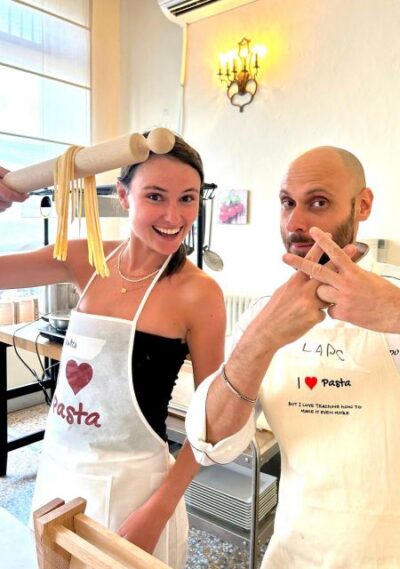
Pasta Making Class with Wine, Limoncello, and Dessert
Read our review →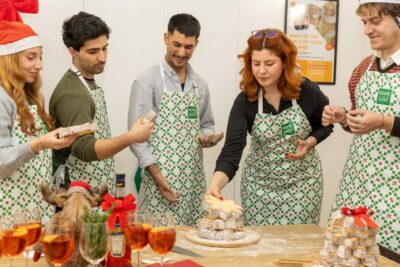
Rome Cooking Class: Make Pasta and 3 Spritz Cocktails
Read our review →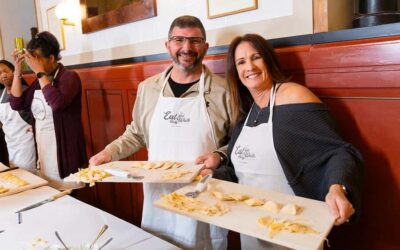
3-in-1 Fettuccine, Ravioli, and Tiramisu Cooking Class
Read our review →
Fettuccine Pasta Cooking Class in Rome’s City Center
Read our review →
Learn to Make Pasta & Tiramisu with Wine and Limoncello Included
Read our review →
Become a Masterchef in Rome: Pasta, Ravioli and Tiramisù Class
Read our review →Browse the lists this tour appears in