
REVIEW · BOLOGNA
Colorful Pasta Workshop in Bologna with meal
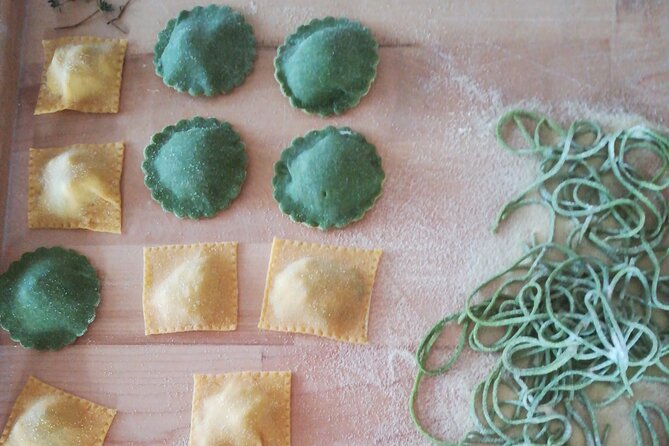
The most memorable part of this Bologna class is turning ordinary flour and eggs into brightly colored pasta with beet, basil, spinach and other foods. I like that you do the work yourself, from mixing dough to shaping tortelloni, and I like that the class ends with five pasta tastings rather than one hurried plate.
You also get a friendly look at home cooking with an Italian family, plus local Parmesan, balsamic vinegar, dessert and wine. The main thing to consider is the kitchen: on a hot day, working with dough for three and a half hours may feel warm and tiring, so bring patience and wear comfortable clothes.
Key points to know before booking
- Color the dough with real ingredients: Beet, basil leaves, spinach and other foods give the pasta its shades.
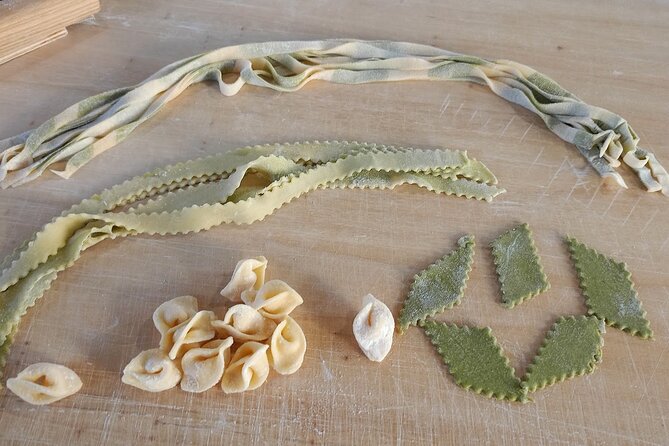
- Make several pasta shapes: You practice hand-cut tagliatelle, fusilli, farfalle and filled pasta such as tortellini, ravioli or tortelloni.
- Eat five handmade pasta dishes: Different sauces let you compare the shapes and flavors you have just prepared.
- Learn from Food Valley ingredients: The flour and other selected products come from farms in the surrounding food-producing area.
- Small group, practical format: The class accepts no more than 10 people, with English offered and a mobile ticket.
- Good value for a meal-centered class: The $95.53 price includes instruction, dinner, wine tasting, alcoholic drinks and other beverages.
Why colorful pasta makes this Bologna class different
Bologna is famous for fresh egg pasta, but this class adds a playful visual lesson to the standard cooking session. You are not simply shown how pasta is made. You learn how ingredients affect the dough, how color enters the mixture and how the finished pasta changes the look of the meal.
The basic idea is wonderfully simple. Flour, water or eggs become dough, yet the results depend on proportions, texture and handling. The hostess explains the types of flour used and their different characteristics, giving you a useful foundation before the hands-on work begins.
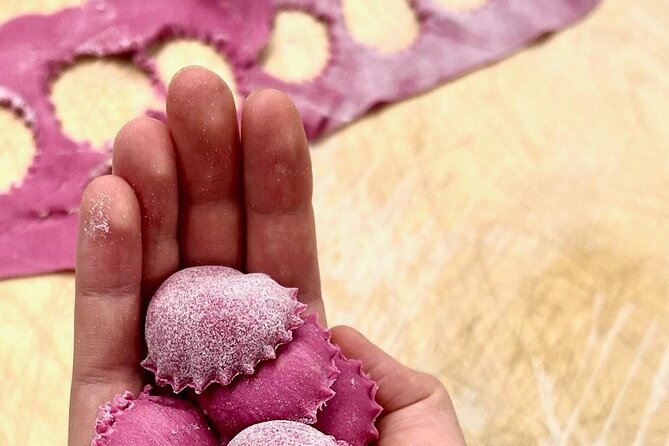
The color lesson is the most distinctive feature. Beet can bring a strong pink or red tone, while basil and spinach add green. One participant noted that mixing pesto more thoroughly into the egg would have made the green more pronounced. That is a useful tip: take your time at this stage if you want the color to show clearly in the finished pasta.
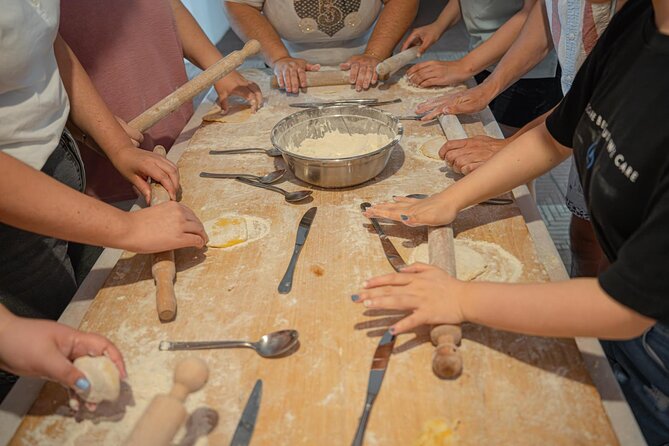
This is still a cooking class, not a food demonstration. You should expect flour on your hands, repeated rolling and shaping, and the small corrections that come with learning fresh pasta. That makes it a good match for you if you want an activity with a clear result at the end.
A few more classes around Bologna worth a look
- Bologna Food & Market Tour with 6 Tastings, Pasta, Wines & More
★ 5.0 · 1,328 reviews - Bologna: Pasta Cooking Class, Ragu, Spritz, Wine & Gelato
★ 4.9 · 775 reviews - Bologna Local Pasta Cooking Class, Ragu, Spritz, Wine & Gelato
★ 5.0 · 527 reviews
From flour and eggs to workable dough
The class begins in the kitchen, where you learn about the ingredients before shaping anything. The selected ingredients come from farms in the Food Valley, the productive area around Bologna known for its traditional food products.
You work with the basics first. The hostess explains how flour differs and how the dough may use water or eggs. This matters because pasta dough is not just a matter of following a recipe. The flour and liquid affect firmness, stretch and the way the dough behaves under a rolling pin or pasta machine.
For a first-time pasta maker, this opening section gives you a better sense of what to watch for. You can pay attention to texture instead of treating the dough as a mystery. For an experienced home cook, the value is in seeing how local ingredients are used in a family kitchen.
The pace is likely to feel hands-on rather than rushed, since the class lasts about three hours and 30 minutes. That is enough time to cover several shapes and still sit down for a full meal. It also means this is not a quick activity to squeeze between two short sightseeing stops.
Making green, red and other colored pasta
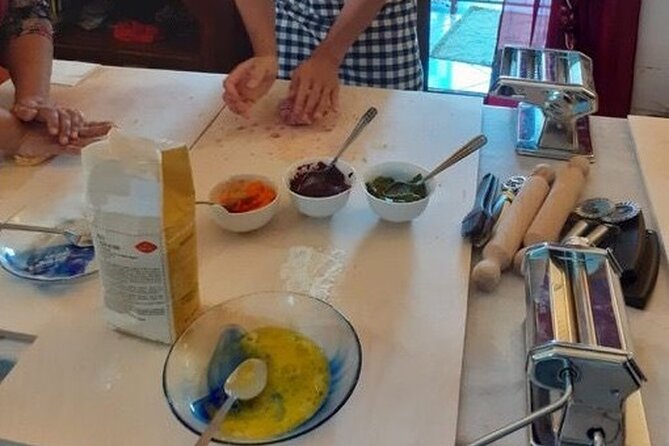
Next comes the part that gives the class its name. You learn to use foods such as beet, basil leaves and spinach to color the pasta. The color is mixed into the dough, so the finished pieces look different before any sauce is added.
This step has both visual and practical value. You see how a natural ingredient can change pasta without turning the session into a complicated science lesson. You also learn that the strength of the color depends on how well the ingredient is mixed, as the note about pesto and green pasta makes clear.
I would treat the color as a bonus, not the only reason to book. The real lesson is control. You learn to make dough that can be rolled, cut and filled, while the colors give you a creative reason to pay attention to the details.
If you are booking with children or anyone who enjoys craft activities, this portion may be especially appealing. The class lets you make something attractive with your hands, then eat it later. The food is not a souvenir that sits on a shelf. It becomes dinner.
Rolling, cutting and shaping the pasta
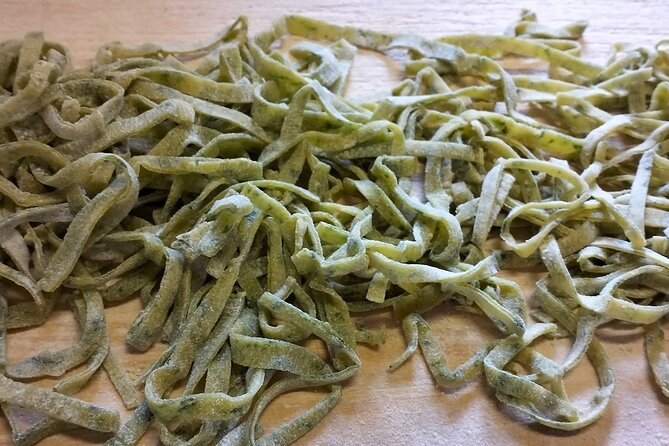
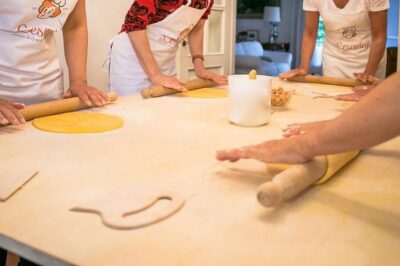
Once the dough is ready, the class moves into the techniques that make fresh pasta useful. You learn to roll and cut the dough by hand, including hand-cut tagliatelle. You also work with fusilli and farfalle, giving you several shapes with different textures and appearances.
The traditional pasta machine is part of the lesson too. That is important for anyone who wants to repeat the process at home. Hand rolling gives you a feel for the dough, while the machine shows how a familiar kitchen tool can create even sheets.
The class also covers filled pasta. You learn how to make tortellini, ravioli or tortelloni. The available feedback gives special weight to making tortelloni, with the participant calling that the point of booking. That makes sense. Filled pasta takes more care than simply cutting ribbons, and completing one successfully gives you a clear goal.
Do not expect every piece to look factory-perfect. That is part of the charm and part of the lesson. Handmade pasta can vary in thickness and shape, and the meal gives you a chance to taste how those differences work with sauce.
Same kitchen, a different thing to make:
- Bologna: Pasta and Tiramisu Small Group Cooking Class with Wine
★ 5.0 · 409 reviews - Bologna: Food Tour with Pasta Tasting & Local Specialties
★ 4.8 · 312 reviews - Bologna: Pasta Tagliatelle al Ragu Cooking Class with Wine
★ 4.7 · 225 reviews - Bologna: 3 Pastas, Tiramisu and Unlimited Wine Tasting
★ 4.6 · 186 reviews
Five pasta tastings, Parmesan and a proper meal
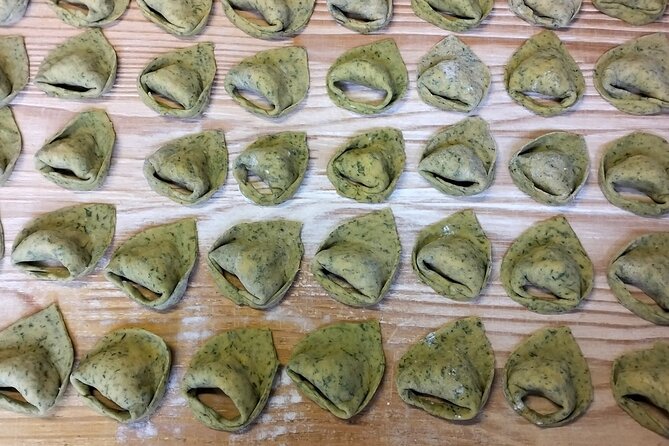
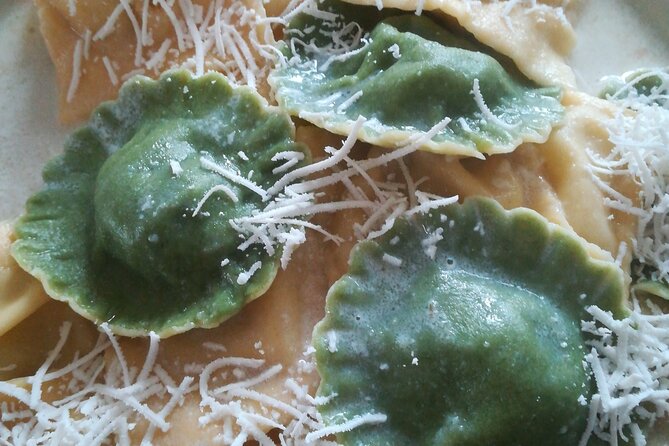
After the work is done, you sit around the table and eat the results. The meal includes five tastings of handmade pasta with different sauces, along with a homemade dessert.
Five tastings are useful because they let you compare more than one shape. Tagliatelle, a twisted shape, a bow tie and filled pasta do not carry sauce in exactly the same way. You can pay attention to the bite, the filling and how the sauce meets each form.
The menu centers on homemade pasta rather than a long list of unrelated courses. That keeps the meal tied to the class. You are tasting the food you helped produce, not being handed a separate restaurant dinner after a demonstration.
The table also includes other gourmet products, including 26-month Parmesan and balsamic vinegar. These details add local food context without taking attention away from the pasta. The Parmesan gives you a chance to taste a well-aged cheese, while the balsamic provides another classic Italian flavor alongside the meal.
A homemade dessert finishes the dinner. It is not specified by type, so you should not book expecting a particular sweet. The reliable point is that dessert is included, along with the pasta tastings and drinks.
Local wine and the family-kitchen setting
Local wine accompanies the meal, and wine tasting is included in the price. Alcoholic beverages and other beverages are also included, so you are not paying separately for the drinks listed as part of the class.
The setting is meant to feel like a connection with an Italian family rather than a formal cooking school. That can make the class more personal, especially if you enjoy learning about food through the people who prepare it at home.
The English offering is useful for anyone who does not speak Italian. You can follow the instructions and ask questions without needing to translate each stage of the recipe. The available details do not name the hostess, so you should not expect a named chef-led format.
The atmosphere is warm and welcoming by design, but the small kitchen setting can also mean a busy working environment. The maximum group size is 10 people, which is small enough for hands-on work while still allowing different skill levels around the table.
Is $95.53 a fair price?
At $95.53 per person, this is not the cheapest way to eat pasta in Bologna. It can be good value if you want a meal, instruction and a social food activity in one booking.
The price includes the hands-on cooking class, dinner, five pasta tastings, homemade dessert, wine tasting, alcoholic beverages and other drinks. It also covers the ingredients used during the lesson, including the colored pasta elements and products from Food Valley farms.
Compare it with what you would otherwise pay for a meal and a separate cooking activity. You are getting roughly three and a half hours of structured time, a full meal and the chance to learn techniques you can repeat at home. The value is strongest for people who want participation rather than simply sitting at a restaurant table.
It is less compelling if you only want a fast introduction to Bologna’s food. The class takes a substantial part of an afternoon or evening, and the main meal is pasta in several forms. If you want a wider menu or a short tasting stop, this is not the right format.
Timing, meeting point and practical planning
The class starts at Viale Abramo Lincoln, 60, 40139 Bologna, Italy, and finishes back at the same meeting point. The activity lasts about three hours and 30 minutes, so allow the full block rather than planning another fixed appointment immediately afterward.
The location is near public transportation, which helps with reaching the start point. The information provided does not give a specific walking time from Bologna’s central sights, so check your route before the day of the class.
A mobile ticket is accepted, and confirmation arrives at booking. The activity is offered in English, which keeps the cooking instructions accessible to English-speaking participants.
Warm weather is worth considering. One participant took the class on a hot day and still found it fun, but a kitchen and several hours of dough work can feel warm. Choose light, comfortable clothing and plan to stay engaged at the work surface.
Tell the provider about special dietary requirements before attending. The class includes eggs, flour, dairy and alcoholic drinks as part of its stated food and beverage program, but the available information does not promise substitutions. Service animals are allowed.
Who will enjoy this class most?
I would recommend it first to people who want to learn a skill while eating the result. You get a clear sequence: ingredients, dough, color, shaping, cooking and tasting. That structure makes the class easy to follow and gives the meal a real purpose.
It also suits couples, families and small groups who like food activities with a creative angle. The colored dough adds something beyond standard tagliatelle making, and the filled pasta gives you a satisfying project to complete.
It may be less suitable if you dislike hands-on work, have limited time in Bologna or want an intimate meal for two without a group setting. The class can include up to 10 people, so it offers a small-group format but not a private dinner unless separately arranged.
You should also think about your alcohol preferences. Wine and alcoholic beverages are included, and the class is built around a meal with local wine. That is a plus for many people, but not the main attraction if you do not drink.
Cancellation and booking flexibility
Free cancellation is available if you cancel at least 24 hours before the local start time. A cancellation made less than 24 hours before the activity does not receive a refund, and changes inside that period are not accepted.
That policy gives you some room to adjust plans early, but you should be careful with same-day changes. Since the class uses food, seating and a small group limit, last-minute flexibility is restricted.
Should you book the colorful pasta workshop?
Book it if you want more than a meal. The strongest reasons are the natural pasta colors, the chance to make several shapes and the five tastings that let you eat your work in different forms. Making tortelloni or another filled pasta is likely to be the most satisfying part if you want one concrete skill to take home.
At $95.53, the class asks for a fair amount of time and money, but the package is substantial: three and a half hours, instruction, dinner, dessert, wine, drinks and a small group capped at 10. I would skip it only if your schedule is tight, you prefer restaurant dining to cooking or you need guaranteed dietary substitutions that have not been confirmed.
For a food-focused day in Bologna, this is a practical and cheerful choice. Bring an appetite, expect a warm kitchen if the weather is hot and take your time mixing the ingredients if you want those colors to show.
FAQ
Where does the colorful pasta workshop begin?
It begins at Viale Abramo Lincoln, 60, 40139 Bologna BO, Italy.
Where does the activity end?
The activity ends back at the meeting point on Viale Abramo Lincoln.
How long does the pasta class last?
The class lasts approximately three hours and 30 minutes.
What language is the class offered in?
The class is offered in English.
What is the maximum group size?
The activity has a maximum of 10 participants.
What kinds of pasta will you learn to make?
You can learn to make hand-cut tagliatelle, fusilli, farfalle and filled pasta such as tortellini, ravioli or tortelloni. You also learn to use a traditional pasta machine.
How is the pasta colored?
The class uses foods such as beet, basil leaves and spinach to give the pasta different colors.
What is included in the price?
The price includes the hands-on cooking class, dinner, five pasta tastings with different sauces, homemade dessert, wine tasting, alcoholic beverages and other beverages.
Can you cancel for a full refund?
Yes. You can cancel for a full refund up to 24 hours before the experience start time. Cancellations and changes made less than 24 hours before the start time are not accepted for a refund.
Just added around Bologna
- Cesarine: Small group Tortellini Class at Local’s Home in Bologna★ 5.0 · 18 reviews
- Tortelloni and Tagliatelle Cooking Class in Bologna + Wine★ 3.0 · 2 reviews
- Cesarine: Pasta & Tiramisu Class at a Local’s Home in Bologna★ 5.0 · 29 reviews
- Private Pizza & Tiramisu Class at a local’s home with tasting in Bologna★ 5.0 · 4 reviews
- Pasta Making Class: Tagliatelle & Bolognese Sauce★ 5.0 · 15 reviews
- Home Cooking: Pasta Making with Natural Colors in a Tiny Group★ 5.0 · 6 reviews
- Pasta and Tiramisu Masterclass with organic wines★ 3.5 · 3 reviews
- Learn & Eat: fresh pasta masterclass and meal in a local’s home★ 5.0 · 6 reviews
Bologna Pasta Classes, compared.
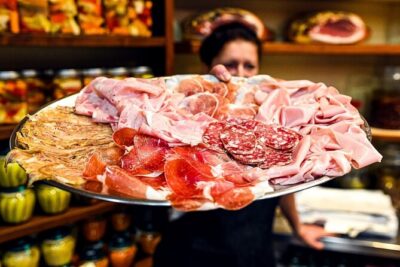
Bologna Food & Market Tour with 6 Tastings, Pasta, Wines & More
Read our review →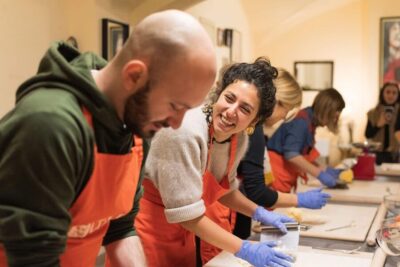
Pasta Cooking Class, Ragu, Spritz, Wine & Gelato
Read our review →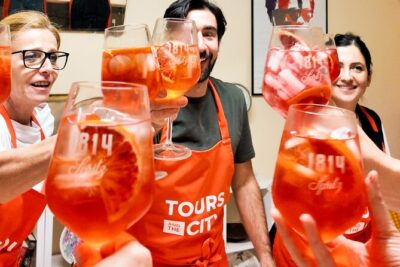
Bologna Local Pasta Cooking Class, Ragu, Spritz, Wine & Gelato
Read our review →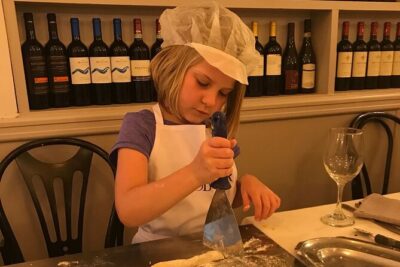
Pasta and Tiramisu Small Group Cooking Class with Wine
Read our review →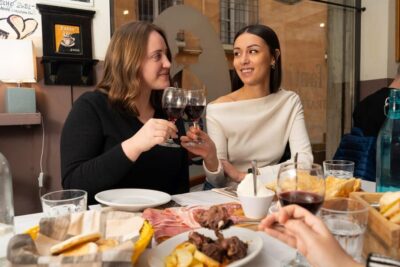
Food Tour with Pasta Tasting & Local Specialties
Read our review →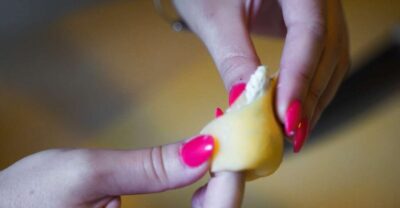
Pasta Tagliatelle al Ragu Cooking Class with Wine
Read our review →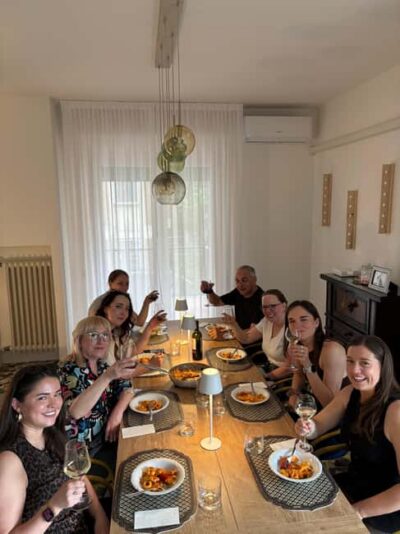
Cesarine: Small group Pasta and Tiramisu class in Bologna
Read our review →Browse the lists this tour appears in