
REVIEW · BOLOGNA
Bologna Local Pasta Cooking Class, Ragu, Spritz, Wine & Gelato
Bologna’s best food lesson starts with flour, eggs, and a rolling pin, not a touristy demonstration where you only watch. You’ll make tagliatelle by hand, learn a local Casoni spritz, and sit down to eat pasta with homemade ragù, Parmigiano Reggiano, and San Giovese.
I like the friendly, social format and the generous menu: Pignoletto, Mortadella, piadina, pasta, wine, coffee, amaro, and gelato all fit into roughly three hours. I also like that instructors such as Roberta, Lucrezia, Sonia, Stella, Stefi, Claudia, and Valentina have been praised for making beginners feel capable. The main consideration is that the ragù is prepared before class, so you learn to make the pasta but not the sauce itself.
Key points at a glance
- Hand-rolled tagliatelle: You mix eggs and flour, work the dough, roll it with a pin, cut it, and cook it.
- Bolognese food, not a generic pasta show: The meal centers on tagliatelle with ragù, Parmigiano Reggiano aged 24 months, and local wine.
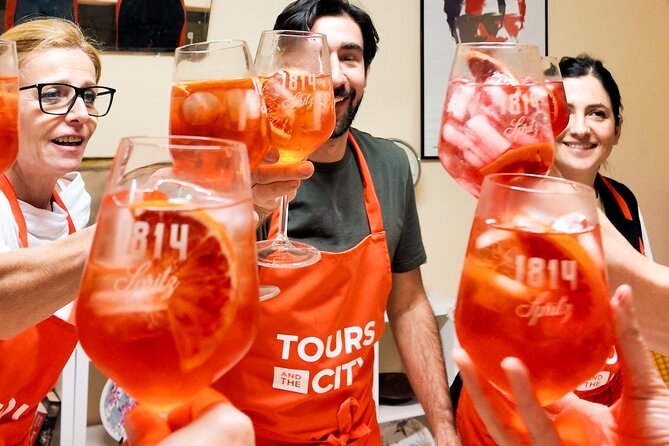
- Aperitivo built into the lesson: Start with Mortadella, piadina or Crescenta, Pignoletto, and a Casoni spritz.
- Small-group atmosphere: The experience is designed for about 10 people, with a stated maximum of 13.
- Good take-home value: Recipes are available as PDFs by email, and some sessions leave you with extra pasta to cook later.
- Three hours of food and drink: Coffee, amaro, and mystery gelato finish the meal, with free cancellation up to 24 hours before the start time.
Why this class fits Bologna so well
Bologna is famous for food that is made slowly and eaten generously. Tagliatelle al ragù is not just pasta with meat sauce. It is a local combination of fresh egg pasta, a sauce prepared in the Bolognese style, and the right balance of texture and richness.
That makes this class more useful than a standard cooking demonstration. You are not simply watching someone shape pasta. You are learning the basic dough used in many Italian kitchens, then eating the result at the same table with the people who made it.
The class takes place near Piazza Galileo Galilei in Bologna’s old town. The meeting point is close to public transportation, and the activity returns there at the end. Since the class lasts about three hours, it fits nicely into an afternoon or evening, though you should avoid booking it directly after a large lunch.
The group is intended to stay small, around 10 people, although the stated maximum is 13. That distinction matters. At 10, you should get plenty of help at the worktable. A full group may feel busier, especially during rolling and cutting, but the format remains more personal than a large demonstration.
More Pasta Classes with Wine in Bologna
- Bologna Food & Market Tour with 6 Tastings, Pasta, Wines & More
★ 5.0 · 1,328 reviews - Bologna: Pasta Cooking Class, Ragu, Spritz, Wine & Gelato
★ 4.9 · 775 reviews - Bologna: Pasta and Tiramisu Small Group Cooking Class with Wine
★ 5.0 · 409 reviews
Starting with Mortadella, piadina, and Pignoletto
The first course is a local aperitivo. Expect Mortadella, piadina or Crescenta, and Pignoletto, a sparkling wine associated with Emilia-Romagna. This opening is more than a snack. It gives the group time to settle in, meet the instructors, and start talking before the hands get covered in flour.
I like this approach because cooking classes work best when the room feels relaxed. You are likely to share a table with couples, families, solo participants, and people who have never met before. The food and wine make conversation easy without forcing a formal introduction.
The portions are also useful. You receive enough food and drink throughout the class that the experience feels like a meal, not a quick lesson followed by a rushed tasting. If you are a light eater, keep that in mind before arriving.
The aperitivo may also include a lesson in regional drinking habits. The Casoni spritz uses a local recipe and herbs, giving it a different identity from the better-known international spritz brands. Some sessions have included comparisons with Campari or Aperol, though the exact presentation can vary.
Mixing two ingredients into pasta dough
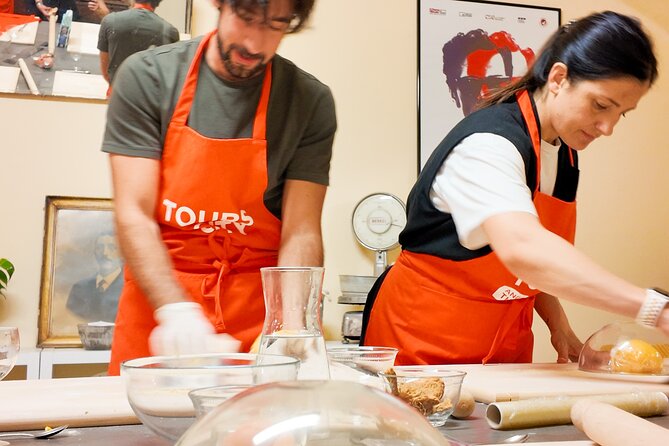
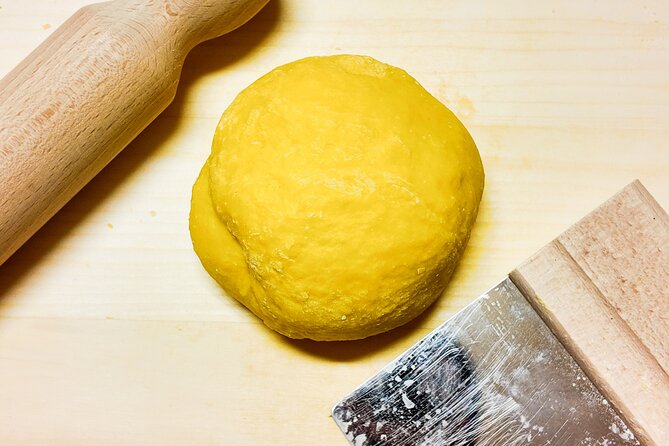
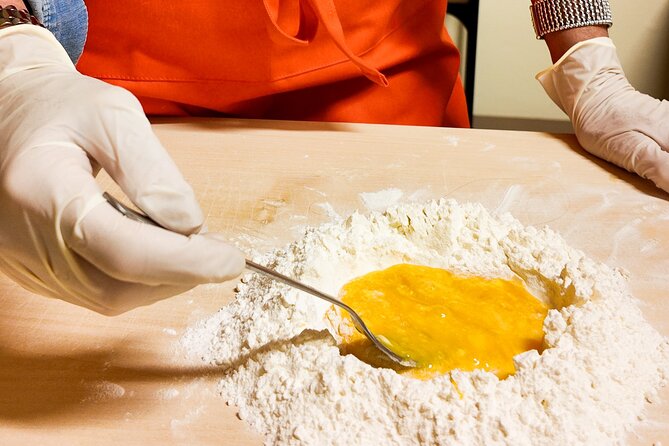
The practical heart of the class is the dough. You use eggs and flour, then mix and knead by hand. There are no pasta machines doing the hard work for you. Your arms, hands, and rolling pin are the equipment.
That sounds simple, and it is. But small changes in the dough make a real difference. You learn how the mixture comes together, how to work it until it becomes smooth, and how to judge when it is ready to roll. For beginners, this removes much of the mystery from fresh pasta.
The instructors demonstrate each step, then help you when the dough feels too dry, sticky, or difficult to manage. Names vary by session, but past classes have been led by instructors including Stefania, Claudia, Sonia, Stella, Valentina, Roberta, Lucrezia, Stefi, and Beatrice. The recurring theme is patient, hands-on instruction rather than a lecture from across the room.
You do not need to arrive as a cook. Several class descriptions from participants show that first-time pasta makers handled the process successfully, while experienced home cooks still picked up useful tips. That makes this a good choice for couples or families with mixed skill levels.
Rolling and cutting tagliatelle the traditional way
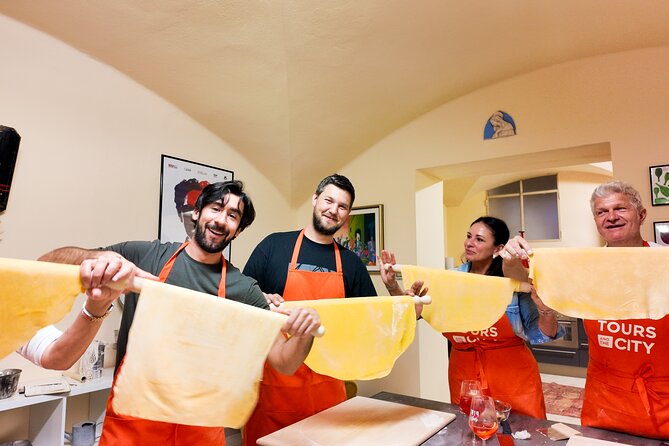
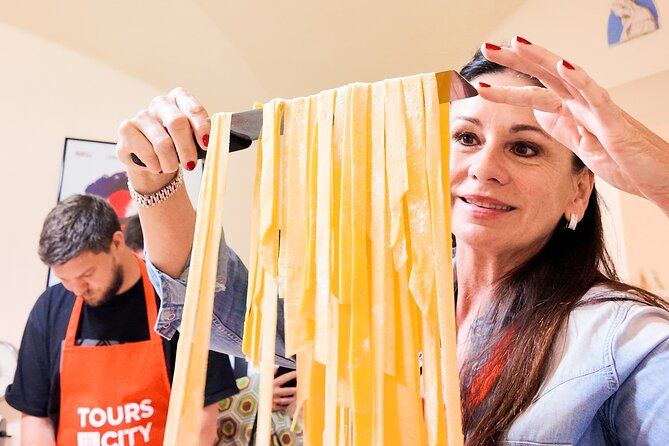
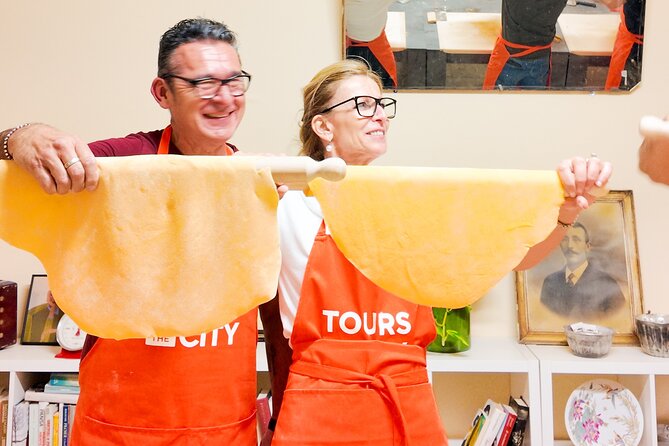
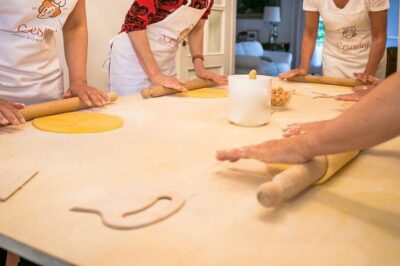
Rolling is where the class becomes distinctly Bolognese. The dough is stretched with a rolling pin rather than fed through a machine. You work toward a thin sheet, then cut it into tagliatelle.
This is also the part where the small group matters most. You need enough table space to roll properly, and you may need an instructor to check the thickness or help with a difficult edge. A larger class could mean more waiting, so the stated group limit is worth noting when you compare this activity with cheaper mass-market cooking lessons.
The goal is not perfect restaurant-level strands. The goal is to understand the movement and feel of the dough so you can repeat it at home. You may leave with pasta that is not identical in width, but that is part of the charm. Fresh handmade tagliatelle has a texture and irregularity that machine-cut pasta does not quite match.
Some sessions provide extra pasta to take home. That is not guaranteed in every description, but it has happened often enough to make a useful bonus. Ask about packaging and storage during your class if you have room in your luggage.
More Gelato Making Classes in Bologna:
- Florence Pizza or Pasta Class with Gelato Making at a Tuscan Farm
★ 5.0 · 6,801 reviews - Florence: Premium Pizza & Gelato Preparation Class with Wine
★ 4.9 · 1,306 reviews - Florence: Pizza or Pasta Class with Gelato at a Tuscan Farm
★ 4.9 · 1,181 reviews - Palermo: Pizza and Gelato Cooking Class with Dinner and Wine
★ 4.9 · 951 reviews
Homemade ragù, with one important limitation
Your tagliatelle is served with house-made ragù. The sauce is described as 100 percent homemade, but the preparation itself is not included because the three-hour schedule is too short.
That is the biggest limitation of the experience. If your main goal is to learn authentic Bolognese ragù from start to finish, this is not the right class by itself. You will hear about local traditions and taste the finished sauce, but the sauce will already be simmering or prepared when you arrive at the pasta stage.
Still, the decision makes sense. A proper ragù needs time, and trying to prepare it during the same class would either make the session much longer or reduce the attention given to the pasta. Here, the emphasis stays on the dough, rolling, cutting, and cooking.
The finished dish is paired with Parmigiano Reggiano aged 24 months. That age gives the cheese a firmer texture and a stronger savory flavor than a young cheese. It is a small detail, but it helps explain why the final bowl tastes more complete than pasta topped with an ordinary grated cheese.
Sitting down to eat what you made
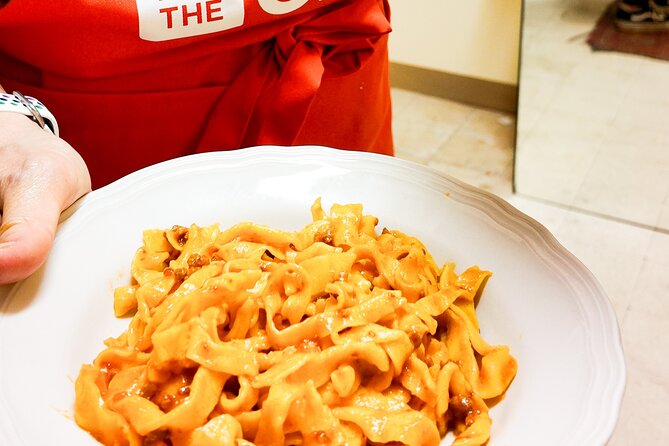
After the pasta dries briefly, the group cooks it together. You then eat the tagliatelle with ragù at the same location, along with San Giovese, the local red wine named in the menu.
This shared meal is one of the strongest parts of the experience. Cooking can feel like a task if you leave immediately after the lesson. Sitting down afterward gives you time to compare results, ask questions, and enjoy the dish while it is fresh.
The pace is social rather than rushed. You may spend part of the meal discussing Bologna, Italian food, or places to go later. Past instructors have also offered suggestions for bars and pubs, including advice for New Year’s Eve. That kind of local help can be particularly handy during a short stay.
The meal is not a fine-dining restaurant service, and you should not book it expecting a long tasting menu. It is a hearty cooking lesson followed by the food you helped make. At $59.26 per person, the combination of instruction, aperitivo, wine, cocktails, dessert, and the meal gives it solid value.
Casoni spritz, coffee, amaro, and mystery gelato
The drink portion is woven into the class instead of being treated as a separate cocktail workshop. You learn how to prepare a Casoni spritz while the pasta process continues.
Casoni is linked to Emilia-Romagna, so this is a useful regional detail. If you already know Aperol or Campari spritzes, you will have a point of comparison. If you do not drink alcohol, check suitability before booking because the menu centers on wine, spritz, and amaro, and the supplied information does not describe a nonalcoholic alternative.
Dessert follows the Italian pattern of finishing with coffee and a digestif. You receive local coffee, amaro, and mystery gelato. Some sessions have included a drizzle of aged balsamic vinegar from Modena, though that particular extra should not be treated as guaranteed.
The mystery gelato is a playful ending rather than a formal dessert course. Since the flavor is not specified in advance, guests with strict dietary needs should ask before booking.
Who will get the most from this experience
I would choose this class if you want to cook, eat, and talk with other people in one sitting. It works especially well for:
- Couples who want an activity beyond sightseeing
- Families with older children who can take part in the cooking
- Solo participants who enjoy meeting people over a shared meal
- Beginners who want a clear introduction to fresh pasta
- Experienced home cooks who want to practice hand-rolled tagliatelle
- Anyone who values local food and drinks more than a polished show
Children are welcome, but the menu and teaching style are designed mainly for adult participation. Parents should consider whether their children will enjoy a three-hour class involving kneading, rolling, waiting, and a meal with alcoholic drinks.
This is less suitable if you want a private lesson, a quiet dining experience, or detailed instruction in ragù. It may also not work for people with severe allergies or strict dietary requirements.
Dietary needs and practical limits
Gluten-free pasta and vegetarian sauces can be accommodated, but you must notify the provider in advance. The class may not be suitable for severe allergies, and the information provided does not promise a fully allergy-proof kitchen.
The same advice applies to other dietary restrictions. Do not wait until you arrive. Contact the provider beforehand and ask if the full menu can be adjusted.
Because the food is prepared and eaten as a group, substitutions may affect more than one part of the meal. A vegetarian sauce is specifically possible, while the standard menu includes Mortadella, ragù, cheese, wine, spritz, amaro, and gelato.
Booking ahead and getting your money’s worth
The experience is commonly booked about 27 days in advance. That suggests you should reserve ahead if your Bologna dates are fixed, especially if you want a particular day or time.
The price is $59.26 per person. I consider that a fair price for a three-hour activity that includes instruction, a full meal, several drinks, dessert, and recipes sent as PDF files on request. You are also paying for the chance to learn a repeatable skill, not just for the food on the table.
The value is strongest when you plan to make pasta at home. The recipe handout, direct practice, and instructor corrections give you something useful after the holiday. If you only want to eat tagliatelle, a restaurant will be simpler and possibly cheaper. If you want food plus a social activity, the class makes more sense.
Free cancellation is available up to 24 hours before the start time for a full refund. Changes or cancellations inside that window are not accepted for a refund, and the cut-off follows Bologna local time.
My recommendation for Bologna food lovers
I would book this class if you want a relaxed, hands-on introduction to Bolognese pasta and enjoy a little wine and conversation along the way. The strongest points are the patient instructors, the small-group format, the amount of food and drink, and the fact that you actually make the tagliatelle yourself.
Go in knowing what the class does not cover. The ragù is homemade but prepared in advance, and the activity is not designed around strict dietary requirements or a deep sauce lesson.
For most visitors, the $59.26 price is justified by the three-hour format and the generous meal. Book it well ahead, tell the provider about dietary needs, and arrive ready to work with your hands. If you do, you will leave with more than a full stomach. You will have a practical pasta method you can use in your own kitchen.
FAQ
Where does the pasta class start?
The meeting point is Piazza Galileo Galilei, P.za Galileo Galilei, 40123 Bologna BO, Italy. The activity ends back at the same meeting point.
How long does the experience last?
The class lasts approximately three hours.
How many people can join?
The class is designed as a small-group experience limited to about 10 people. The stated maximum is 13 travelers.
Is the ragù made during the class?
No. The ragù is 100 percent homemade, but its preparation is not included because of the limited class time. You learn to make the tagliatelle and eat it with the prepared ragù.
Can the class accommodate vegetarian or gluten-free diets?
Gluten-free pasta and vegetarian sauces can be accommodated. You must provide dietary information in advance, and the class may not be suitable for severe allergies or strict dietary requirements.
What is the cancellation policy?
You can cancel up to 24 hours before the start time for a full refund. Cancellations or changes made less than 24 hours before the experience are not accepted for a refund.
More Wine Tastings in Bologna
- Bologna: Pasta Tagliatelle al Ragu Cooking Class with Wine
★ 4.7 · 225 reviews - Bologna: 3 Pastas, Tiramisu and Unlimited Wine Tasting
★ 4.6 · 186 reviews - Bologna: Pasta Cooking Class, Ragu & Wine with Local Host
★ 4.9 · 113 reviews - Bologna: Tagliatelle & Ragù Home Cooking Class with wine
★ 4.5 · 55 reviews
Just added around Bologna
- Colorful Pasta Workshop in Bologna with meal★ 5.0 · 2 reviews
- Cesarine: Small group Tortellini Class at Local’s Home in Bologna★ 5.0 · 18 reviews
- Tortelloni and Tagliatelle Cooking Class in Bologna + Wine★ 3.0 · 2 reviews
- Cesarine: Pasta & Tiramisu Class at a Local’s Home in Bologna★ 5.0 · 29 reviews
- Private Pizza & Tiramisu Class at a local’s home with tasting in Bologna★ 5.0 · 4 reviews
- Pasta Making Class: Tagliatelle & Bolognese Sauce★ 5.0 · 15 reviews
- Home Cooking: Pasta Making with Natural Colors in a Tiny Group★ 5.0 · 6 reviews
- Pasta and Tiramisu Masterclass with organic wines★ 3.5 · 3 reviews
Bologna Pasta Classes, compared.
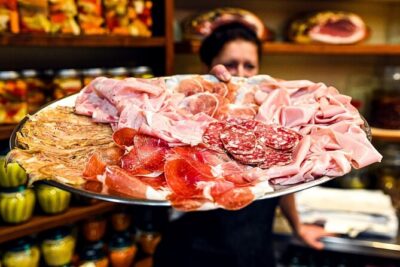
Bologna Food & Market Tour with 6 Tastings, Pasta, Wines & More
Read our review →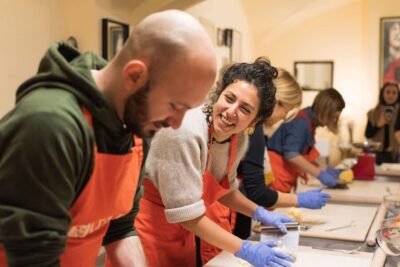
Pasta Cooking Class, Ragu, Spritz, Wine & Gelato
Read our review →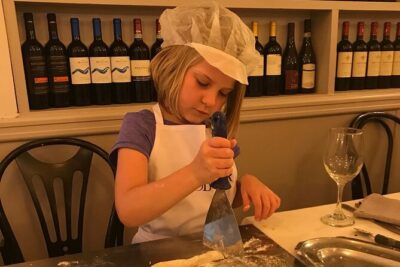
Pasta and Tiramisu Small Group Cooking Class with Wine
Read our review →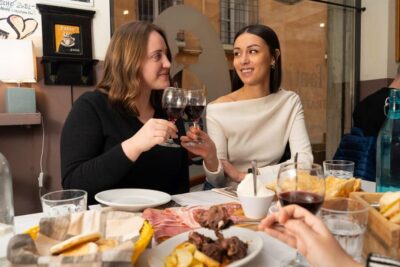
Food Tour with Pasta Tasting & Local Specialties
Read our review →
Pasta Tagliatelle al Ragu Cooking Class with Wine
Read our review →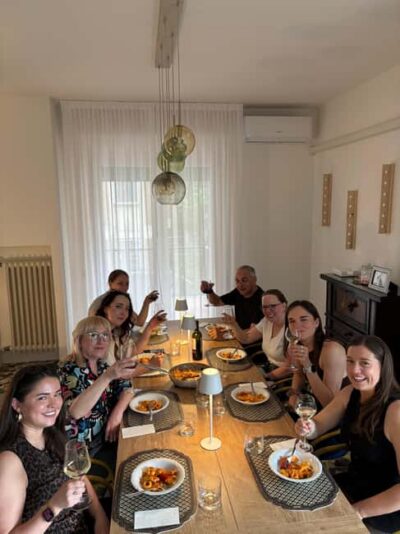
Cesarine: Small group Pasta and Tiramisu class in Bologna
Read our review →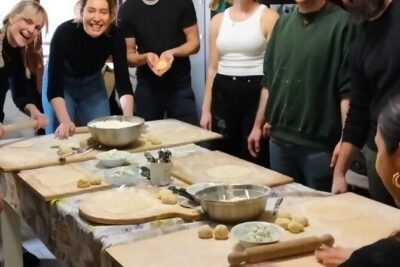
Authentic Bologna Home Cooking Class: Tagliatelle & Tortellini
Read our review →Browse the lists this tour appears in