
REVIEW · BOLOGNA
Bologna: Express Pasta-Making Class with Tasting
Bologna’s pasta tradition is wonderfully hands-on here. In 90 minutes, Alessia Fiocchi shows you how to roll dough with a pin and shape tortellini, tagliatelle, and farfalle, then matches each pasta with its proper sauce. I like the small groups of up to 10, and I like that you eat what you make instead of watching a cooking show and leaving hungry.
The warm, home-style setting, with an aperitif, wine, salame, and mortadella, gives this class a friendly local feel. One important catch: the advertised 1.5 hours may run much longer, especially when lunch and conversation stretch out. Do not book a tight appointment immediately afterward.
Key points before you book
- You make several Bolognese pastas: Tortellini, tortelloni, tagliatelle, farfalle, balanzoni, and lasagne are among the shapes covered.
- You roll by hand: The dough is made and rolled with a traditional rolling pin, not a pasta machine.
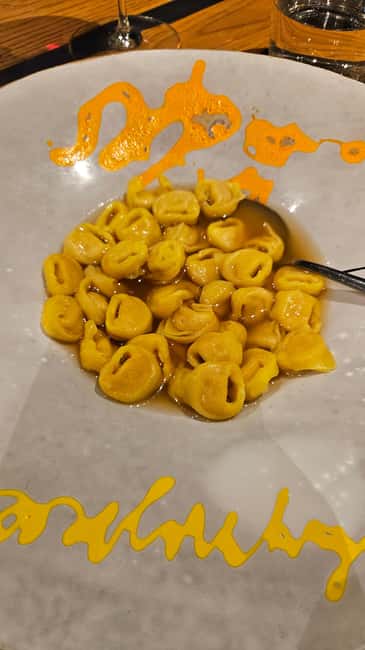
- Each pasta gets its own sauce: Tortellini go into broth, tagliatelle with ragù, and farfalle with tomato and basil sauce.
- The class feels social: Wine, coffee, tea, an aperitif, and local cured meats add to the meal.
- Alessia leads the session: She teaches in English, Italian, or French and keeps the class limited to 10 people.
- Plan for extra time: The formal duration is 90 minutes, but a meal-focused session can last well over two hours.
Why Bologna is the right place to learn pasta
Bologna is the capital of Emilia-Romagna, a part of Italy strongly tied to fresh egg pasta. Here, pasta is not just a quick meal from a packet. It is a skill shaped by touch, timing, and the feel of the dough under your hands.
That matters in this class. You are not simply shown how pasta is made, then handed a plate prepared in advance. You work with the dough, roll it thin, cut it, and shape it. The result may not look perfect on your first try, which is part of the point. You leave with a better sense of why handmade pasta behaves differently from dried pasta.
I especially like that the lesson focuses on pasta types linked to Bologna and the surrounding region. Tortellini, tortelloni, tagliatelle, balanzoni, farfalle, and lasagne all use the same basic dough in different ways. You get to see how a small change in shaping or cutting creates a different dish.
This is a good fit if you want more than a standard restaurant meal. You get a meal, but you also gain a technique you can try at home. It is also a useful choice for people who do not cook often. The process is active without requiring advanced kitchen skills.
More Fresh Pasta Workshops in Bologna
- Bologna: Traditional Bolognese Pasta Making with Meal
★ 4.8 · 97 reviews - Traditional bolognese pasta making with a meal
★ 4.5 · 69 reviews - Learn and taste the real bolognese ragù and pasta making
★ 4.8 · 32 reviews
Arriving at Via Sabotino 27
The meeting point is Via Sabotino 27 in Bologna. The arrival instruction is specific: go in front of the gray gate for cars. That detail is worth taking seriously, since a home-based class can be harder to spot than a restaurant with a large sign.
Give yourself enough time to find the address and identify the correct gate. The activity information does not promise a separate street-side welcome desk, so arriving at the meeting point rather than simply the general street is important.
The class is listed as wheelchair accessible. Children under six cannot take part, and comfortable clothing is recommended. Smoking is not allowed indoors, which is standard for a food preparation setting.
Once inside, you can expect a small group rather than a large demonstration. The maximum is 10 participants. That number is large enough for a social meal but small enough for Alessia to watch your technique and correct the dough or shaping when needed.
Meeting Alessia and settling in
Alessia Fiocchi leads the class in French, Italian, or English. Her teaching style is practical and direct. If the dough is too thick, the shape is loose, or the fold is not quite right, you can expect her to show you the correction rather than simply let the mistake pass.
That direct approach is useful. Pasta making is one of those activities where a little instruction at the right moment saves a lot of frustration. You learn by repeating the movement, not by hearing a long lecture about it.
The atmosphere is informal. Pol and Ruby, the host’s kittens, may be around while you cook. For cat lovers, this adds a homey touch. If you are not comfortable around cats, keep in mind that this is part of the setting rather than a formal cooking school environment.
The session also includes an aperitif. Wine is included, along with coffee and tea, and the food can include salame and mortadella. This opening bite helps turn the lesson into a shared meal instead of a rushed practical exercise.
Rolling pasta with a pin
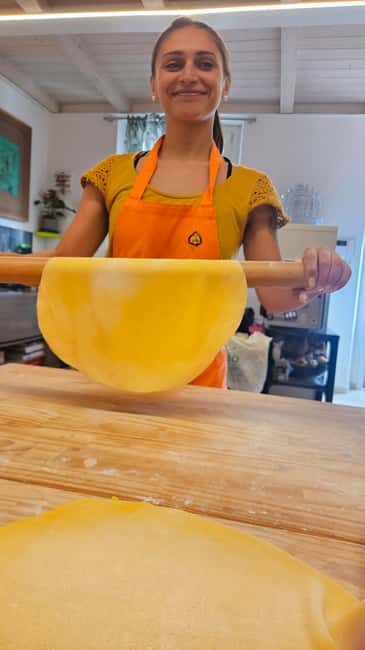
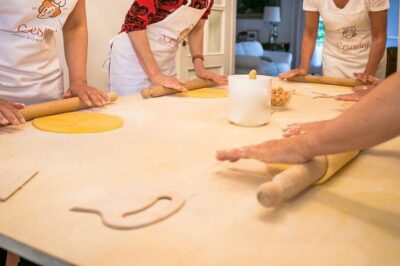
The key tool is a rolling pin. You are not relying on an electric machine to flatten the dough, so your hands must judge the thickness. That makes the lesson more traditional and gives you a better feel for the work involved in fresh pasta.
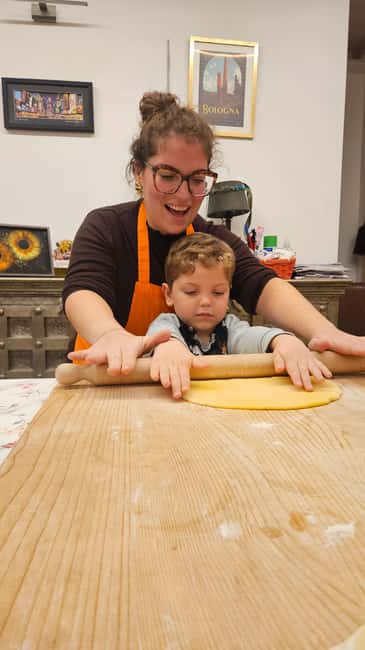
Rolling dough evenly takes practice. You may find the center becomes thin while the edges remain thick, or that the sheet needs turning as you work. Alessia can guide you through these small adjustments. They are the most useful details to take home because they apply to many types of fresh pasta.
The class also includes an apron and the necessary materials, so you do not need to arrive with specialist equipment. Wear comfortable clothes that allow you to stand and work at a table. The activity details do not specify a dress code beyond that.
Pasta color customization is included. This gives you room to add a personal touch to some of your dough, though the traditional shapes and methods remain the heart of the class. It can also make the activity appealing to families with children old enough to participate.
Same kitchen, a different thing to make:
- Bologna Food & Market Tour with 6 Tastings, Pasta, Wines & More
★ 5.0 · 1,328 reviews - Bologna: Pasta Cooking Class, Ragu, Spritz, Wine & Gelato
★ 4.9 · 775 reviews - Bologna Local Pasta Cooking Class, Ragu, Spritz, Wine & Gelato
★ 5.0 · 527 reviews - Bologna: Pasta and Tiramisu Small Group Cooking Class with Wine
★ 5.0 · 409 reviews
Three pasta shapes, three different plates
The class works through several pasta forms, with three especially important tastings.
Tortellini in broth
Tortellini are small filled pasta shapes that require careful folding. The dough must be thin enough to handle, but strong enough to hold the filling and stay closed during cooking.
Here, the finished tortellini are served in broth. That pairing matters. Broth keeps the focus on the pasta and filling, rather than covering the delicate shape with a heavy sauce. You can taste the texture of the dough and see if your folds held together.
You may also work with tortelloni, the larger cousin of tortellini. The larger shape is often easier to handle at first, while the smaller tortellini demand more finger control. Learning both helps you understand how size affects filling and cooking.
Tagliatelle with ragù
Tagliatelle is one of Bologna’s signature pasta forms. You roll the dough into a sheet, then cut long ribbons of a fairly even width. The task sounds simple, but uniform cutting makes a difference once the pasta is cooked.
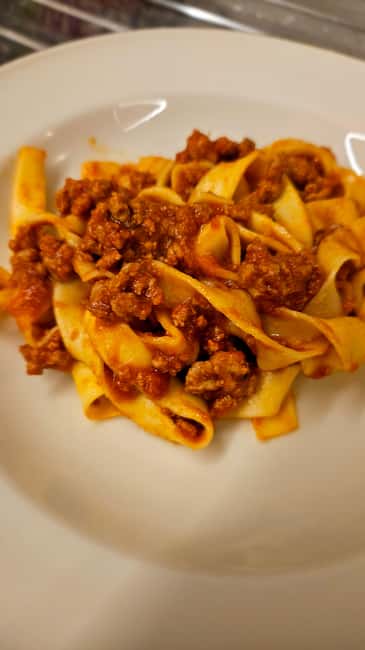
The finished tagliatelle is paired with ragù, the slow-cooked meat sauce associated with Bolognese cooking. This is a hearty match. The broad ribbons hold the sauce well, which is why tagliatelle works better here than a very thin noodle.
This part of the class is especially useful if you want a pasta shape you can repeat at home. You do not need a complicated mold or special cutter. The rolling pin and a good knife are enough.
Farfalle with tomato and basil
Farfalle are the bow-shaped pieces made by pinching the center of small pasta rectangles. They are playful and accessible, but the pinch must be firm enough to keep the shape during cooking.
The class serves them with tomato and basil sauce. That lighter, brighter sauce gives you a contrast with the broth and ragù. You get to compare how different shapes carry different sauces, rather than tasting the same dough with one topping three times.
The selection also introduces you to balanzoni and lasagne. The exact balance of shapes can depend on the class, but the stated focus is on typical Bolognese pasta and handmade methods.
The meal after the work
One of the best parts of this experience is sitting down to eat the pasta you have just made. The food is not an afterthought. The class includes tasting, wine, and an aperitif, so the cooking naturally moves into a shared meal.
Salame and mortadella may be served as part of the opening spread. These local cured meats help set the regional tone before the pasta arrives. Wine adds to the relaxed feeling, though you should consider your own plans and tolerance if you have other activities afterward.
The meal is also where the techniques make sense. You can see how tortellini hold up in broth, how tagliatelle catches ragù, and how farfalle carries tomato and basil. A cooking class can be hard to judge while your hands are covered in flour. Eating the results gives you a clear finish.
The setting is more like cooking with people in a home than attending a strict professional workshop. That has real appeal, especially if you want conversation and hospitality along with instruction. It also means the experience may be less tightly timed than a formal school class.
How long should you allow?
The published duration is 1.5 hours. That is the time you should use when comparing activities, but it is not a safe promise for your whole day.
A session can run over when the group takes time with the dough, sits down for the meal, and continues talking over wine. One recorded experience lasted more than three hours when lunch was included. Another participant specifically noted that the class ran long and advised leaving plenty of room afterward.
I see this as a benefit if you want an unhurried meal. It is a drawback if you are trying to reach a museum, train, or restaurant reservation at a fixed time. My advice is simple: treat 90 minutes as the official minimum, then leave a generous buffer.
The relaxed pace also explains why the class can feel personal. Alessia does not appear to rush everyone through the shapes just to end on the advertised minute. If you value time control above conversation, this may not be the best cooking activity for you.
Is $62 a good value?
At $62 per person, the price covers the class, equipment, apron, rolling pin, pasta color customization, aperitif, wine, and the food you make. It also covers the instruction and the chance to eat a full selection of handmade pasta.
That is a strong value for Bologna if you want both a meal and a practical activity. A restaurant meal gives you the finished dish, but not the technique. A short demonstration may teach you less and offer less food. Here, your payment goes toward instruction, ingredients, social time, and lunch or dinner.
The value is strongest for couples, families with children over six, and visitors who want an activity that breaks up sightseeing. It is also good for non-cooks. You do not need to arrive with confidence in the kitchen, and the small group gives you a chance to ask questions.
The value is less clear if you want a polished, tightly scheduled culinary course. The session may run long, and the home-style setting means the experience is informal. You are paying for warmth and participation, not a formal certificate or restaurant kitchen tour.
Who should book this class?
I would choose this class if you want to connect Bologna’s food traditions with something you can do yourself. It suits first-time pasta makers, couples, families with older children, and solo visitors who like meeting people around a table.
The class is also a good choice for anyone who normally avoids cooking activities because they seem intimidating. The shapes vary in difficulty, but the process is broken into clear steps. You can start with rolling and cutting, then work toward filled pasta.
Families should note the age rule. Children under six are not suitable for this activity, while children aged nine to twelve have enjoyed taking part. The hands-on work gives older children a real role instead of asking them to sit quietly through a demonstration.
I would be more cautious if you have strict dietary needs, since the supplied details do not explain substitutions or allergy handling. Ask before booking if that matters to you. The same applies if you need the class to finish at an exact time.
Booking details that matter
You can cancel up to 24 hours before the activity for a full refund. The reserve-now-and-pay-later option lets you hold a place without paying immediately, which helps when your Bologna plans are still shifting.
The class is available in English, Italian, and French. It is wheelchair accessible, and the group size is limited to 10 participants. Bring comfortable clothes, and do not smoke indoors.
Look for the gray car gate at Via Sabotino 27. That is the most useful arrival detail to remember.
Should you book it?
Book this pasta class if you want to make food, not just photograph it. Alessia’s class combines traditional rolling-pin work, three distinct pasta tastings, wine, local cured meats, and a relaxed home setting. The chance to eat tortellini in broth, tagliatelle with ragù, and farfalle with tomato and basil gives the lesson a satisfying purpose.
The main caution is time. Do not schedule a train, museum entry, or formal dinner immediately afterward. If you can allow the class to unfold at its own pace, $62 buys a friendly and useful introduction to Bologna’s kitchen traditions.
FAQ
Where does the pasta-making class meet?
The class meets at Via Sabotino 27 in Bologna. Go in front of the gray gate for cars.
How long does the class last?
The stated duration is 1.5 hours. The full experience can last longer when the meal and social time are included, so leave extra time afterward.
What types of pasta can I learn to make?
The class covers typical Bolognese forms, including tortellini, tortelloni, tagliatelle, balanzoni, farfalle, and lasagne. The planned tastings focus on tortellini, tagliatelle, and farfalle.
What will I eat during the class?
You eat the pasta you make. Tortellini are served in broth, tagliatelle with ragù, and farfalle with tomato and basil sauce.
Is wine included?
Yes. Wine and an aperitif are included. Coffee and tea are also listed among the refreshments.
Are food and cooking equipment provided?
Yes. The necessary materials, an apron, and a rolling pin are included.
Is the pasta made with a machine?
No. The pasta is rolled out by hand with a rolling pin.
What languages does Alessia speak during the class?
Instruction is available in French, Italian, and English.
Can children attend?
Children under six are not suitable for the activity. Older children can participate, subject to the group booking.
Is the class wheelchair accessible?
Yes, the activity is listed as wheelchair accessible.
More Food and Drink Tours in Bologna
- Bologna Food & Market Tour with 6 Tastings, Pasta, Wines & More
★ 5.0 · 1,328 reviews - Bologna: Food Tour with Pasta Tasting & Local Specialties
★ 4.8 · 312 reviews - Bologna: 3 Pastas, Tiramisu and Unlimited Wine Tasting
★ 4.6 · 186 reviews - Private Pizza & Tiramisu Class at a local’s home with tasting in Bologna
★ 5.0 · 4 reviews
Just added around Bologna
- Colorful Pasta Workshop in Bologna with meal★ 5.0 · 2 reviews
- Cesarine: Small group Tortellini Class at Local’s Home in Bologna★ 5.0 · 18 reviews
- Tortelloni and Tagliatelle Cooking Class in Bologna + Wine★ 3.0 · 2 reviews
- Pasta Making Class: Tagliatelle & Bolognese Sauce★ 5.0 · 15 reviews
- Cesarine: Pasta & Tiramisu Class at a Local’s Home in Bologna★ 5.0 · 29 reviews
- Private Pizza & Tiramisu Class at a local’s home with tasting in Bologna★ 5.0 · 4 reviews
- Home Cooking: Pasta Making with Natural Colors in a Tiny Group★ 5.0 · 6 reviews
- Pasta and Tiramisu Masterclass with organic wines★ 3.5 · 3 reviews
Bologna Pasta Classes, compared.
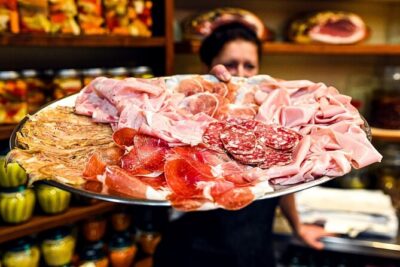
Bologna Food & Market Tour with 6 Tastings, Pasta, Wines & More
Read our review →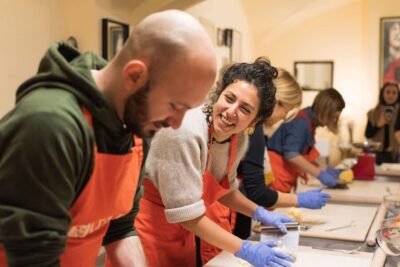
Pasta Cooking Class, Ragu, Spritz, Wine & Gelato
Read our review →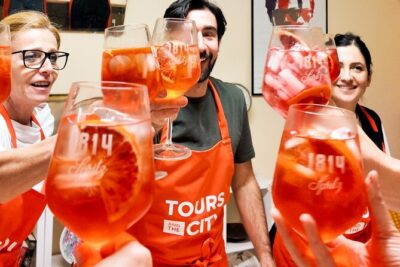
Bologna Local Pasta Cooking Class, Ragu, Spritz, Wine & Gelato
Read our review →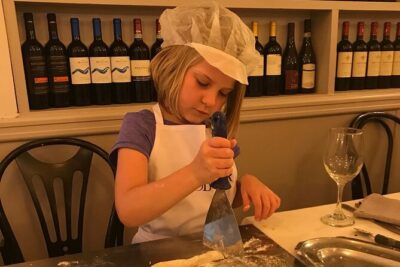
Pasta and Tiramisu Small Group Cooking Class with Wine
Read our review →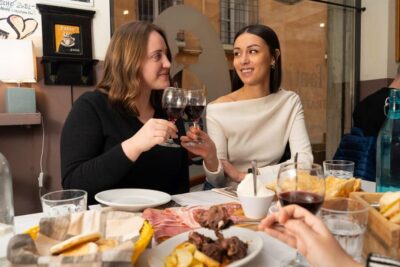
Food Tour with Pasta Tasting & Local Specialties
Read our review →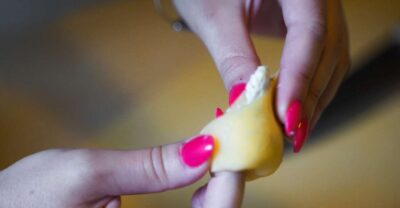
Pasta Tagliatelle al Ragu Cooking Class with Wine
Read our review →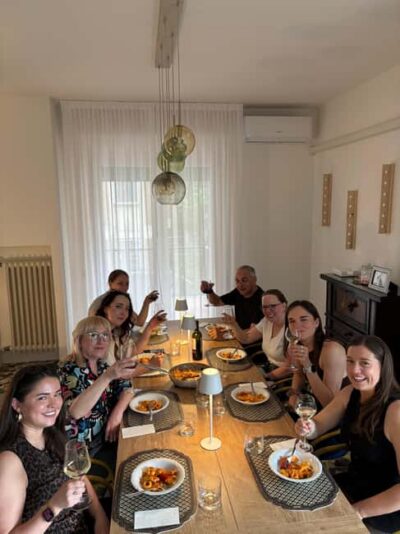
Cesarine: Small group Pasta and Tiramisu class in Bologna
Read our review →Browse the lists this tour appears in