
REVIEW · ROME
Rome: Small Group Pasta cooking class near Piazza Navona
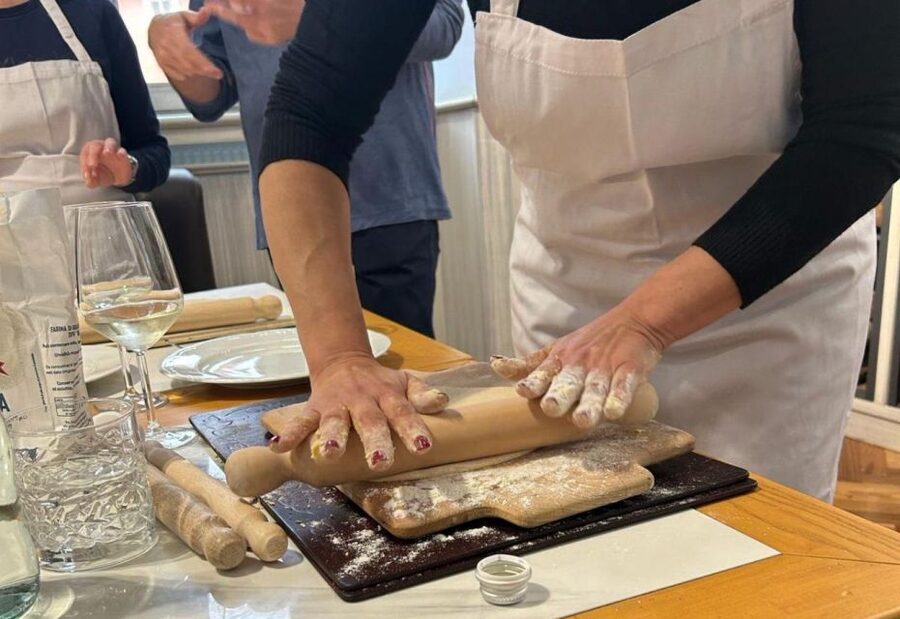
The best part of this Rome class is that you do not simply sit down to eat pasta. You make it yourself, with an Italian chef guiding you through the dough, shape, sauce, and final meal. With room for only six people, the class should feel personal rather than like a cooking demonstration in a crowded room.
I like the easy location, just a five-minute walk from Piazza Navona, and the generous menu of edible rewards: prosciutto, artisan cheese, prosecco, your own pasta, tiramisu, wine or a non-alcoholic cocktail, and limoncello. The main consideration is the price, $147.27 per person. That is fair for a three-hour class with food and drinks, but it is more than a simple pasta lesson or a regular Roman meal.
Key points at a glance
- Six-person limit: A tiny group gives you more room to ask questions and follow the chef’s hands-on instructions.
- Three pasta shapes: You may work with fettuccine, tonnarelli, or maltagliati, then choose your preferred sauce and fresh ingredients.
- A meal built into the lesson: Prosciutto, artisan cheese, handmade pasta, tiramisu, wine, prosecco, and limoncello are included.
- Five minutes from Piazza Navona: The central location makes this easy to fit between Rome sightseeing stops.
- Davide and Iheb lead the session: Chef Davide handles the cooking, while Iheb helps with interpretation.
- Flexible booking terms: You can cancel up to 24 hours before the class for a full refund and reserve without paying immediately.
Why this pasta class works well in central Rome
Rome has no shortage of pasta, but eating another plate of cacio e pepe is not the same as learning how pasta takes shape. This class gives you a little story to carry home. You see the basic process, work with the dough, and then eat the result while it is still part of the afternoon or evening’s event.
The setting near Piazza Navona is a practical plus. After admiring Bernini’s fountains and the long oval square, you can reach the class in about five minutes on foot. That makes the experience easy to pair with a day in the historic center. You do not need to set aside time for a long ride across Rome, which matters when traffic and crowded buses can eat up part of your day.
The small-group limit is perhaps the most important feature. Six participants is small enough for the chef to keep an eye on each person’s work. If your dough feels too dry, your pasta strip is too thick, or you are unsure how to shape it, you have a reasonable chance of getting individual help.
This is also a social experience, but it is not built around a large crowd. You will share food and a cooking table with a handful of people, which suits couples, families, and small groups of friends. A family that wants more than a museum stop may find the class especially useful because everyone can take part in the meal.
More Small Group Classes in Rome:
- Rome: Pizza Making Class Small Group Experience
★ 5.0 · 487 reviews - Rome Small Group Pasta Making Class with Wine and Italian Chef
★ 5.0 · 295 reviews - Rome Cooking Class: Gelato and Fettuccine Small Group Experience
★ 5.0 · 128 reviews
Arriving near Piazza Navona
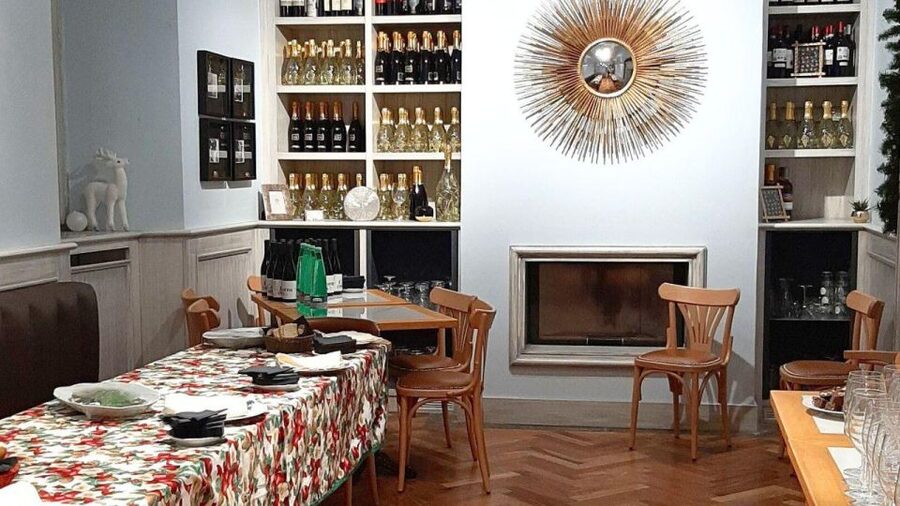
The class takes place in the heart of Rome, close to one of the city’s most famous squares. Piazza Navona is a natural meeting point for sightseeing, with its grand fountains, open space, and central location. You can plan the class before or after a walk through the surrounding streets.
Because the class lasts three hours, allow enough time to arrive without rushing. Rome’s historic center is easy to explore on foot, but streets can be confusing, and stopping for photos or a quick coffee is hard to resist. The short walk from Piazza Navona is convenient, but you still want to check the exact meeting details and starting time before setting out.
The experience is wheelchair accessible, which is useful in a part of Rome where old streets and uneven paving can sometimes create problems. The available information does not describe the full route inside the venue, so anyone with specific mobility needs should confirm the details before booking.
Starting with prosciutto, cheese, and prosecco
The class begins with food in front of you, not just a bowl of flour. A selection of prosciutto and artisan cheeses gives you something to enjoy while the cooking gets underway. This is more than a snack. It sets the tone for a meal that uses familiar Italian ingredients in a relaxed way.
You also receive one glass of prosecco. The drink helps turn the lesson into a shared meal rather than a formal school session. If you do not drink alcohol, the package includes a non-alcoholic cocktail later in the meal, so you are not left with nothing while others raise a glass.
I appreciate this opening because it gives the class a natural rhythm. You can listen to the chef, watch the early steps, and have something to eat while everyone settles in. It also means the experience is not dependent on a single plate of pasta. You are receiving a full sequence of tastes.
The selection is not described in detail, so do not book this expecting a fixed tasting menu with named cheeses or special regional cuts. Think of it as a pleasant Italian starter that supports the cooking lesson.
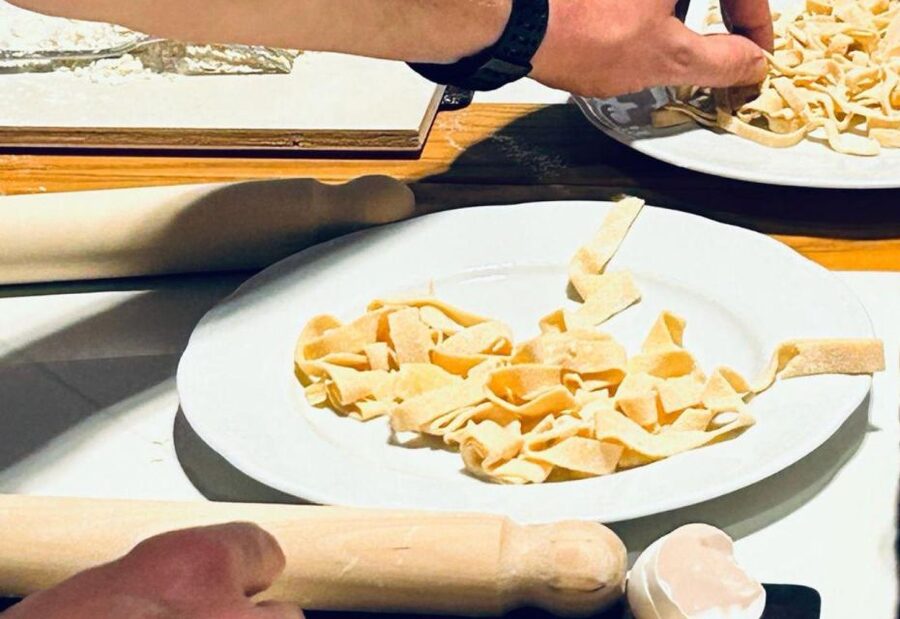
Making fettuccine, tonnarelli, or maltagliati
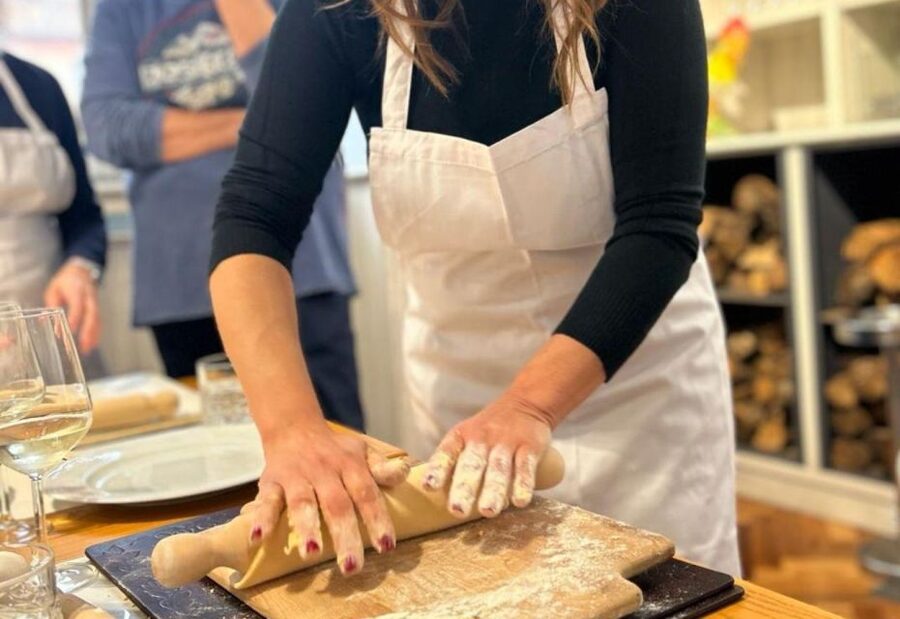
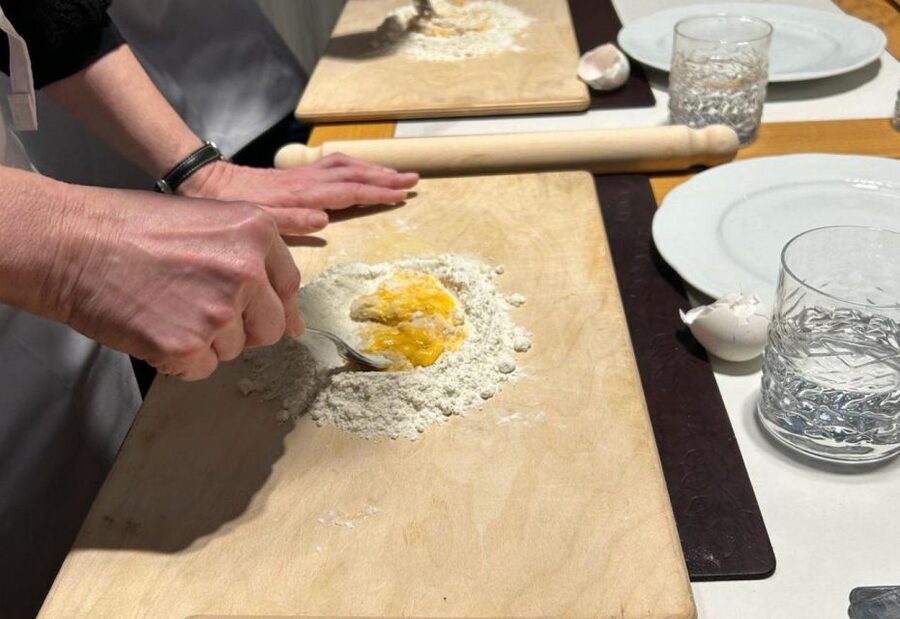
The central task is making pasta from scratch. The class may focus on fettuccine, tonnarelli, or maltagliati, and you choose your preferred sauce and fresh ingredients. That choice gives the lesson a useful personal touch. You are not simply copying one recipe without input.
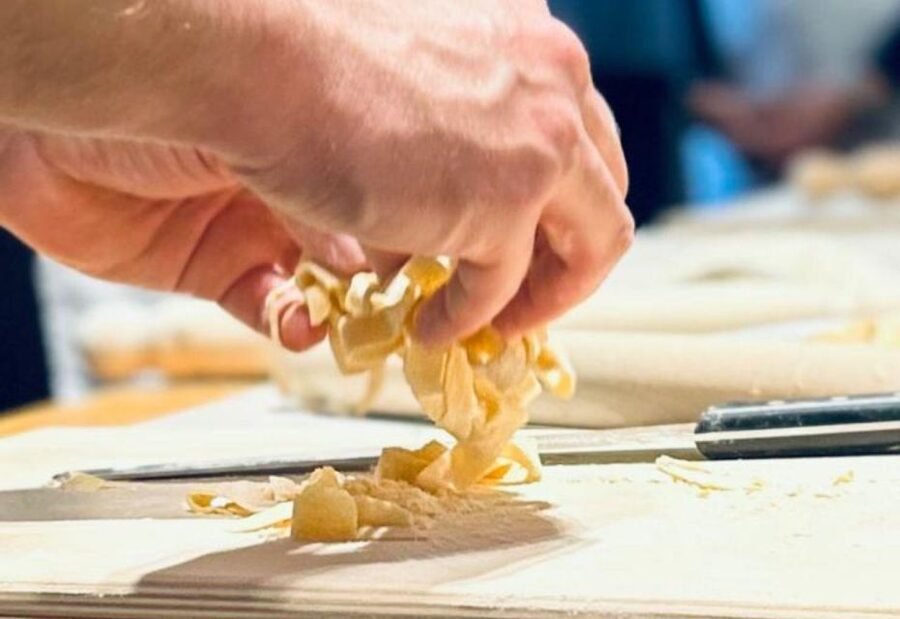
Fettuccine is the familiar broad ribbon, while tonnarelli is a thicker, more substantial shape. Maltagliati means roughly cut pieces, often irregular by design. That last option may appeal to anyone who worries about making every strip look perfect. Pasta made by hand does not need factory precision to taste good.
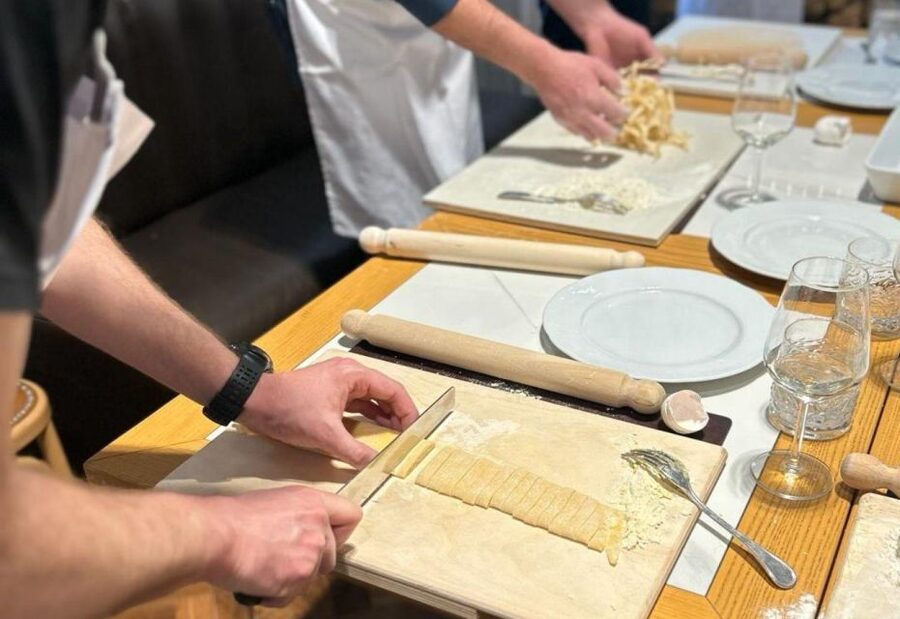
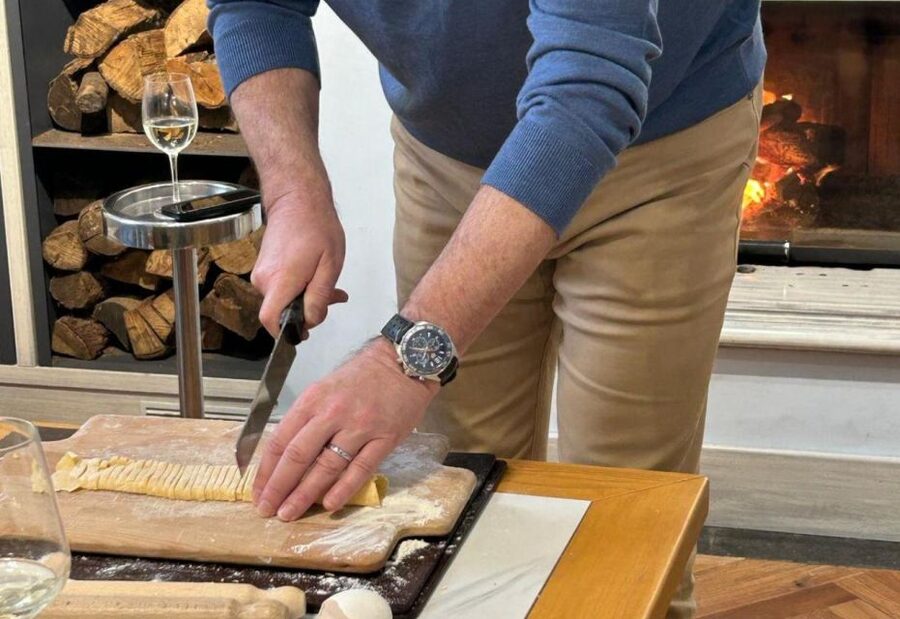
The chef guides you through the process, and the class is described as hands-on. You should expect to handle the pasta rather than only watch a demonstration. The useful lesson here is not just one recipe. It is learning how shape and sauce work together, and how fresh pasta differs from dried pasta.
Chef Davide leads the cooking, with Iheb providing interpretation. English, Spanish, and French are available, so you can choose the language that makes the instructions easiest to follow. The exact division between the chef’s explanations and interpretation is not specified, but having language support is reassuring when the task involves texture, timing, and technique.
Do not expect to become a professional pasta maker in three hours. You should leave with practical skills and a better feel for the process, but handmade dough takes practice. The real value is that you can try the method in a friendly setting, ask questions, and repeat it at home while the steps are still fresh.
A few more classes around Rome worth a look
- 3 in 1 Cooking Class near Navona: Fettuccine, Ravioli & Tiramisu
★ 5.0 · 7,376 reviews - Rome: Pasta & Tiramisu Class with Fine Wine by the Vatican
★ 4.9 · 4,852 reviews - Rome: Pasta Making Class with Wine, Limoncello, and Dessert
★ 4.9 · 3,177 reviews - Rome Cooking Class: Make Pasta and 3 Spritz Cocktails
★ 5.0 · 2,937 reviews
Choosing the sauce and eating your own work
After the pasta is made, you choose a sauce and fresh ingredients. This makes the final plate more meaningful than a standard meal served to everyone. You have taken part in the work, then get to taste how the finished pasta comes together.
The available information does not name the sauce choices, so you should not book this expecting a particular Roman classic. The useful point is the flexibility. If you have a strong preference, the class gives you some control over the final dish. If you are unsure, the chef can guide your choice based on the pasta shape.
The meal includes one glass of wine or a non-alcoholic cocktail. Along with the prosecco, this gives the class a generous drinks package. If you prefer not to drink, the non-alcoholic option keeps the experience comfortable, although the exact drink selection is not specified.
The pasta is your own handmade portion with the sauce you choose. That makes the class a good fit for someone who enjoys participation more than passive sightseeing. You are not merely collecting another restaurant meal in Rome. You are learning the process behind it, then eating the result at the same table.
Learning the tiramisu finish
Tiramisu is prepared in front of you as the dessert portion of the class. You can watch the method, pick up tips, and then eat the finished dessert. The experience specifically encourages you to note down the chef’s advice, which is sensible if you want to recreate it at home.
Tiramisu is a smart choice for a cooking class because it is familiar, popular, and practical to repeat. You do not need specialized equipment to attempt it later. The class may not provide a written recipe, so bring a small notebook or use your phone discreetly if the chef shares useful measurements or timing.
The dessert also gives the three-hour session a clear finish. You start with savory snacks, move through the main cooking task, eat your pasta, and end with something sweet. A shot of limoncello follows, adding a distinctly Italian closing note.
The limoncello is alcoholic, and the information does not state that a substitute is available for that final shot. If you do not drink alcohol, ask about alternatives in advance. This is a small point, but it is better to know before booking if your group includes children or anyone avoiding alcohol.
How the small group changes the experience
Six participants is a meaningful limit, not just a marketing number. In a larger class, you might spend much of the session watching someone else work or waiting for an ingredient. With six people, the chef has a better chance to correct mistakes and answer questions as they arise.
That setup also helps families. A parent can watch children participate without losing them in a crowd, and the group can share the finished meal. The class suits couples and friends for the same reason. You have enough company for conversation, but not so many people that the session becomes anonymous.
The small size can also mean a more focused atmosphere. If you prefer to keep to yourself, you should know that this is a shared activity with food, drinks, and conversation. It is not a quiet private lesson unless your group happens to fill all six places.
The positive reports about chef Davide and interpreter Iheb point to the human side of the class. Their role is not only to explain technique. They help keep the session welcoming and easy to follow, which matters when people arrive with different cooking skills and different language needs.
Is $147.27 a fair price?
At $147.27 per person, this is not the cheapest way to eat pasta in Rome. You can find a plate of pasta for far less. The comparison is not quite fair, though, because this price includes three hours of instruction, a small group, several food courses, and multiple drinks.
You receive prosciutto and cheese, prosecco, your handmade pasta with sauce, wine or a non-alcoholic cocktail, tiramisu, and limoncello. Add the central location near Piazza Navona and the chance to learn a skill you can use later, and the price becomes easier to justify.
I would call it good value for someone who actively wants a cooking lesson and a meal in one sitting. It is weaker value for someone who mainly wants a quick lunch or dinner. If the class is a highlight of your Rome trip, the cost is more reasonable. If you are counting every euro and already have several food experiences planned, you may prefer a less expensive meal.
The six-person limit is important to the value calculation. You are paying for a more personal class, not a mass-market demonstration. Still, the available details do not promise a private class, and the maximum of six is not the same as booking the entire room for yourself.
Timing, language, and booking details
The class lasts three hours, with starting times shown when you check availability. Since the schedule is not fixed in the information provided, look at your preferred date before building the rest of your Rome plans around it.
English, Spanish, and French instruction is available. Chef Davide and interpreter Iheb are associated with the session, giving you named points of contact rather than an anonymous cooking demonstration.
You can reserve now and pay later, which helps if your itinerary is still shifting. Cancellation is free up to 24 hours in advance for a full refund. That policy gives you some protection, but you should still check the exact time zone and cancellation deadline shown during booking.
The activity is wheelchair accessible. For anyone who needs particular arrangements, confirm the details before payment because accessibility can depend on the route, entrances, seating, and facilities.
Who should book this class?
I would recommend it to you if you want a social Rome activity with a real food lesson at its center. It suits people who like to work with their hands, families looking for a break from monuments, and couples who want an activity that creates a shared memory.
It is also a good choice if you are staying near the historic center. The five-minute walk from Piazza Navona makes it simple to combine with sightseeing, and the three-hour length gives the experience enough time to feel substantial.
You may want to skip it if you only want to eat, not cook. It may also disappoint you if you need a fully private lesson, a fixed named menu, or a short activity that fits into a tight schedule.
Food restrictions are not described in the available information. If you have allergies, dietary rules, or a serious intolerance, ask before booking rather than assuming the menu can be changed.
Should you book this Rome pasta class?
Book it if you value hands-on cooking, a tiny group, and a full food-and-drink experience near Piazza Navona. The strongest reasons are the six-person limit, the chance to choose your pasta sauce, and the warm teaching team of chef Davide and interpreter Iheb.
The price is high for a meal but reasonable for three hours of instruction plus several courses and drinks. I would make the booking when you want an activity that teaches you something, not simply another restaurant reservation. If that sounds like your kind of Rome afternoon or evening, this class earns a place on your itinerary.
FAQ
How long does the Rome pasta class last?
The class lasts three hours. Starting times depend on availability for your chosen date.
Where is the class located?
The class takes place near Piazza Navona, about a five-minute walk from the square.
How many people can join the class?
The class is limited to six participants.
What pasta can I make?
The class may include fettuccine, tonnarelli, or maltagliati. You can choose your preferred sauce and fresh ingredients.
What food and drinks are included?
The package includes one glass of prosecco, prosciutto and artisan cheese, your handmade pasta with sauce, one glass of wine or a non-alcoholic cocktail, tiramisu, and one shot of limoncello.
Which languages are available, and is the class wheelchair accessible?
Instruction is available in English, Spanish, and French. The activity is wheelchair accessible.
Just added around Rome
- Rome: Pasta and tiramisu class with wine pairing at Come Na Vorta★ 5.0 · 30 reviews
- Spritz and Pasta! Spritz, Fettuccine & Tiramisù★ 5.0 · 2 reviews
- Rome: Vespa Tour with Photographer and Tiramisu treat★ 4.5 · 61 reviews
- Walking Tour & Pizza Making★ 4.0 · 2 reviews
- Trastevere Food Tour with Pasta-Making Class★ 5.0 · 5 reviews
- Rome: Private Vespa Tour and Professional Photoshoot★ 5.0 · 22 reviews
- Traditional Pasta Cooking Class with Tiramisu Small Group★ 5.0 · 7 reviews
- Tiramisu and Gelato Creation in Authentic Roman Dessert Workshop★ 4.5 · 3 reviews
Rome Pasta Classes, compared.
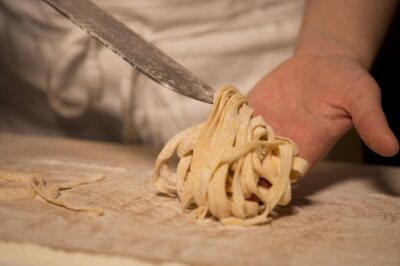
3 in 1 Cooking Class near Navona: Fettuccine, Ravioli & Tiramisu
Read our review →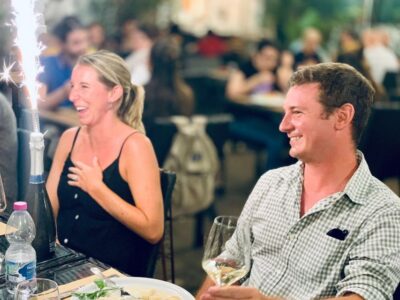
Pasta & Tiramisu Class with Fine Wine by the Vatican
Read our review →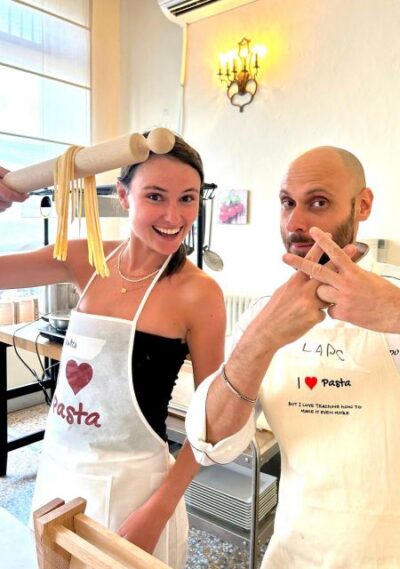
Pasta Making Class with Wine, Limoncello, and Dessert
Read our review →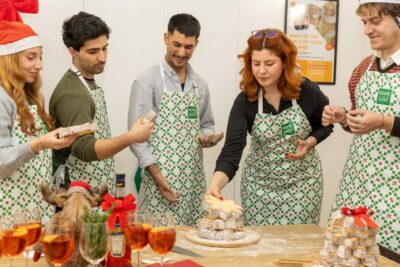
Rome Cooking Class: Make Pasta and 3 Spritz Cocktails
Read our review →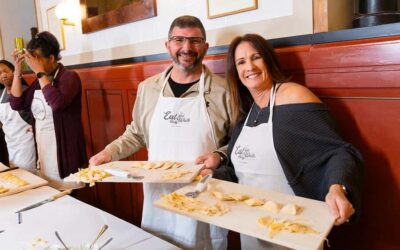
3-in-1 Fettuccine, Ravioli, and Tiramisu Cooking Class
Read our review →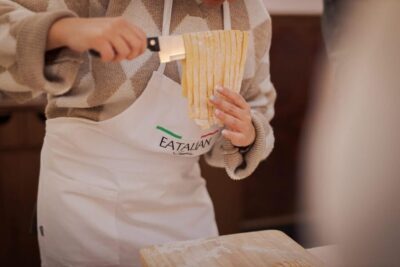
Fettuccine Pasta Cooking Class in Rome’s City Center
Read our review →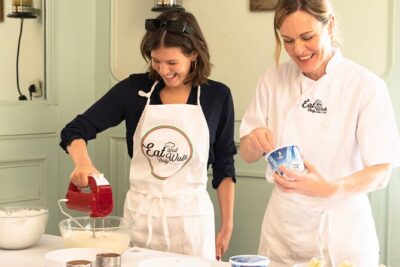
Learn to Make Pasta & Tiramisu with Wine and Limoncello Included
Read our review →
Become a Masterchef in Rome: Pasta, Ravioli and Tiramisù Class
Read our review →Browse the lists this tour appears in