
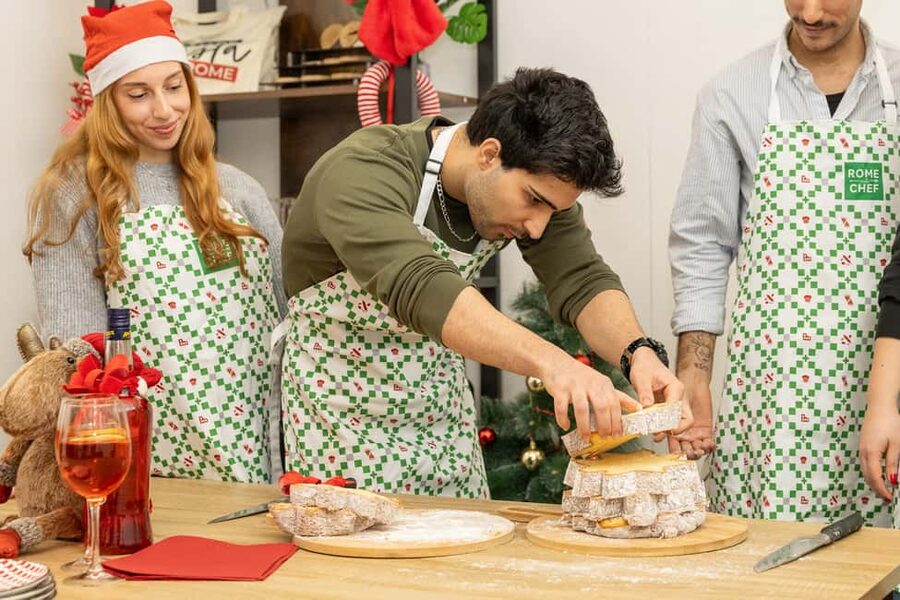
REVIEW · ROME
Rome: Make Pasta & Mix 3 Italian Spritz Near the Colosseum
The unusual hook here is simple: you make dinner while mixing three Italian spritzes. I like the hands-on pasta work, from rolling and cutting fresh fettuccine to cooking it with carbonara or cacio e pepe. I also like the social setup, where solo visitors, couples, and friends share a table and a meal near the Colosseum.
The main caution is the menu’s limits. This class includes gluten and dairy, so it is not suitable for vegans or people with coeliac disease, gluten intolerance, or lactose intolerance. Also, three cocktails over three hours can be more than some people expect, so pace yourself and use the included water.
Key points at a glance
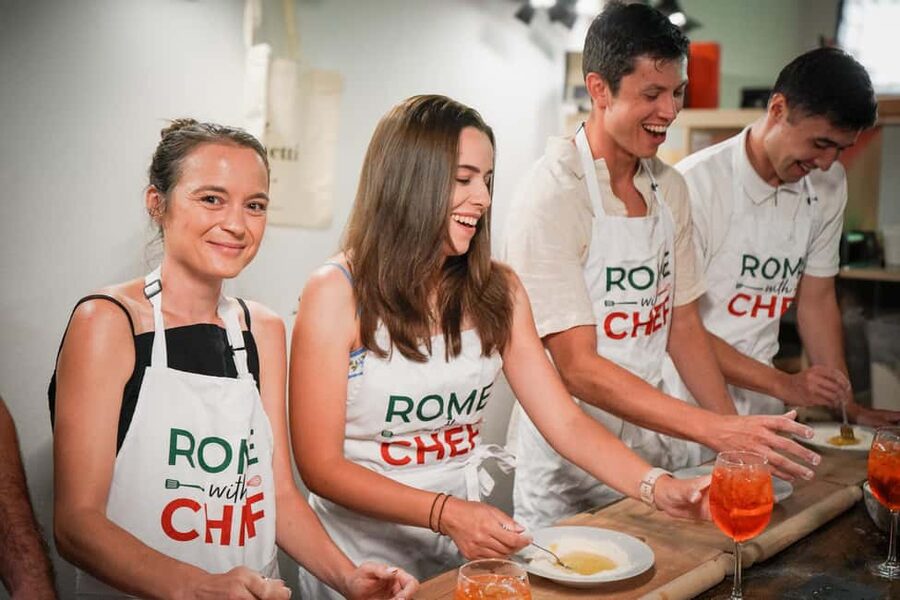
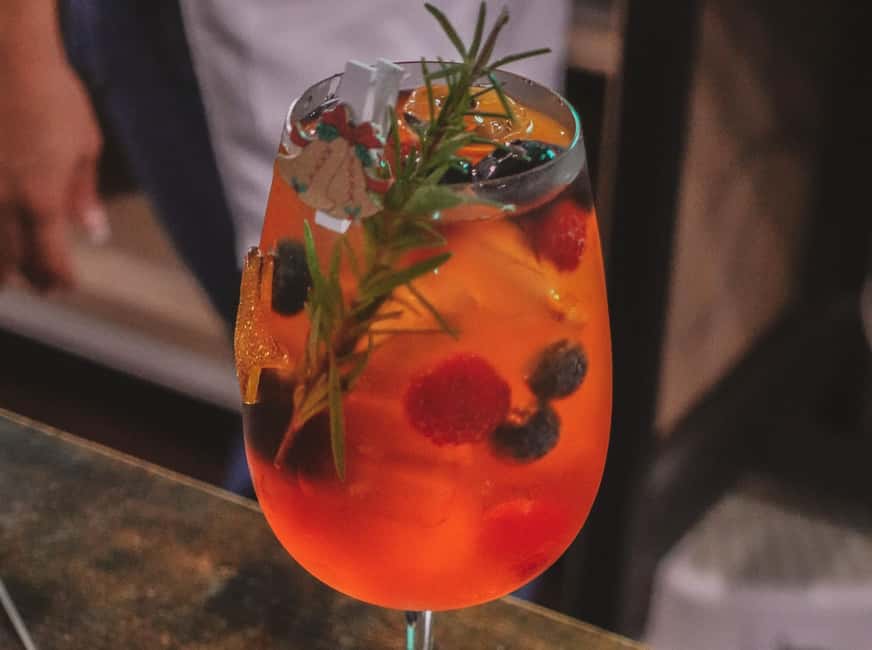
- Three spritzes are built into the class: You make an Aperol spritz at the start, a Hugo spritz while cooking, and a Limoncello spritz with the meal.
- The pasta is genuinely hands-on: You roll, cut, and cook your own fettuccine rather than simply watching a demonstration.
- The location works well for sightseeing: The class is about 10 minutes from the Colosseum, making it easy to pair with a day in ancient Rome.
- The group stays fairly small: A maximum of 14 people gives the chef room to help with shaping pasta and sauces.
- The atmosphere depends partly on your chef: Past hosts have included Sunny, Angela, Marzia, Jem, Bart, Laura, and Gianna, with a strong focus on humor and participation.
- Dietary restrictions are a real limitation: Vegetarian food is available, but gluten-free, vegan, and dairy-free meals are not.
A pasta class with a cocktail in each chapter
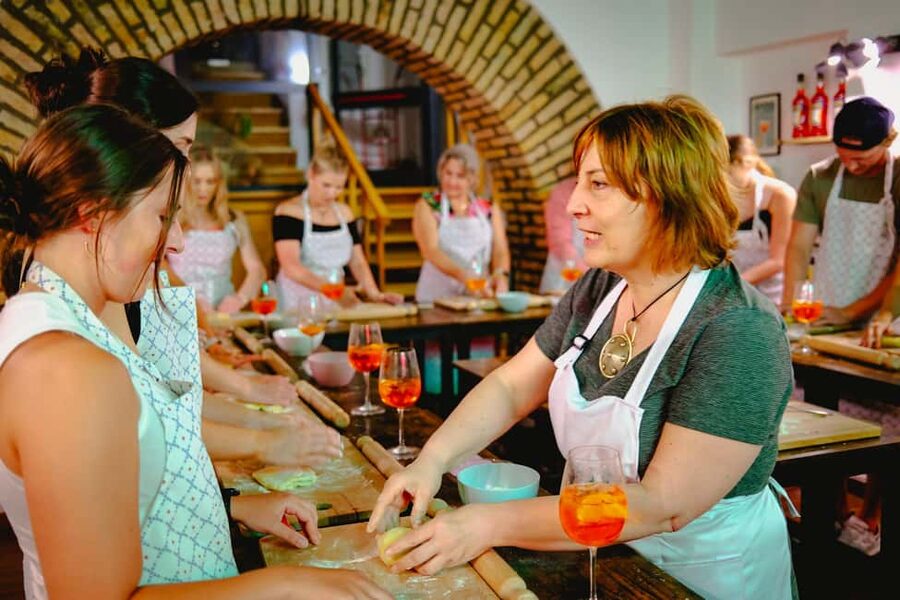
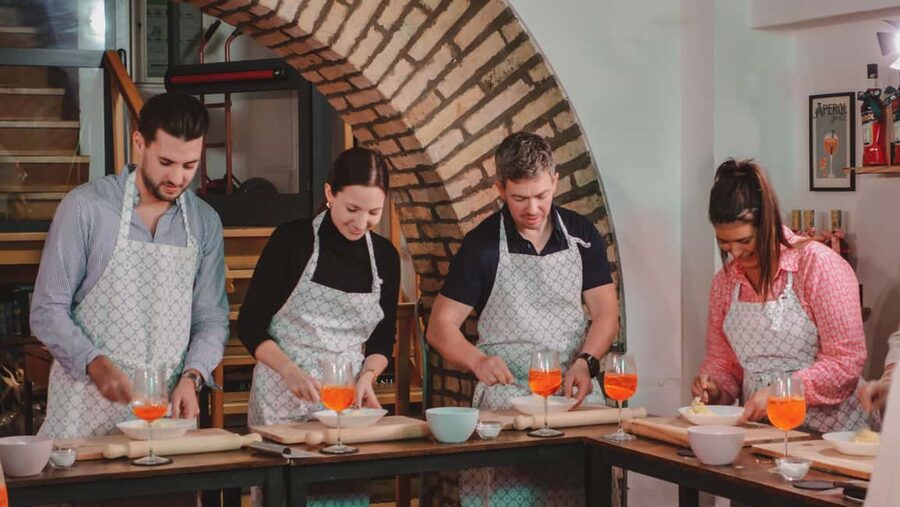
Rome has no shortage of cooking lessons, but this one gives the usual pasta class a playful twist. You are not only learning how to make a Roman meal. You are also preparing three of Italy’s best-known spritzes, one at each stage of the afternoon or evening.
The class takes place close to the Colosseum, around a 10-minute walk away. That makes it a useful choice if you are already sightseeing in the ancient center. I would not treat it as a quick snack stop, though. The full activity takes about three hours, and you should allow enough time to settle in, cook, eat, and enjoy the drinks without rushing.
The class is conducted in English. Group size is capped at 14 people, and a private group is available if you want the cooking session to stay within your own party. The small-group format matters here. Pasta making is messy and practical, and you get more from it when the chef can look at your dough, correct your technique, and keep everyone involved.
More Pasta Classes with Wine in Rome
- Rome: Pasta & Tiramisu Class with Fine Wine by the Vatican
★ 4.9 · 4,852 reviews - Rome: Pasta Making Class with Wine, Limoncello, and Dessert
★ 4.9 · 3,177 reviews - Rome Cooking Class: Make Pasta and 3 Spritz Cocktails
★ 5.0 · 2,937 reviews
Starting with an Aperol spritz
The first drink is an Aperol spritz. It serves as both a welcome and a way to loosen up the room before the flour appears. You meet the chef and the other people at your table, then learn how to prepare the drink rather than simply receiving one from a bar.
That opening helps the class feel social from the start. If you arrive alone, you are not left to sit quietly while couples take over the conversation. One solo participant specifically found the hosts made sure she was included, which is useful to know if you are booking on your own.
The tone is friendly and informal. Past instructors such as Sunny, Angela, and Gianna were praised for keeping everyone involved, while Jem and Bart were singled out for humor and high energy. The actual chef can vary, so you should expect the personality of the class to change from one session to another. Still, the format is clearly designed around participation, laughter, and shared work.
You do need to remember that this is an alcohol-based activity. The class includes three spritzes, not just a tasting sip of each. Water and soft drinks are available without limit, so use them throughout the session.
Rolling and cutting fresh fettuccine
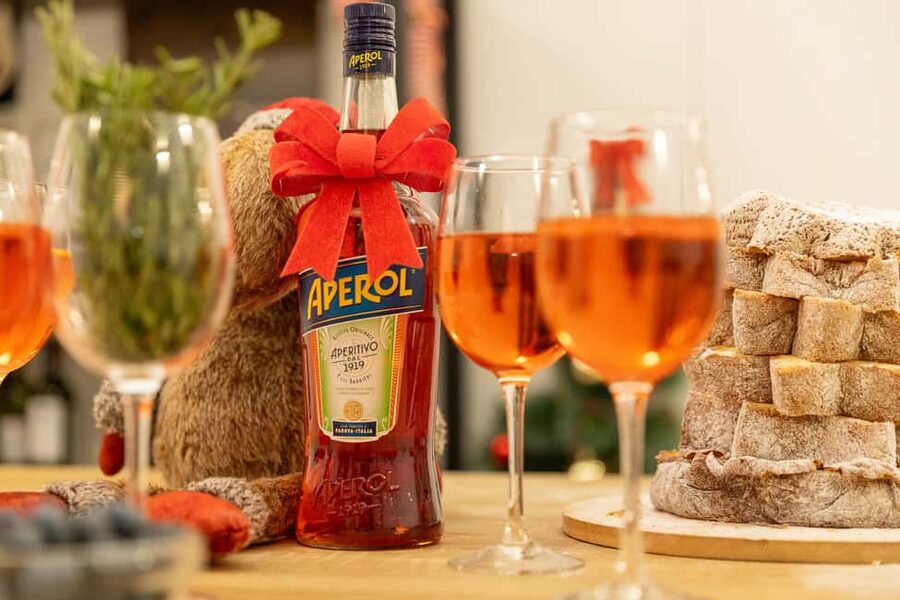
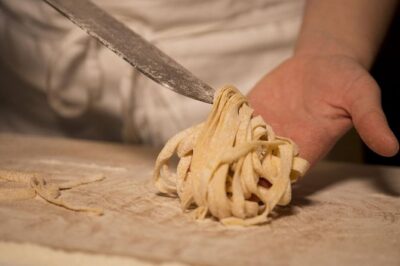
Once introductions are finished, the work begins with the pasta. You use fresh, locally sourced ingredients and take part in the key steps: rolling the dough, cutting it into fettuccine, and cooking it.
That is the part I find most valuable. A restaurant meal can show you what good Roman pasta tastes like, but it does not teach you why the texture works. Here, you get a better sense of the dough, the thickness, and the care needed to keep the strands from sticking together.
The class is suitable for beginners. You do not need to arrive with pasta-making skills, and the chef leads the process step by step. People who want a serious culinary course should keep their expectations in check, however. Three hours also includes cocktails, conversation, cooking, and eating, so this is an approachable social lesson rather than an advanced chef-training session.
The group size of 14 is a sensible compromise. It is large enough to create a lively table but small enough for the instructor to monitor the work. Your exact level of one-on-one help will depend on the group and the chef, but the design is more personal than a large demonstration class.
Choosing between carbonara and cacio e pepe
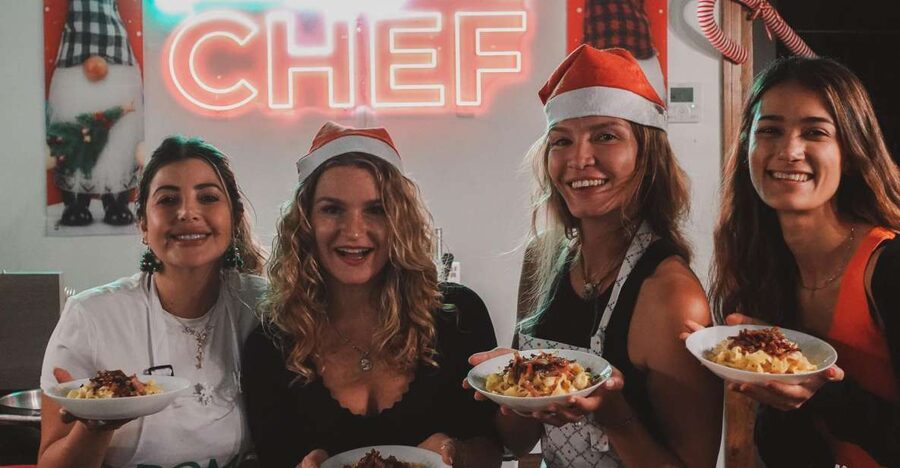
The pasta is paired with a traditional Roman sauce, usually carbonara or cacio e pepe. Both are excellent examples of why Roman cooking can seem simple on paper but require care in practice.
Carbonara depends on balancing egg, cheese, and the pasta’s heat without scrambling the sauce. Cacio e pepe is even more stripped down, relying on cheese, pepper, and starchy pasta water to create a smooth coating. Learning either sauce gives you something practical to repeat at home, since neither requires a long shopping list.
The precise sauce may depend on the class option or session. If you have your heart set on one, check the details when booking. Some classes have also included two pasta preparations, but you should not assume that every session follows the same menu.
Vegetarians can take part, according to the supplied information. The class is not suitable for vegans, and the kitchen cannot accommodate gluten-free or dairy-free diets. This is not a minor note. Flour and dairy are central to both the pasta and the Roman sauces, so people with serious intolerance should choose another food experience.
Same kitchen, a different thing to make:
- 3 in 1 Cooking Class near Navona: Fettuccine, Ravioli & Tiramisu
★ 5.0 · 7,376 reviews - Rome: 3-in-1 Fettuccine, Ravioli, and Tiramisu Cooking Class
★ 4.9 · 2,704 reviews - Rome: Fettuccine Pasta Cooking Class in Rome’s City Center
★ 4.8 · 2,414 reviews - Learn to Make Pasta & Tiramisu with Wine and Limoncello Included
★ 5.0 · 2,345 reviews
A Hugo spritz while the pasta cooks
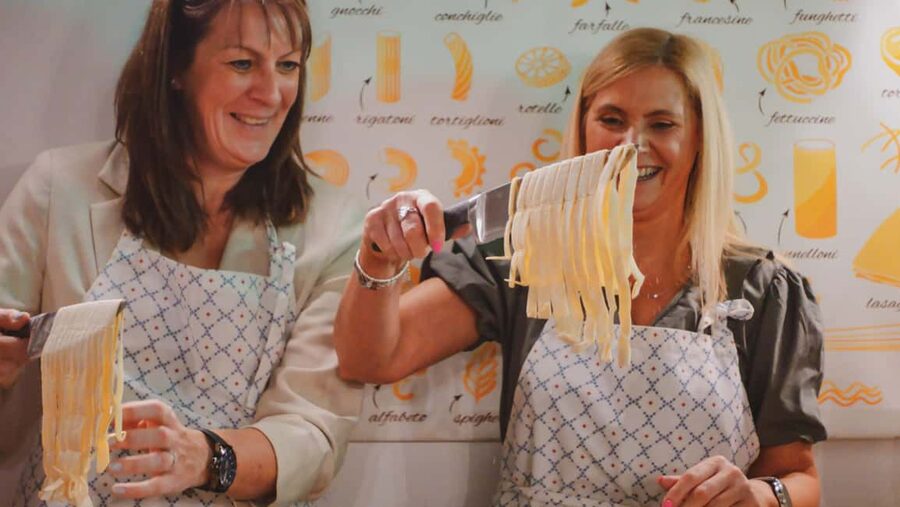
The second cocktail is a Hugo spritz, served while you are working on the pasta. This breaks up the cooking and gives you a chance to chat with the people around you while the dough and sauce come together.
The spritz sequence also gives the activity a clear rhythm. The Aperol spritz starts the gathering, the Hugo spritz fills the cooking stage, and the Limoncello spritz arrives with the meal. It is less like a formal lesson with a drink added on and more like a social evening built around food and cocktails.
Several past sessions were described as generous with the drinks, and one person noted that the pours felt strong. That makes the included water especially useful. If you are not used to drinking while cooking, go slowly. You can enjoy the class just as much without finishing every drink quickly.
The social side is one of the strongest reasons to book this instead of eating in a standard restaurant. You work beside people from different countries, then sit down together with the food you made. It is a good fit for couples and groups of friends, but it can also work for solo visitors who want company without committing to a full group tour.
Eating what you made near the Colosseum
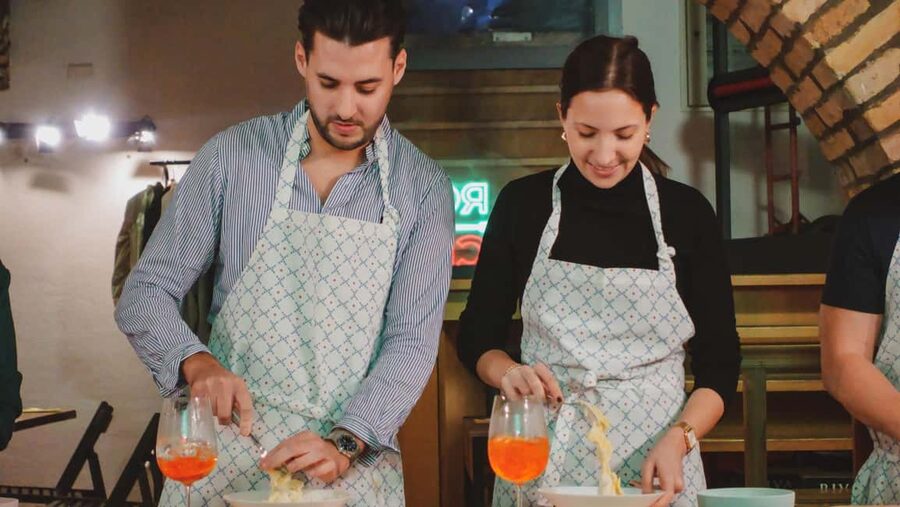
At the end, you eat the pasta with the chef and the rest of the group. That meal is the payoff for the practical work, and it gives you a fair test of what you learned. Fresh pasta tends to taste better when you know how much effort went into it, but the class also gives you a useful comparison with the many Roman restaurants nearby.
Past participants repeatedly singled out the food as a high point. One person said the homemade carbonara and cacio e pepe were better than versions eaten in Roman restaurants. That is personal judgment, not a guarantee, but it points to the advantage of eating pasta immediately after making it.
The meal is not a separate restaurant course with a long menu. You eat the handmade pasta and sauce prepared during the workshop. If you are looking for several courses, wine pairings, or a formal culinary setting, this is not that kind of experience.
The final drink is a Limoncello spritz. It gives the meal a sweet, citrusy finish and completes the three-drink sequence. You also receive the recipes to take home, which is more useful than a souvenir photograph if you want to keep the experience going after Rome.
What the $79 price really covers
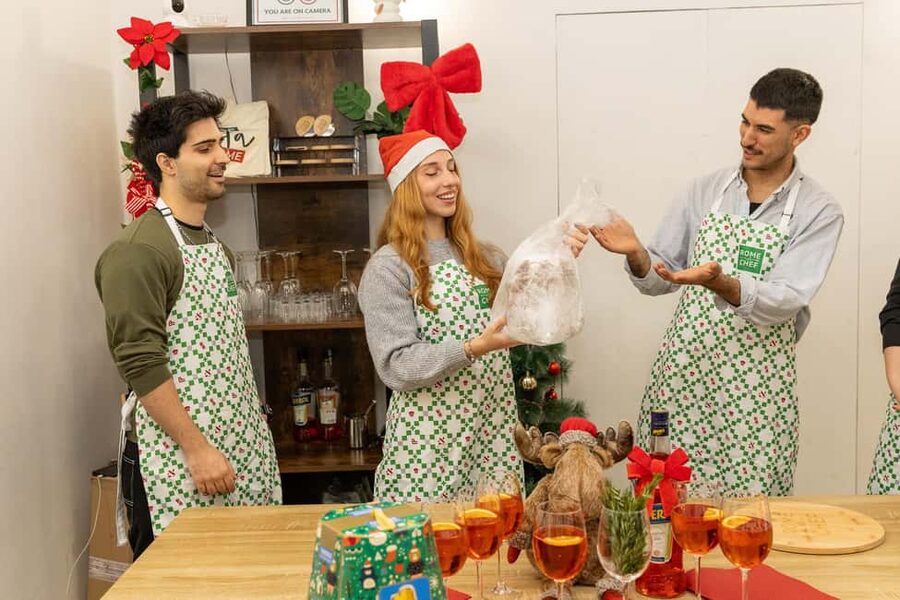
At $79 per person, this is not the cheapest pasta meal in Rome. You are paying more than you would for a casual plate of carbonara, but the comparison is not quite fair. The price includes three cocktails, a chef-led pasta workshop, the ingredients, the meal, water and soft drinks, and the recipes.
I consider the value strongest for someone who wants an activity as well as dinner. You spend three hours learning, cooking, drinking, and meeting people. If you only want to eat near the Colosseum, a restaurant will be quicker and possibly cheaper. If you want an evening that gives you a skill to take home, the class makes better sense.
The price also includes instruction from a local chef rather than a self-guided recipe sheet. Names such as Marzia, Laura, Sunny, Angela, and Jem appear repeatedly in the class’s history, and the strongest praise focuses on their warmth, humor, energy, and ability to explain each stage clearly.
I would book this for a special evening, a couple’s activity, or the first night of a Rome visit when you want an easy way to meet people. I would be less likely to choose it for a tight sightseeing schedule. Three hours is a substantial block of time, and the drinks mean you may not want to follow the class with a demanding museum visit.
Timing, meeting point, and practical details
The meeting point can vary with the option you book. Both possible locations are within a five-minute walk of each other, and you are told in advance if the address changes. Check the final meeting details rather than assuming the class begins at one fixed location.
The activity is about 10 minutes from the Colosseum, but that does not mean you should arrive at the last second. Rome’s central streets can be crowded, and you will want time to find the correct entrance and settle in before the first drink.
Starting times vary, so check availability for the date you want. The class is offered in English. Private groups are available, which can be worthwhile for a birthday, a family gathering with adult children, or a group that wants more control over the pace and conversation.
Children under 2 are not suitable for the class. An infant who joins must remain on an adult’s lap because there is no separate seat or workspace. That arrangement would be awkward during pasta preparation, so families with very young children should plan a different activity.
Free cancellation is available up to 24 hours before the start time, and you can reserve now and pay later. Those policies help if your Rome schedule is still changing, but they do not remove the need to check the meeting point, starting time, and food restrictions before booking.
Who should book this pasta and spritz class?
I would recommend it most strongly to:
- Couples who want a shared activity rather than another restaurant dinner
- Friends looking for a lively evening near the Colosseum
- Solo visitors who enjoy meeting people at a communal table
- First-time cooks who want a simple pasta skill they can repeat at home
- People who like cocktails and do not mind an alcohol-centered activity
- Anyone with a free three-hour block in the ancient-center area
I would skip it if you need gluten-free, dairy-free, or vegan food. I would also look elsewhere if you want a quiet, highly technical cooking lesson. The class is built around fun, conversation, and drinks as much as the pasta itself.
The strongest feature is the mix of useful instruction and relaxed social time. You do not simply watch a chef make pasta, and you do not simply sit at a bar drinking spritzes. You take part in both, then eat the result.
Should you book it?
Book this class if you want to turn dinner into one of your Rome activities. The combination of fresh fettuccine, Roman sauce, three spritzes, and a small English-speaking group gives you more than a meal for the price.
Skip it if dietary restrictions rule out flour or dairy, if you prefer alcohol-free sightseeing, or if your schedule cannot spare three hours. For everyone else, this is a practical, sociable choice near the Colosseum, with recipes that can keep the memory alive after you return home.
FAQ
How long does the pasta and spritz class last?
The experience lasts three hours. Starting times vary, so check availability for your chosen date.
How many spritzes are included?
The class includes one Aperol spritz, one Hugo spritz, and one Limoncello spritz.
What pasta will I make?
You will roll, cut, and cook fresh fettuccine. The pasta is served with a traditional Roman sauce, either carbonara or cacio e pepe, depending on the class option.
Is the class suitable for vegetarians?
Yes. Vegetarian options are available.
Can I join if I am vegan or gluten-free?
No. The class includes gluten and dairy and cannot accommodate vegan, gluten-free, coeliac, gluten-intolerant, or lactose-intolerant diets.
Is the class suitable for young children?
It is not suitable for children under 2. If an infant joins, the child must remain on an adult’s lap because there is no separate seat or workspace.
What happens if the meeting point changes?
The meeting point can vary depending on the option booked. Both locations are within a five-minute walk of each other, and you will be informed in advance if the address changes.
Just added around Rome
- Rome: Pasta and tiramisu class with wine pairing at Come Na Vorta★ 5.0 · 30 reviews
- Spritz and Pasta! Spritz, Fettuccine & Tiramisù★ 5.0 · 2 reviews
- Rome: Vespa Tour with Photographer and Tiramisu treat★ 4.5 · 61 reviews
- Walking Tour & Pizza Making★ 4.0 · 2 reviews
- Trastevere Food Tour with Pasta-Making Class★ 5.0 · 5 reviews
- Rome: Private Vespa Tour and Professional Photoshoot★ 5.0 · 22 reviews
- Traditional Pasta Cooking Class with Tiramisu Small Group★ 5.0 · 7 reviews
- Tiramisu and Gelato Creation in Authentic Roman Dessert Workshop★ 4.5 · 3 reviews
Rome Pasta Classes, compared.
3 in 1 Cooking Class near Navona: Fettuccine, Ravioli & Tiramisu
Read our review →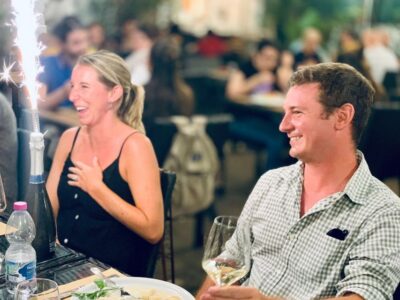
Pasta & Tiramisu Class with Fine Wine by the Vatican
Read our review →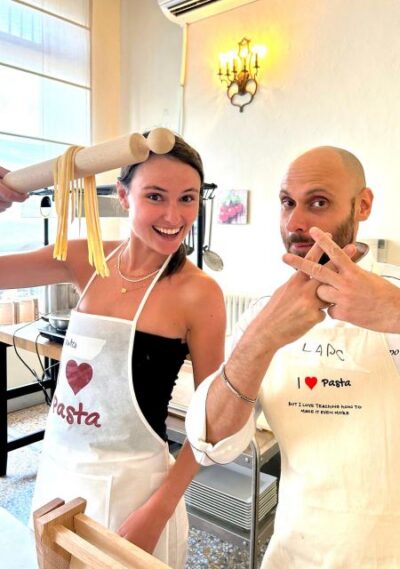
Pasta Making Class with Wine, Limoncello, and Dessert
Read our review →
Rome Cooking Class: Make Pasta and 3 Spritz Cocktails
Read our review →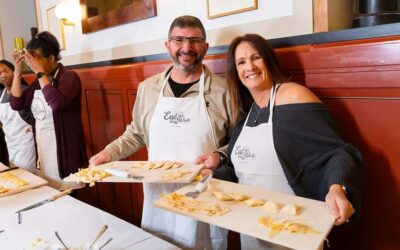
3-in-1 Fettuccine, Ravioli, and Tiramisu Cooking Class
Read our review →
Fettuccine Pasta Cooking Class in Rome’s City Center
Read our review →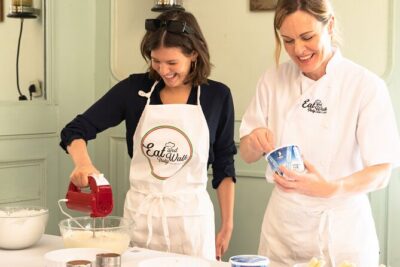
Learn to Make Pasta & Tiramisu with Wine and Limoncello Included
Read our review →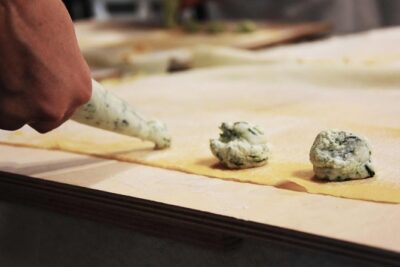
Become a Masterchef in Rome: Pasta, Ravioli and Tiramisù Class
Read our review →Browse the lists this tour appears in