
REVIEW · ROME
Rome: Enjoy Spritz and Pasta Making in Piazza Navona
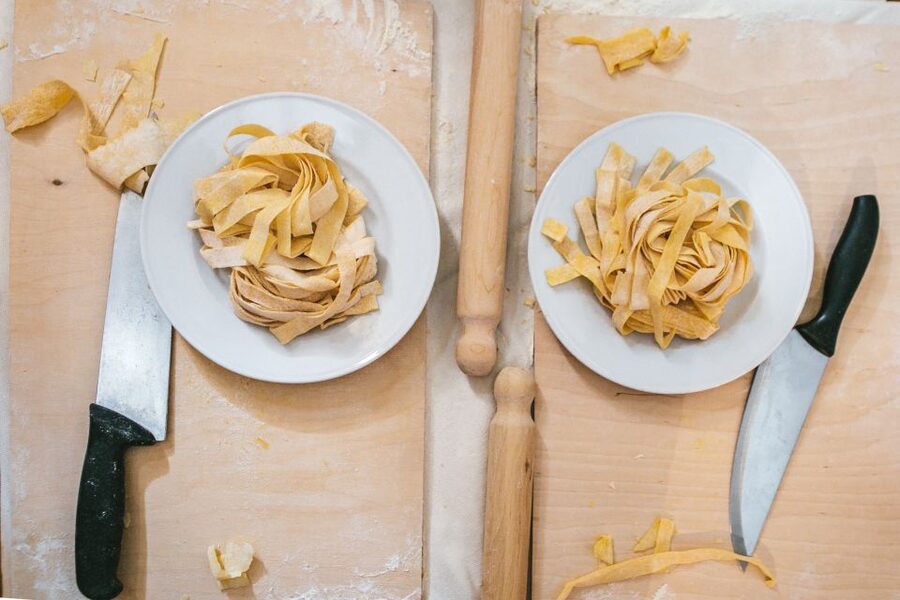
Fresh pasta is the real star here. In a restaurant near Piazza Navona, you mix dough, roll it, and cut it into fettuccine and maltagliati, then sit down to eat what you made. The Spritz lesson gives the evening a cheerful Italian start.
I like the hands-on teaching and the generous meal that follows. I also like that the class works for beginners, families with older children, couples, and solo visitors who enjoy meeting people around a table. The main consideration is that pasta making takes some effort, so this is not a quiet tasting or a quick demonstration.
Key points at a glance
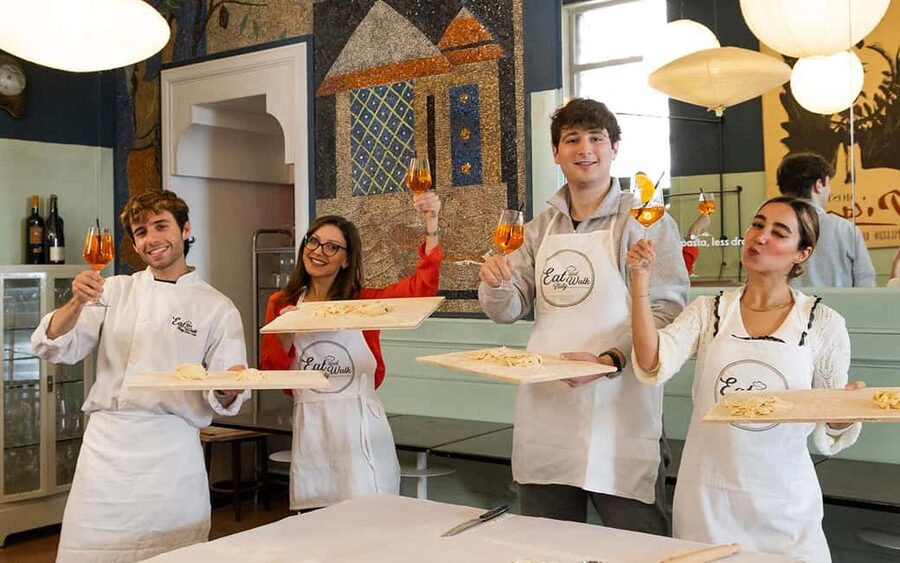
- Two pasta shapes from one dough: Learn to turn fresh dough into fettuccine and irregular maltagliati pieces.
- Spritz practice comes first: Make the classic aperitivo before moving on to the pasta.
- A full meal is included: Bruschetta, two pasta dishes, tiramisu, wine or a soft drink, and limoncello or coffee are part of the $88 price.
- English-speaking chefs lead the class: Maria, Tiziana, Jessica, Jess, Lori, Lory, Leo, and Agnes have led sessions at different times.
- Excellent central location: Restaurant Gusto, the meeting point, is just steps from Piazza Navona.
- Good for families and beginners: Children under four cannot take part, and alcohol is limited to people aged 18 and over.
Making pasta beside Piazza Navona
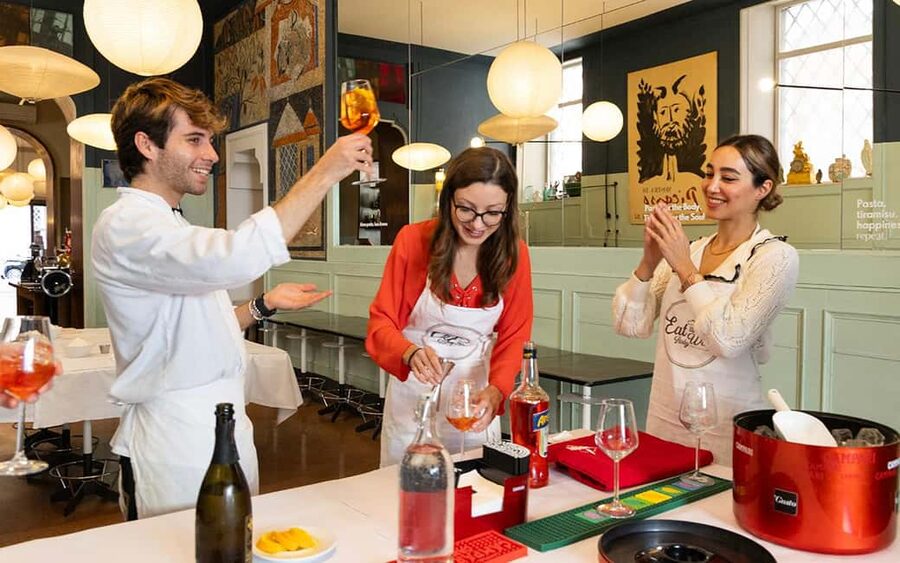
This experience puts cooking right in the middle of your Rome day. The meeting point is Restaurant Gusto, operated by Eat and Walk Italy, a short walk from Piazza Navona. That location matters: you can pair the class with the Pantheon, the Trevi Fountain, or an evening stroll through the historic center without spending time getting across town.
The format is social rather than formal. You sit or work with other people, follow an English-speaking chef, and share the meal afterward. If you are traveling alone, this gives you an easy way to meet people. If you are with family or friends, it gives everyone a task instead of leaving one person to do all the cooking.
The chefs named in past sessions include Maria, Tiziana, Jessica, Jess, Lori, Lory, Leo, and Agnes. The exact instructor depends on the date, but the teaching style is consistent in the most important way: clear demonstrations, help at the worktable, and plenty of encouragement for first-time pasta makers.
You do not need to know how to cook. Several parts of the process are easier than they first look, and the chef steps in when the dough needs extra work or your cuts are uneven. That said, making pasta by hand is active. Expect flour on your hands and a little physical effort, especially while working the dough.
More Fresh Pasta Workshops in Rome
- Rome: Pasta Making Class with Wine, Limoncello, and Dessert
★ 4.9 · 3,177 reviews - Enjoy Spritz and Pasta Making in Piazza Navona
★ 5.0 · 1,681 reviews - Pasta Making & Wine Tasting with Dinner in Frascati from Rome
★ 5.0 · 1,326 reviews
Your first lesson is the Italian Spritz
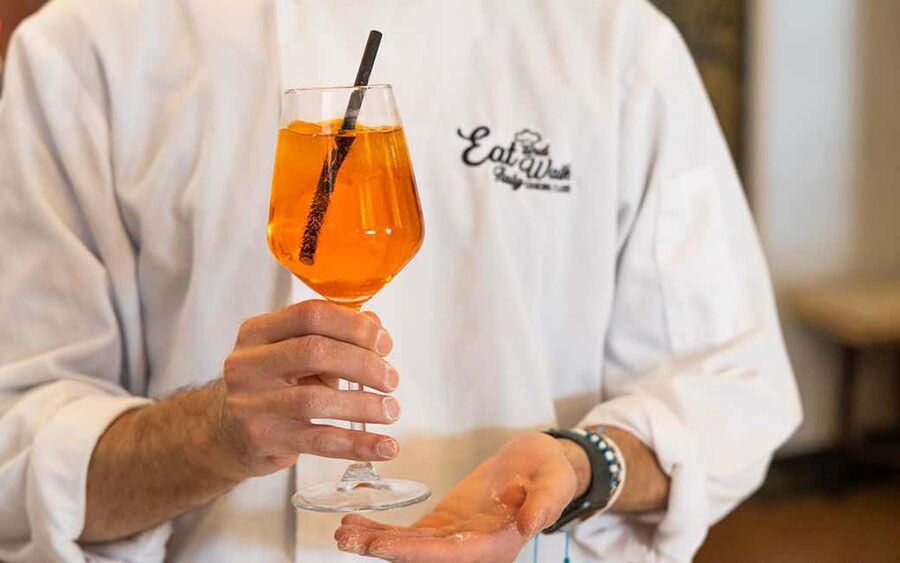
The class begins with a welcome Spritz. Rather than simply handing you a drink, the activity includes preparation of the cocktail, so you get a small lesson in one of Italy’s most recognizable aperitivi.
This is a smart opening. A Spritz gives the class an informal start while the group gets settled, and it suits the Roman habit of enjoying a drink before dinner. If you do not drink alcohol, the experience includes non-alcoholic beverage options later, but the stated welcome drink is a Spritz.
Alcoholic drinks are available only to participants aged 18 and over. That rule matters for families booking with teenagers. Children can still take part in the pasta activity if they meet the minimum age requirement, but they should not expect to receive alcoholic drinks.
Turning one dough into two kinds of pasta
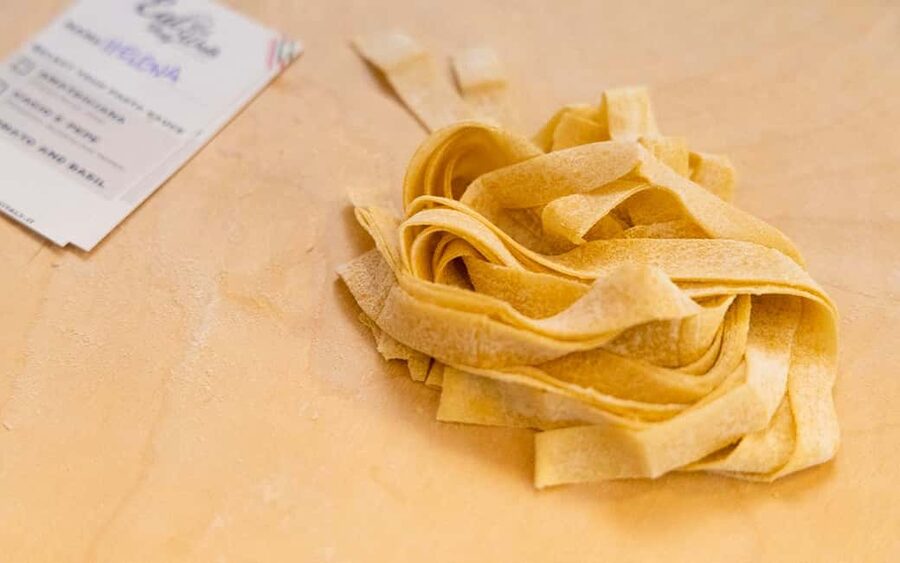
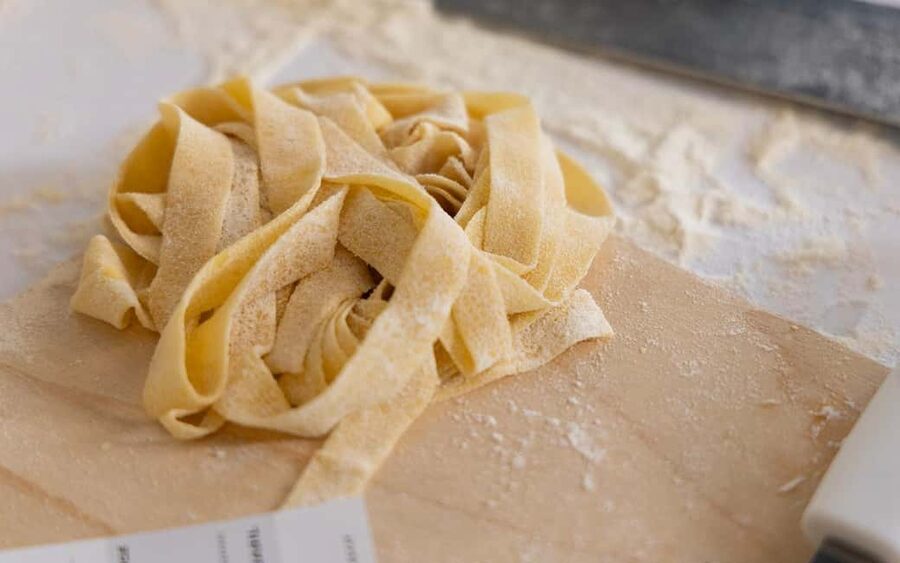
The central lesson is fresh pasta made from scratch. You prepare a dough and use it to make two different shapes: fettuccine and maltagliati.
Fettuccine is the familiar long, ribbon-like pasta. It gives you a chance to practice cutting evenly and seeing how thickness affects the finished dish. Maltagliati means badly cut, or irregularly cut, pasta. That name takes pressure off. Uneven pieces are part of the style, not a failure.
This pairing is useful because you learn both precision and freedom. Fettuccine rewards careful cutting, while maltagliati lets you work more casually. The session is therefore not just a recipe to copy. It shows how Italian cooks can use the same dough in different ways and how imperfect shapes can still make a satisfying meal.
The instructor demonstrates each stage, then helps you at your own station. Past classes have been especially welcoming to children and complete beginners. One useful feature is that the chef does not simply talk from the front of the room. The teaching includes individual help, so you can ask about dough texture, cutting, or the next step as you work.
You may not produce restaurant-perfect strands on your first try. That is fine. The point is to leave with a practical method you can repeat at home. Some participants have even received the recipe and class photos by email after the session, though you should confirm that this is available for your booking.
From worktable to two pasta sauces
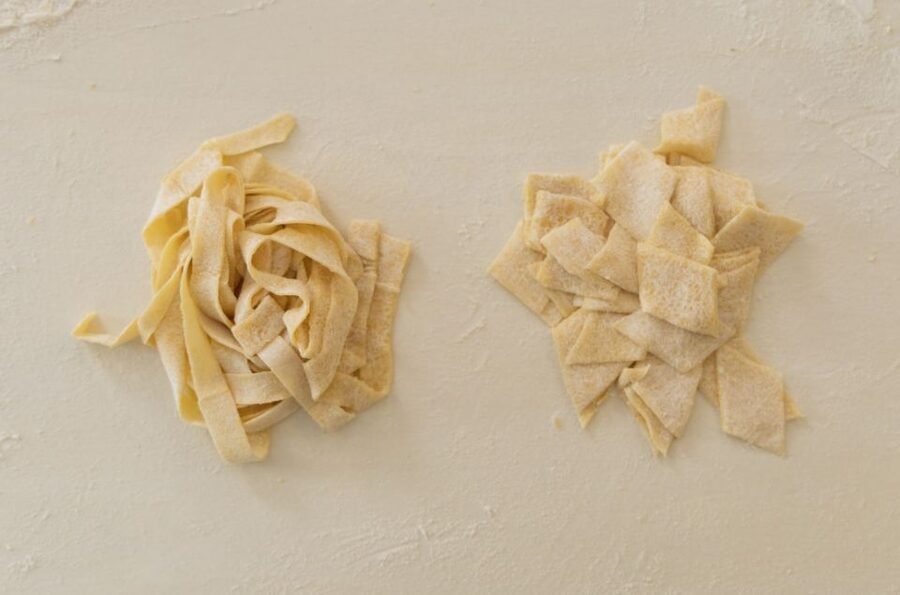
Once your pasta is ready, it is cooked and served as part of the meal. The planned pairings are maltagliati with basil pesto and fettuccine with sugo al pomodoro, a simple tomato sauce.
These sauces make sense for a class because they let the fresh pasta do the work. Basil pesto brings a bright, herbal flavor, while tomato sauce offers the familiar comfort of a Roman-style pasta dish. You can taste how fresh pasta holds sauce differently from dried pasta.
The meal also includes toasted bruschetta with tomatoes, basil, and oregano. This gives you something to eat while the pasta is being prepared or cooked, and it adds a simple starter to the evening rather than making the meal only about the dish you made.
Past sessions have included other sauce choices at times, such as carbonara or cacio e pepe, but the stated menu for this experience is pesto and sugo al pomodoro. If a particular sauce matters to you, ask when you arrive rather than assuming the alternatives will be offered.
More Pasta Classes with Wine in Rome
- Rome: Pasta & Tiramisu Class with Fine Wine by the Vatican
★ 4.9 · 4,852 reviews - Rome Cooking Class: Make Pasta and 3 Spritz Cocktails
★ 5.0 · 2,937 reviews - Learn to Make Pasta & Tiramisu with Wine and Limoncello Included
★ 5.0 · 2,345 reviews - Fettuccine & Tiramisù: Cooking Class with Wine & Limoncello
★ 4.9 · 2,103 reviews
The meal is more than a small cooking-class sample
At $88 per person, this is not priced like a basic pasta demonstration. You are paying for a 2.5-hour activity, a welcome Spritz, the cooking instruction, bruschetta, two pasta preparations, dessert, water, a glass of wine or non-alcoholic drink, and a final glass of limoncello or coffee.
That makes the value fairly strong for visitors who want both an activity and dinner. A comparable evening in Rome could easily involve a paid meal plus a separate cocktail, while this combines food, instruction, and a central location. The homemade pasta is not merely a snack at the end. It is the main meal.
Tiramisu finishes the meal. It is a fitting dessert after a pasta-focused class, and coffee or limoncello gives you a choice for the final drink. The included wine is also a useful touch because it lets the cooking session flow naturally into dinner without requiring you to order every drink separately.
The limit is that additional food and drinks cost extra. You should not treat the listed inclusions as an open bar or an unlimited meal. For most people, though, the included food is substantial enough to serve as dinner.
Why the teaching style matters
The instructor can make or break a hands-on class. Here, the strongest pattern is personal attention and a light, friendly approach. Maria has been praised for clear demonstrations and for helping people who do not cook often. Tiziana has welcomed families and explained the process in a relaxed way. Jessica and Jess have been noted for keeping the group laughing while still giving useful instruction.
That mix is important. Pasta making can feel intimidating if the teacher moves too quickly or treats mistakes as a problem. A good chef shows you what to do, watches your work, and helps you correct it without making you feel clumsy.
You should also expect the tone to vary slightly with the chef and the makeup of the group. Some sessions may feel lively and chatty, while others may be smaller and calmer. One family session had only four people, but group size can change, so do not book solely on the assumption that every class will be intimate.
The class is taught in English. That makes the instructions accessible to English-speaking visitors, though the setting remains an Italian restaurant rather than a school kitchen. You get the useful parts of a cooking lesson without giving up the pleasure of eating in a local dining setting.
A good choice for families, couples, and solo visitors
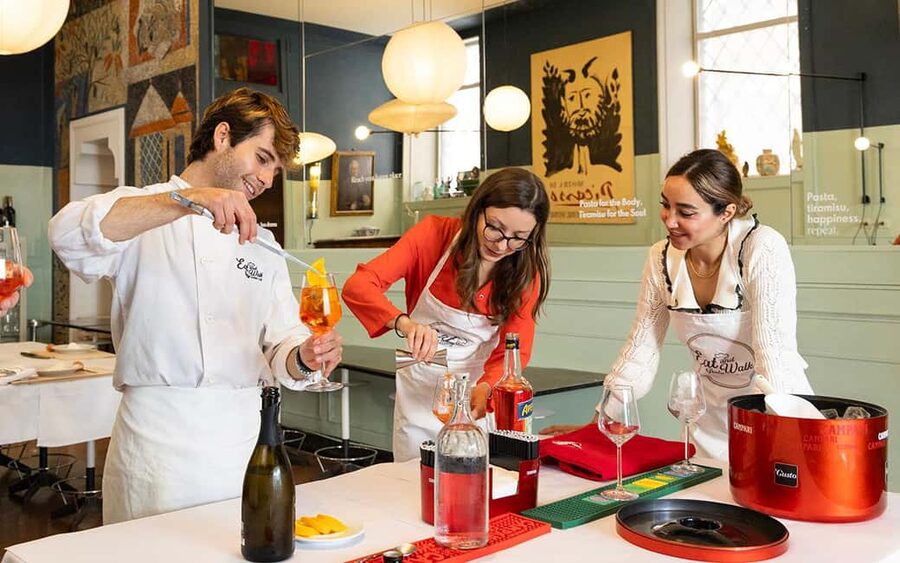
Families with children over four are a particularly good match. The work is simple enough for young cooks with help, and the final meal gives children a clear reward for paying attention. Older children and teenagers can also enjoy the social side, though only participants aged 18 and over may have alcohol.
Couples can use the class as a shared evening activity. Instead of sitting across from each other for another restaurant meal, you work together and then eat the result. It is also a useful birthday activity, with the food and cooking giving the occasion more substance than a standard dinner.
Solo visitors should consider it if they enjoy conversation. You will likely be placed in a group setting, and the shared preparation makes it easier to talk with people than at a table in a conventional restaurant. If you prefer silence, privacy, or a highly polished culinary lesson, this may not be the right fit.
The class is wheelchair accessible, which removes one common barrier for a central Rome activity. Pets are not allowed. Children under four are not suitable for the experience.
Timing your class around Piazza Navona
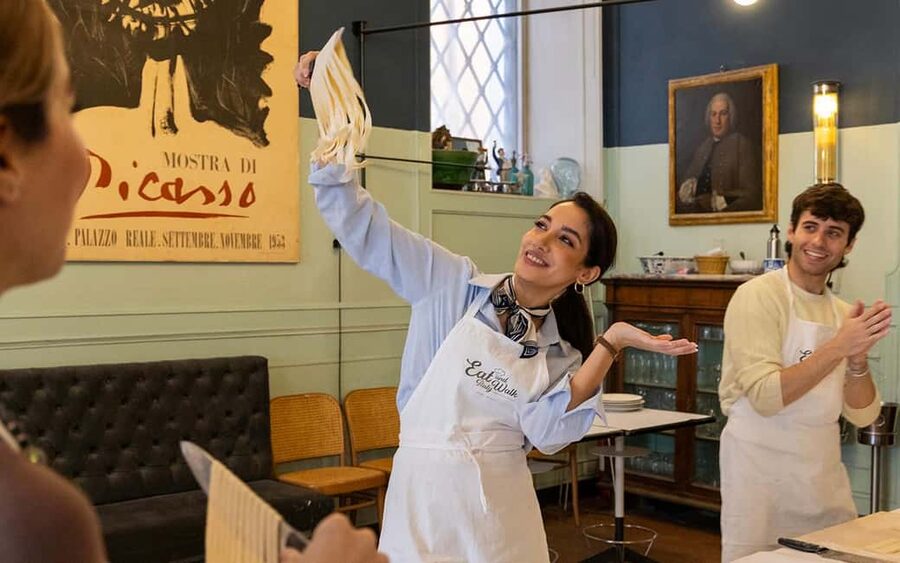
The class lasts 2.5 hours, so plan it as a major part of your day rather than a quick stop between sights. A morning or afternoon session can fit well before an evening walk, while a later class can become your dinner.
Because the meeting point is close to Piazza Navona, allow time to find Restaurant Gusto and arrive without rushing. Rome’s central streets can be crowded with pedestrians, outdoor tables, and uneven paving. You will enjoy the class more if you are not hurrying in from a distant attraction.
The location also gives you an easy after-dinner plan. You can walk around Piazza Navona after the meal, see the fountains lit at night, or continue toward the Pantheon. The activity does not include a guided sightseeing tour, so the value of the setting comes from what you can do before or after on your own.
A practical tip: avoid scheduling another demanding activity immediately afterward. The pasta lesson is fun, but the dough work requires attention, and the meal takes time. Give yourself room to stay at the table and enjoy the social part.
The main drawbacks to consider
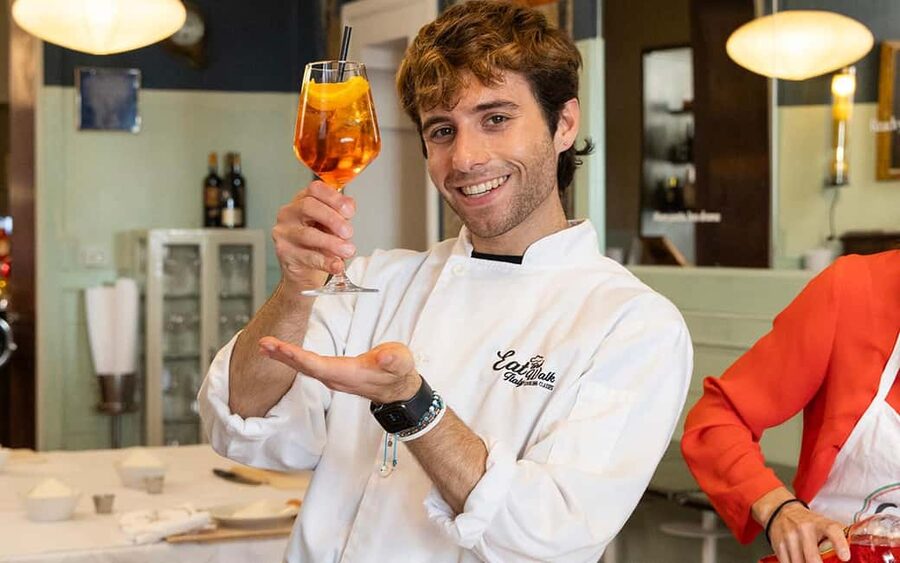
The first drawback is the hands-on work itself. If you are expecting a demonstration where you sit back with a drink, you may find the session more active than planned. The dough needs mixing, working, and cutting, and the class can leave you warm and flour-dusted.
The second is menu flexibility. The included meal is clearly defined: bruschetta, maltagliati with pesto, fettuccine with tomato sauce, tiramisu, and drinks. Extra items are not included, and the available sauces may vary only if the restaurant chooses to offer alternatives.
The third is that the experience is social. That is a plus for many people, but not for everyone. Your enjoyment depends partly on the group and the instructor working that day. The English-language format helps, but it does not turn the class into a private lesson.
Finally, $88 is a meaningful part of a Rome food budget. I think the price works best if you count the class as both dinner and entertainment. If you only want an inexpensive plate of pasta, a regular trattoria will cost less. If you want to learn a skill and eat a full meal in a central location, the price is easier to justify.
Booking details worth knowing
Free cancellation is available up to 24 hours before the activity for a full refund. You can also reserve and pay later, which helps if your Rome schedule is still shifting.
Check the available start times before booking, since the class schedule can vary. The instructor speaks English, the activity lasts 2.5 hours, and the meeting point is Restaurant Gusto, Eat and Walk Italy.
I would book ahead if this is one of your priority Rome activities. The combination of central location, food, and an English-language class is likely to appeal to many visitors, particularly during busy travel periods.
Should you book this pasta class?
I would book it if you want a social food experience that teaches a real skill and provides a full dinner. It suits first-time cooks, families with children over four, couples, and solo visitors who like meeting people. The pasta shapes are simple enough for beginners, but the process still feels like something you can take home and repeat.
I would skip it if you want a quiet meal, a private class, or a highly technical chef’s workshop. For everyone else, the $88 price is reasonable because it covers 2.5 hours of instruction, a Spritz, a substantial meal, dessert, and drinks near Piazza Navona. Bring a little patience, expect to work with your hands, and you should leave with both a full stomach and a better feel for fresh pasta.
FAQ
Where does the pasta-making experience meet?
The meeting point is Restaurant Gusto, Eat and Walk Italy, located just steps from Piazza Navona in Rome.
How long does the activity last?
The cooking class and meal last 2.5 hours.
What pasta will I make?
You will prepare fresh fettuccine and maltagliati pasta from scratch.
What food and drinks are included?
The inclusions are a welcome Spritz, bruschetta, maltagliati with basil pesto, fettuccine with sugo al pomodoro, tiramisu, water, a glass of wine or non-alcoholic drink, and a glass of limoncello or coffee.
Can children take part?
Children under four are not suitable for the activity. Participants must be at least 18 years old to receive alcoholic beverages.
Is the class wheelchair accessible?
Yes, the activity is wheelchair accessible. Pets are not allowed.
Just added around Rome
- Rome: Pasta and tiramisu class with wine pairing at Come Na Vorta★ 5.0 · 30 reviews
- Spritz and Pasta! Spritz, Fettuccine & Tiramisù★ 5.0 · 2 reviews
- Rome: Vespa Tour with Photographer and Tiramisu treat★ 4.5 · 61 reviews
- Walking Tour & Pizza Making★ 4.0 · 2 reviews
- Trastevere Food Tour with Pasta-Making Class★ 5.0 · 5 reviews
- Rome: Private Vespa Tour and Professional Photoshoot★ 5.0 · 22 reviews
- Traditional Pasta Cooking Class with Tiramisu Small Group★ 5.0 · 7 reviews
- Tiramisu and Gelato Creation in Authentic Roman Dessert Workshop★ 4.5 · 3 reviews
Rome Pasta Classes, compared.
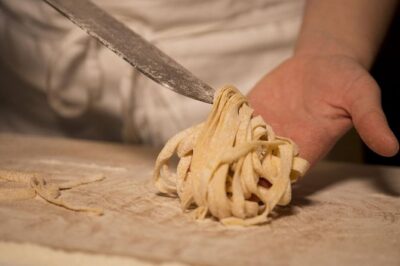
3 in 1 Cooking Class near Navona: Fettuccine, Ravioli & Tiramisu
Read our review →
Pasta & Tiramisu Class with Fine Wine by the Vatican
Read our review →
Pasta Making Class with Wine, Limoncello, and Dessert
Read our review →
Rome Cooking Class: Make Pasta and 3 Spritz Cocktails
Read our review →
3-in-1 Fettuccine, Ravioli, and Tiramisu Cooking Class
Read our review →
Fettuccine Pasta Cooking Class in Rome’s City Center
Read our review →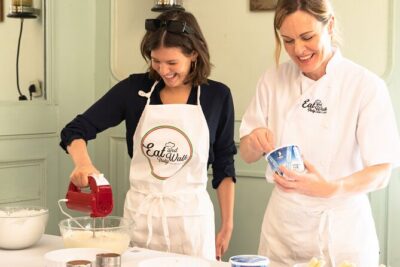
Learn to Make Pasta & Tiramisu with Wine and Limoncello Included
Read our review →
Become a Masterchef in Rome: Pasta, Ravioli and Tiramisù Class
Read our review →Browse the lists this tour appears in