
REVIEW · LECCE
Lecce: Pasta Making Class in 1400s-Era Courtyard with Wine
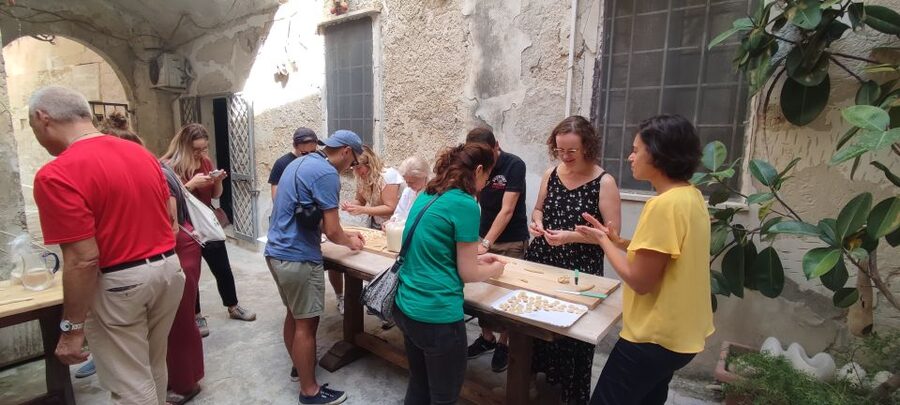
Lecce’s most memorable cooking class starts with a handful of flour, water, and a local woman showing you how to turn both into orecchiette and Sagne. The setting is the Faggiano Archaeological Museum, where a courtyard dating to the 1400s gives the lesson a fine sense of place. I like the direct, hands-on format, and I like that you eat the pasta you make with wine afterward.
The class also has a warm social side. Local cooks such as Teresa and Luciana guide the work, while multilingual hosts help with Italian, English, and French. The main thing to consider is group size: some sessions have around 20 people, so this feels more like a lively shared evening than a quiet private lesson.
Key points at a glance
- A 1400s courtyard: You make pasta inside the historic setting of the Faggiano Archaeological Museum in central Lecce.
- Two Apulian shapes: The lesson covers orecchiette and Sagne, with close attention to hand technique.
- Real hands-on work: You mix flour and water, handle the dough, and shape the pasta yourself.
- A shared meal follows: Your finished pasta is served after class with wine, and sometimes snacks or other simple accompaniments.
- A friendly international table: The group setting makes it easy to meet people from several countries.
- Good value at $68: For 2.5 hours of instruction, equipment, a meal, and wine, the price is fair for a central Lecce activity.
Why pasta makes sense in Lecce
Lecce is known for its pale stone buildings, ornate churches, and easygoing evening streets. But food gives you another way to understand Salento, the southern part of Puglia. Here, pasta is not just something ordered in a restaurant. It is a household skill, taught by touch and repeated until the movement feels natural.
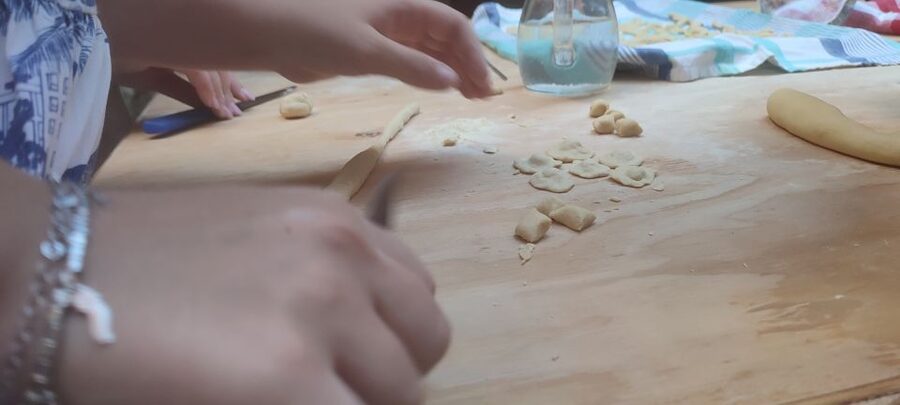
That is the appeal of this class. You are not simply watching a cook prepare a dish. You are asked to work the dough, feel its texture, and copy a motion that looks simple until you try it yourself. Orecchiette means little ears, a name that makes sense once you see the small cupped shapes.
Sagne gives you a second style of Apulian pasta. The experience information calls it a pasta made especially in Puglia, while several class descriptions refer to the second shape as maccheroni. Either way, you learn more than one local technique, which adds useful variety to the lesson.
I like classes that connect food with place. Here, the pasta is local, the instructors are local, and the building is part of Lecce’s story. That combination makes the evening feel more rooted than a generic cooking studio.
More Fresh Pasta Workshops in Italy:
- Rome: Pasta Making Class with Wine, Limoncello, and Dessert
★ 4.9 · 3,177 reviews - Pastamania – Florence Pasta Making Class
★ 5.0 · 3,050 reviews - Enjoy Spritz and Pasta Making in Piazza Navona
★ 5.0 · 1,681 reviews
Finding the Faggiano Museum in central Lecce
The meeting point is Via Ascanio Grandi 58, at the Faggiano Archaeological Museum. You arrange your own transport, so plan to reach the address directly. The central location is useful if you are already spending the day on foot in Lecce’s old town.
The museum itself adds character before the cooking begins. You are working in a courtyard associated with the 1400s, not in a modern classroom designed only for demonstrations. Its age and atmosphere give the class a strong backdrop, especially once the evening light softens the stone.
The setting is attractive, but it also shapes the experience. This is an old historic space, so you should expect a practical working area rather than a polished culinary school. The charm comes from the surroundings and the people, not from restaurant-style presentation.
Bring your passport or identity card, as this is listed among the things required for the activity. The class runs rain or shine. Since the cooking takes place in a historic courtyard, weather may affect your comfort even though the event is scheduled to continue.
Mixing flour and water with local cooks
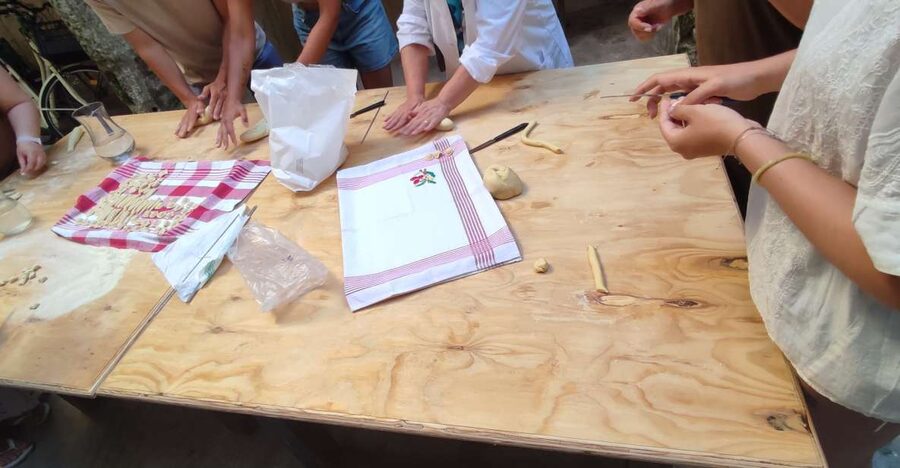
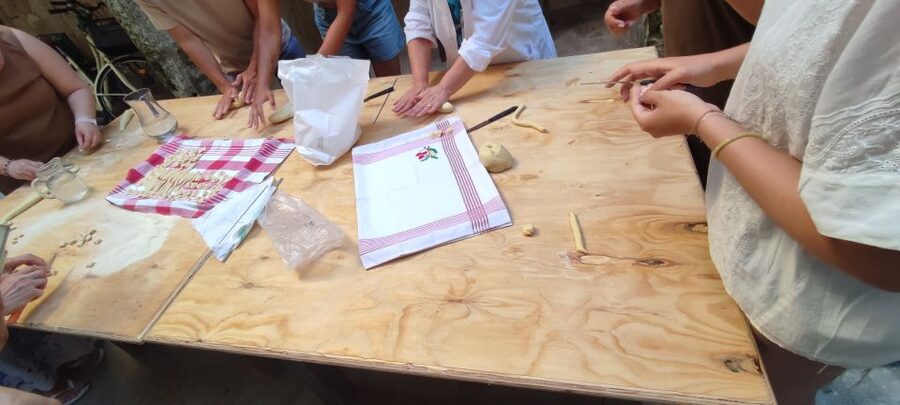
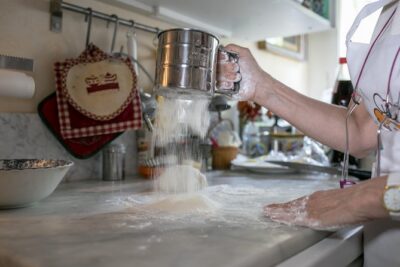
The lesson begins with the basic building blocks: flour, water, and the tools provided at the venue. A local cook demonstrates how to combine them, then you follow along. This sounds easy until you start shaping the dough yourself. Several parts of the technique require more control than they first appear to.
That challenge is a good part of the class. You are not performing a staged trick with a ready-made product. You are learning how the dough feels and how small movements change the shape. The cooks watch the work and help you correct it, which matters when a neat orecchietta starts looking more like a small lump.
Teresa, known as Nonna Teresa during the class, has been singled out for patient instruction and close attention to quality. Luciana often supports the session and helps explain the process in clear English. The language support is useful because hand gestures alone do not always explain how much pressure to use or how quickly to move.
The instructors speak Italian, English, and French between them, according to the activity details. That makes this a practical option for international visitors. If you need a step repeated, ask. The class is built around participation, and the cooks are there to show the movement again rather than leave you guessing.
Shaping orecchiette and Sagne by hand
Orecchiette is the star of the class. You form small pieces of dough, press and drag them with a knife or similar tool, then turn each piece to create its shallow cup. The finished pasta should hold sauce, but getting a consistent shape takes practice.
This is where you may discover that Italian nonnas make the work look far easier than it is. Some people pick up the motion quickly. Others need several attempts before the pasta begins to look right. The atmosphere is forgiving, though the instructors may give firm corrections when your technique wanders.
You then work on the second pasta shape, identified as Sagne in the tour description and often called maccheroni in the class context. Learning two shapes keeps the session active and gives you a better sense of the range of southern Italian fresh pasta.
The work is best suited to people who enjoy doing rather than watching. If you want a polished chef demonstration with little mess, this may feel too active. If you like learning through trial and error, the difficulty becomes part of the fun.
Families can take part too. One family group brought children aged 10 and 14 and found the activity enjoyable, though younger children may need help with the fine hand movements. The course is listed as wheelchair accessible, which helps make it available to a wider range of visitors.
More Pasta Classes with Wine in Italy:
- Florence: Pasta Cooking Class with Unlimited Wine
★ 4.9 · 10,285 reviews - Florence: Pasta & Tiramisu Cooking Class with Unlimited Wine
★ 4.9 · 6,708 reviews - Florence: Pasta Cooking Class with Unlimited Wine
★ 5.0 · 6,413 reviews - Rome: Pasta & Tiramisu Class with Fine Wine by the Vatican
★ 4.9 · 4,852 reviews
A class that feels social, not private
The group setting shapes the evening as much as the food does. Sessions can reach around 20 people. That number allows for plenty of conversation and shared laughter, but it also means you will not receive continuous one-on-one attention.
I would choose a place near the instructors if you want to watch every motion closely. Ask for help early rather than waiting until a whole batch of pasta has gone wrong. The cooks aim to give personal guidance, but in a larger group you may need to make your needs clear.
The upside is the table atmosphere. You meet people from several countries, work beside them, and then eat together. That can be especially useful if you are traveling alone or want an evening that includes more than a meal at a restaurant.
The social tone is informal and good-natured. The cooks keep the class moving, and the language guides help the group stay together. One session even included local music while the pasta cooked, though you should not treat that as a guaranteed part of every booking.
Eating the pasta you made
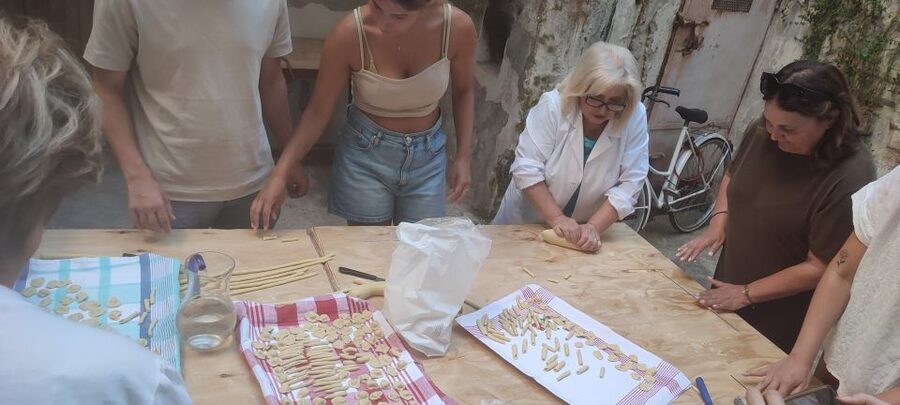
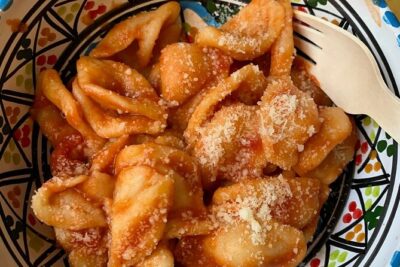
After the shaping is finished, the pasta is cooked and served to the group. This is the payoff, but it is also a useful part of the lesson. You see how fresh pasta behaves in the pot and then taste the result while it is still connected to the work you just did.
Wine is included, adding to the relaxed dinner feel. Past meals have included snacks, a simple tomato and basil sauce, and dessert, but the core promise is your pasta with wine rather than a fixed multi-course restaurant menu. If you need certainty about the exact meal, check the current booking details before reserving.
I like that the meal is shared rather than handed to you as a separate restaurant course. You sit with the people who were shaping dough beside you, compare results, and talk about the evening. The food may not be elaborate, but the setting and the effort behind it give it meaning.
Do not expect to produce perfect pasta on your first try. The instructors may correct you firmly, and a few pieces may look uneven. That is normal. The meal still works because the goal is not professional-level uniformity. It is learning a traditional method and enjoying what you made.
What the $68 price really covers
At $68 per person, this is a fair buy for Lecce if you value activity as much as dinner. The fee includes the professional cook, museum venue, cooking equipment, pasta lesson, and the meal with wine. You are also paying for a central location and a 2.5-hour block of your evening.
A comparable dinner in Lecce could cost less, especially if you choose a simple trattoria. But dinner alone would not give you the instruction, the historic courtyard, or the chance to make the food yourself. A private cooking lesson would normally cost more, though this is not a private class.
The price makes the most sense for couples, families, solo visitors, and small groups who want an evening activity with a meal built in. It is less appealing if you already have several cooking classes planned or if you prefer quiet dining with no group participation.
The included equipment also keeps the cost clear. You do not need to arrive with specialist tools. Transport is not included, but the venue is in the center of Lecce, making this easier to reach than a countryside food experience.
Timing, language, and practical details
The activity lasts 2.5 hours. That is long enough to teach two pasta shapes and eat afterward without taking up the whole day. Check the available start time when you book, since the exact schedule can vary.
Instruction is available in Italian, English, and French. The language support is a real help during the shaping stage, when a small visual detail can change the pasta completely. If English is your main language, Luciana has been praised for clear explanations and a welcoming manner.
You can cancel up to 24 hours before the start for a full refund. A reserve-now, pay-later option is also available, which helps if your Lecce plans are still shifting. The class may be canceled if the minimum number of participants is not reached. In that case, you are notified and refunded.
The event runs in all weather. Wear something comfortable for handling flour and dough, and bring your identity document. Since the venue is a museum courtyard, the atmosphere is more historic and informal than purpose-built.
Who should book this Lecce pasta class?
I would book this if you want to meet people, learn a food skill, and spend an evening in a memorable old setting. It works particularly well as a first-night activity because the shared meal helps you meet others and the central venue is easy to fit into a stay in Lecce.
It also suits anyone curious about Puglian food beyond the restaurant menu. You leave with a better sense of how orecchiette is made and why the shape is so closely tied to southern Italy. The lesson is practical enough for beginners, but you should be ready for a little frustration before the dough begins to cooperate.
Families can enjoy it, and solo visitors have a natural way to join the group. Couples should book it if they prefer a lively evening over a private dinner. The class is not the best choice for someone seeking a small, quiet workshop or a highly polished chef-led production.
My verdict on the 1400s courtyard experience
I like this class because it combines three things that work well together: local food, a distinctive Lecce setting, and real participation. The strongest part is not simply eating fresh pasta. It is watching the cooks shape it with ease, trying the motion yourself, and then sharing the result around a common table.
The group size is the main compromise. Around 20 people can make the courtyard feel crowded, and the instruction may not always be one-to-one. Still, the same group creates the laughter and international conversation that many people value most.
At $68, the package offers solid value for 2.5 hours, equipment, instruction, wine, and food in central Lecce. I would reserve it if you want an active, social evening and do not mind imperfect pasta. Skip it only if you want a private lesson, a silent meal, or a formal cooking school atmosphere.
FAQ
Where does the pasta-making class meet?
The meeting point is the Faggiano Archaeological Museum at Via Ascanio Grandi 58 in central Lecce.
How long does the activity last?
The class lasts 2.5 hours. Starting times vary, so check availability when booking.
Which types of pasta will I learn to make?
You will learn to make orecchiette and Sagne. The second pasta is also referred to as maccheroni in descriptions of the class.
Is wine included?
Yes. You eat the pasta made during the class and have wine afterward.
Which languages are available?
The instructors and guides provide support in Italian, English, and French.
Is the class wheelchair accessible?
Yes, the activity is listed as wheelchair accessible.
More Wine Tastings in Italy
- Learn to Make Pasta & Tiramisu with Wine and Limoncello Included
★ 5.0 · 2,345 reviews - Florence: Cooking Class Pasta & Tiramisu Making Unlimited Wine
★ 5.0 · 2,234 reviews - Fettuccine & Tiramisù: Cooking Class with Wine & Limoncello
★ 4.9 · 2,103 reviews - Sorrento: Pizza Lesson, Wine, and Limoncello at a Local Farm
★ 5.0 · 1,513 reviews
Just added around Italy
- Volterra: Fresh Pasta Cooking Class at a Tuscan Farmhouse★ 5.0 · 33 reviews
- Verona: Tortellini Cooking Class and Lunch with Mamma Ivana★ 5.0 · 20 reviews
- Vicenza: Pasta & Tiramisu Cooking Class at a Local’s Home★ 5.0 · 5 reviews
- Verona: My Granny’s secrets making gnocchi★ 5.0 · 7 reviews
- Verona: Prosecco and Pasta Making Class at a Local’s Home★ 5.0 · 10 reviews
- Verona: Pasta Cooking Class with Wine Tasting★ 5.0 · 4 reviews
- Verona: Pasta & Tiramisu Cooking Class at a Local’s Home★ 5.0 · 16 reviews
- Venice: Share Your Pasta Love in a Local’s Home★ 4.8 · 20 reviews
Lecce Pasta Classes, compared.
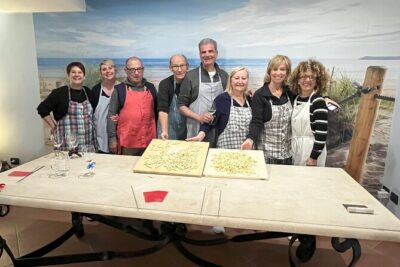
Make pasta, drink wine. Cooking class with transported included!
Read our review →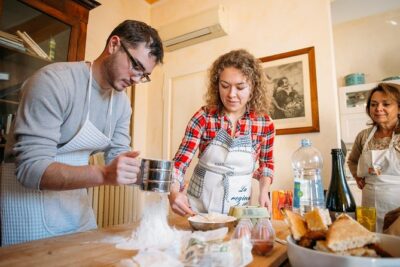
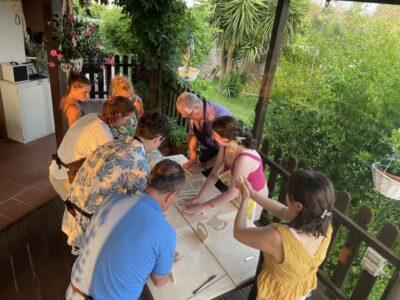
Private Cooking Class in Lecce (Corigliano): Handmade pasta
Read our review →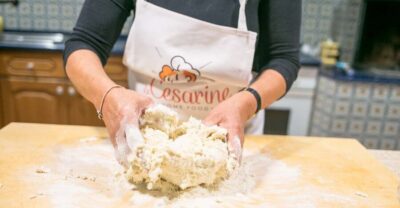
Pasta & Tiramisu Cooking Class at a Local’s Home
Read our review →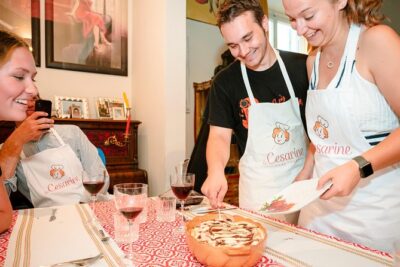
Share your Pasta Love: Small group Pasta and Tiramisu class in Otranto
Read our review →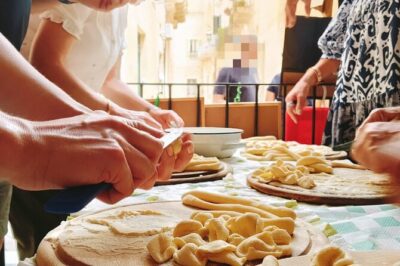
Private Pasta & Tiramisu Class at a Cesarina’s home with tasting in Lecce
Read our review →Browse the lists this tour appears in