
REVIEW · ROME
Traditional Pasta Cooking Class with Tiramisu Small Group
Fresh pasta and tiramisu make a fine Roman afternoon lesson, especially when you get to eat the results. This three-hour small-group class begins with prosecco, then moves from tiramisu to pasta dough, shaping, sauce, and dinner at the same table.
I like the hands-on format, since you are not just watching a chef work. I also like the practical focus on ingredients and home cooking, plus the friendly teaching style associated with Alma and Stefania, also called Stefy. The main drawback is timing: the 4:30 p.m. start fills much of your afternoon and evening, and the class may feel less appealing if you want a broad Roman sightseeing tour instead of a focused food activity.
Key points to know before booking
- You make both tiramisu and fresh pasta, then eat the meal you prepared.
- The class is capped at 12 people, giving the chef room to guide each step.
- A glass of prosecco starts the lesson, with wine and water served with dinner.
- The class lasts about three hours, beginning at 4:30 p.m. near Via dei Capocci.
- Alma and Stefania, or Stefy, are named instructors connected with the experience.
- The $71.97 price includes ingredients, equipment, instruction, and dinner, but not transportation to or from the meeting point.
Why this Rome cooking class works so well
Rome offers endless chances to eat pasta, but a cooking class gives you something more useful than another plate at a restaurant. You learn how the dish comes together, then sit down to enjoy it while the steps are still fresh in your mind.
This experience keeps its menu focused. You prepare tiramisu and fresh pasta, two Italian staples that are familiar enough to feel approachable but still teach useful kitchen skills. The class is not trying to cover every regional dish in Italy. That is a strength, since you have time to work carefully rather than rush through a long menu.
The format also suits Rome’s warm afternoons. You begin at 4:30 p.m., when a long outdoor sightseeing session may feel tiring, and spend the next few hours indoors with food, conversation, and a drink. One past class was especially appreciated as a way to get out of the heat, making the timing useful during summer visits.
You should expect a social setting rather than a private lesson. With a maximum of 12 people, the group is small enough for personal help but large enough to create a shared dinner atmosphere. If you enjoy meeting people around a table, this is part of the appeal. If you want total control over the pace, workspace, or menu, a private class would be a better fit, though it would likely cost more.
More Tiramisu Classes in Rome
- 3 in 1 Cooking Class near Navona: Fettuccine, Ravioli & Tiramisu
★ 5.0 · 7,376 reviews - Rome: Pasta & Tiramisu Class with Fine Wine by the Vatican
★ 4.9 · 4,852 reviews - Rome: 3-in-1 Fettuccine, Ravioli, and Tiramisu Cooking Class
★ 4.9 · 2,704 reviews
Starting with pasta, tiramisu, and prosecco
The class begins with a short introduction to the history of pasta and tiramisu. It is paired with a glass of prosecco, which gives the opening a relaxed feel instead of starting with a technical lecture.
The background portion is brief, so you are not giving up much cooking time. Its value is practical context: you get a sense of how these familiar foods fit into Italian cooking before you start handling ingredients yourself.
The class then turns to ingredient selection. This matters more than it may seem. Pasta and tiramisu use relatively simple ingredients, so quality and balance have nowhere to hide. You are shown what to look for and how the ingredients affect the finished dish.
The available information does not provide a fixed list of brands, recipes, or regional variations. That means you should not expect a full culinary seminar on Roman cuisine. Instead, the useful promise is a clear lesson in basic methods that you can repeat at home.
Making tiramisu before the pasta
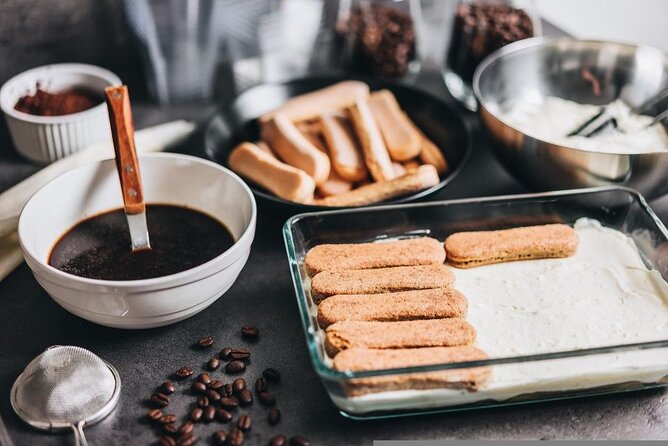
Tiramisu comes first. A professional chef guides you through the recipe step by step, then the dessert is set aside while you work on the pasta.
That order is sensible. Tiramisu needs time to rest, so preparing it early allows the dessert to be ready by the end of the class. It also breaks the lesson into two different kinds of cooking: a measured dessert followed by the more physical work of mixing and shaping dough.
The instructors connected with this class include Alma and Stefania, also called Stefy. Their teaching style is described as patient and clear, with close guidance through each stage. That is important for first-time cooks, since tiramisu can look easy until you need to judge texture, layering, and proportions for yourself.
One of the best features is that the class is designed to help you repeat the recipe later. You are not simply handed a finished dessert after watching someone else make it. You take part in the process and leave with a method you can use for friends and family at home.
The exact recipe details are not supplied, so you should not book this expecting a printed menu of every measurement or a formal baking course. Still, the step-by-step instruction makes the session useful for cooks who want a reliable starting point.
Rolling and shaping the fresh pasta
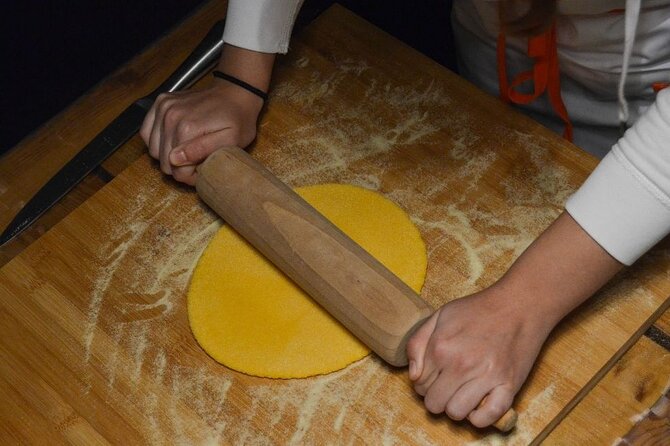
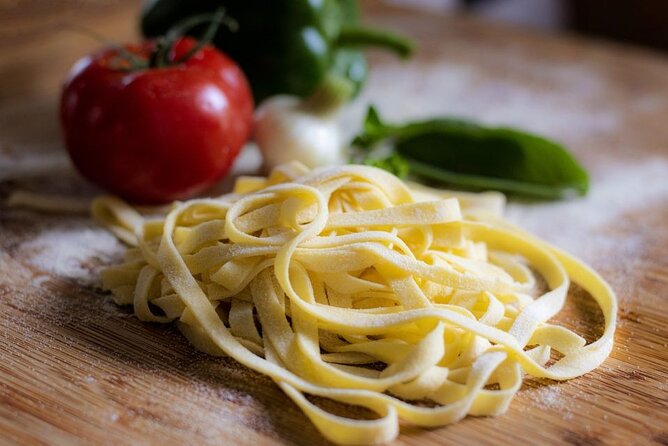
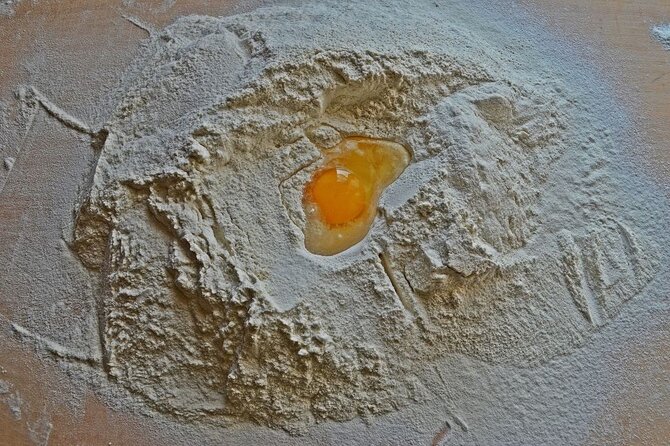
Once the tiramisu is resting, you move on to fresh pasta dough. This is the more tactile part of the class, and probably the moment when the lesson feels most different from an ordinary restaurant meal.
You learn the dough-making process, then shape the pasta with the chef’s help. The class includes cooking utensils and all ingredients, so you do not need to bring equipment or shop before arriving.
Fresh pasta can be less forgiving than dried pasta. Dough may feel too dry, too wet, or difficult to shape, especially the first time. The small group helps here because the chef can correct your technique and show you what to adjust. One of the most useful points in the teaching is that the instructor takes time to help each person succeed rather than simply moving on with the group.
This is also where expectations matter. The class is about learning and eating, not producing restaurant-perfect pasta for display. Your shapes may vary, and that is part of the experience. The finished dish is still prepared and served as dinner with the chef.
The class information does not name one specific pasta shape. You should think of the activity as a lesson in fresh pasta preparation and shaping, with the precise style dependent on the session.
Same kitchen, a different thing to make:
- Rome: Pasta Making Class with Wine, Limoncello, and Dessert
★ 4.9 · 3,177 reviews - Rome Cooking Class: Make Pasta and 3 Spritz Cocktails
★ 5.0 · 2,937 reviews - Rome: Fettuccine Pasta Cooking Class in Rome’s City Center
★ 4.8 · 2,414 reviews - Learn to Make Pasta & Tiramisu with Wine and Limoncello Included
★ 5.0 · 2,345 reviews
Choosing a sauce for your pasta
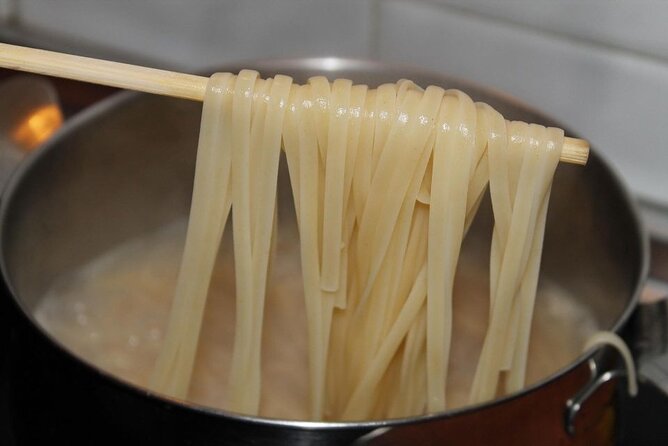
After the pasta is shaped, you select a homemade sauce to serve with it. The choice gives the meal a personal touch, even though the class does not list all sauce options in advance.
A simple tomato sauce has been used in the class, and it worked well with the fresh pasta. That pairing is a good example of why uncomplicated Italian cooking can be so satisfying. Fresh pasta does not need a heavy or elaborate topping to make a good dinner.
The sauce stage also gives the chef a chance to explain balance. The right sauce should support the pasta rather than hide it. You learn not only how to prepare the dough but how to think about what belongs with it once it reaches the plate.
Because the exact menu is not guaranteed in the provided details, avoid booking if you need a particular sauce, dietary plan, or fixed recipe. The class clearly includes pasta, sauce, and dinner, but the selection may vary.
The meal you made is the main reward
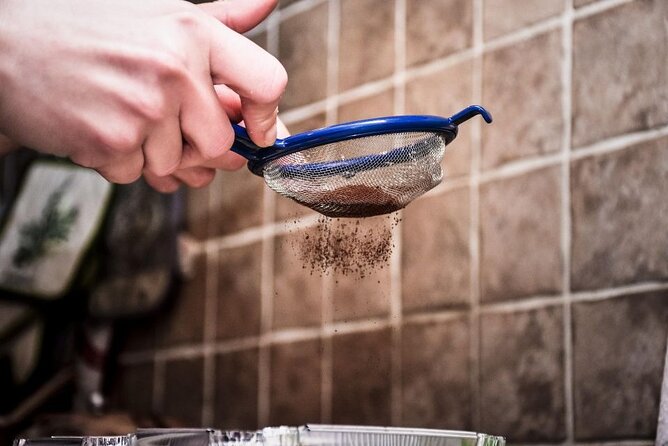
At the end, you eat the tiramisu and pasta you prepared. This is more satisfying than receiving a pre-plated meal because you can connect the taste to each step of the lesson.
Dinner includes the pasta made with the chef, a glass of wine, and a bottle of water. Some sessions have also included coffee and limoncello, but those extras should be treated as possible additions rather than guaranteed inclusions, since the confirmed package lists prosecco, wine, water, and dinner.
The meal is not presented as a formal fine-dining event. It is a shared table after a practical class. You laugh, talk, cook, and eat with the other people in the room. That relaxed rhythm is a large part of the value.
For couples, this makes a pleasant change from another restaurant reservation. For families, it gives children and adults a common project, though younger participants should be comfortable following kitchen instructions. For solo visitors, the small group offers an easy way to meet people without the awkwardness of joining a large organized excursion.
A practical look at the $71.97 price
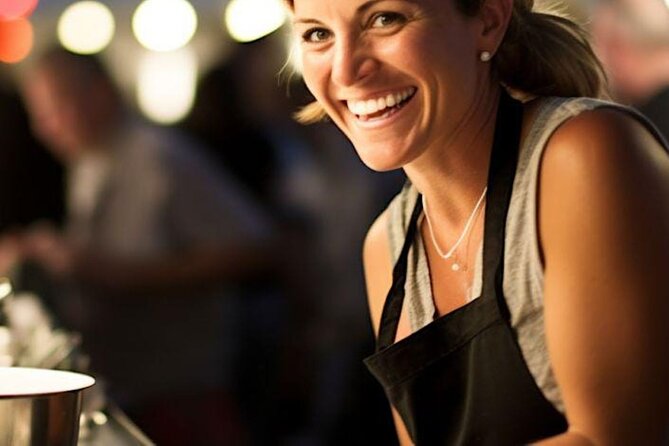
At $71.97 per person, the price is reasonable if you value instruction and participation, not just the amount of food served. You are paying for roughly three hours, a professional chef, ingredients, utensils, prosecco, wine, water, and the dinner you prepare.
A restaurant meal in Rome may cost less, depending on where you eat, but it will not teach you how to make the dishes or provide the same shared activity. A private cooking lesson could offer more individual attention but would usually carry a higher cost. This class sits in the middle: more personal than a large demonstration and less expensive than a private session.
The value is strongest for people who will use the skills later. If you return home and make tiramisu or fresh pasta for friends, the class keeps giving back. If you mainly want a quick meal, the three-hour commitment may not feel worthwhile.
The class is often booked about 24 days ahead. That suggests you should reserve early if your Rome dates are fixed, especially since the group is limited to 12 people. Confirmation arrives when you book, and the activity is offered in English.
Location, timing, and what to plan around it
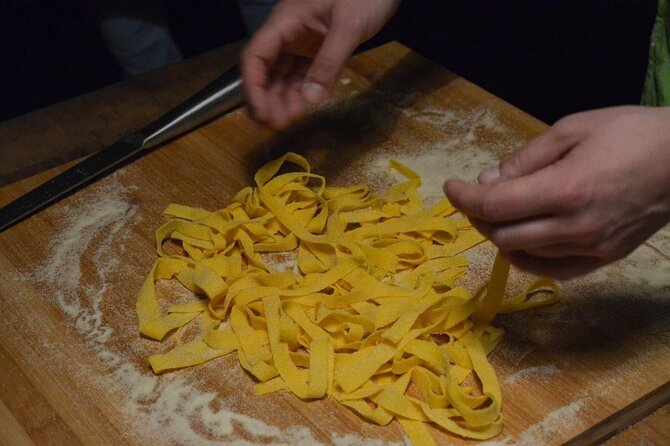
The meeting point is Via dei Capocci, 26, 00184 Rome. The class ends at the same location, and the area is near public transportation.
You will need to make your own way there. Hotel pickup and drop-off are not included, so leave enough time to reach Via dei Capocci before the 4:30 p.m. start. The supplied details do not specify the nearest station, walking time, or parking arrangements, so check your route before the day of the class rather than relying on a last-minute search.
Because the class ends back at the starting point, you can plan dinner afterward without arranging a separate return transfer. In practice, the food you make is already your evening meal, so this works best as an early dinner rather than a pre-dinner activity.
The three-hour length also deserves attention. You will not be able to squeeze in a major sightseeing stop between the start and finish. Pair it with nearby plans earlier in the day, then let the class take over the afternoon.
Who should book this class
I would recommend it most strongly to you if you meet one or more of these descriptions:
- You want a practical food activity rather than a restaurant meal.
- You enjoy learning recipes you can repeat at home.
- You are visiting Rome as a couple or family and want a shared project.
- You like small groups and informal conversation.
- You are comfortable with a fixed 4:30 p.m. start and about three hours of cooking.
- You want a break from outdoor sightseeing, especially on a hot day.
You may want to skip it if you have very limited time in Rome and prefer museums, churches, or major ancient sites. It is also not the best choice if you need a fully private setting, a guaranteed menu beyond pasta and tiramisu, or a detailed dietary accommodation that has not been confirmed.
The class is conducted in English, which makes the instruction accessible to English-speaking visitors. The chef-led format also means you can ask questions as you work rather than trying to follow a demonstration from a distance.
Booking, cancellation, and final advice
The activity offers free cancellation if you cancel at least 24 hours before the local start time. Cancellations or changes made inside that window are not refunded, and late changes are not accepted.
A minimum number of participants is required. If the class is canceled because that minimum is not reached, you are offered another date or experience, or a full refund.
My advice is simple: book this if you want to leave Rome with a recipe and a memory tied to your own hands. The strongest parts are the small group, patient step-by-step help, and the chance to eat the tiramisu and pasta you made. The main tradeoff is that the menu and extras are not fully specified, and the class takes a solid three hours.
Should you book it?
Yes, if fresh pasta, tiramisu, and an informal shared dinner sound better to you than another scheduled attraction. At $71.97, the package gives you instruction, supplies, drinks, and a complete meal, which is fair value for a three-hour activity.
Book with realistic expectations. You are joining a friendly cooking lesson, not a private chef’s table or a full survey of Italian cuisine. For couples, families, and anyone who wants a useful Roman food memory to take home, this is a smart pick.
FAQ
How long does the cooking class last?
The class lasts approximately three hours.
What time does the class start?
The class starts at 4:30 p.m.
Where does the class meet?
The meeting point is Via dei Capocci, 26, 00184 Rome, Italy.
Where does the activity end?
The class ends back at the meeting point.
What food will I prepare?
You will prepare tiramisu and fresh pasta, then eat the pasta with a homemade sauce and enjoy the tiramisu.
Are drinks included?
Yes. The package includes a glass of prosecco, a glass of wine, and a bottle of water. Some sessions have also included coffee and limoncello, but those are not listed as guaranteed inclusions.
How many people can join the class?
The class has a maximum of 12 participants.
More Small Group Classes in Rome
- Rome: Pizza Making Class Small Group Experience
★ 5.0 · 487 reviews - Rome Small Group Pasta Making Class with Wine and Italian Chef
★ 5.0 · 295 reviews - Rome Cooking Class: Gelato and Fettuccine Small Group Experience
★ 5.0 · 128 reviews - Rome: Small-Group Night Tour with Pizza and Gelato
★ 4.4 · 113 reviews
Just added around Rome
- Rome: Pasta and tiramisu class with wine pairing at Come Na Vorta★ 5.0 · 30 reviews
- Spritz and Pasta! Spritz, Fettuccine & Tiramisù★ 5.0 · 2 reviews
- Rome: Vespa Tour with Photographer and Tiramisu treat★ 4.5 · 61 reviews
- Walking Tour & Pizza Making★ 4.0 · 2 reviews
- Trastevere Food Tour with Pasta-Making Class★ 5.0 · 5 reviews
- Rome: Private Vespa Tour and Professional Photoshoot★ 5.0 · 22 reviews
- Tiramisu and Gelato Creation in Authentic Roman Dessert Workshop★ 4.5 · 3 reviews
- The Pasta Factory Class★ 4.5 · 21 reviews
Rome Pasta Classes, compared.
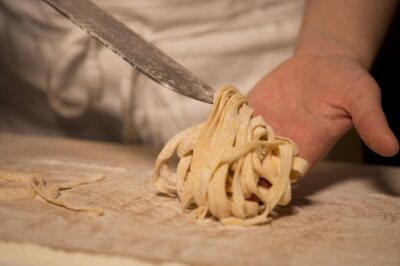
3 in 1 Cooking Class near Navona: Fettuccine, Ravioli & Tiramisu
Read our review →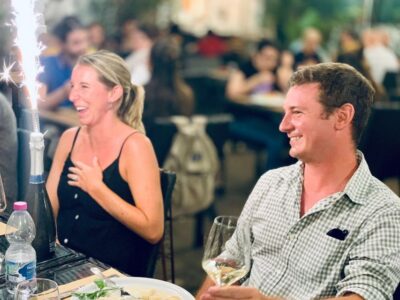
Pasta & Tiramisu Class with Fine Wine by the Vatican
Read our review →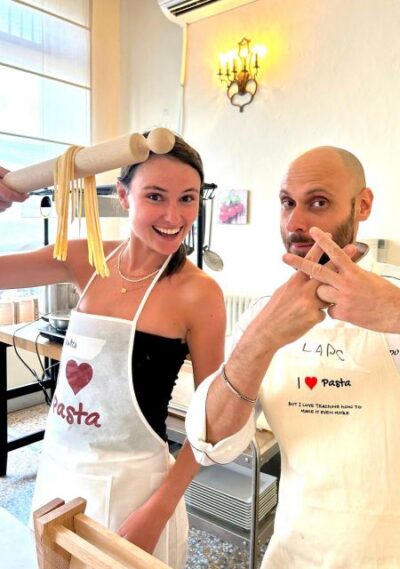
Pasta Making Class with Wine, Limoncello, and Dessert
Read our review →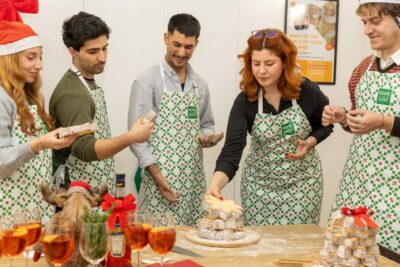
Rome Cooking Class: Make Pasta and 3 Spritz Cocktails
Read our review →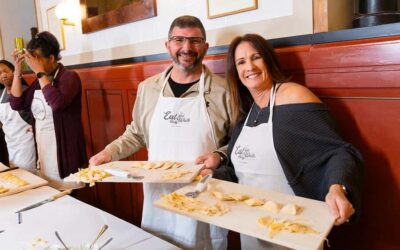
3-in-1 Fettuccine, Ravioli, and Tiramisu Cooking Class
Read our review →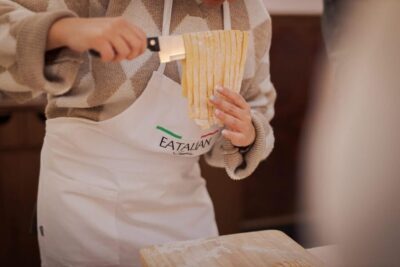
Fettuccine Pasta Cooking Class in Rome’s City Center
Read our review →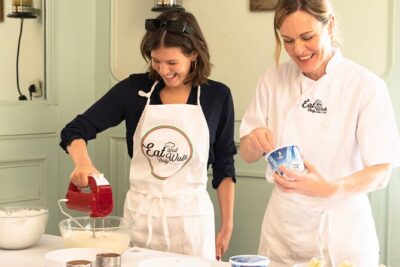
Learn to Make Pasta & Tiramisu with Wine and Limoncello Included
Read our review →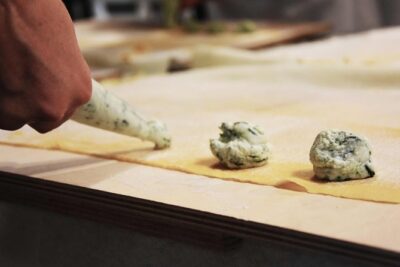
Become a Masterchef in Rome: Pasta, Ravioli and Tiramisù Class
Read our review →Browse the lists this tour appears in