
REVIEW · FLORENCE
Small group PURO Vegan pasta and bruschette Class in Florence
The most interesting thing here is the chance to make egg-free Italian pasta that still feels deeply traditional. In about two and a half hours, you prepare bruschetta, three pasta dishes, sauces, and possibly gnocchi or ravioli, then sit down to eat what you made.
I like the small group size, capped at 12, and the practical teaching from chefs such as Giulio, Roberto, Irene, and Vary. I also like that wine, recipes, water, and soft drinks are included, so the class feels like both a cooking lesson and a relaxed meal.
The main point to check before booking is the meaning of vegan. The experience is advertised around vegan cooking, but some sessions have included vegetarian pasta with eggs and cheese alongside vegan dishes. If avoiding animal products entirely matters to you, confirm the exact class format before paying.
Key points to know before you book
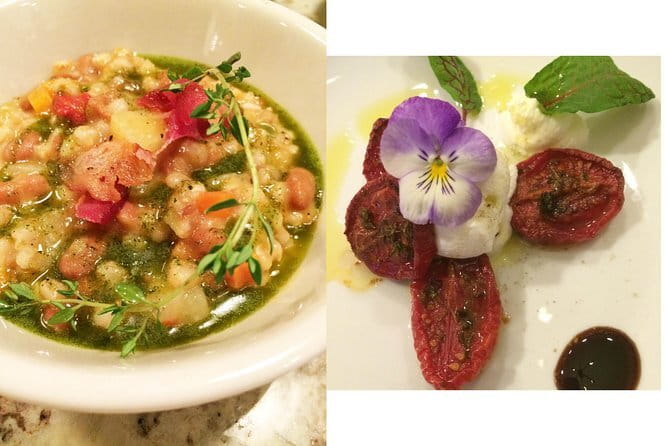
- Three pasta dishes from scratch: You may work with long pasta, tortellini or ravioli, gnocchi, and colored vegetable pasta, depending on the session.
- Tuscan and southern Italian flavors: Expect ideas such as fresh tomato spaghetti, Sicilian pesto with dried tomatoes, pasta alla norma with aubergine, and seasonal vegetables.
- A meal as well as a lesson: Bruschetta and an aperitivo begin the class, then you eat the finished pasta with wine or other drinks.
- A small, social setting: The maximum is 12 people, which gives the chef room to explain techniques and help beginners.
- Vegan details need checking: Some sessions have mixed vegan and vegetarian dishes, while the provider says a fully vegan class can be arranged or provided.
- Useful take-home value: Recipes are included, and the techniques use simple ingredients that can be repeated in your own kitchen.
Making pasta by hand on Via Romana
The class begins at Via Romana 41r, in Florence. The meeting point is south of the Arno, in the Oltrarno area, and the activity returns to the same place when the meal is over. You receive a mobile ticket, and the class is offered in English.
Allow roughly two and a half hours. That is long enough to make several dishes without turning the evening into a rushed kitchen drill. It also gives you time to eat, talk, and enjoy a glass of wine after the work is done.
A maximum of 12 people keeps the setup personal enough for hands-on instruction. You will not simply watch a chef roll dough while a finished plate appears in front of you. The point is to mix, shape, cut, fill, and cook the pasta yourself, with guidance along the way.
Wear comfortable clothing and shoes suited to a kitchen. Open sandals and flip-flops may not be allowed, and long sleeves made from synthetic fabric are discouraged. This is practical advice, not fashion advice: flour, sauces, warm cooking areas, and active work call for clothes you can move in.
The minimum age is 16. The minimum drinking age is 18, so younger participants can join the cooking experience but should not expect wine service.
More Vegetarian Cooking Classes in Florence:
- Florence Cooking Class: Vegetarian Pasta and Dessert Making
★ 5.0 · 7 reviews - Semi private Pasta Class Vegetarian Organic
★ 4.5 · 3 reviews - Vegan Cooking Class in Florence: Pasta Making & Wine!
★ 5.0 · 2 reviews
Bruschetta and aperitivo open the evening
The first course is bruschetta, served with an aperitivo. This is a good way to settle into the class before the pasta work begins. You get a taste of the meal, meet the chef, and start with something that does not require a long lesson.
Bruschetta also introduces one of the useful ideas behind the class: Italian food often depends on a few good ingredients handled well. The ingredients mentioned for the course include fresh tomatoes, seasonal organic vegetables, aubergines, pears, pumpkin, dried tomatoes, and wholemeal flour.
I like this opening because it gives you food before the more technical work starts. A cooking class can feel awkward when everyone is hungry and waiting for the final dish. Here, the aperitivo helps turn the evening into a shared meal from the start.
The exact ingredients can change with the season. That is a benefit if you want a more natural Tuscan cooking lesson, but it also means you should not treat every sample dish as guaranteed. The class may feature tomato spaghetti one night and a different vegetable-based combination another time.
Three pasta dishes, several Italian techniques
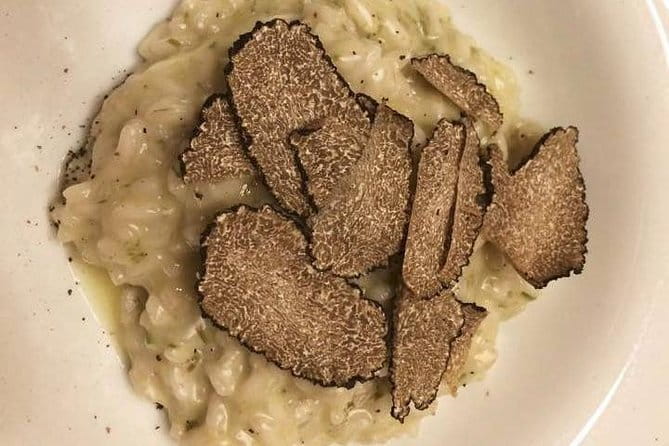
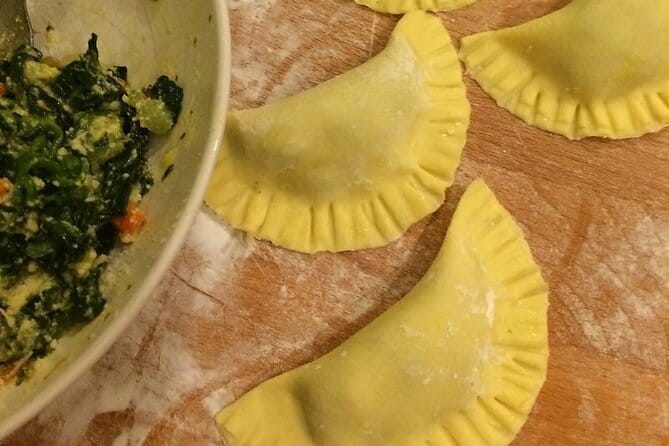
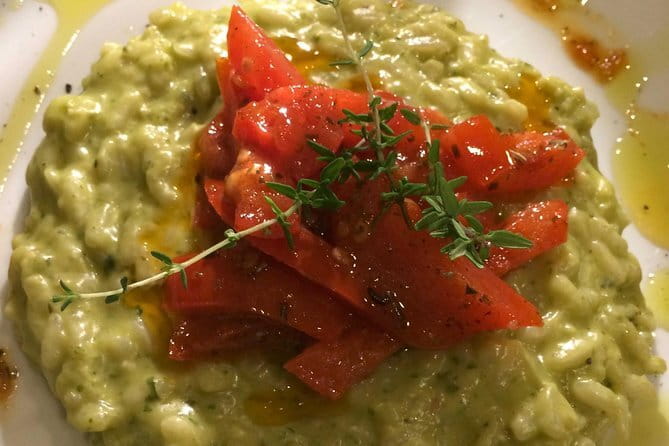
The central part of the experience is making three pasta dishes with the chef. The sample food includes egg-free Italian-style pasta, potato gnocchi, buckwheat ravioli, and colored pasta with vegetables. The fuller description also points to spaghetti with fresh tomatoes, Sicilian pesto made with dried tomatoes, pasta alla norma with aubergines, and ravioli filled with pears or pumpkin.
That range is what gives the class its value. You are not repeating one shape three times. You might work with long pasta, filled pasta, and gnocchi, learning how different doughs and ingredients behave.
Egg-free pasta
Egg-free dough is especially useful for vegan cooks. It shows you how flour and water can create pasta with good texture, and it gives you a base you can make at home without special equipment.
The class focuses on simple methods that can be repeated in an ordinary kitchen. One of the strongest practical benefits is that you leave with recipes, not just a pleasant memory. You can try the techniques again instead of treating handmade pasta as a one-night trick.
More Small Group Classes in Florence:
- Florence Small-Group Pasta Class with Seasonal Ingredients
★ 5.0 · 532 reviews - Small Group Pasta Making Class Wine Tasting in a Tuscan Castle
★ 5.0 · 142 reviews - 2 Hour Florence Pizza and Gelato Small Group Guided Cooking Class
★ 5.0 · 54 reviews - Tuscan Pasta Masterclass Small-Group Cooking Experience
★ 5.0 · 17 reviews
Gnocchi
Potato gnocchi adds a different texture and a different kind of shaping. You work with potatoes and seasonal vegetables rather than only rolling sheets of dough.
Gnocchi is a good choice for beginners because it feels hands-on and forgiving. It also gives the chef a chance to explain how to handle the mixture without making it heavy. The exact recipe can change, but the class has included vegetable-based gnocchi with ingredients such as radicchio, black garlic, or other seasonal produce.
Ravioli and filled pasta
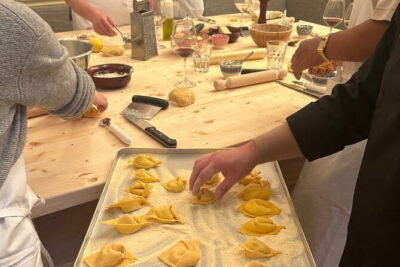
Ravioli or tortellini provide the most decorative part of the lesson. You learn how to work with a thin sheet, add filling, seal the edges, and avoid wasting dough.
The suggested fillings include pumpkin and pears, while buckwheat pasta is also part of the sample menu. These ingredients show how Italian pasta can move beyond the familiar tomato-and-basil combination.
Filled pasta takes a little more patience. If your group is large or everyone is new to the process, the pace may feel uneven. That is where an attentive chef matters. Giulio, Roberto, Irene, and Vary have each been praised for clear instructions, patience, humor, and the ability to make beginners feel comfortable.
Color, vegetables, and Tuscan character
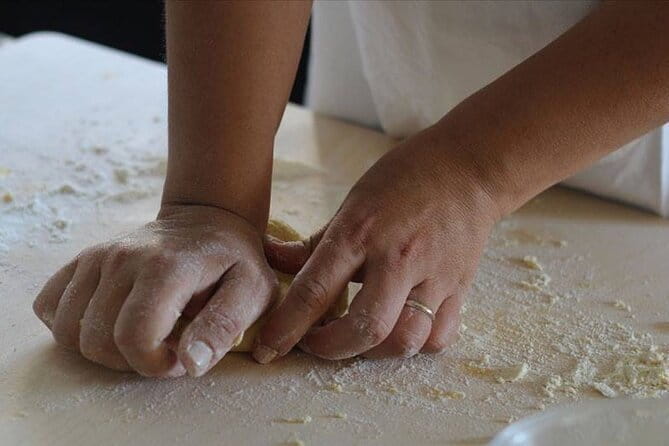
Colored pasta with vegetables is one of the more unusual parts of the class. The color comes from vegetable ingredients, adding visual appeal without depending on meat or seafood.
The course also uses flavors connected with southern and central Italian cooking. Dried tomato pesto brings a concentrated, slightly sweet taste. Pasta alla norma uses aubergine in a classic combination, while fresh tomatoes keep the simplest dish bright and direct.
I appreciate this focus on vegetables because vegan pasta can sometimes become an afterthought. Here, vegetables are treated as the main event. The course aims to show that vegan food can have range: fresh, earthy, sweet, savory, soft, and crisp elements can all appear in the same meal.
You should also expect some variation. One session may prepare caramelized tomato spaghetti, cavatelli with green turnip, potatoes and black garlic, vegan gnocchi with radicchio, and pumpkin ravioli. Another may use different sauces and shapes. That flexibility is useful for repeat visitors, but it makes the printed sample menu more of a guide than a promise.
Eating the pasta you made
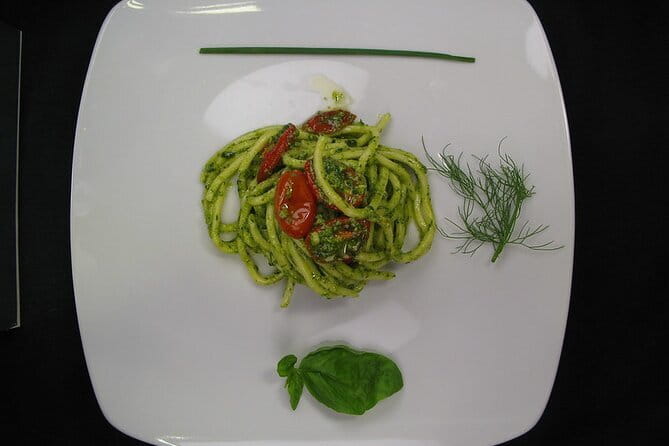
Once the cooking is finished, you sit down to eat the dishes as a group. Wine, bottled water, soda, and other beverages are included, and the meal is covered by the booking.
This final meal is more than a reward. It lets you taste the results immediately, while you still remember how each dough, filling, and sauce was made. You can compare shapes and textures and ask the chef why one pasta feels softer or holds more sauce than another.
The social side is a real part of the value. The class has been described as relaxed, funny, and family-friendly for older children and young adults. Couples can treat it as a hands-on date, while friends or families can divide up the work and share the meal afterward.
Do not expect restaurant-style individual courses with a silent dining room. The food is prepared by the group, and the final meal has a communal feel. That is a strength if you enjoy conversation and shared work. It may be less appealing if you want a formal tasting menu or a quiet dinner.
The important vegan question
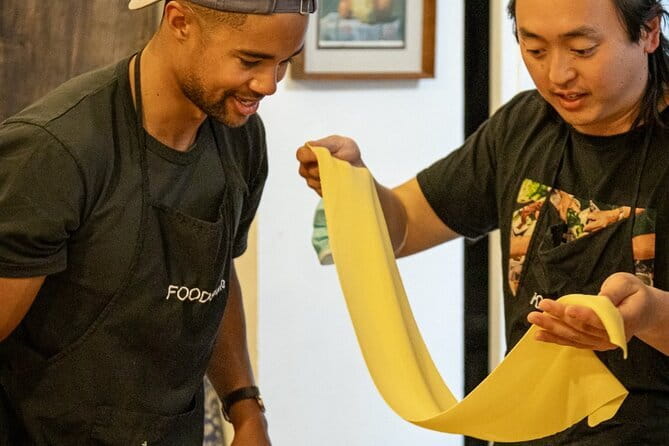
The experience is presented as a vegan and vegetarian pasta class, but the available details do not describe every session in exactly the same way. Some participants made two vegan dishes and one vegetarian dish with eggs and cheese. Others encountered a mixed class in which vegan and non-vegan pasta were prepared together.
The provider has also stated that the vegan class is fully vegan and free from cross-contamination. One session included three vegan dishes plus a vegetarian pumpkin ravioli, while another participant received an extra vegan pasta after explaining their needs.
That leaves you with a simple booking rule: state your dietary requirements when you book and confirm the exact menu before arrival. If you are vegan by preference and are comfortable sharing a class with vegetarian food, the mixed format may be fine. If even seeing animal products is a problem, ask specifically for a fully vegan session or a private class.
Gluten-free cooking is not allowed in the standard class. The information specifically says to ask about a private class instead. Do not assume that a vegan menu can also be made gluten-free.
The chefs and the teaching style
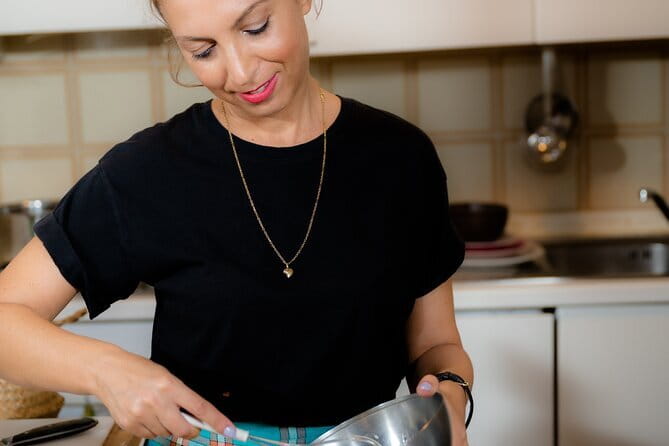
Chef Vary is named as the provider, but the person teaching your session may be Giulio, Roberto, Irene, Vary, or another member of the kitchen team. The strongest teaching qualities associated with the class are clear explanations, patience, humor, and the ability to adjust recipes to personal tastes.
Giulio is especially associated with making the process feel easy and fun. Roberto is described as an excellent teacher who adds cultural context to the cooking. Irene has been praised for respectfully accommodating a vegan participant in a mixed group, and Vary for her energy, fresh ingredients, and encouragement of younger cooks.
You should still remember that a class is a live event, not a private lesson by default. With up to 12 people, each person will get help, but the amount of individual attention depends on the group and the chef. A private class is the better choice if you need a very specific menu or want constant one-to-one instruction.
Is $186.74 a fair price?
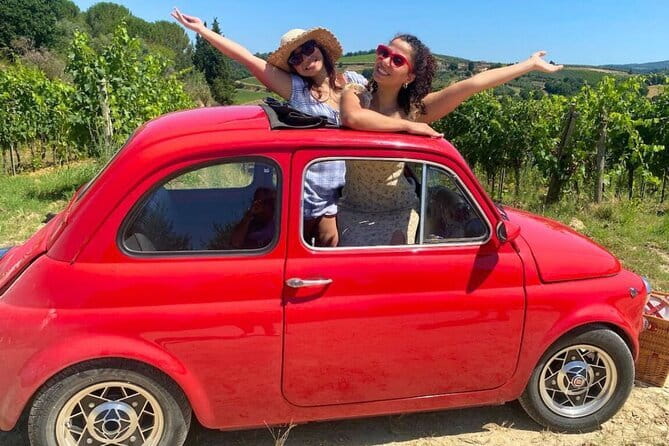
At $186.74 per person, this is not a cheap way to get dinner. You are paying for a cooking class, a chef, several pasta dishes, bruschetta, drinks, recipes, and the time spent teaching you.
The value improves if you would otherwise book a separate meal and a separate culinary activity. You receive both in one evening, and the recipes give the experience some use after your return home. The small group limit also matters. A large demonstration class could cost less, but it would not offer the same chance to shape pasta and ask questions.
The price is harder to justify if you mainly want to eat and have little interest in cooking. Florence has plenty of restaurants where you can enjoy pasta without handling flour or waiting for a group to finish. This experience earns its price through participation, not through a luxury dining room.
It is also worth noting that the class is often booked about 24 days ahead. That suggests you should not leave it until the last day of a short Florence visit, especially if your dates are fixed.
Who should book this Florence pasta class?
I would recommend it to vegan and vegetarian food lovers who want to understand how pasta is made rather than simply order it. It is also a good fit for couples, families with participants aged 16 or older, and friends who enjoy doing something together in the evening.
Beginners should feel at home. The recipes use straightforward methods, and the chefs are used to guiding people who have never made fresh pasta. You do not need to arrive as an experienced cook.
I would be more cautious if you need gluten-free food, dislike group activities, avoid alcohol, or require a strictly vegan environment without prior confirmation. The class includes soft drinks and water, so alcohol is not compulsory, but wine is part of the included offering.
Comfortable shoes and kitchen-ready clothes matter. The meeting point is near public transportation, but the supplied details do not specify the exact transit route or accessibility arrangements, so ask ahead if those points affect your booking.
The cancellation policy is strict. The experience is non-refundable and cannot be changed for any reason. If the minimum number is not reached and the provider cancels, you are offered another date or experience, or a full refund.
Should you book it?
Book this class if you want an active Florence evening built around fresh pasta, vegetables, shared food, and practical instruction. The best parts are the range of techniques, the included meal and drinks, the recipes to take home, and the chance to learn from engaging chefs such as Giulio, Roberto, Irene, or Vary.
Before paying, confirm two things: the exact vegan menu and the gluten rule. If those fit your needs, the class offers more than a plate of pasta. You get a useful cooking lesson, a social meal, and a taste of Italian food traditions you can carry into your own kitchen.
FAQ
Where does the pasta class begin?
The class begins at Via Romana 41r, 50125 Florence, Italy. It ends back at the same meeting point.
How long does the experience last?
The cooking class lasts approximately two hours and 30 minutes.
How many people can join the class?
The maximum group size is 12 people.
Is the class offered in English?
Yes. The class is offered in English.
What food will I make?
You will make bruschetta and three pasta dishes. Depending on the session, these may include egg-free pasta, gnocchi, ravioli, tortellini, colored vegetable pasta, spaghetti with tomatoes, or pasta with aubergines.
Is the class completely vegan?
The experience is promoted as vegan and vegetarian, but some sessions have included vegetarian pasta with eggs and cheese alongside vegan dishes. State your dietary needs when booking and confirm whether your session is fully vegan.
Can I take the class if I need gluten-free food?
Standard gluten-free cooking is not allowed. The information advises asking about a private class instead.
Are drinks included?
Yes. Wine, bottled water, soda, and other beverages are included. The minimum drinking age is 18.
What should I wear?
Wear comfortable clothing and shoes suitable for kitchen work. Open sandals and flip-flops may not be allowed, and synthetic long-sleeved clothing is discouraged.
More Food Tours in Florence
- Florence Food Tour with Truffle Pasta, Steak & Free Flowing Wine
★ 5.0 · 278 reviews - Florence Food Tour: Home-Made Pasta, Truffle, Cantucci, Olive Oil, Gelato
★ 4.5 · 187 reviews - Florence: Art of Pasta Cooking Workshop with Food and Wine
★ 5.0 · 69 reviews - Florence Market Tour and Pasta Class with Food Author Patrizia
★ 5.0 · 2 reviews
More Vegan & Vegetarian in Florence
- Florence: Vegetarian Pasta & Dessert Workshop
★ 5.0 · 2 reviews - Vegan Pasta in Verona in a family home Kitchen
★ 5.0 · 2 reviews
Just added around Florence
- Vegan Cooking Class in Florence: Pasta Making & Wine!★ 5.0 · 2 reviews
- Hands on Deluxe Traditional 4-course dinner with fresh pasta★ 5.0 · 15 reviews
- MaMa Florence: The Art of Corzetti – Hands-On Pasta Class★ 5.0 · 15 reviews
- The Art of Pasta and Wine Tasting with Local Sommelier★ 5.0 · 16 reviews
- Gluten free pasta and dessert class 6 guests max★ 5.0 · 2 reviews
- Tuscan Pasta Masterclass Small-Group Cooking Experience★ 5.0 · 17 reviews
- Cooking class and home made pasta in Florence with LA VIVANDIERA!★ 5.0 · 5 reviews
- Real Pizza And Gelato Lesson In Florence★ 5.0 · 3 reviews
Florence Pasta Classes, compared.
Florence Pizza or Pasta Class with Gelato Making at a Tuscan Farm
Read our review →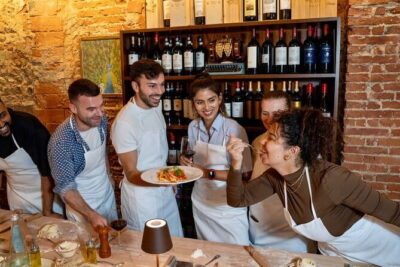
Pasta & Tiramisu Cooking Class with Unlimited Wine
Read our review →
Cooking Class Pasta & Tiramisu Making Unlimited Wine
Read our review →
Premium Pizza & Gelato Preparation Class with Wine
Read our review →
Pizza or Pasta Class with Gelato at a Tuscan Farm
Read our review →Browse the lists this tour appears in