
REVIEW · MONTEPULCIANO
Tuscan Cooking Class -Traditional Pasta Menu
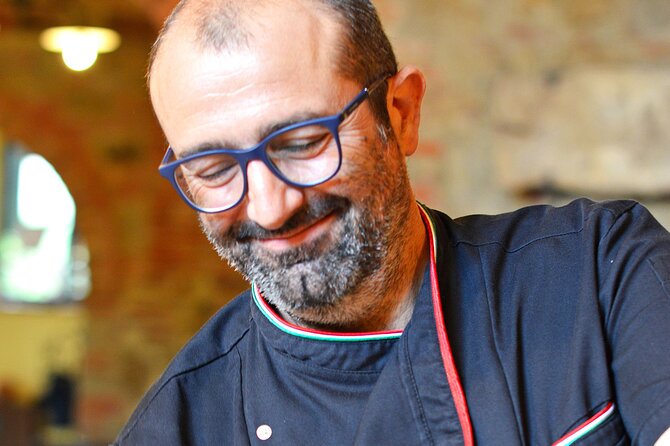
Fresh pasta is only part of the appeal here. At Farmhouse Le Caggiole, Chef Giacomo teaches the practical habits behind Tuscan cooking: how to choose ingredients, handle dough, build a sauce, and match local wine to the finished dish. You prepare two pastas, bruschette, and tiramisu, then sit down to eat the meal you made.
I like the small group of no more than eight, which gives the lesson a personal feel. I also like the combination of hands-on cooking and three local wine pairings, guided by Giacomo’s training as a sommelier. The main catch is that you must remain standing during preparation, and there is no transfer service, so you need to reach the Montepulciano meeting point on your own.
Key points to know before booking
- You make two fresh pastas by hand: pici with a traditional sauce and pappardelle with Tuscan meat ragù.
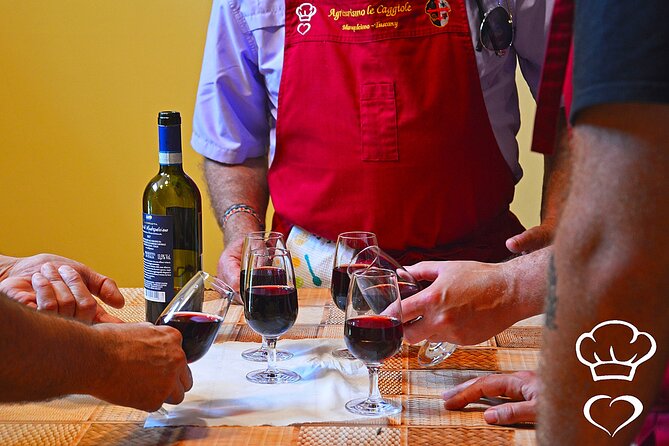
- Chef Giacomo teaches both cooking and wine pairing: three selected local wines accompany the savory courses.
- The class takes place at Farmhouse Le Caggiole: you finish dessert on the terrace with views over the surrounding countryside.
- The group is capped at eight people: this suits anyone who wants direct help rather than a large demonstration.
- The full session lasts about four hours: it begins at 9:30 am and ends back at the meeting point.
- Plan carefully for practical rules: wear comfortable shoes, leave rings and large bracelets at home, and report allergies before booking.
A farmhouse morning built around real Tuscan food
The class begins at 9:30 am at Traversa di Montepulciano, 12, in Montepulciano. The setting is Farmhouse Le Caggiole, not a cooking studio designed for quick tourist turnover. That matters because the food, the pace, and the family recipes are the heart of the experience.
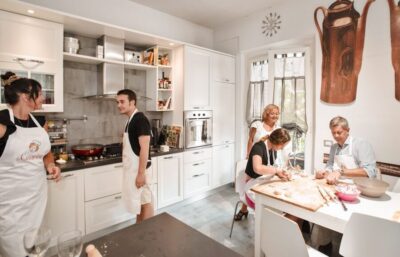
You meet Giacomo, the chef and sommelier, and work through the menu as a small group. Cristiana also helps create the warm, social tone that makes this feel less like a formal school and more like a shared morning in a Tuscan home. The atmosphere is friendly and relaxed, but the teaching has a clear purpose.
The class is conducted in English. You are not simply shown a finished plate and handed a recipe card. You take part in the work, from preparing ingredients to shaping pasta and assembling the meal. The lesson also covers the background of the dishes and local variations, which helps explain why Tuscan food often depends on simple ingredients handled well.
That practical focus is one of the strongest reasons to book. If you want to return home able to make fresh pasta instead of only remembering a pleasant lunch, this class gives you useful techniques to carry forward.
A few more classes around Italy worth a look
- Florence: Pasta Cooking Class with Unlimited Wine
★ 4.9 · 10,285 reviews - 3 in 1 Cooking Class near Navona: Fettuccine, Ravioli & Tiramisu
★ 5.0 · 7,376 reviews - Florence Pizza or Pasta Class with Gelato Making at a Tuscan Farm
★ 5.0 · 6,801 reviews
Starting with ingredients, tools, and Tuscan habits
A good cooking lesson teaches more than a sequence of steps. Giacomo places attention on choosing the best ingredients and understanding how those ingredients affect the finished dish.
You also learn the basic tools used during preparation. Aprons and kitchen equipment are supplied, along with all ingredients. Pencil and notepad are available on request, which is worth arranging if you want to record measurements, techniques, or wine notes during the morning.
The instruction has a traditional family angle. The goal is to pass along Nonna’s secrets, not to turn the food into a complicated restaurant exercise. You learn how Tuscan cooks work with fresh pasta, familiar sauces, local meat, and straightforward seasoning.
I especially like the lesson’s emphasis on cooking around fresh ingredients rather than blindly following a fixed recipe. That is a useful change in thinking. A recipe can tell you what to do, but a cook who understands the ingredients can adjust to what is available and in season.
The morning is active. You remain standing during the preparation, so comfortable clothing and shoes are important. The kitchen rules are also clear: for hygiene, no rings, large bracelets, or artificial nails are allowed while you work.
Making pici, Tuscany’s rustic pasta
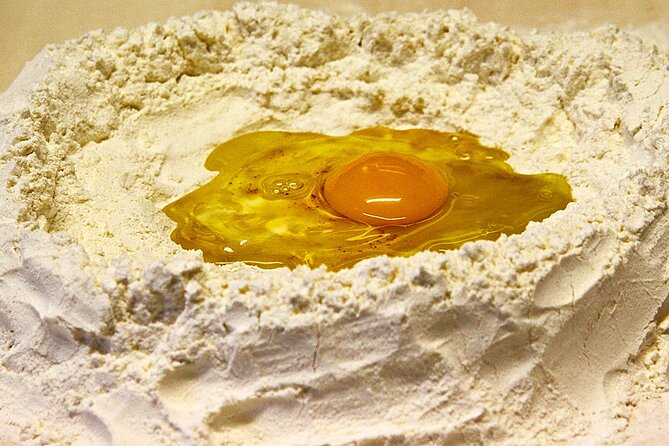
The first main course is pici with a traditional sauce. Pici is a thick, hand-rolled Tuscan pasta, rustic in shape and satisfying on the plate. It is a good choice for a class because you can see and feel the dough change as you work it.
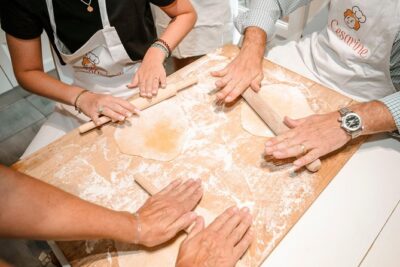
The lesson gives you a chance to learn the technique rather than treating the pasta as a finished prop. You work with the dough by hand, learning how to form the long strands and how the sauce should suit the pasta’s weight and texture.
This is the kind of dish that rewards patience more than fancy equipment. You do not need to make every strand look identical. The point is to understand the dough and to gain confidence with a pasta shape that belongs to the region.
The pici is paired with a traditional local sauce and one of the selected wines. Giacomo uses the pairing to explain how food and wine work together. You learn the basics of choosing a wine that supports the dish rather than overpowering it.
Rolling pappardelle for Cinta Senese ragù
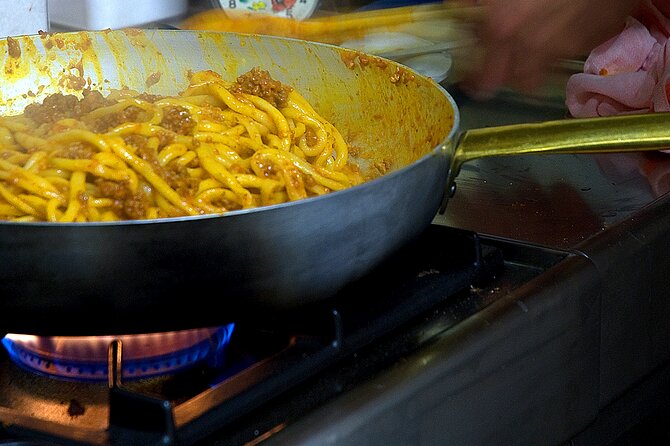
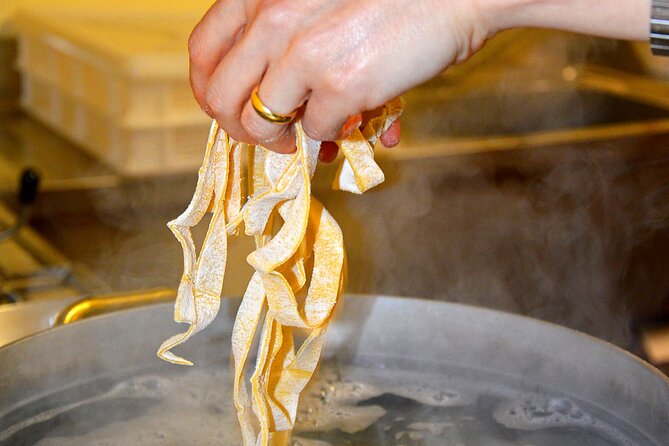
The second pasta is pappardelle with Tuscan meat ragù made with Cinta Senese pork. Pappardelle is broad and substantial, so it holds a hearty sauce well. Making two different pastas in the same class also lets you compare techniques and textures.
The pappardelle section gives the class a useful contrast. Pici is rustic and hand-formed, while pappardelle asks you to work with broad sheets and cut them into ribbons. You get a better sense of how pasta shape is matched to sauce, rather than treating all fresh pasta as the same thing.
The ragù is tied to Tuscany through Cinta Senese pork, a local breed. That regional ingredient gives the meal a stronger sense of place than a generic meat sauce would. You are not simply preparing a popular Italian dish. You are learning how a Tuscan menu uses local food traditions.
This is also where the wine pairing becomes especially useful. Meat ragù has more weight than the earlier courses, so the selected wine needs to make sense with the sauce. Giacomo’s sommelier background adds value here because the wine is part of the lesson, not just an extra drink at lunch.
Same kitchen, a different thing to make:
- Florence: Pasta & Tiramisu Cooking Class with Unlimited Wine
★ 4.9 · 6,708 reviews - Florence: Pasta Cooking Class with Unlimited Wine
★ 5.0 · 6,413 reviews - Naples: Pizza-Making Workshop with Drink and Appetizer
★ 4.9 · 5,411 reviews - Rome: Pasta & Tiramisu Class with Fine Wine by the Vatican
★ 4.9 · 4,852 reviews
Bruschette, tiramisu, and the four-course meal
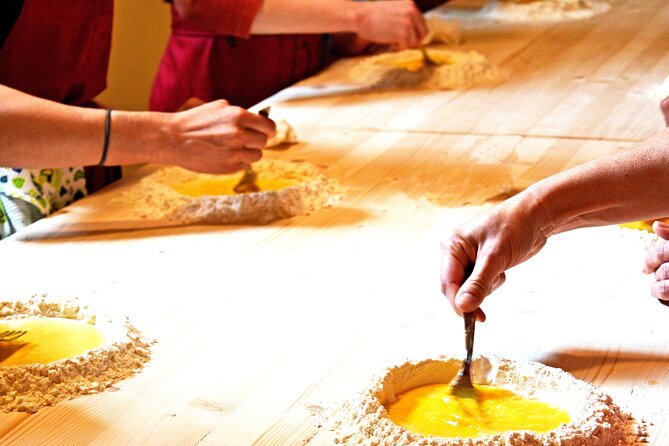
Before the pasta, you prepare traditional bruschette and a typical Tuscan appetizer. This gives the morning a proper beginning and introduces the idea that a Tuscan meal is built in stages.
The starter is simple, but that is exactly why it works well in a cooking class. You can focus on the quality of the ingredients and the balance of the finished bite. It also leaves room for the two pasta courses to remain the center of the meal.
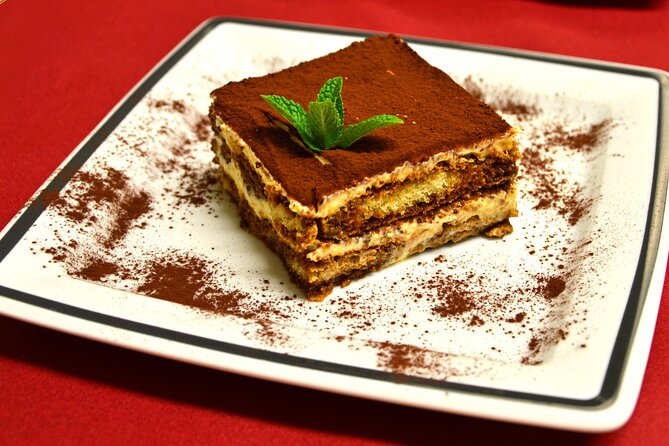
Tiramisu closes the menu. You learn the family recipe and prepare the dessert as part of the class, rather than receiving a purchased sweet at the end. The dessert is not paired with wine, while each savory dish receives its own selected local wine.
At the end of the preparation, you sit around a large table and taste the four-course menu:
- Traditional Tuscan bruschette and appetizer
- Pici with traditional sauce
- Pappardelle with Tuscan meat ragù and Cinta Senese pork
- Family-recipe tiramisu
This meal is the payoff, but it is also part of the teaching. You can taste how the pasta texture, sauce, seasoning, and wine work together. The food you made may receive some final chef’s touches from Giacomo, so the table offers both a reward and a chance to compare your work with a professional’s finishing hand.
Wine pairings that add real value
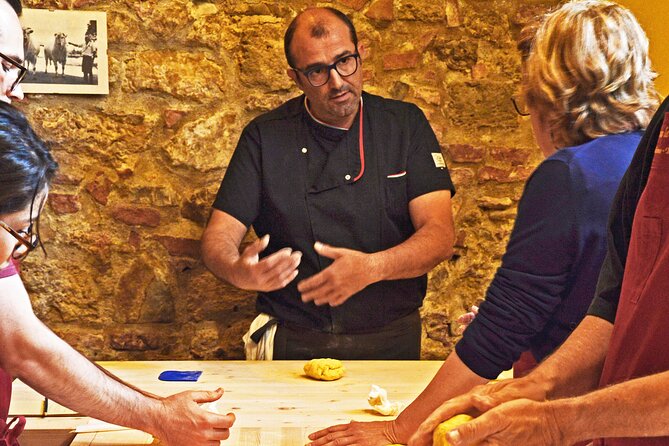
Wine tasting can sometimes feel like an unrelated extra added to a cooking class. Here it is built into the meal. Three selected local wines are served with food, and Giacomo explains the basic ideas behind matching wine and dishes.
You do not need advanced wine knowledge to benefit. The useful lesson is learning to ask simple questions: Is the food delicate or hearty? Is the sauce rich, acidic, or strongly seasoned? Does the wine refresh the palate or compete with the dish?
The pairings create what the class calls a sensorial path. That may sound grand, but the practical idea is easy to understand. You taste a dish with its suggested wine and notice how each changes the other.
I like this addition because it turns lunch into a second lesson. The cost of the experience includes the three wines, so you are not paying separately for a tasting after the cooking ends. If you have little interest in wine, you can still enjoy the food, but wine is an important part of the morning’s design.
Finishing on the terrace at Farmhouse Le Caggiole
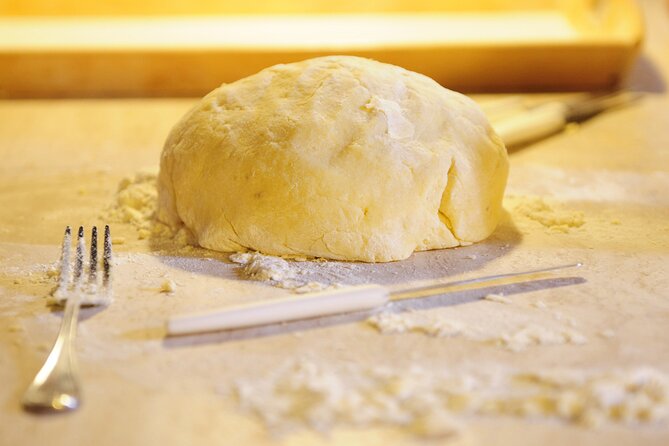
Dessert is served on the terrace, where you can relax and enjoy the views after the standing work in the kitchen. This change of setting helps the meal feel like a full Tuscan morning rather than a class that ends as soon as the last pan is washed.
The terrace is also a natural place for conversation. The group is small, and the social side is part of the experience. You share the meal with the other people in the class, compare your pasta, and enjoy the easy humor that comes with cooking together.
The family element adds warmth without requiring you to take part in an artificial performance. The emphasis remains on food, wine, and conversation. If you prefer a private, quiet lesson with no interaction, this may feel more social than you want. If you enjoy meeting people over a shared meal, it is a strong fit.
The entire activity lasts about four hours and ends back at the meeting point. There is no shuttle or transfer service, so this is best planned as part of your Montepulciano day rather than treated as an experience that will collect you from your hotel.
What the $212.85 price includes
At $212.85 per person, this is not a cheap pasta demonstration. The value depends on how much you want from the morning.
You receive a roughly four-hour, small-group class with a professional chef and sommelier, all ingredients, kitchen tools, an apron, the full meal, and three selected local wines. You also prepare several distinct items rather than one pasta shape: an appetizer, pici, pappardelle with meat ragù, and tiramisu.
The price makes more sense if you count the experience as both a cooking lesson and a long food-and-wine lunch. It offers more direct participation than a standard tasting and more instruction than a meal at a restaurant. The group limit of eight is important because it allows for individual attention while you work with dough and sauces.
Still, you should book it for the teaching, not only for the food. If all you want is a Tuscan lunch, local restaurants will offer less expensive options. If you want to understand how to make fresh pasta and pair dishes with wine, the price is easier to justify.
The class does not include transport, video, or other recordings during preparation. You can request a pencil and notepad, but you should not expect to film the lesson. That rule may disappoint anyone hoping to record every step, though it also keeps attention on the kitchen and the people at the table.
Who will get the most from this class
This experience suits couples, families with adult children, and small groups of friends who want an activity with plenty of participation. It also works well for solo visitors, but single participants are asked to contact the provider before booking so they can be placed in an already scheduled small group.
You do not need to be an expert cook. The class is designed to teach techniques and traditional methods, and the food is prepared step by step. A basic interest in cooking will make the morning more rewarding than arriving only for the meal.
It is a particularly good choice if you want to learn how to:
- Make two different fresh pasta shapes
- Build a traditional Tuscan sauce
- Use Cinta Senese pork in a local ragù
- Prepare a family-style tiramisu
- Choose ingredients with more care
- Match local wine to different savory dishes
You should think twice if standing for much of the preparation is difficult, if you need a transfer service, or if you cannot provide allergy information before booking. Menu changes cannot be considered after the booking is complete, so food intolerances and allergies need to be discussed early.
Timing, cancellation, and useful preparation tips
The class starts at 9:30 am, and a good breakfast is recommended. That advice is practical: you will be working through a full menu before sitting down to eat, and the class includes wine tasting.
Wear comfortable clothes and shoes. You will be on your feet during preparation, and the setting is active rather than formal. Leave rings, large bracelets, and artificial nails at home for the cooking portion.
Confirmation is provided at booking. After confirmation, you are asked to send a WhatsApp text with your name, booking date, and email address. The experience offers free cancellation if you cancel at least 24 hours before the start time. Cancellations or changes inside that period are not refunded or accepted.
A minimum number of participants is required. If the provider cancels because that minimum is not reached, you will be offered another date or experience, or receive a full refund.
Should you book the Tuscan Cooking Class?
I would choose this class if you want a hands-on morning that connects food, family tradition, and local wine. The strongest parts are the small group, the chance to make two genuinely different pastas, and Giacomo’s combined role as chef and sommelier.
You get the most value if you are willing to cook, stand, taste, ask questions, and share a table with other people. The experience is less suitable if you want a quick demonstration, private transport, or a filmed lesson.
For a Montepulciano visit, this is a strong choice for anyone who wants to take home more than a photograph of lunch. You leave with practical pasta techniques, a better sense of Tuscan ingredients and pairings, and the memory of eating a meal you helped make at Farmhouse Le Caggiole.
FAQ
Where does the cooking class take place?
The class takes place at Farmhouse Le Caggiole, at Traversa di Montepulciano, 12, 53045 Montepulciano SI, Italy.
What time does the experience begin?
The class starts at 9:30 am and lasts about four hours.
What food will I prepare?
You prepare traditional bruschette and a Tuscan appetizer, pici with a traditional sauce, pappardelle with Tuscan meat ragù made with Cinta Senese pork, and tiramisu using the family recipe.
Are drinks included?
Yes. The experience includes tasting three selected local wines, each paired with the savory dishes. Tiramisu is not paired with wine.
Is transportation included?
No. The provider does not offer transfer or shuttle service. The activity ends back at the meeting point.
How large is the group?
The experience has a maximum of eight travelers.
What should I wear and bring?
Wear comfortable clothes and shoes because you remain standing during preparation. For hygiene reasons, do not wear rings, large bracelets, or artificial nails. A pencil and notepad are available on request.
Just added around Italy
- Volterra: Fresh Pasta Cooking Class at a Tuscan Farmhouse★ 5.0 · 33 reviews
- Verona: Tortellini Cooking Class and Lunch with Mamma Ivana★ 5.0 · 20 reviews
- Vicenza: Pasta & Tiramisu Cooking Class at a Local’s Home★ 5.0 · 5 reviews
- Verona: My Granny’s secrets making gnocchi★ 5.0 · 7 reviews
- Verona: Prosecco and Pasta Making Class at a Local’s Home★ 5.0 · 10 reviews
- Verona: Pasta Cooking Class with Wine Tasting★ 5.0 · 4 reviews
- Verona: Pasta & Tiramisu Cooking Class at a Local’s Home★ 5.0 · 16 reviews
- Venice: Share Your Pasta Love in a Local’s Home★ 4.8 · 20 reviews
Montepulciano Pasta Classes, compared.
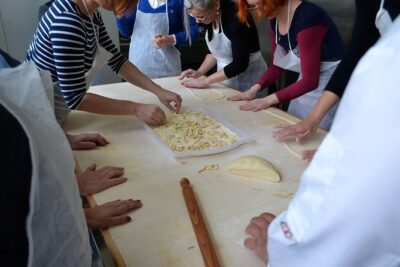
Cesarine: Small group Pasta and Tiramisu class in Montepulciano
Read our review →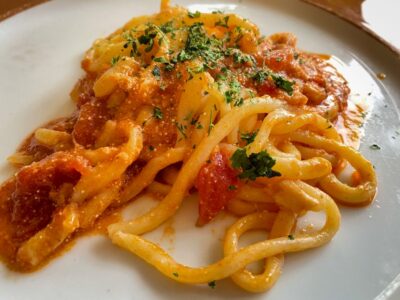
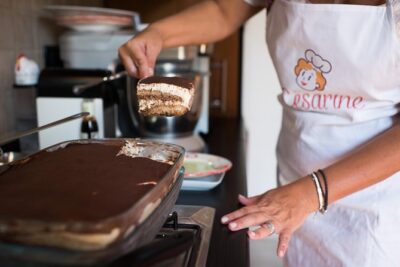
Private Pasta & Tiramisu in an Intimate Montepulciano Home
Read our review →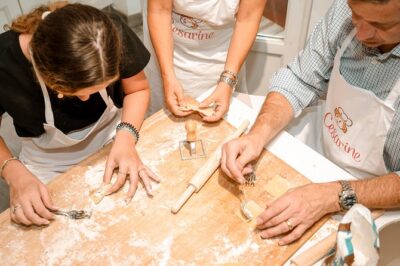
Cesarine: Fresh Pasta Class at Local’s Home in Montepulciano
Read our review →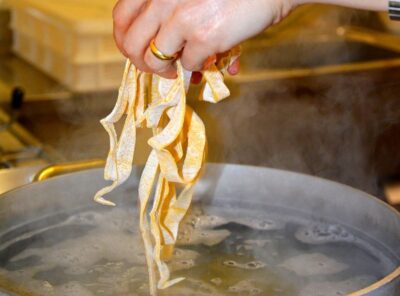
Browse the lists this tour appears in