
REVIEW · FOOD & DRINK
Three Hour Pasta Course with Final Tasting
Fresh pasta is the point here, not a quick demonstration. Laura takes you through the full process, from hand-kneading dough to rolling sfoglia and shaping three Emilia-Romagna specialties at your own work station. I like the hands-on format and the chance to eat the pasta you make, rather than watch someone else do all the work.
I also like the small, private setup and the practical pickup option from the train station. The main consideration is time: three and a half hours is a real cooking session, and the class runs on weekdays, so it may not fit a short or tightly planned visit.
Key points at a glance
- Three pasta shapes in one class: Make tagliatelle, tortelloni, and garganelli rather than focusing on only one recipe.
- Traditional tools: Work with a wooden board and rolling pin, using the hand techniques that define fresh sfoglia.
- Personal instruction: Laura follows you step by step and teaches in English.
- A full tasting afterward: The sample menu includes tortelloni with butter, sage, and Parmesan, garganelli with rosemary and saffron, and tagliatelle with Bolognese sauce.
- Easy station pickup: A small car park at the train station makes the meeting point more manageable if you arrive by rail.
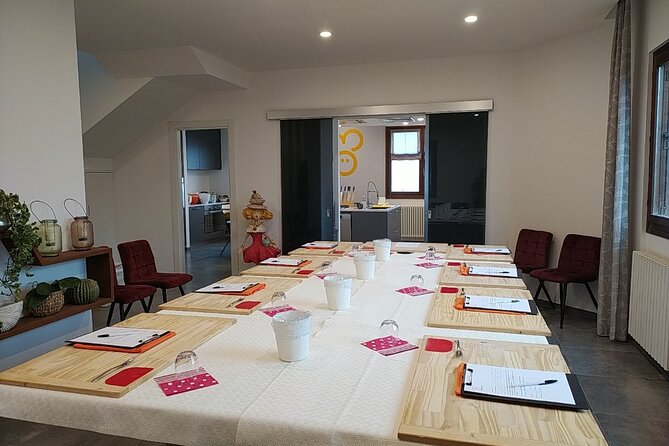
- Private group format: Only your own group takes part, useful if you want close guidance and a relaxed pace.
Making three kinds of pasta from one dough
This class gives you a useful look at how much work sits behind a bowl of fresh pasta. You begin by hand-kneading your own dough, rather than being handed a prepared ball. That first step matters because you learn the feel of the dough as it comes together.
Laura guides you through each stage. The focus is not only on a finished dish, but on the small physical skills that make fresh pasta work: pressing, turning, rolling, cutting, and shaping. I like this approach because you leave with methods you can try again at home, not just a recipe card.
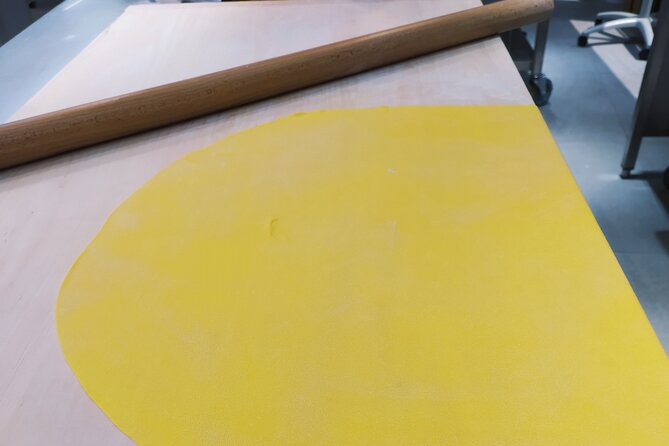
Your station comes with a traditional wooden board and rolling pin. There is no shortcut through a pasta machine in the description of the class. You roll the dough completely by hand into thin sheets called sfoglia. That is the central skill of the session, and it can take more effort than the tidy plates at the end suggest.
The class then uses those sheets in three different ways. Each shape teaches a separate technique, so the lesson has more variety than a single-pasta workshop.
More Food and Drink Tours in Italy:
- Bologna Food & Market Tour with 6 Tastings, Pasta, Wines & More
★ 5.0 · 1,328 reviews - Pasta Making & Wine Tasting with Dinner in Frascati from Rome
★ 5.0 · 1,326 reviews - Rome: Pasta Making with Wine Tasting and Dinner in Frascati
★ 4.9 · 979 reviews
Rolling sfoglia by hand on a wooden board
The sfoglia stage is where the course becomes a proper lesson in local pasta making. You roll the dough thin by hand, working across the wooden board with the rolling pin. The board gives you a traditional work surface, while the pin requires steady pressure and control.
You should expect to work at your own pace while Laura checks each stage. That is especially useful if you have never made pasta before. The dough can look simple, but rolling an even sheet takes practice, and a patient teacher can help you avoid rushing it.
This is also the part most likely to challenge anyone expecting a light cooking demonstration. You will be standing or working with your hands for much of the session, and the class lasts about three hours and thirty minutes. I would choose comfortable clothing and come ready to take part, not simply observe.
The reward is practical. Once you understand how a sheet should feel and look, the later shapes make more sense. You can see why the same dough becomes a ribbon pasta, a filled pasta, or a ridged tube depending on how you cut and fold it.
Cutting tagliatelle with a knife
Tagliatelle is made with a knife-cut technique. After rolling the sfoglia, you learn to cut it into the long ribbons associated with the pasta of Bologna and the surrounding Emilia-Romagna area.
The important lesson here is consistency. You want ribbons that cook at roughly the same rate, rather than a pile of uneven strips. Laura’s step-by-step guidance is useful because the hand position and cutting rhythm are not obvious until someone shows you.
The sample dish pairs the tagliatelle with Bolognese sauce. That is a familiar combination, but it gives the pasta a sensible test. Fresh tagliatelle has a different texture from dried pasta, and the sauce gives you a clear way to judge the result at the table.
I like that tagliatelle is part of a three-shape class because it teaches the most direct cutting method. You do not need to master a complicated fold before you can make something recognizable. Still, the knife work rewards patience, and you should not expect every ribbon to look perfectly uniform on your first try.
Folding tortelloni with butter, sage, and Parmesan
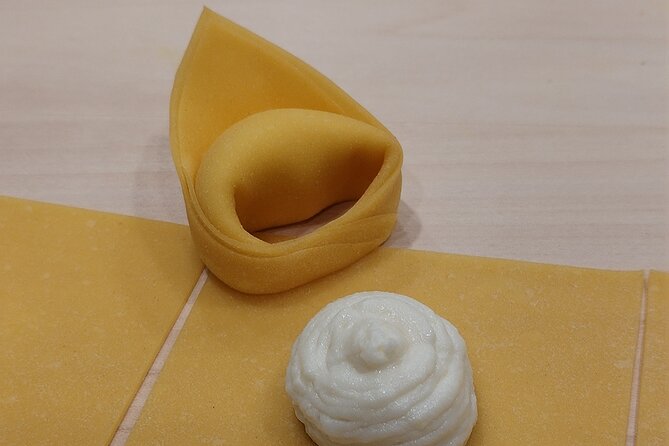
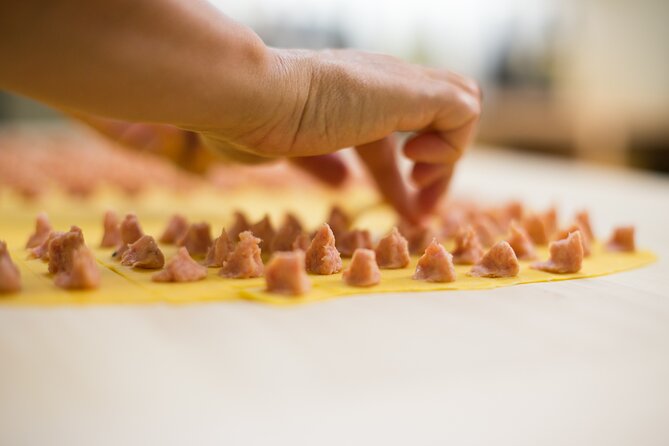
Tortelloni brings the filling and shaping skills. You learn how to shape the pasta by hand, with Laura showing you how to handle the sheets and form the filled pieces.
The sample menu serves the tortelloni with butter, sage, and Parmesan cheese. That is a relatively simple sauce, which is a good choice for a class tasting. It lets the pasta and filling remain central instead of burying them under a strong sauce.
This stage may be the most satisfying for people who enjoy careful craft work. Folding filled pasta takes more attention than cutting tagliatelle. You need to shape the pieces neatly and make sure they hold together. The description promises instruction in how to perfectly shape tortelloni, but your first pieces may still have their own personality. That is part of the fun, and it gives you a fair sense of the technique.
The butter, sage, and Parmesan combination also fits the teaching goal. It is a classic finish with few distractions, so you can pay attention to the texture of the pasta you made.
A few more classes around Italy worth a look
- 3 Hours Private Boat Tour of Capri with Pasta and Prosecco
★ 4.0 · 34 reviews - 3 Hour Florence Pasta Making & Unlimited wine
★ 5.0 · 24 reviews - 3 Hour Sicilian Cooking Class on Fresh Pasta in Catania
★ 5.0 · 9 reviews - 3 Hour Cooking Class: Homemade Pasta and Tiramisu in Venice
★ 4.5 · 7 reviews
Shaping garganelli with rosemary and saffron
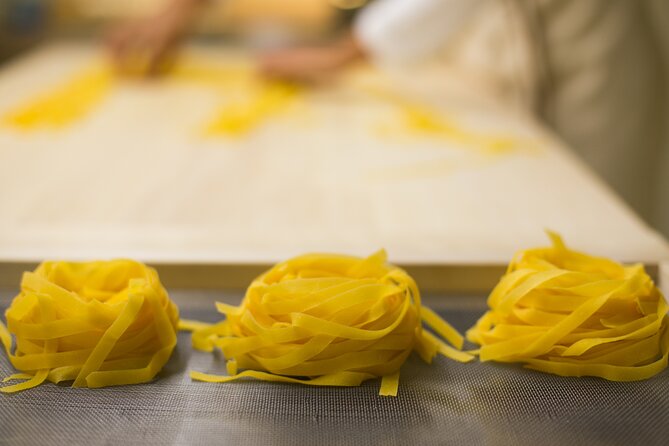
Garganelli adds a third skill and a different final shape. Instead of flat ribbons or filled parcels, you form the pasta into ridged tubes. The class teaches the shaping method rather than limiting you to one basic cut.
The sample dish combines garganelli with rosemary and saffron. That gives the tasting a different flavor from both the butter and sage tortelloni and the Bolognese tagliatelle. You get three distinct pasta dishes, not the same preparation served in three forms.
This variety is one of the strongest reasons to choose the class. If you are already comfortable making simple noodles, the filled tortelloni and shaped garganelli give you more to learn. If you are new to pasta, Laura’s presence at each stage matters because the techniques build on one another.
The class description does not give a detailed recipe for the filling or sauces, so you should book it for the technique and shared meal rather than for a fixed set of take-home recipes. The listed menu tells you what you are likely to taste, while the teaching centers on the pasta itself.
The final tasting turns work into lunch
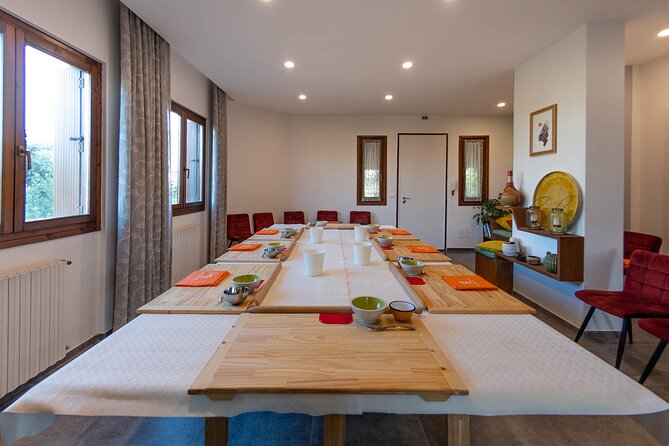
After the hands-on portion, you sit down to taste the finished pasta. The sample menu includes:
- Tortelloni with butter, sage, and Parmesan cheese
- Garganelli with rosemary and saffron
- Tagliatelle with Bolognese sauce
That final meal is more than a reward. It gives you a chance to compare the shapes and sauces while the lesson is still fresh. You can see how the thickness of the sfoglia, the cut, and the shape affect the way each pasta feels with its sauce.
A shared meal also gives the class a social finish. One participant described lunch as pleasant enough to continue talking about pasta for hours. I would not treat that as a promise of a long social gathering, but it does point to the relaxed format of the experience.
The meal may also help if someone in your group is nervous about the practical work. You do not need perfect pasta to have a worthwhile session. The tasting lets you enjoy the results while Laura’s instruction gives you a better chance of repeating the process at home.
Laura’s patient, personal teaching style
Laura is the main guide for this pasta class. The format has her following you through each stage, rather than giving one general talk and leaving you to guess what comes next.
That matters in a private class. Only your own group participates, so the session is not built around a large audience. You can focus on your own dough and shapes, and you have a better chance to ask for help when a sheet is too thick or a fold is not holding.
The available feedback also points to Laura’s patience and professional approach. One participant who did not speak Italian still found the class manageable because Laura took the time to help. Since the class is offered in English, that is useful reassurance for English-speaking groups.
Another course connected with the school was led with help from Irene, who was described as thorough and supportive. For this pasta session, Laura is the named teacher, so you should expect her to lead the class. The school’s wider teaching team may vary by course, but the supplied details do not promise Irene’s presence here.
A private class near Bazzano
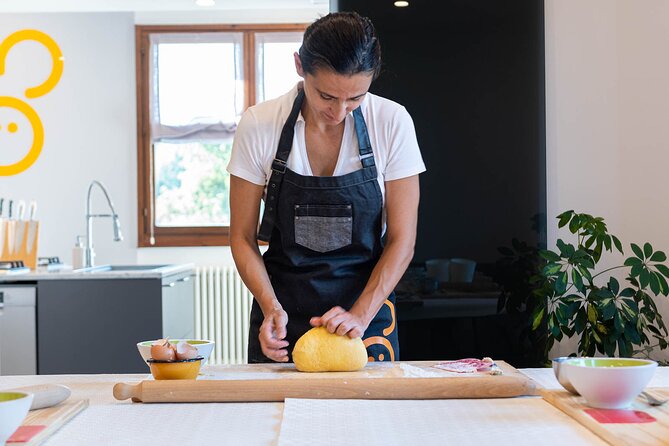
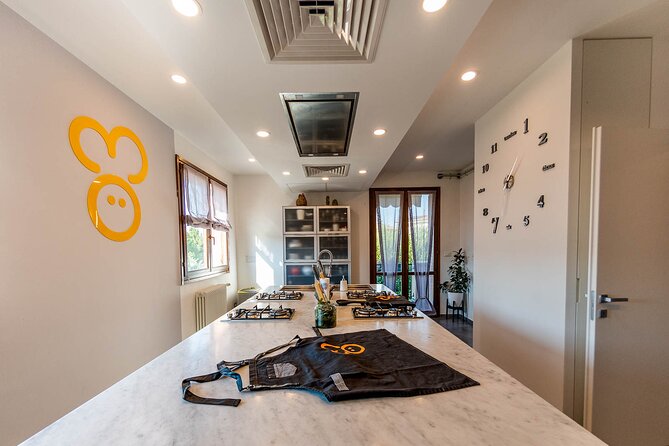
The meeting point is Scuola di Cucina Wellness Gourmet at Via del Bucco 33, in Bazzano, Valsamoggia, near Bologna. The experience begins and ends at the school, which keeps the day simple once you arrive.
You can use the pickup option if you arrive at the train station. The station has a small car park, and the school says the pickup can be arranged there. If you drive or take a taxi, use the Bazzano address. When you book, provide your mobile number so the school can send a detailed map.
That phone number is worth supplying. The address is described as easy to find, but a cooking school outside a major city can still be less obvious than a central restaurant. A map and a planned pickup remove needless stress before a hands-on class.
The experience is offered Monday through Friday, from 9:30 a.m. to 7 p.m., within the published operating period of August 14, 2025, through December 9, 2026. The listing does not give a single fixed start time for every booking, so check your confirmation carefully and plan your transport around the actual time assigned.
Is $108.84 a fair price?
At $108.84 per person, this is not the cheapest way to eat pasta in Italy. It can still be good value if you want instruction, not just lunch.
You are paying for about three and a half hours, a private group setting, personal help from Laura, traditional equipment, three pasta shapes, and a final tasting. The value improves if you are traveling with family or friends who want to work together, since the private format avoids a large class where your turn at the table may be limited.
The price is harder to justify if you mainly want a quick food stop or a demonstration. You need to knead, roll, cut, and shape the dough yourself. That is the appeal, but it also means the class demands time and attention.
I would compare the cost with what you hope to remember after the trip. A restaurant meal disappears quickly. The ability to make sfoglia, tagliatelle, tortelloni, and garganelli gives the experience lasting value, provided you are willing to practice again at home.
Who should book this class?
This course fits you best if you want a genuine cooking lesson and enjoy learning by doing. It is a good choice for couples, families, and small private groups who can spare most of a morning or afternoon.
It also suits a mixed-language group. The class is offered in English, and Laura has shown patience with a participant who did not speak Italian. That does not mean every language need is covered, but English instruction is part of the offering.
You may want to skip it if your schedule is packed, you dislike repetitive hand work, or you want a polished chef-led meal with little effort on your part. The class asks you to participate from the first stage to the last.
The weekday schedule is another practical limit. If your Emilia-Romagna visit falls on a weekend, this particular experience may not fit. Check the available date before arranging transport.
Final call: book it for skills, not speed
I would book this pasta class if you want to understand how Emilia-Romagna pasta is made from scratch. The combination of a private group, Laura’s close instruction, three distinct shapes, and a meal built around your work gives the experience a clear purpose.
Book it especially if you like traditional tools and hands-on lessons. The wooden board, rolling pin, knife-cut tagliatelle, folded tortelloni, and shaped garganelli offer more substance than a single recipe class.
I would pass if you only want a fast meal or a short demonstration. At three and a half hours, this is a proper workshop. For the right person, that time is the value.
FAQ
Where does the pasta class take place?
The class takes place at Scuola di Cucina Wellness Gourmet, Via del Bucco 33, 40053 Valsamoggia BO, Italy. The address is also given as Via del Bucco 33, Bazzano.
How long does the experience last?
The course lasts approximately three hours and thirty minutes.
Is the class offered in English?
Yes. The experience is offered in English.
What types of pasta will I make?
You will learn to make tagliatelle, tortelloni, and garganelli.
Do I make the dough myself?
Yes. You hand-knead your own pasta dough from scratch, then roll it into thin sheets of sfoglia by hand.
What equipment is provided?
You work at your own station with a traditional wooden board and rolling pin.
What food is included at the final tasting?
The sample menu includes tortelloni with butter, sage, and Parmesan cheese; garganelli with rosemary and saffron; and tagliatelle with Bolognese sauce.
Is pickup available from the train station?
Yes. If you arrive at the train station, pickup is offered from the small car park there. Provide your mobile number when booking so the school can send a detailed map.
Is this a private activity?
Yes. Only your own group participates in the activity.
Just added around Italy
- Volterra: Fresh Pasta Cooking Class at a Tuscan Farmhouse★ 5.0 · 33 reviews
- Verona: Tortellini Cooking Class and Lunch with Mamma Ivana★ 5.0 · 20 reviews
- Vicenza: Pasta & Tiramisu Cooking Class at a Local’s Home★ 5.0 · 5 reviews
- Verona: Prosecco and Pasta Making Class at a Local’s Home★ 5.0 · 10 reviews
- Verona: Pasta Cooking Class with Wine Tasting★ 5.0 · 4 reviews
- Verona: My Granny’s secrets making gnocchi★ 5.0 · 7 reviews
- Verona: Pasta & Tiramisu Cooking Class at a Local’s Home★ 5.0 · 16 reviews
- Valnerina/Pasta cooking class in a 12th century location★ 4.8 · 9 reviews
Food & Drink, compared.
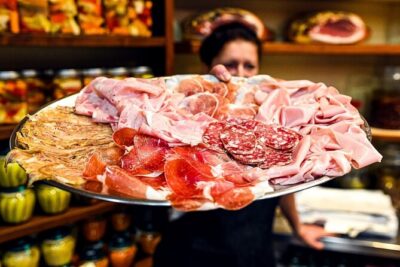
Bologna Food & Market Tour with 6 Tastings, Pasta, Wines & More
Read our review →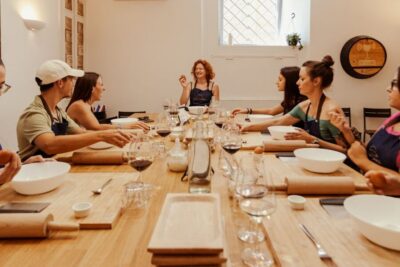
Pasta Making with Wine Tasting and Dinner in Frascati
Read our review →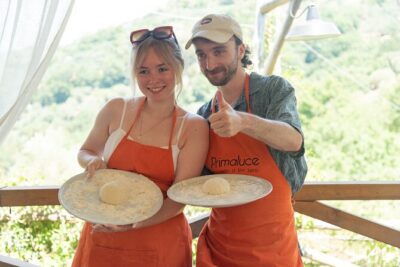
Pizza School with Wine and Limoncello Tasting in a Local Farm
Read our review →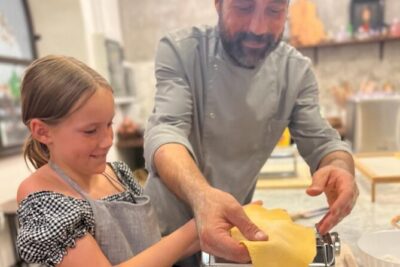
Super Fun Pasta & Gelato Class by Vatican with Wine + Oil Tasting
Read our review →
Countryside Tour with Wine Tasting & Pasta Class
Read our review →
Food Tour with Pasta Tasting & Local Specialties
Read our review →
Florence Food Tour with Truffle Pasta, Steak & Free Flowing Wine
Read our review →
Jewish Ghetto & Cannaregio Area Food Tour: Pasta Wine Gelato and More!
Read our review →Browse the lists this tour appears in