
REVIEW · FRESH PASTA WORKSHOPS
Pasta Making Class at Local’s Home in Trieste
Fresh pasta is the star here, but the real treat is making it in a local home rather than watching a chef work behind a restaurant counter. You learn regional recipes from a Cesarina, prepare three pasta dishes, then sit down to eat them with wines from Friuli Venezia Giulia.
I like the private format, since your host can slow down for children, answer questions, and give you hands-on help. I also like the warm, personal side: hosts such as Giovanni and Giovanna have welcomed families into their homes, served homemade sauces, and added touches such as tiramisu or limoncello. The main drawback is the price, $174.60 per person for about three hours, and some hosts may speak only limited English, so Google Translate can be useful.
Key points to know before booking
- Three hours in a local home: You learn, cook, eat, and talk rather than simply watching a demonstration.
- Private attention: Only your group participates, which helps if you have children, dietary questions, or little kitchen experience.
- Regional pasta focus: Ravioli and spaghetti have featured in past classes, with recipes tied to local cooking traditions.
- Wine is part of the meal: Your Cesarina serves a selection of red and white wines from regional cellars.
- Communication may vary: English is offered, but some hosts rely on translation apps for much of the conversation.
- A small take-home bonus: You receive an official Cesarine apron and shopping bag after the class.
Why this Trieste cooking class feels personal
A pasta class can easily become a staged demonstration. This one is set up differently. You meet a Cesarina, the local home cook assigned to your booking, at her home in Trieste. The exact address arrives after you book, so you should not expect a public meeting point such as a restaurant or cooking school.
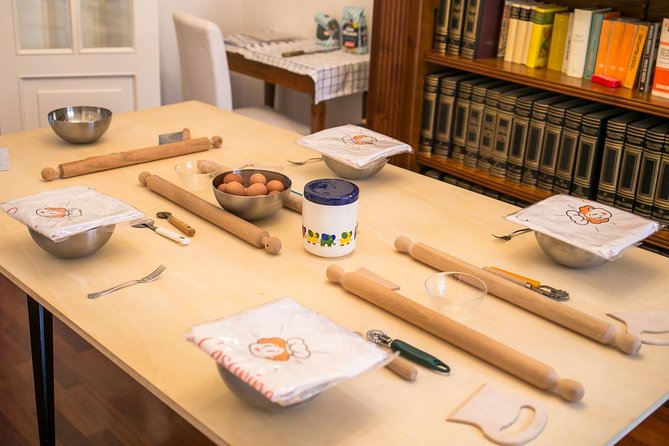
That setting changes the mood. You are not just learning how dough should feel or how ravioli should be sealed. You are doing it in somebody’s home, with the host’s own tools, habits, recipes, and way of serving the finished meal. The Cesarine network selects home cooks who act as local ambassadors for Italian food traditions, and each host brings a personal version of regional cooking.
The class lasts about three hours and can begin in the morning or afternoon. That timing gives you some flexibility. A morning class can become your main midday meal, while an afternoon session works well as an early dinner before an evening walk around Trieste.
The private format matters more than it may first appear. You do not have to keep pace with a large group, and your host can spend extra time with a child who is shaping ravioli or with an adult who has never worked with fresh dough. You also avoid the usual problem of standing at the back of a crowded kitchen and trying to copy a hand movement from several feet away.
More Fresh Pasta Workshops in Italy:
- Rome: Pasta Making Class with Wine, Limoncello, and Dessert
★ 4.9 · 3,177 reviews - Pastamania – Florence Pasta Making Class
★ 5.0 · 3,050 reviews - Enjoy Spritz and Pasta Making in Piazza Navona
★ 5.0 · 1,681 reviews
Rolling, filling, and shaping three pasta dishes
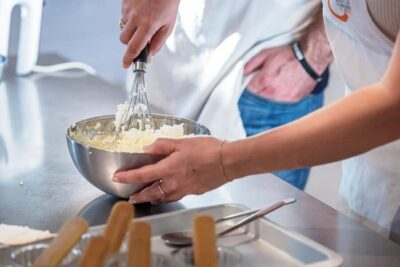
The heart of the experience is the hands-on pasta work. You learn the secrets behind regional recipes and practice making pasta that you can reproduce at home. The exact dishes can vary by host, but ravioli and spaghetti have been part of past classes, along with a dessert such as tiramisu.
Ravioli gives you the most tactile part of the lesson. You work with the dough, add filling, and seal the edges. It looks simple until you try to create pieces of a similar size without trapping too much air inside. A private teacher can correct small mistakes before they become a whole plate of broken ravioli.
Spaghetti offers a different lesson. It is less about filling and more about getting the dough thin and even, then cutting it into strands. Children often enjoy this step because it feels direct and playful. If you are cooking with a family, the private setting lets younger hands take part instead of merely watching an adult handle the dough.
The experience is described as making three regional pasta dishes, so you should expect more than one basic recipe. Still, do not assume every class will follow the exact menu described in another person’s visit. Home cooking changes with the Cesarina, the available local produce, and the traditions of that household.
You may also make dessert. Tiramisu appeared in several especially detailed accounts of the class, and it became a favorite part for families. It adds a sweet finish and gives the lesson a wider view of an Italian meal, not just a single pasta course.
Eating the meal you made
The best part of a cooking class is often the moment you stop working and taste the result. Here, your pasta is cooked and served after the preparation, usually with sauces made by the host. That distinction matters: you are not merely sampling a bite at the kitchen counter. You sit down to enjoy the meal your group helped create.
The sauces can be as important as the pasta itself. One host, Giovanni, was praised for homemade sauces that turned the finished dishes into a memorable meal. His wife also helped cook and serve the food, giving the experience the feel of a shared family meal rather than a quick class followed by a rushed tasting.
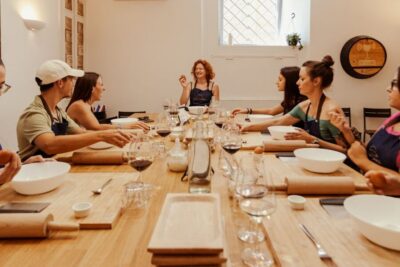
Wine is included as part of the food experience. Cesarine offer red and white wines from regional cellars, so you get a taste of the territory beyond the pasta. Some meals have also included prosecco at the start, a small snack such as chicchetta, and homemade limoncello after dessert. These extras can vary, so treat them as possible touches rather than a guaranteed menu.
If you do not drink wine, the supplied details do not specify substitute beverages. It is sensible to raise any food or drink concerns when booking, but the available information does not confirm special menus or dietary adaptations.
Meeting Giovanni, Giovanna, or another Cesarina
The host is central to the quality of this experience. Giovanni comes across as patient and encouraging, especially for people who are new to pasta making. Another host, Giovanna, created a relaxed meal with ravioli, spaghetti, tiramisu, local wine, and homemade limoncello.
The host assigned to your booking may be different. That means you should think of this as a format rather than a fixed performance with one named chef. You are buying a private lesson in a local home, and the personality of the Cesarina will shape the evening or afternoon.
English is listed as an offered language, but the actual level of spoken English may vary from host to host. In one case, Google Translate handled the communication well. That is not necessarily a problem. Cooking gives you plenty of shared actions to work through, and pasta dough is fairly good at crossing language barriers. Still, if detailed culinary explanations are important to you, keep a translation app ready.
The private setting helps here. You can pause, point, repeat a motion, and confirm what you are doing without holding up a larger class. A little patience will make the exchange easier.
A few more classes around Italy worth a look
- Florence: Pasta Cooking Class with Unlimited Wine
★ 4.9 · 10,285 reviews - 3 in 1 Cooking Class near Navona: Fettuccine, Ravioli & Tiramisu
★ 5.0 · 7,376 reviews - Florence Pizza or Pasta Class with Gelato Making at a Tuscan Farm
★ 5.0 · 6,801 reviews - Florence: Pasta & Tiramisu Cooking Class with Unlimited Wine
★ 4.9 · 6,708 reviews
What the $174.60 price includes in practical terms
At $174.60 per person, this is not a cheap way to get dinner. You can eat pasta in Trieste for much less. The value comes from combining a meal with personal instruction, a private host, regional wine, and a connection to a local household.
Three hours is a reasonable length for this type of class. You have time to learn the dough, shape several kinds of pasta, prepare or watch the sauces, and sit down for the meal. A shorter lesson might feel rushed, while a much longer session could become tiring for children or anyone who is mainly looking for a pleasant introduction.
The private format also makes the price easier to justify for a small family or a group with mixed experience. If one person wants detailed instruction and another mainly wants to enjoy the meal, the host can usually give attention where it is needed. The experience also creates a shared activity, which can be more memorable than another restaurant dinner.
Still, the cost deserves a clear-eyed look. One person described it as pricey for the time involved, even while valuing the memories created with a daughter. If you are comparing this with a standard group cooking school, you may pay more here in exchange for privacy and a home setting. If your main goal is simply to eat excellent pasta, a restaurant will offer better financial value.
Choosing the right time in your Trieste plans
You can select a morning or afternoon start. The booking begins in Trieste and ends back at the meeting point, which in this case is the host’s home location. The precise address is provided once the booking is complete, so leave room in your schedule for getting there.
Because the activity takes place in a private residence, do not plan to arrive without checking the address and timing carefully. The supplied details confirm that the area is near public transportation, but they do not name a specific bus stop, route, or travel time. You should use the address you receive to plan the final approach.
A morning class can make sense if you want a substantial meal before sightseeing. An afternoon class may suit you better if you prefer a slower start and want to turn the cooking lesson into dinner. In either case, the three-hour duration is long enough that you should avoid placing a tight appointment immediately afterward.
The experience is booked, on average, 57 days ahead. That figure suggests you should reserve early if your Trieste dates are fixed, especially if you need a particular morning or afternoon slot. It is not a promise that every date will sell out, but it is a useful planning signal.
Best for families, couples, and curious eaters
Families are a strong match for this class. Children can help make pasta, and the private format keeps the lesson from becoming a problem if their attention wanders. Ravioli and spaghetti provide simple, hands-on tasks, while tiramisu can add an extra reward for younger cooks.
Couples and friends may appreciate the relaxed pace and the chance to share a meal in a local home. If you have already visited several restaurants, this gives you a different look at regional food. You learn how the meal comes together, not just how it tastes on the plate.
It also suits anyone who wants a repeatable skill. The point is not only to eat fresh pasta in Trieste. You are shown how to reproduce Italian pasta at home, which gives the class value after your holiday ends. The apron and shopping bag are modest souvenirs, but they reinforce the practical side of the experience.
This may be less suitable if you dislike social meals, prefer a tightly scripted professional demonstration, or want a low-cost activity. It may also frustrate you if you need a fully English-speaking instructor and are uncomfortable using a translation app. The class is intimate and personal, not polished in the way a large culinary school may be.
What to bring and how to prepare
The experience includes a mobile ticket, so keep your booking available on your phone. You receive the exact home address after booking, and the activity is near public transportation. Confirm the location before setting out, since the initial Trieste meeting information is broad rather than a single public landmark.
Wear clothing that you do not mind wearing around flour, sauce, and food preparation. The official Cesarine apron is provided, but an apron does not guarantee that every spot stays perfectly clean. Comfortable clothes will make the three-hour session easier.
Bring a translation app if you want extra help with conversation. English is offered, but past hosts have had different levels of spoken English. A phone with enough battery power is more useful here than a notebook, since you may want to translate questions or photograph a pasta shape for later reference.
Cancellation is free up to 24 hours before the local start time. Cancelling later, or making changes within that period, does not qualify for a refund. This is worth noting before you reserve a morning or afternoon slot.
Should you book the Trieste pasta class?
Book it if you want a private, hands-on food experience and are happy to pay for personal attention rather than a bargain meal. It is especially well suited to families, couples, and small groups who want to cook together, taste regional wines, and leave with a skill they can use at home.
Think twice if $174.60 feels high for three hours or if you are mainly seeking dinner. The food may be memorable, but the price covers the host, instruction, private setting, meal, wine, and personal connection. For the right person, that combination is the point.
I would choose this class over a standard restaurant meal when I wanted a story to bring home, not just a plate of pasta. The strongest reasons are the private attention, the chance to work with ravioli and spaghetti, and the warmth of hosts such as Giovanni and Giovanna. Just plan for possible translation help and confirm the home address before you go.
FAQ
Where does the pasta-making class take place?
The class takes place in a local Cesarina’s home in Trieste, Italy. You receive the exact address after completing the booking.
How long does the experience last?
The class lasts approximately three hours.
Is the class private?
Yes. Only your group participates in the activity.
Is the class offered in English?
English is an offered language. However, the level of spoken English may vary by host, and Google Translate may be helpful.
What will I learn to make?
You learn to make three regional pasta dishes. Ravioli and spaghetti have featured in past classes, but the exact menu may vary.
Do I eat the pasta I make?
Yes. You taste the pasta dishes prepared during the class.
Is wine included?
The Cesarine offer a selection of red and white wines from regional cellars. Some meals have also included prosecco or homemade limoncello, but these additional drinks are not stated as guaranteed for every class.
Is a meal included?
Yes. After preparing the food, you eat the pasta dishes you make. Some hosts may also include dessert such as tiramisu.
What do I take home?
You receive an official Cesarine apron and shopping bag.
Can I cancel for a full refund?
Yes, if you cancel at least 24 hours before the experience start time. Cancellations or changes made less than 24 hours in advance are not refunded.
Just added around Italy
- Volterra: Fresh Pasta Cooking Class at a Tuscan Farmhouse★ 5.0 · 33 reviews
- Verona: Tortellini Cooking Class and Lunch with Mamma Ivana★ 5.0 · 20 reviews
- Vicenza: Pasta & Tiramisu Cooking Class at a Local’s Home★ 5.0 · 5 reviews
- Verona: My Granny’s secrets making gnocchi★ 5.0 · 7 reviews
- Verona: Prosecco and Pasta Making Class at a Local’s Home★ 5.0 · 10 reviews
- Verona: Pasta Cooking Class with Wine Tasting★ 5.0 · 4 reviews
- Verona: Pasta & Tiramisu Cooking Class at a Local’s Home★ 5.0 · 16 reviews
- Valnerina/Pasta cooking class in a 12th century location★ 4.8 · 9 reviews
Fresh Pasta Workshops, compared.
Pasta Making Class with Wine, Limoncello, and Dessert
Read our review →
Enjoy Spritz and Pasta Making in Piazza Navona
Read our review →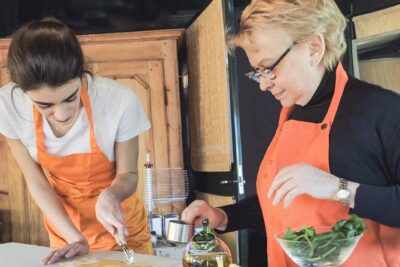
The Secrets to Learn Fresh Pasta and Tiramisù in a Glam Home
Read our review →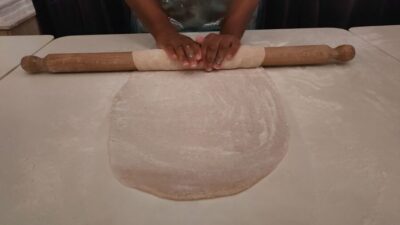
Pasta Making with Wine Tasting and Dinner in Frascati
Read our review →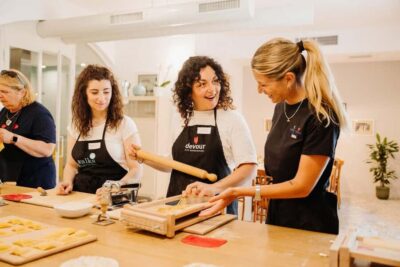
Handmade Pasta & Dessert Class with Unlimited Wine
Read our review →Browse the lists this tour appears in