REVIEW · ITALY
Cagliari: Workshop di pasta fresca tradizionale sarda
The star of this three-hour experience is culurgiones, Sardinia’s distinctive stuffed pasta shaped with a wheat-ear seal called a sa spighitta. You’ll work with Carlotta and Matteo in the courtyard of a traditional Sardinian home, learning the dough, filling, and closing technique before sitting down to a generous tasting.
I especially like the small group of no more than eight, which gives you a fair chance to watch the demonstration and practice your own pasta. I also like the setting: this is a home-based cooking lesson, not a polished restaurant classroom. The main consideration is dietary. The experience is not suitable for people with gluten or lactose intolerance.
Key points
- Learn the culurgiones seal: Practice the delicate a sa spighitta closure, shaped like a wheat ear.
- Cook in a traditional home: The class takes place in an internal courtyard rather than a commercial kitchen.
- Meet Carlotta and Matteo: They lead the lesson in Italian and English and share Sardinian food traditions.
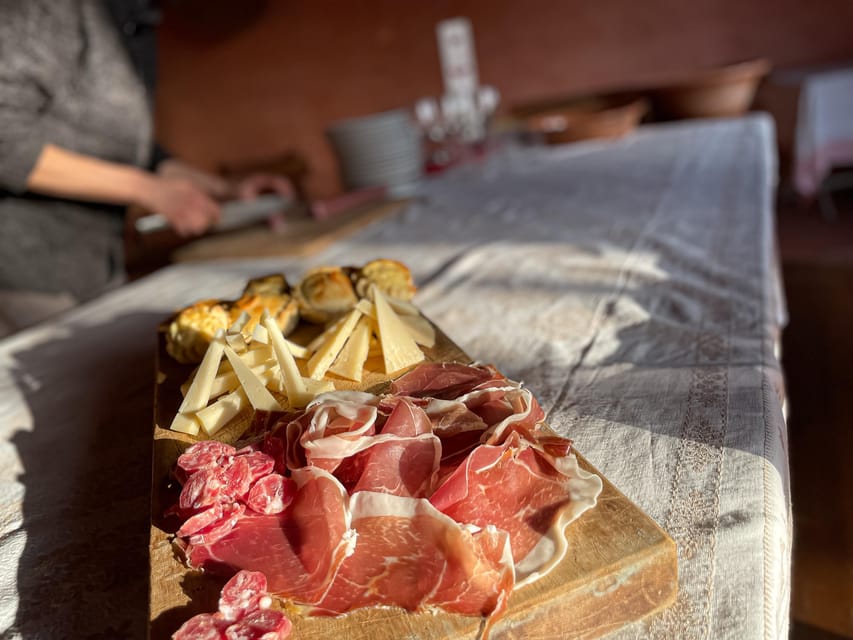
- Taste beyond pasta: The meal can include cheeses, meats, breads, panadas, pratzidas, Coccoi Prena, and local wine.
- Keep your own creations: Materials are supplied, and you can take away the Sardinian pasta you make.
- Plan for dietary limits: Gluten and lactose intolerance are listed as exclusions.
Making culurgiones in a Sardinian courtyard
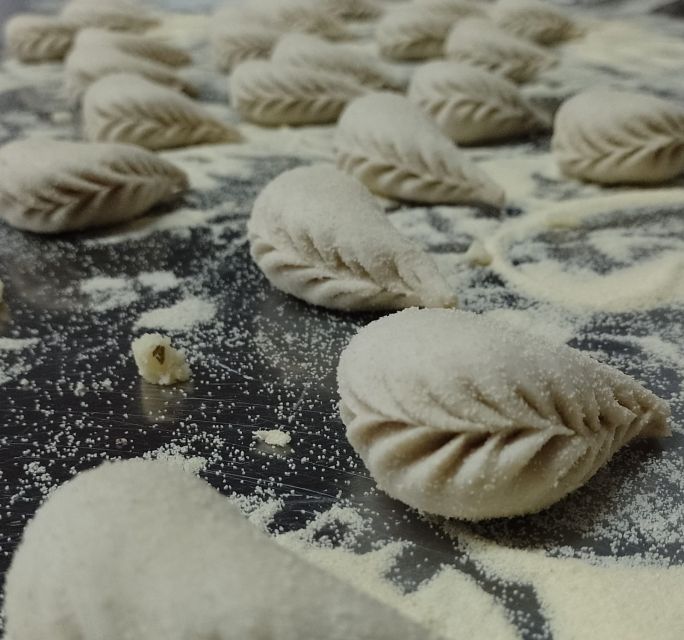
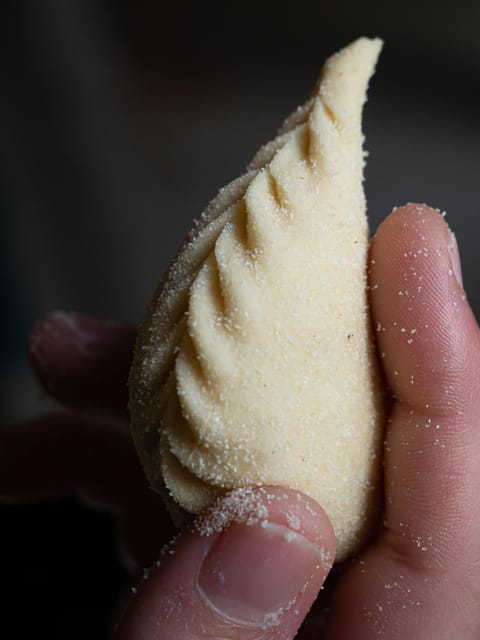
The experience begins with a lesson in one of Sardinia’s most recognizable foods. Culurgiones are stuffed pasta, often filled with potatoes, cheese, and mint. Their shape matters as much as their flavor. The edges are closed with a sa spighitta, a braided seam that resembles a wheat ear.
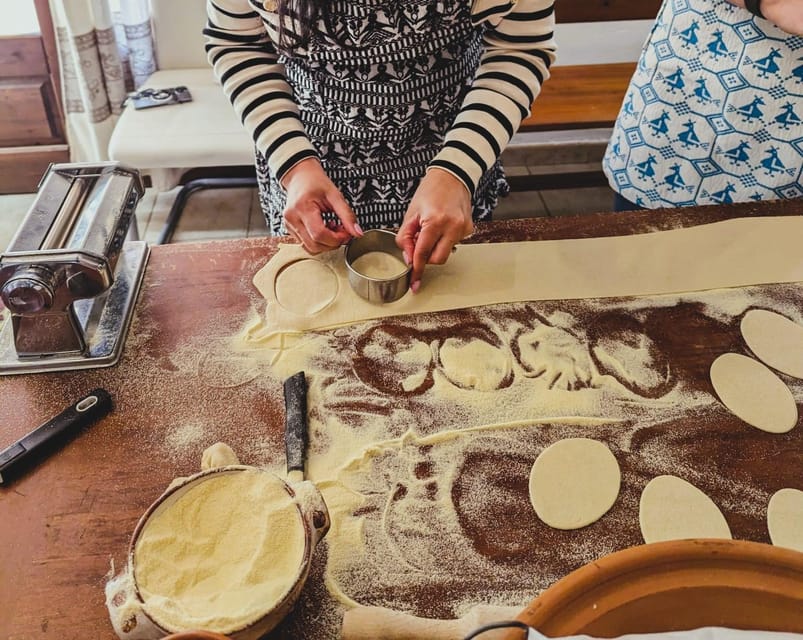
That seal is the part that makes this class more than a basic pasta workshop. Rolling dough is fairly familiar to many home cooks. Pinching a neat, even wheat-ear edge takes patience and a bit of finger control. You’ll be guided through it step by step, so you can focus on learning the pattern rather than worrying about getting every piece perfect.
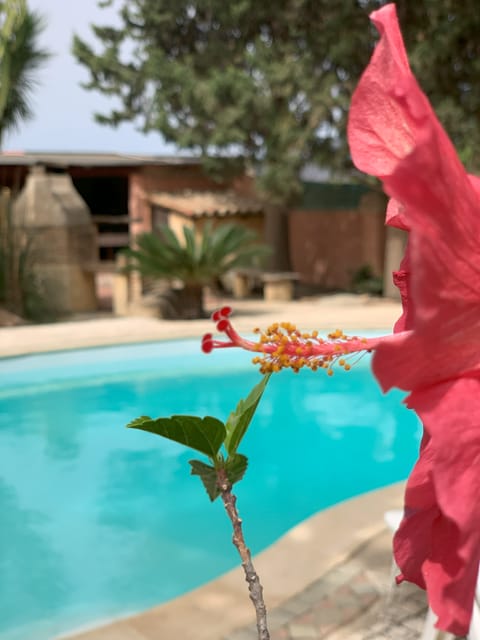
The setting adds a useful layer of context. You’ll work in the internal courtyard of a traditional Sardinian home, where the surroundings feel tied to everyday local life. This is a more personal setting than a cooking school with rows of workstations, and it gives the class a clear sense of place without needing a long cultural lecture.
Carlotta and Matteo lead the activity in Italian and English. That makes the lesson accessible to English-speaking visitors, while the food itself does much of the explaining. You can see the ingredients, follow the hand movements, and repeat the technique as you go.
A few more classes around Italy worth a look
- Florence: Pasta Cooking Class with Unlimited Wine
★ 4.9 · 10,285 reviews - 3 in 1 Cooking Class near Navona: Fettuccine, Ravioli & Tiramisu
★ 5.0 · 7,376 reviews - Florence Pizza or Pasta Class with Gelato Making at a Tuscan Farm
★ 5.0 · 6,801 reviews
From filling to dough, the class is hands-on
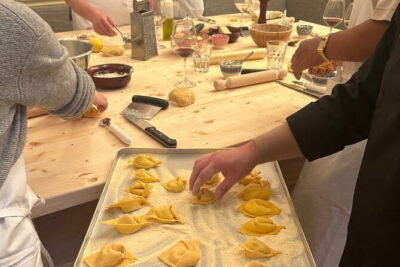
The preparation covers both the filling and the fresh pasta dough. You’ll learn how the elements come together before working on the final shape. The order matters, since the dough needs to be handled carefully enough to hold the filling and still close cleanly.
The class is practical rather than purely demonstrational. You are not simply watching a cook prepare a plate and then receiving lunch. You make your own typical Sardinian creations, with all materials provided. That makes the experience useful after your holiday, too. Once you know the basic method, you can try making a version of the pasta at home.
Expect the closure to take the most attention. The a sa spighitta finish is a craft in itself, and the result may vary from piece to piece. That is part of the fun, though it also means this is not the best pick if you want a quick, effortless meal with no hands-on work.
The small group helps here. With a maximum of eight participants, the instructors can show the technique at close range and give you room to practice. A larger class could make a fine pasta shape hard to see, especially for a method based on small finger movements. The limited size should make this feel more like a shared cooking session than a crowded demonstration.
The Sardinian foods waiting after the lesson
Once the pasta work is finished, the experience turns into a tasting of local specialties. Culurgiones are central, but they are only one part of the meal. You can expect a spread that may include local cheeses, meats, traditional breads, and other Sardinian dishes.
The listed specialties include panadas and pratzidas, savory baked preparations associated with Sardinian cooking, as well as Coccoi Prena. Homemade bread adds a simple but important part of the table. Sardinian meals often make good use of straightforward ingredients, and a tasting like this lets you compare textures and fillings rather than treating pasta as the whole story.
The food also includes local wine and water. Wine makes the meal feel more like a proper Sardinian table experience, though you should keep in mind that the activity is also suitable for those who prefer not to drink, since water is included as well.
One detail I find appealing is the timing of the meal. The hosts prepare the culurgiones while the group sits down to enjoy the other foods, then you get to taste the pasta connected to the work you just completed. That creates a satisfying link between lesson and meal. You are not just sampling an unfamiliar dish. You have seen its components and practiced part of the process.
The tasting may also include sweets and other regional foods. Specific dishes mentioned include perdulas and seadas with cheese. Since the exact selection can vary, think of the meal as a broad sampling of Sardinian flavors rather than a fixed restaurant menu.
Why the home setting matters
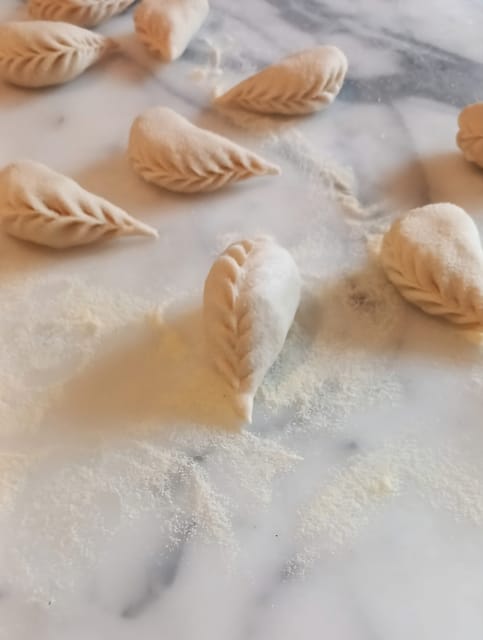
A traditional home courtyard changes the mood of the experience. You get a look at a lived-in Sardinian space, not just a venue arranged for visitors. The courtyard is part of what you are paying for: it gives the meal and cooking lesson a local frame.
That does not mean the activity is a full tour of Sardinian culture. You will not be visiting several food producers or touring a market based on the details available. The focus stays on cooking, eating, and spending time with the hosts. If you want a broad sightseeing program, this will feel narrow. If you want a close look at one food tradition, the focus is a strength.
The home environment also suits people who enjoy conversation and shared meals. Carlotta and Matteo are described as warm hosts who explain the food and traditions behind it. Their role is not limited to handing out ingredients. They help connect the dishes to Sardinian customs and show you how the pasta fits into local cooking.
For some people, this personal setting will be the best reason to book. For others, a professional kitchen with formal workstations might feel more efficient. This experience chooses warmth and local character over a slick, restaurant-style format.
Same kitchen, a different thing to make:
- Florence: Pasta & Tiramisu Cooking Class with Unlimited Wine
★ 4.9 · 6,708 reviews - Florence: Pasta Cooking Class with Unlimited Wine
★ 5.0 · 6,413 reviews - Naples: Pizza-Making Workshop with Drink and Appetizer
★ 4.9 · 5,411 reviews - Rome: Pasta & Tiramisu Class with Fine Wine by the Vatican
★ 4.9 · 4,852 reviews
Is the $101.96 price good value?
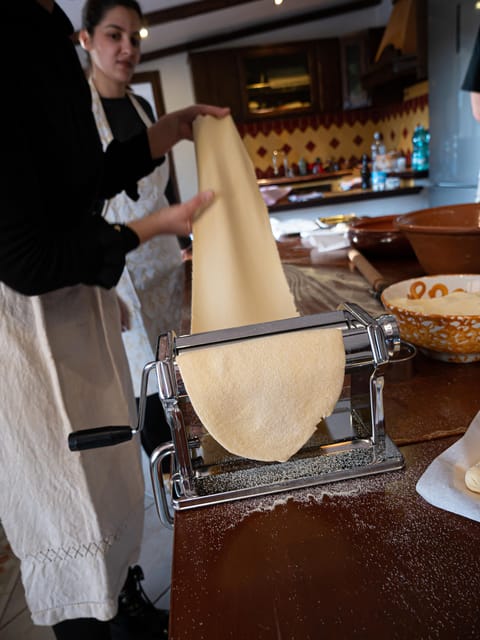
At $101.96 per person, this is not a low-cost lunch. You are paying for three hours of instruction, the ingredients and equipment, the hands-on pasta preparation, the tasting, and the small group format. Food and drink are included, so you do not need to treat the class fee as separate from a meal afterward.
The value is strongest if you care about learning a skill. You are not simply paying for a plate of culurgiones. You are learning how the dough and filling are made, practicing the distinctive closure, eating several local specialties, and taking your own creations away.
The value is also better for people who appreciate access to a private home setting. A meal at a restaurant might cost less, but it would not give you the same direct time with Carlotta and Matteo or the chance to make the pasta yourself.
On the other hand, this may feel expensive if you mainly want to eat Sardinian food. You could prefer a regular restaurant meal, especially if you have little interest in cooking or hands-on activities. The price makes the most sense when you treat it as a cooking class, a cultural meeting, and a meal in one.
Who will enjoy this pasta class most?
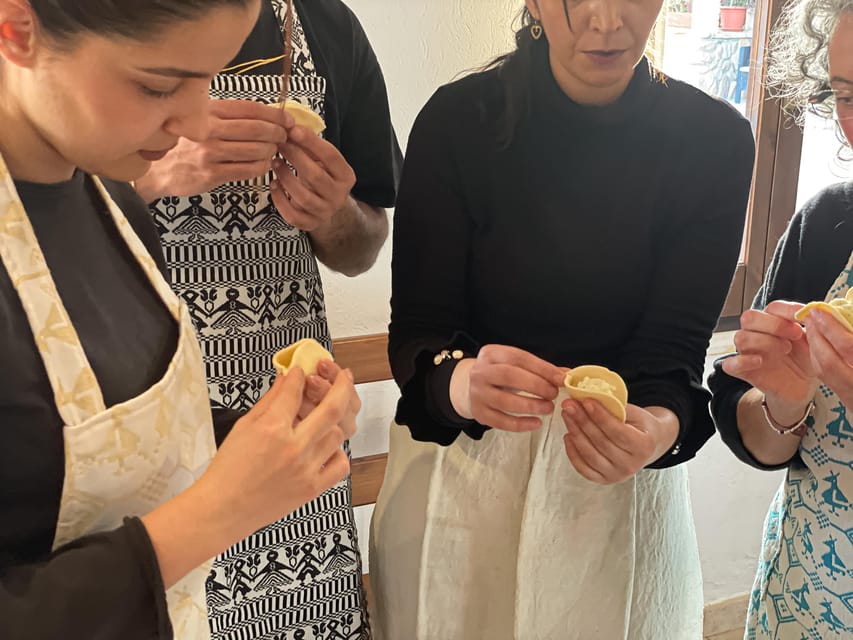
This experience suits you if you like food with a strong regional identity and want to do more than take pictures of it. It works especially well for couples, families with older children, and small groups of friends who enjoy learning together.
You should also be comfortable with a three-hour commitment. The pace includes preparation, practice, and a substantial tasting, so it is not a quick stop between sightseeing visits. Check the available starting time before booking and allow enough room around the class for the meal.
The class is a good fit for cooks at different levels because the technique is taught from the beginning. You do not need to arrive as a pasta expert. At the same time, experienced cooks may enjoy the challenge of the wheat-ear closure, which is less familiar than basic filled pasta.
It is less suitable for anyone with gluten intolerance or lactose intolerance. The supplied information specifically lists both conditions as exclusions. If you follow another diet, the available details do not confirm substitutions, so you should not assume the menu can be changed.
What you can take home
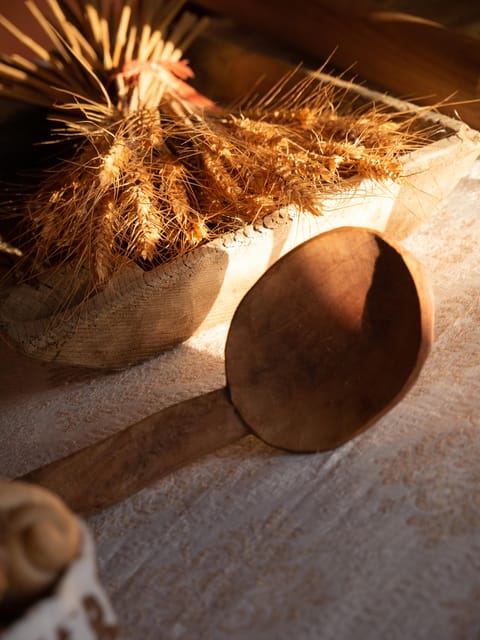
Each participant can take away their own typical Sardinian creations. That is a useful touch, since it gives the class a result beyond the meal itself. Your pasta may not look as uniform as the instructor’s, but it will carry the mark of what you learned.
The takeaway also makes the workshop easier to remember later. Once you return home, the shape can remind you how the dough felt and how the a sa spighitta seam was formed. You may even want to try the technique again while the lesson is still fresh.
All materials are provided, so you do not need to bring cooking equipment. The activity is designed as a complete experience, from preparation through tasting and takeaway.
Language, group size, and booking details
The class is offered in Italian and English. That is important for a technique-based activity, since you need to understand instructions about dough, filling, and the pasta seal. The bilingual format also lets the hosts share food traditions without making the session feel like a silent demonstration.
The maximum group size is eight participants. This is small enough for a more personal exchange and should give you a better view of the preparation than a large food tour. It also means availability may be limited, so check the starting times that suit your schedule.
The activity lasts three hours. You can reserve now and pay later, which helps if your Sardinia plans are still taking shape. Cancellation is free up to 24 hours before the experience for a full refund. Those details are useful, but the bigger planning point is to protect the full three-hour window. A cooking class followed by a relaxed tasting should not be squeezed between tight appointments.
A warm introduction to Sardinian food
What makes this experience appealing is its balance. You get instruction, but you also get a meal. You get traditional food, but you are not asked to sit back and watch the entire time. You enter a local home setting, yet the format remains clear and easy to follow.
The most praised parts are the warmth of Carlotta and Matteo, the sense of Italian hospitality, and the chance to see how local people live. Those details matter because a pasta class can otherwise become a simple recipe lesson. Here, the hosts and the home setting give the food a stronger connection to Sardinia.
The culurgiones lesson is the central reason to choose it. The potato, cheese, and mint filling offers a clear taste of the dish, while the wheat-ear closure gives you a specific skill to practice. The later tasting broadens the experience with cheeses, meats, breads, panadas, pratzidas, Coccoi Prena, wine, and other regional treats.
Should you book this Sardinian cooking experience?
Book it if you want a small, personal food experience and like the idea of learning a pasta shape you may not find in an ordinary cooking class. It is particularly worthwhile if meeting local hosts and eating in a traditional home matters as much to you as the recipe itself.
Skip it if you have gluten or lactose intolerance, or if you want a fast meal with no cooking involved. At $101.96, the price is justified by the three-hour format, included food and drink, small group, instruction, and takeaway pasta. For a visitor who wants to understand Sardinia through its food, this is a well-focused choice.
FAQ
How long does the Sardinian pasta workshop last?
The workshop lasts three hours. Starting times vary, so check availability when choosing your date.
What pasta will I learn to make?
You will learn to prepare culurgiones, including the filling, fresh pasta dough, and the traditional a sa spighitta closure, shaped like a wheat ear.
Where does the cooking class take place?
The class takes place in the internal courtyard of a traditional Sardinian house.
Are food and drinks included?
Yes. Food and drink are included, with a tasting that can feature culurgiones, local cheeses, breads, panadas, pratzidas, Coccoi Prena, and local wine.
Is the activity suitable for people with dietary intolerances?
No. The activity is not suitable for people with gluten intolerance or lactose intolerance.
How many people can join the class?
This is a small-group activity limited to eight participants. It is conducted in Italian and English.
Just added around Italy
- Volterra: Fresh Pasta Cooking Class at a Tuscan Farmhouse★ 5.0 · 33 reviews
- Vicenza: Pasta & Tiramisu Cooking Class at a Local’s Home★ 5.0 · 5 reviews
- Verona: Tortellini Cooking Class and Lunch with Mamma Ivana★ 5.0 · 20 reviews
- Verona: My Granny’s secrets making gnocchi★ 5.0 · 7 reviews
- Verona: Prosecco and Pasta Making Class at a Local’s Home★ 5.0 · 10 reviews
- Verona: Pasta Cooking Class with Wine Tasting★ 5.0 · 4 reviews
- Verona: Pasta & Tiramisu Cooking Class at a Local’s Home★ 5.0 · 16 reviews
- Valnerina/Pasta cooking class in a 12th century location★ 4.8 · 9 reviews
Italy Pasta Classes, compared.
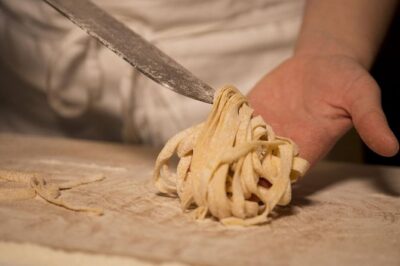
3 in 1 Cooking Class near Navona: Fettuccine, Ravioli & Tiramisu
Read our review →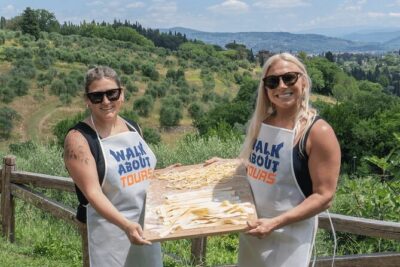
Florence Pizza or Pasta Class with Gelato Making at a Tuscan Farm
Read our review →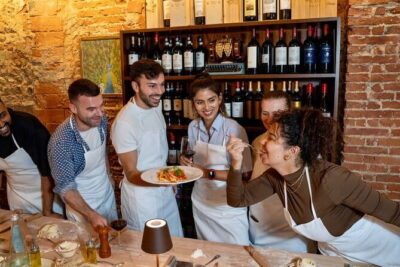
Pasta & Tiramisu Cooking Class with Unlimited Wine
Read our review →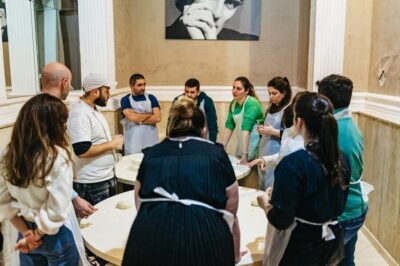
Pizza-Making Workshop with Drink and Appetizer
Read our review →
Pasta & Tiramisu Class with Fine Wine by the Vatican
Read our review →