
REVIEW · BARI
Bari Pasta Experience by Rickshaw
Bari’s best food lesson happens in a local home, where you learn to shape orecchiette by hand after riding through the old town by rickshaw. I like the mix of city sights and hands-on cooking, and the private format keeps the outing personal. The main drawback is the tight schedule: two hours leaves little time at each stop.
I also like that the guides, including Anna, Federico, Emanuele, Aldo, Cera, and Hannah, bring different personalities to the route. You get a practical introduction to Bari, a pasta meal, and often gelato for $61.62 per person. Be careful with the meeting point: it starts in the city at Strada Vallisa 81, not at the cruise port.
Key points at a glance
- Orecchiette in a local home: Learn Bari’s famous ear-shaped pasta from a local nonna, including Carmela in some departures.
- Rickshaw sightseeing: Cover Bari’s narrow old-town streets without making the full route on foot.
- A private small-group outing: Each rickshaw takes up to three adults, or two adults and one child aged 10 or younger.
- A short but varied two-hour plan: You see churches, piazzas, the castle area, and the pasta-making portion in one outing.
- Food beyond the pasta: The meal includes pasta, and several departures also include gelato.
- Important port warning: The listed meeting point is at Strada Vallisa 81 in central Bari, and the activity returns there.
Why the pasta lesson is the heart of the outing
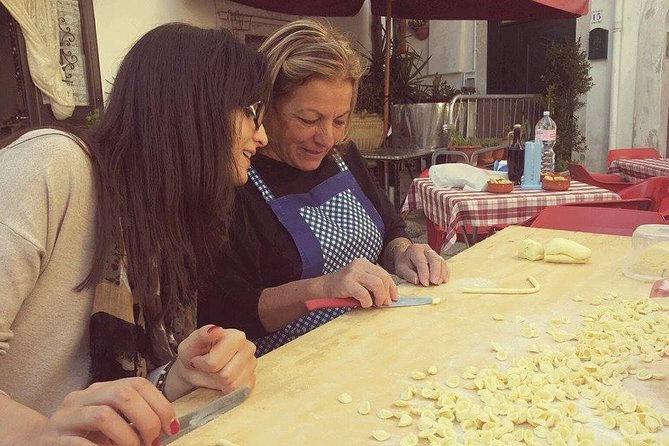
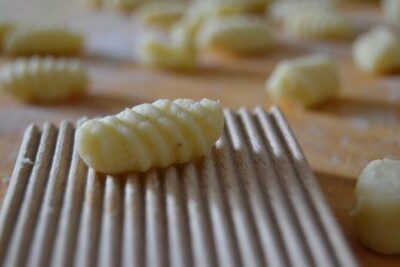
Bari is closely tied to orecchiette, the small ear-shaped pasta made by pressing and dragging dough with a knife or fingertip. Watching a local woman make it in her own home gives you something a restaurant meal cannot: a look at an everyday skill passed through families and neighborhoods.
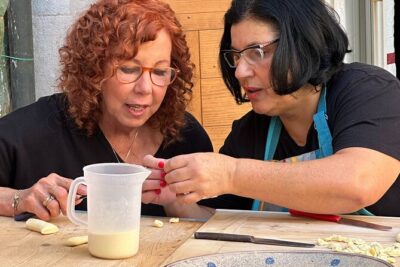
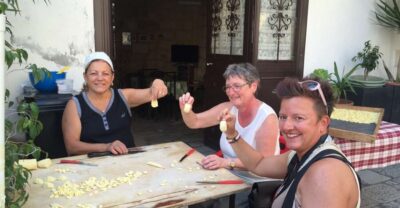
The class is not presented as a formal cooking school. That is part of its appeal. You sit with a local, work with the dough, and see how the pasta is made in a home setting. Carmela is named as one of the women who hosts this portion, and the personal contact is one of the strongest parts of the day.
You should expect the pasta-making segment to be fairly brief. One family with children wished for more than five minutes on the pasta street, and the same time pressure can apply to the cooking portion when the schedule is full. If you want a long, technical lesson with several recipes, this is not that kind of class.
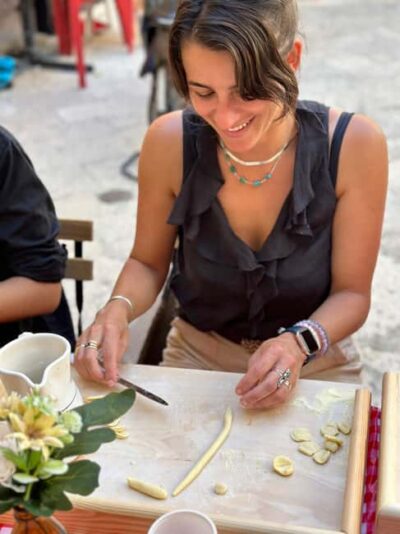
If you want to make orecchiette, eat it, and get a friendly introduction to local customs without giving up half a day, the format works well. Teenagers and young adults have especially enjoyed the hands-on part, but the activity also suits older visitors who prefer a seated food stop after seeing the city.
A few more classes around Bari worth a look
- Bari: Pasta Experience Walking Tour
★ 4.7 · 660 reviews - Bari: Pasta and Tiramisu Cooking Class with Wine
★ 5.0 · 273 reviews - Bari Walking Tour with Pasta Experience
★ 4.5 · 270 reviews
Starting at Strada Vallisa 81
The meeting point is Velo Service, at Strada Vallisa 81, 70122 Bari. You meet the local driver-guide there before setting off. The tour ends back at the same point, which makes it easier to plan your next stop in central Bari.
The port detail deserves attention. The meeting point is not described as a pickup beside the cruise ships. One customer with limited walking ability missed the activity after finding that the supposed port meeting point meant traveling into the city. If you arrive by cruise ship, check the route from the port to Strada Vallisa 81 before booking, and allow enough time for the transfer.
The activity is offered in English and uses a mobile ticket. Confirmation arrives when you book. Multiple departure times give you some choice, though the exact times are not provided here. Since the tour is often booked about 33 days ahead, reserve early if your schedule is fixed.
Seeing Bari from a rickshaw
The rickshaw is a useful choice for Bari’s old town. Narrow lanes and small openings can make a walking route feel crowded or confusing, especially when you have limited time. From the rickshaw, you can cover more ground before getting out for the main sights.
The ride also helps if you prefer not to walk continuously. The activity is private, and each rickshaw holds either three adults or two adults plus one child aged 10 or younger. That limit keeps the group compact, but it also means a larger family or party will need more than one vehicle or a different arrangement.
The rickshaw is not a substitute for a full walking tour. You still stop for short visits and explanations, and some streets are best understood on foot. Its real value is practical: you get an overview of Bari, then spend your limited time on the most local part of the day, the food lesson.
One useful bonus is weather protection. A family enjoyed the tour even in the rain because the rickshaw kept the sightseeing manageable. That does not mean the ride guarantees perfect shelter in every weather condition, but it can make a damp day less troublesome than a fully outdoor walking tour.
Basilica San Nicola and the story of Saint Nicholas
The first major stop is Basilica San Nicola, dedicated to Saint Nicholas. The saint’s story later helped shape the modern figure of Father Christmas, but the church is much more than a Santa connection.
You can hear why Saint Nicholas matters in Bari and visit the crypt where his holy relics remain. The stop is scheduled for about 15 minutes, so expect a focused introduction rather than a long examination of every chapel and detail.
That short timing can work well if this is your first look at Bari. You receive the central story, see the important crypt, and keep moving. If you want extended time inside the basilica, plan a separate visit after the tour.
The church also gives the food portion more meaning. You are not simply being driven from one snack to another. The route links Bari’s religious past, old-town streets, public squares, and home cooking in a compact way.
Same kitchen, a different thing to make:
- Apulian Cooking Class with Aperitif and Wine in Polignano a Mare
★ 5.0 · 89 reviews - Bari Bike Tour with Pasta Experience
★ 5.0 · 87 reviews - Apulian cooking class fresh pasta and focaccia
★ 5.0 · 68 reviews - Cesarine: Small group Pasta and Tiramisu class in Bari
★ 5.0 · 56 reviews
Castle walls and the Norman-Swabian setting
The route continues through the narrow streets toward Castello Normanno Svevo, also known as the Norman-Swabian Castle. The castle hosts plaster casts and temporary art exhibitions, so its role is not only defensive or historic.
The scheduled stop lasts about 15 minutes. Admission is not included, so check the cost before deciding if you want to enter. The supplied details do not promise a full castle admission, which means you should treat this as a castle-area stop unless your guide confirms that entry is part of your departure.
The castle section is useful for seeing how Bari’s old town changes as you move from tight residential lanes toward a larger fortified complex. Your guide can also explain the city’s past and local culture along the way. Emanuele, for example, was praised for giving just enough information without overloading the group. That is a good fit for this quick route.
Cathedral of San Sabino and the underground Succorpo
At Cattedrale di San Sabino, you visit a church dedicated to Saint Sabinus, a bishop of Canosa whose relics were brought to Bari in the ninth century. The cathedral remains the seat of the Archbishop of Bari-Bitonto.
The detail that makes this stop especially interesting is the Succorpo, the underground area with Roman walls. It gives you a look beneath the present-day cathedral and shows how older layers of the city remain under later buildings.
Again, the planned visit is about 15 minutes, and admission is not included. That is enough for an introduction, but not enough for a leisurely look at every feature. If underground archaeology is a priority, confirm what you will see during your departure and consider returning independently.
For most people, the cathedral is best treated as one piece of a larger picture. You see a major religious building, hear about Saint Sabinus, and glimpse the older Roman level before moving on to the public squares.
Piazza del Ferrarese and the old Roman road
Piazza del Ferrarese marks one of the main entrances to Bari’s old town. From here, the narrow lanes and alleys lead toward Piazza Mercantile and the castle.
A short section of the ancient Via Appia-Traiana came to light during restoration work around the square. The road was built by the Romans in the early second century AD. You have about 10 minutes here, so your guide will likely point out the key feature rather than give a long archaeological talk.
This is a good place to understand Bari’s layout. The square is not an isolated monument. It connects the newer waterfront-facing parts of the city with the older quarter, making it easier to see how the tour’s churches, lanes, and public spaces fit together.
Piazza Mercantile and the social center of Bari
Piazza Mercantile has long been tied to commerce and civic life. The old market is no longer held here, but the square still serves as an important meeting place for people in Bari.
The historic Palazzo Sedile is another useful landmark. It was linked to city administration and remains part of the square’s civic identity. The stop lasts about 10 minutes, enough to hear the basic story and take in the atmosphere before the food portion.
I like this pause because it shifts the route from monuments to daily city life. Basilica San Nicola and the cathedral explain Bari’s religious importance. Piazza Mercantile shows how people use the city in ordinary life.
Pasta, lunch, and gelato
The meal is the reward for the sightseeing, but it is also the main cultural lesson. You do not just receive a plate of pasta. You learn how the local shape is made, then eat what you have helped prepare.
Several departures also include gelato. One route began with gelato, while others finished with it, so the precise order may vary by guide or time. The important point is that the food element is more generous than a simple tasting.
The menu details are not specified beyond homemade pasta, pasta tasting or lunch, and gelato in some experiences. Do not book this expecting a full restaurant menu or a broad cooking curriculum. Book it because you want one local dish, a personal food connection, and enough to make the activity feel like lunch.
Cera was singled out for making one group’s favorite tour, with cooking, music, and gelato all part of the appeal. Federico also combined sightseeing with an orecchiette lesson led by Carmela. The guides clearly shape the tone, so your experience may feel more chatty, more historical, or more family-focused depending on who leads it.
Guide style and group atmosphere
The guides named in the feedback include Aldo, Anna, Federico, Emanuele, Cera, and Hannah. Emanuele was praised for humor, pacing, and clear explanations. Anna was described as both informative and fun, particularly with teenagers. Aldo led a route that combined the city tour and pasta-making in a relaxed way.
Those details matter because a two-hour tour can become tiring if the guide talks nonstop. The best version of this activity uses short explanations while moving, then gives you a personal food encounter as the main event.
The activity is private, so only your group participates. That makes it a better choice than a large group tour if you want to ask questions, move at your own pace, or have children take part in shaping pasta.
At the same time, private does not mean leisurely. The route has several stops packed into two hours. You may spend only 10 or 15 minutes at a sight before moving on. If your priority is a slow architectural study, choose a longer walking tour instead.
Is $61.62 a fair price?
At $61.62 per person, the price covers more than transportation. You receive a local guide, a private rickshaw route, historical orientation, a pasta-making activity, and lunch or pasta tasting. Gelato may also be included depending on the departure.
That is fair value if you would otherwise pay separately for a city tour and a cooking class. The private format adds value for couples, small families, and friends who want their own guide rather than joining a large group.
The value is weaker if you mainly want admission to the castle or cathedral. Those ticket costs are not included, and the short stops may leave you wanting more time inside. You are paying for the combination of places, transport, food, and local contact, not for long museum visits.
The strongest reason to book is the mix. You can spend a morning or afternoon learning enough about Bari to find your bearings, then sit down with a local and make the city’s signature pasta.
Who should book this Bari outing?
I would choose this for a first visit to Bari, especially if you have only a few hours in the city. It is also a smart pick for families, teenagers, and small groups who want an activity with food rather than a lecture-heavy sightseeing route.
It suits cruise passengers only if you carefully arrange transport from the ship to Strada Vallisa 81 and leave enough time to return. The listed start and end point are in the city, not directly at the port.
You should think twice if you need a fully accessible route or cannot manage the transfer into central Bari. The rickshaw reduces walking during the tour, but the supplied information does not promise full accessibility. A cane user previously missed the activity because of the meeting-point problem.
Should you book the Bari Pasta Experience by Rickshaw?
Book it if you want a compact introduction to Bari with a real food connection. The orecchiette lesson in a local home is the part that gives the tour its character, while the rickshaw makes a busy old-town route easier to cover.
Skip it if you want long visits inside the basilica, castle, or cathedral, or if you expect a detailed multi-course cooking class. For everyone else, especially small groups and families, this is a well-balanced way to combine Bari’s churches, lanes, piazzas, pasta, and gelato in about two hours.
FAQ
How long does the Bari Pasta Experience by Rickshaw last?
The activity lasts approximately two hours.
Where does the tour begin?
It begins at Velo Service, Strada Vallisa 81, 70122 Bari BA, Italy.
Where does the activity end?
The tour ends back at the meeting point on Strada Vallisa.
Is the tour offered in English?
Yes. The experience is offered in English.
How many people can ride in one rickshaw?
Each rickshaw can hold a maximum of three adults, or two adults and one child aged 10 or younger.
Is this a private activity?
Yes. Only your group participates in the activity.
Are admission tickets to the castle and cathedral included?
No. Admission is listed as not included for Castello Normanno Svevo and Cattedrale di San Sabino.
Can I cancel for a full refund?
Yes, if you cancel at least 24 hours before the experience start time. Cancellations or changes made less than 24 hours before the start are not refunded or accepted.
Just added around Bari
- Cesarine: Private Pasta Class & Meal at Local’s Home in Bari★ 5.0 · 4 reviews
- Cesarine: Small group Pasta and Tiramisu class in Bari★ 5.0 · 56 reviews
- People of Bari unusual guided tour with pasta making at Grandma house★ 5.0 · 54 reviews
- Cesarine: Pasta & Tiramisu Class at Local’s Home in Bari★ 5.0 · 2 reviews
- Premium Cooking Class in Bari: Pasta & Tiramisu, free wine bottle★ 5.0 · 2 reviews
- Fresh pasta and dinner in my biogarden★ 5.0 · 8 reviews
- Artisanal ice cream pasta course in Castellana caves★ 5.0 · 6 reviews
- Cooking class of Tagliatelle and Tiramisu in Altamura★ 5.0 · 7 reviews
Bari Pasta Classes, compared.
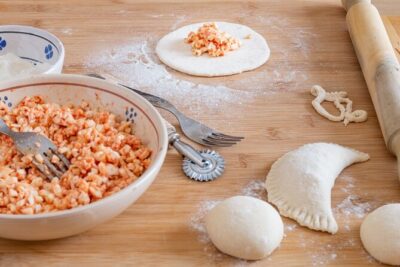
Apulian Cooking Class with Aperitif and Wine in Polignano a Mare
Read our review →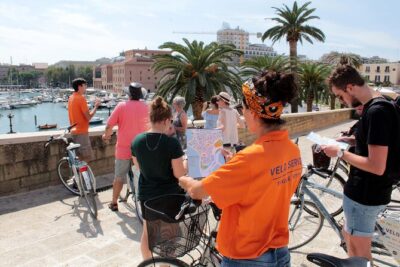
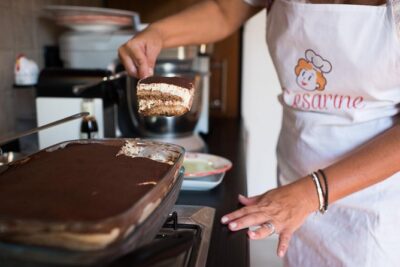
Cesarine: Small group Pasta and Tiramisu class in Bari
Read our review →Browse the lists this tour appears in