
REVIEW · PIZZA MAKING CLASSES
New York City: Hands-On Pizza Workshop
The best part of this four-hour class is that you do not just watch someone spin dough. You make the dough, sauce, crust, and pizzas yourself, then eat what comes out of the oven. It is a practical New York food experience with a useful payoff: you leave with skills you can use at home.
I like the access to fresh mozzarella from DiPalo’s, the famous Italian food shop on Grand Street, and the chance to test several topping combinations. I also like the take-home setup. You can make up to four pizzas, get boxes for leftovers, and take extra dough home.
The main drawback is the price, $225 per person, and the non-refundable booking policy. This is not a quick slice stop. It is a long, hands-on class, so you should book it because you want to cook, not simply because you want to eat pizza.
Key points to know before you book
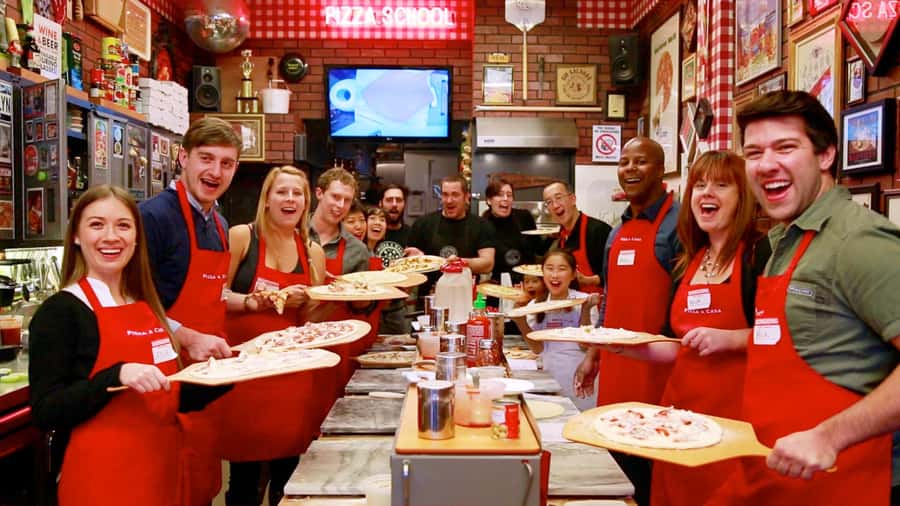
- You make up to four pizzas: The class gives you repeated practice with stretching, topping, and baking.
- The class covers home cooking: You learn dough, sauce, ingredient balance, and ways to get more from a home oven.
- Fresh DiPalo’s mozzarella is included: The cheese comes from a long-running Lower East Side Italian food shop.
- Instructor Shah brings humor and experience: His teaching style has been praised for making the class clear and fun.
- Leftovers are part of the plan: Pizza boxes and containers for extra dough are provided.
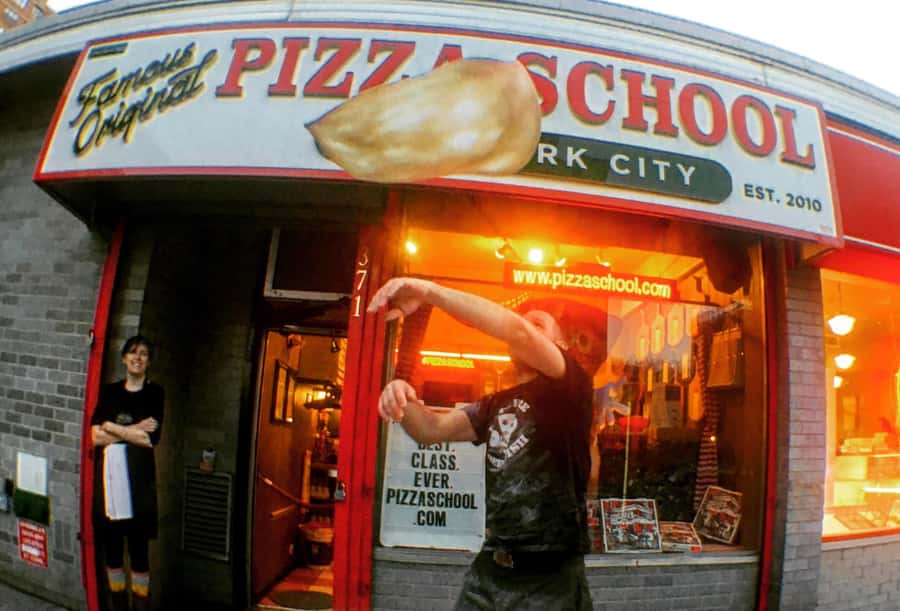
- The Lower East Side location is easy to spot: Find the Pizza School awning on Grand Street between Essex and Norfolk, behind the bus stop.
What the four-hour pizza class is really about
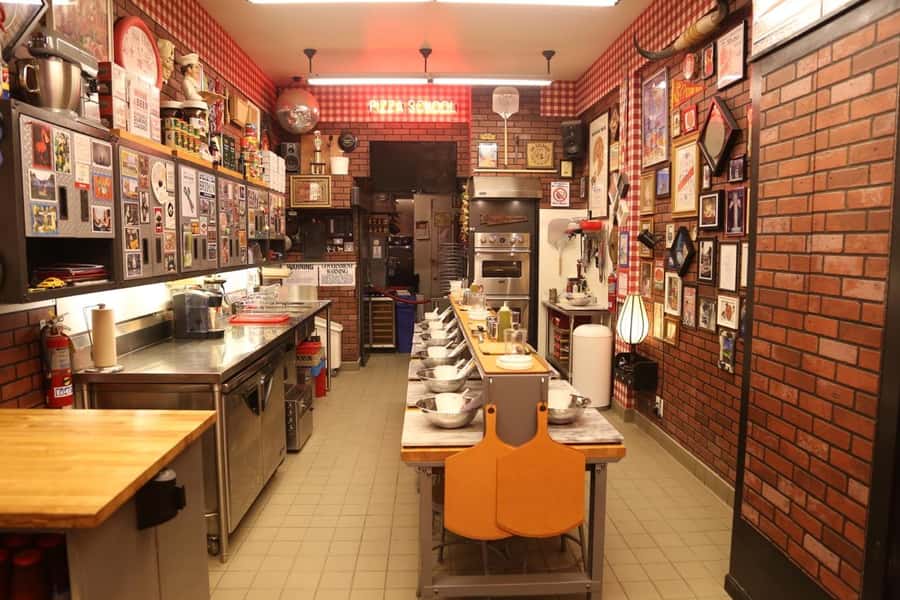
Pizza School NYC treats pizza as a craft, not a mystery. You work through the process from the first mixing of dough to the final bake, with instructors explaining why each step matters.
That makes the class useful for two kinds of people. If you are new to homemade pizza, you get a clear starting point. If you already bake at home, you can compare your habits with professional methods and pick up better ways to handle dough, sauce, toppings, and heat.
The four-hour length matters. You have enough time to make several pizzas rather than rushing through one demonstration. Repetition helps. Your first attempt may feel awkward, but by the third or fourth pizza, you have had more chances to stretch dough evenly, apply toppings in the right order, and judge how much is too much.
You also get to eat during the class. That turns the lesson into a meal, though you should not expect a formal restaurant service. The focus is on making and tasting pizza while learning how the parts work together.
More Pizza Making Classes in the USA:
- Little Italy Food and Drink Walking Tour: Pizza, Pasta & Piazzas
★ 5.0 · 37 reviews - San Diego Pizza & Gelato Walking Tour in Little Italy Small Group
★ 5.0 · 22 reviews - Private Chicago-style deep dish pizza or pasta making class
★ 5.0 · 4 reviews
Finding the school on Grand Street
The class is in Manhattan’s historic Lower East Side, on Grand Street between Essex and Norfolk. Look behind the bus stop for the Pizza School awning, then come inside.
This is a useful meeting point because the directions are specific and simple. Still, give yourself enough time to find the awning, especially if you are unfamiliar with the Lower East Side or are arriving close to the start time. The class lasts four hours, so arriving late could mean missing an important early step with the dough.
The neighborhood also gives the experience a proper New York setting. You are not taking a generic cooking lesson in a hotel conference room. You are learning pizza in Manhattan, close to old-school food shops and the city’s long Italian-American food tradition.
Starting with dough made from scratch
The dough is the foundation of the class. You make it yourself rather than starting with a prepared ball, so you can see how the process begins and learn what good dough should feel like.
The instructors explain the best dough methods and give you techniques you can repeat at home. That is more useful than simply handing you a finished recipe. Pizza dough is sensitive to handling, and working with it directly teaches you things a written recipe cannot fully show.
You will likely spend time learning how to handle the dough without working it too aggressively. The class also provides extra dough containers, so the lesson does not end when your last pizza comes out of the oven. You can take extra dough with you and continue practicing later.
This is one reason the price can make sense for serious home cooks. You are not paying only for four hours of food. You are paying for guided practice, ingredients, instruction, and a method you can repeat. If you rarely cook, though, the value is less clear.
Making sauce and learning ingredient balance
The sauce lesson focuses on making something better and less expensive than many store-bought options. You learn how to prepare sauce and how much to apply, rather than simply spreading on a thick layer.
Ingredient balance is a major part of the class. The instructors cover where to find good ingredients and explain order, proportions, and balance when adding toppings. These details affect the final pizza more than many beginners expect.
Too much sauce can make a crust wet. Too much cheese can overpower the dough. A heavy pile of toppings can stop the pizza from baking properly. The class is designed to help you understand those choices through actual pizzas, not just talk.
You can choose from an array of ingredients for meat-lovers and vegetarians. That gives you room to compare classic combinations with less expected pairings. The exact selection may vary, but the point is to see how different flavors work with the same basic crust.
More Fresh Pasta Workshops in the USA:
- Handmade Fresh Pasta from Scratch in NYC
★ 5.0 · 13 reviews - Seafood & Handmade Pasta Class in Central Philadelphia (4-Course)
★ 5.0 · 3 reviews - Italian Pasta Making in San Francisco (Includes 4-Course Meal)
★ 5.0 · 2 reviews - Rome: Pasta Making Class with Wine, Limoncello, and Dessert
★ 4.9 · 3,177 reviews
Stretching dough and forming the crust
After the dough is ready, you learn how to stretch it into a pizza. This is where the class becomes especially hands-on.
The instructors show you how to form a crust and how to throw dough like a pro. You do not need to arrive with circus skills. The useful lesson is learning how to shape the dough without crushing the edge or making the center too thick.
The crust is more than a border. It affects how the pizza holds sauce and toppings, how it cooks, and how it feels when you eat it. Practicing several times lets you see the difference between a balanced crust and one that is uneven.
This portion may be the most entertaining part for a group. It is also where the class can be messy and physical. If you prefer a polished food tasting with little participation, this experience may feel like work. If you enjoy learning by doing, it is the heart of the class.
Baking advice for your home oven
The instructors also cover oven etiquette, including how to get more from a home oven. You learn home-oven tips along with advice drawn from pizzeria and wood-fired oven cooking.
That comparison is valuable because most people will not have a professional pizza oven at home. A good class should help you adjust the method to the equipment you actually use. The focus here is on making better choices with a home setup, while also explaining how pizzeria and wood-fired ovens differ.
The class does not promise that your home oven will produce exactly the same result as a commercial oven. That is a good thing. Instead, you gain a clearer idea of how heat, timing, dough, and toppings affect the bake.
If you already make pizza at home, pay close attention during this part. Small changes in how you prepare and bake the pie can matter more than buying a long list of expensive tools.
Tasting New York ingredients and instructor-made pizzas
You do not make every pizza in isolation. The instructors prepare sample pizzas, giving you a chance to taste combinations created by people who work with the process every day.
The ingredient selection includes classic toppings and more unusual matches. This helps you think beyond the standard cheese and pepperoni formula without losing sight of the basics.
Fresh mozzarella from DiPalo’s is one of the class’s special touches. DiPalo’s has been family-owned and operated since 1925, and its connection to the lesson gives the food a strong Lower East Side link. The cheese is not just another generic ingredient placed on a prep table.
You also taste classic New York City pizza made by the instructors. That comparison is useful. You can see how a trained pizza maker handles the dough, toppings, and bake, then apply those observations to your own pizzas.
Making four pizzas and taking some home
The class allows you to make up to four pizzas. That does not mean you must produce four identical pies. It gives you room to practice and try different combinations.
Repeated attempts are a real benefit. One pizza teaches you the basic sequence. A second lets you correct a problem. By the third or fourth, you can make more deliberate choices about crust shape, sauce, cheese, and toppings.
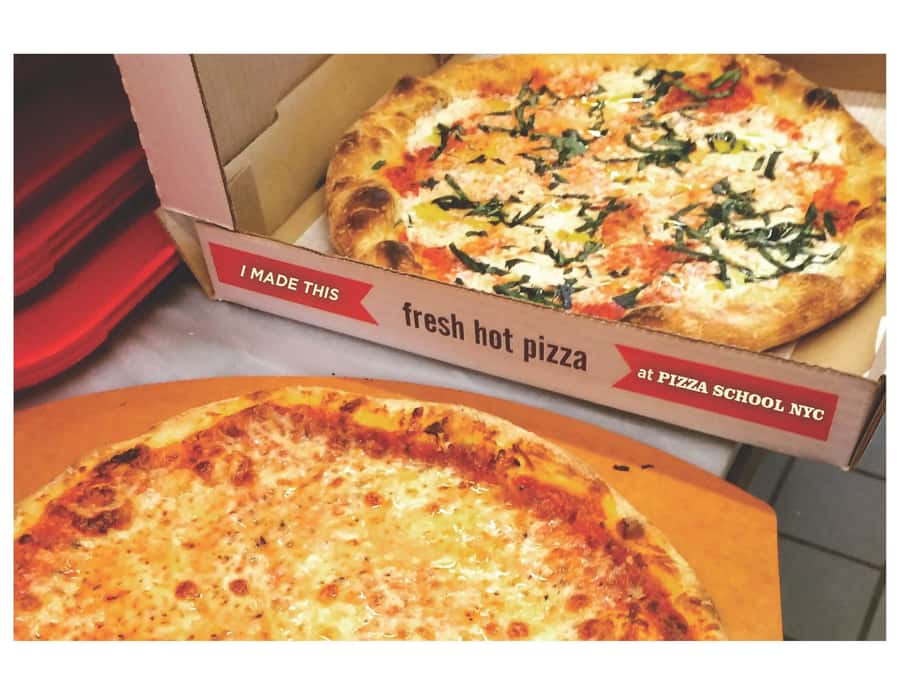
Pizza boxes are provided for leftovers, and containers are available for extra dough. This is especially helpful if you are visiting New York and cannot eat four pizzas in one sitting. You can take food back with you instead of feeling pressured to finish everything in class.
The class is still a substantial meal, so plan accordingly. You may want to keep your schedule light afterward, especially if you are making several pizzas and sampling the instructors’ work as well.
What the $225 price includes
The cost is $225 per person. Ingredients and instructors are included, while beer, wine, and specialty soda are available for purchase separately.
That price is high compared with simply eating New York pizza. The value depends on what you want from the afternoon. For a visitor who wants a one-time meal, it is expensive. For someone who wants instruction, repeated practice, food, leftovers, a booklet, and continuing support, the calculation looks better.
You receive the instructional booklet Make Perfect Pizza at Home. You also get post-class email support and access to the Dough Emergency Hotline. Those extras matter if you expect to keep practicing after you leave Manhattan.
The class provides fresh ingredients and up to four pizzas, but the lasting value is the technique. If the lesson helps you avoid repeated failed dough batches or improves your home baking, the cost can pay off over time. If you will not cook pizza again, choose a cheaper food tour or pizza tasting instead.
Beer, wine, and soda are not included. Treat those as optional add-ons, not part of the advertised class price.
The teaching style and instructor Shah
The class is taught in English. One instructor highlighted by name is Shah, who brings experience, humor, and a clear way of explaining the process.
That combination matters in a hands-on class. Pizza making can become confusing when several things happen at once: dough handling, toppings, oven timing, and questions from the group. A teacher who keeps the mood light while explaining the reasons behind each step can make the process much easier to follow.
You should still expect to participate rather than sit back. The instructors guide you, but you are responsible for making the pizzas. The class suits beginners because no advanced skill is required, while practicing pizza-makers can focus on refinement.
Children under 10 are not suitable for this activity. For families with older children, consider whether they will enjoy several hours of food preparation and instruction rather than a quick hands-on activity.
Who should book this Lower East Side experience
I would recommend the class to you if you enjoy cooking, want a practical New York food activity, or hope to improve homemade pizza. It also works well for friends and couples who prefer an active afternoon to a standard restaurant meal.
It is a good match for:
- First-time pizza makers who want instruction from start to finish
- Home cooks who want better dough and oven results
- People who enjoy tasting ingredients while learning how they work
- Visitors looking for a Lower East Side activity with a food focus
- Groups willing to spend four hours cooking and eating together
I would think twice if you want a short tasting, have a very tight schedule, or dislike messy, hands-on cooking. The non-refundable policy also means you should be certain about your date before booking.
The class is offered at different starting times, so check availability before you plan the rest of your day. Since it often sells out, booking ahead is sensible.
Should you book Pizza School NYC?
Book it if you want more than a slice. The strongest reason to go is the mix of instruction and repetition: you make dough, sauce, and several pizzas, then leave with leftovers, extra dough, a booklet, and ways to get better at home.
At $225, this is a special-occasion activity rather than a casual food stop. I think it is worth considering for dedicated pizza fans, cooking-minded visitors, and anyone who values a skill they can take home.
Skip it if your main goal is simply to taste New York pizza at the lowest cost. But if you want to understand how pizza is built, enjoy a funny and practical instructor such as Shah, and spend an afternoon making your own food in the Lower East Side, this class makes a strong case for itself.
FAQ
How long does the pizza class last?
The class lasts four hours. Starting times vary, so check availability for the date you want.
Where does the class meet?
It meets on Grand Street between Essex and Norfolk in Manhattan’s Lower East Side. Look for the Pizza School awning behind the bus stop.
What does the class teach?
You learn to make dough and sauce from scratch, stretch and shape the crust, choose and balance ingredients, and get better results from a home oven. The class also includes advice related to pizzeria and wood-fired ovens.
How many pizzas can I make?
You can make up to four pizzas during the class. Pizza boxes are provided for leftovers, and containers are available for extra dough.
Are drinks included in the price?
No. Craft beer, fine wine, and specialty sodas are available for purchase, but they are not included.
Is the class suitable for children?
Children under 10 are not suitable for the activity. The class is taught in English.
Just added around the USA
- Gourmet Pasta Class in Washington D.C. (Includes 3-Course Meal)★ 5.0 · 5 reviews
- Exquisite Italian Pasta in Tucson (Includes 5-Course Meal)★ 5.0 · 2 reviews
- Italian Pasta Making in San Francisco (Includes 4-Course Meal)★ 5.0 · 2 reviews
- Half Day Sardinian Pasta Classes with Dining and Latin Dance★ 3.0 · 2 reviews
- Seafood & Handmade Pasta Class in Central Philadelphia (4-Course)★ 5.0 · 3 reviews
- Viator Exclusive: Pasta Cooking Class & Dinner -Greenwich Village★ 5.0 · 10 reviews
- Handmade Fresh Pasta from Scratch in NYC★ 5.0 · 13 reviews
- Best Italian Pasta Class in Los Angeles (Includes 3-Course Meal)★ 5.0 · 6 reviews
Pizza Making Classes, compared.
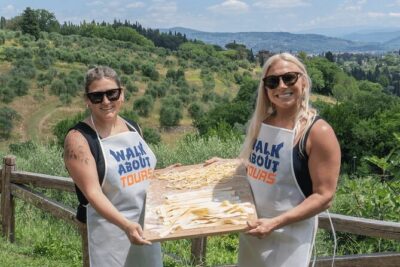
Florence Pizza or Pasta Class with Gelato Making at a Tuscan Farm
Read our review →
Pizza-Making Workshop with Drink and Appetizer
Read our review →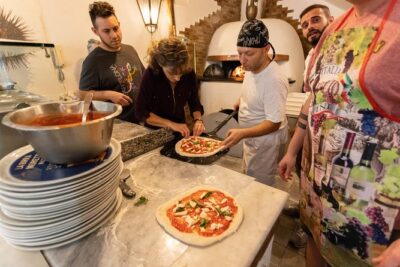
Authentic Pizza Making Class in Naples with Appetizers and Drink
Read our review →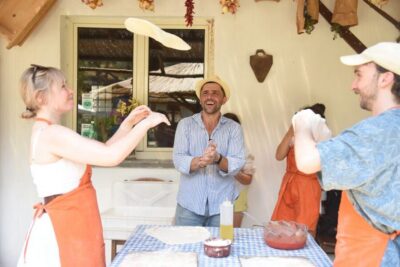
Pizza Lesson, Wine, and Limoncello at a Local Farm
Read our review →
Cooking Class in the Heart of Rome: Pizza and Tiramisu Making
Read our review →
Premium Pizza & Gelato Preparation Class with Wine
Read our review →
Pizza or Pasta Class with Gelato at a Tuscan Farm
Read our review →
Combo Pizza and Pasta Cooking Class with Wine
Read our review →Browse the lists this tour appears in