
REVIEW · FRESH PASTA WORKSHOPS
Handmade pasta workshop by Cilento Experience
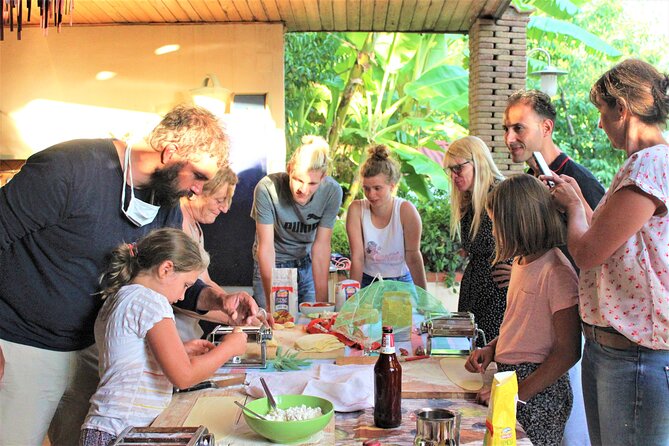
The best part of this Salerno-area cooking class is that the food has a short trip from soil to plate. You first visit the countryside where Michele grows vegetables, then join Rosalba on her flower-filled garden terrace to make tagliatelle and ricotta ravioli with buffalo ricotta, garden sage, and local olive oil.
I like the personal family setting, where Rosalba can explain the food traditions behind each step, and I like the small, private format. The meal is not a staged restaurant demonstration. You work with the ingredients, ask questions, and then eat what you made. One important consideration: the meeting point is in Capaccio Paestum, not central Salerno, and the class can run well beyond the advertised two hours.
Key points at a glance
- Farm visit first: Begin with a short countryside excursion to see where Michele grows vegetables.
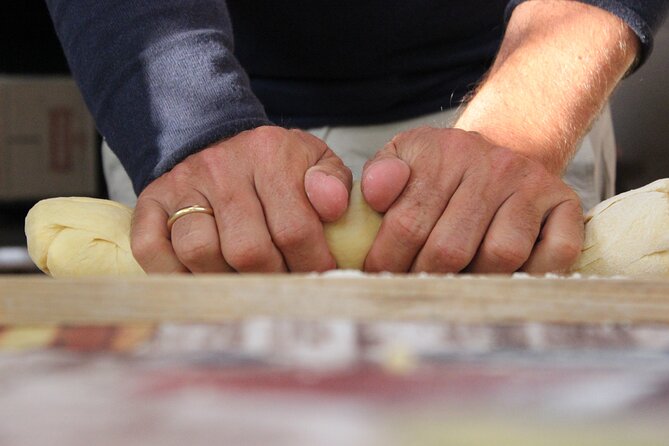
- Two classic pastas: Learn to make homemade tagliatelle and ricotta-filled ravioli.
- Ingredients from nearby: Use freshly made buffalo ricotta, buffalo butter, garden sage, homemade tomato sauce, and olive oil from the family’s mountain trees.
- Family-led instruction: Rosalba learned to cook young while her parents worked in the fields, and Daniel helps create an easygoing cultural exchange.
- Private setting: Only your own group takes part, making this a good choice for families and small parties.
- Longer than planned: The scheduled time is about 2 hours 5 minutes, but one class lasted more than four hours.
From Salerno to the Cilento countryside
The class meets at 3 p.m. on Via della Gueglia 53 in Capaccio Paestum, in the province of Salerno. That detail matters. This is not a cooking lesson in Salerno’s historic center, so you need to plan the trip to the meeting point before booking.
The setting gives the class its character. Rather than beginning with a bowl of flour in a commercial kitchen, you start with a short excursion into the countryside. Michele grows vegetables there, and this opening visit connects the final meal to the place where some of its ingredients come from.
I like this order. It helps you understand the meal before you start cooking it. The vegetables, olive oil, herbs, dairy, and pasta are not presented as abstract local products. They belong to a working family food system.
The excursion is described as short, so you should not expect a full farm tour or a long walk. Its value is the connection it creates between the growing of food and the cooking of food. If you are already planning to see Paestum, this location may fit neatly into a day in the area. If your base is Salerno, allow extra time for reaching Capaccio Paestum and returning afterward.
More Fresh Pasta Workshops in Italy:
- Rome: Pasta Making Class with Wine, Limoncello, and Dessert
★ 4.9 · 3,177 reviews - Pastamania – Florence Pasta Making Class
★ 5.0 · 3,050 reviews - Enjoy Spritz and Pasta Making in Piazza Navona
★ 5.0 · 1,681 reviews
Meeting Rosalba on the flower-filled terrace
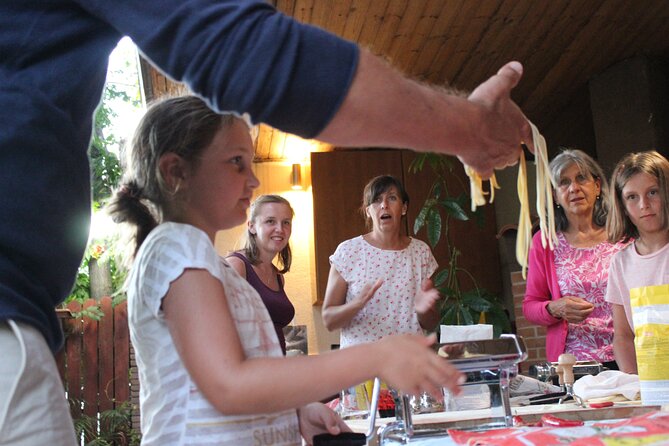
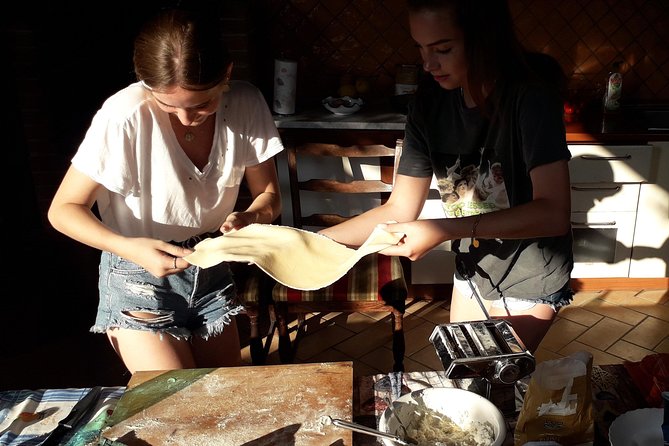
After the countryside stop, you meet Rosalba, who leads the pasta work in the family kitchen. The kitchen is set on a garden terrace surrounded by flowers and greenery. You also eat there, keeping the entire meal in the same family setting.
This is a useful contrast to a class held in a polished culinary studio. The terrace is part of the home, and the cooking reflects the way food is prepared in the Cilento household. The setting may feel less formal, but that is precisely the point. You are there to see how a southern Italian family cooks and eats, not to watch a restaurant chef perform.
Rosalba’s background gives the lesson a personal thread. She began cooking for her younger brother while her parents worked in the fields. Her pasta skills come from years of everyday family cooking, not from a short course designed for visitors.
You are encouraged to ask questions. That makes the class more than a list of instructions. You can ask about the ingredients, the techniques, and the customs connected with the dishes. If you are curious about how fresh pasta fits into ordinary family meals, this is the moment to speak up.
Daniel Aleman Lücker is the experience provider, and he helps with the welcome and communication. A family with a seven-year-old found that Daniel worked well with children, which is useful information if you are considering this for a mixed-age group. He also once helped arrange train details and picked up a family from the station, but you should confirm any transport help directly rather than assume it is part of the standard booking.
Making tagliatelle by hand
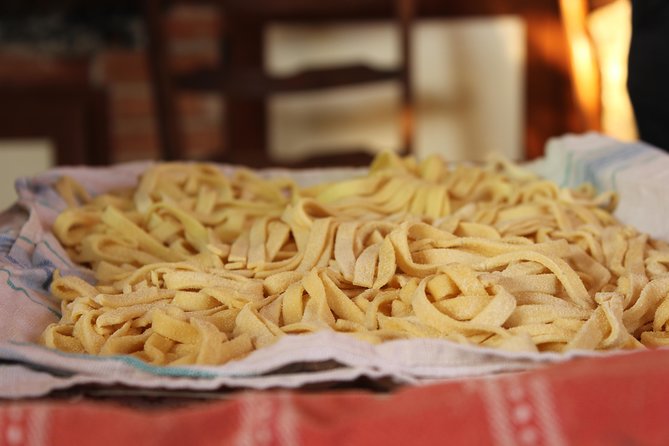
The first pasta is tagliatelle, the long, ribbon-like pasta served with homemade tomato sauce. The supplied details do not specify every technical stage, so you should expect hands-on instruction without assuming a formal professional lesson covering every pasta shape.
The appeal is the direct practice. You are not just eating fresh tagliatelle or watching someone else cut it. You learn how the dough becomes the pasta on your plate. Rosalba’s advice comes from home cooking, so the focus is likely to be on practical results you can repeat in your own kitchen.
The tomato sauce keeps this part of the meal simple. That is a good match for handmade pasta. The sauce lets you notice the texture and flavor of the noodles instead of burying them under a complicated recipe.
This is also where the pace of the class matters. The scheduled duration is about 2 hours 5 minutes, but the activity may stretch when questions, cooking, conversation, and eating all take their natural time. One class lasted more than four hours. I would not book a tight evening train or a fixed dinner reservation immediately afterward.
Filling ricotta ravioli with local ingredients
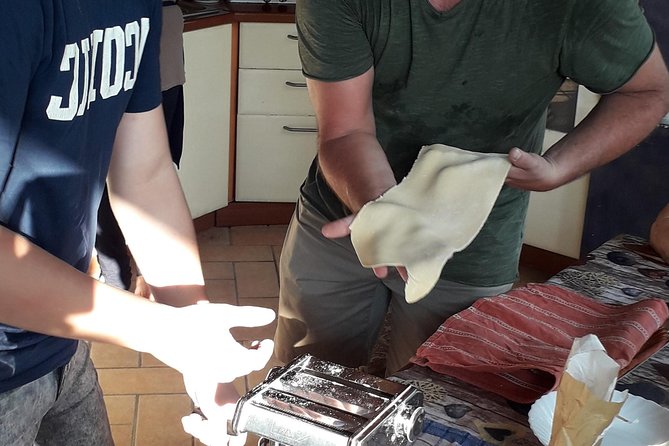
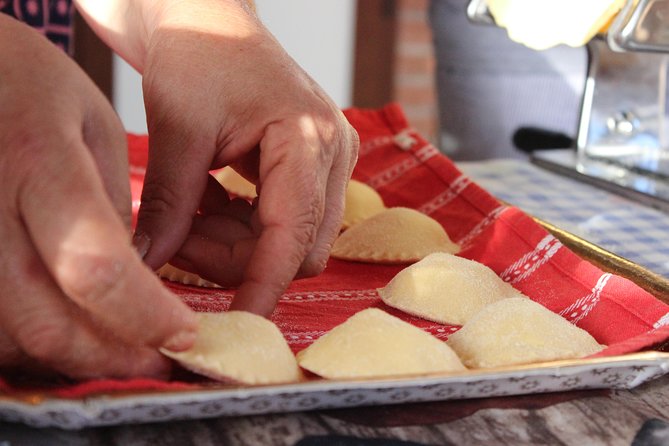
The second pasta is ravioli filled with freshly made buffalo ricotta. The filling also uses buffalo butter, while the finished ravioli is served with butter and sage sauce.
The ricotta is made nearby, around the corner, and the sage comes from the garden. These details give the dish a clear local identity. The class is not simply teaching a generic ravioli recipe and adding an Italian label. It uses products connected to the surrounding area and the family’s daily food culture.
Working with ravioli adds a different skill from making tagliatelle. You must handle the filling, place it correctly, seal the pasta, and avoid wasting dough. The information provided does not promise a formal lesson in troubleshooting every possible mistake, but Rosalba’s experience should help you understand the basic feel of the process.
The butter and sage sauce is an especially sensible match. It is restrained, so the buffalo ricotta remains the main flavor. Fresh sage from the garden adds a clean herbal note without turning the dish into something fussy.
If you have children in your group, ravioli can also be a good activity because the filling and shaping offer simple jobs alongside the more exact work. The private format means you are not trying to keep pace with a large class.
A few more classes around Italy worth a look
- Florence: Pasta Cooking Class with Unlimited Wine
★ 4.9 · 10,285 reviews - 3 in 1 Cooking Class near Navona: Fettuccine, Ravioli & Tiramisu
★ 5.0 · 7,376 reviews - Florence Pizza or Pasta Class with Gelato Making at a Tuscan Farm
★ 5.0 · 6,801 reviews - Florence: Pasta & Tiramisu Cooking Class with Unlimited Wine
★ 4.9 · 6,708 reviews
Eating what you make on the terrace
The sample menu is straightforward:
- Ravioli di ricotta with butter and sage sauce
- Tagliatelle with homemade tomato sauce
This is a two-course pasta meal rather than a broad Italian feast. You should not book it expecting a long sequence of starters, meat, dessert, or wine pairings. The point is the pasta and the ingredients that support it.
I like that you eat on the same garden terrace where you cook. The meal does not shift into a separate restaurant experience. You can continue the conversation with Rosalba and Daniel, ask about the methods you used, and compare the two pasta dishes while the work is still fresh in your mind.
The food also reflects the stated Cilentan approach: use what is nearby, cook it simply, and eat together. Homemade tomato sauce, buffalo dairy, garden herbs, and family olive oil all make sense in that setting.
The olive oil comes from the grandmother’s trees in the mountains. That is a small detail, but it tells you how personal the ingredients are. The oil is not just described as local. It is tied to the family and to a particular place.
What makes the private format useful
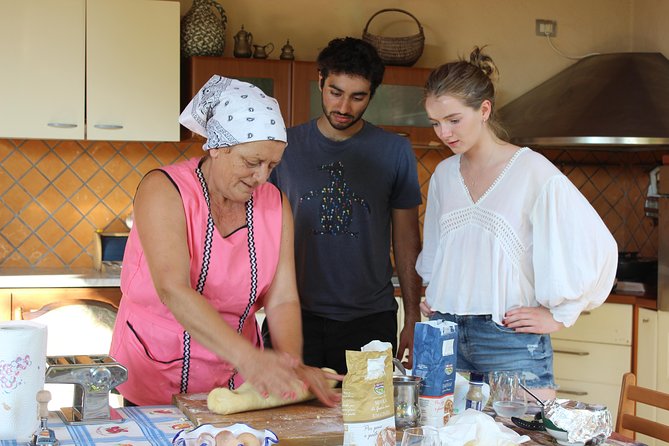
This is a private activity, so only your group participates. That gives you room to ask questions without competing with strangers or worrying about holding up a large class.
A private lesson is especially useful if your group includes children, beginners, or people who want to focus on conversation as much as technique. A seven-year-old took part successfully in one family’s class, and Daniel was noted for being good with children.
The format also suits anyone who wants a quieter cultural experience. You can ask about Rosalba’s childhood, the family farm, the ingredients, and the role of pasta in Cilento cooking. That exchange is a central part of the activity, not an extra lecture added at the end.
The tradeoff is that a private home-based class has a less standardized rhythm. The experience may be intimate and generous with time, but it may not follow a strict two-hour schedule. If you prefer a tightly timed lesson with printed recipes and a fixed finish, this may feel loose.
Is the $96 price a good value?
At about $96.12 per person, this is not the cheapest way to eat pasta in the Salerno area. You are paying for more than a plate of food, though. The price includes a private class, the countryside visit, instruction from Rosalba, the meal, and access to ingredients linked to the family and the local area.
The value improves if you care about the setting and the story behind the food. You see where Michele grows vegetables, handle the pasta yourself, learn about Rosalba’s family cooking, and eat the finished dishes at the home terrace. That is a fuller afternoon than simply ordering ravioli at a restaurant.
The price is easier to justify for a family or small group because the private format gives the session a personal feel. It is also appealing if you are staying near Paestum and want a food activity connected to the area rather than another city-center cooking class.
The calculation is less favorable if you only want a quick pasta lesson. The class may last much longer than the stated 2 hours 5 minutes, so you should value the time as well as the meal. For me, the ingredients and family setting make the price reasonable for someone seeking a personal food experience, but not for someone focused only on learning a basic dough recipe.
Timing, weather, and cancellation details
The activity begins at 3 p.m. and ends back at the meeting point. Because the cooking area is on a garden terrace and the countryside visit is part of the plan, good weather is required.
If poor weather cancels the activity, you can receive a different date or a full refund. The experience also requires a minimum number of participants, and if that minimum is not reached, you are offered another date or experience, or a full refund.
You can cancel for a full refund up to 24 hours before the local start time. A cancellation made less than 24 hours in advance is not refunded, and changes inside that window are not accepted.
Booking confirmation normally arrives at once. If you book within 12 hours of the start, confirmation comes as soon as possible and depends on availability. Since the meeting point is outside central Salerno, confirm the booking before building a tight transport plan around it.
Who should book this pasta class?
I would choose this experience if you want food connected to family life and local agriculture. It works particularly well for:
- Families with children who can take part in shaping pasta
- Couples looking for a personal meal outside the city
- Small groups that prefer a private lesson
- Home cooks who want practical advice from an experienced family cook
- Visitors combining Paestum or the Cilento area with a food activity
- Anyone who values conversation and local ingredients as much as formal technique
I would think twice if you need a central Salerno location, a strict two-hour finish, or a large menu with several courses. The class is centered on two pasta dishes, and the countryside setting means you should plan the afternoon with flexibility.
Should you book the Cilento pasta workshop?
Yes, if you want to make pasta in a real family setting rather than attend a polished demonstration. The combination of Michele’s vegetable farm, Rosalba’s home cooking, buffalo ricotta, garden sage, family olive oil, and the terrace meal gives the afternoon a clear sense of place.
Before booking, check your route to Capaccio Paestum and leave your evening open. The class starts at 3 p.m., and the generous pace may turn two hours into four. For a family or small private group, that extra time can be part of the charm. For a tightly scheduled day trip, it may be a problem.
The experience has a 4.9 rating from 18 reviews, with 100 percent recommending it. More important for your decision, the strongest praise centers on the things that are hardest to fake: warm family contact, good food, child-friendly help, practical pasta tips, and a genuine connection to the countryside.
FAQ
Where does the pasta workshop meet?
The meeting point is Via della Gueglia 53, 84047 Capaccio Paestum, in the Salerno area of Italy.
What time does the experience start?
The activity starts at 3 p.m.
How long does the pasta class last?
The listed duration is approximately 2 hours 5 minutes. It can last longer, and one session continued for more than four hours.
What pasta dishes will I make?
You will learn to make homemade tagliatelle and ricotta-filled ravioli.
What food is included?
The sample menu includes ricotta ravioli with butter and sage sauce, plus tagliatelle with homemade tomato sauce. The ravioli uses freshly made buffalo ricotta, buffalo butter, and sage from the garden.
Is this a private activity?
Yes. Only your own group participates in the activity.
Just added around Italy
- Volterra: Fresh Pasta Cooking Class at a Tuscan Farmhouse★ 5.0 · 33 reviews
- Verona: Tortellini Cooking Class and Lunch with Mamma Ivana★ 5.0 · 20 reviews
- Vicenza: Pasta & Tiramisu Cooking Class at a Local’s Home★ 5.0 · 5 reviews
- Verona: My Granny’s secrets making gnocchi★ 5.0 · 7 reviews
- Verona: Prosecco and Pasta Making Class at a Local’s Home★ 5.0 · 10 reviews
- Verona: Pasta Cooking Class with Wine Tasting★ 5.0 · 4 reviews
- Verona: Pasta & Tiramisu Cooking Class at a Local’s Home★ 5.0 · 16 reviews
- Valnerina/Pasta cooking class in a 12th century location★ 4.8 · 9 reviews
Fresh Pasta Workshops, compared.
Pasta Making Class with Wine, Limoncello, and Dessert
Read our review →
Enjoy Spritz and Pasta Making in Piazza Navona
Read our review →
The Secrets to Learn Fresh Pasta and Tiramisù in a Glam Home
Read our review →
Pasta Making with Wine Tasting and Dinner in Frascati
Read our review →
Handmade Pasta & Dessert Class with Unlimited Wine
Read our review →Browse the lists this tour appears in