
REVIEW · GELATO MAKING CLASSES
Ravenna UNESCO Monuments with Pasta, Piadina and Gelato Tasting
Ravenna’s mosaics are the star here, and they deserve more than a quick look and a phone photo. Inside Sant’Apollinare Nuovo, Galla Placidia, and San Vitale, an expert guide helps you read the tiny figures, colors, gestures, and symbols that make these sixth-century interiors so special. I like the way the tour pairs serious art and history with piadina and handmade gelato. I also like the well-paced route, which gives you food breaks between the major monuments.
The main drawback is simple: the €12.50 entrance cost is not included. The food is generous enough to count as lunch, but if mosaics are your only reason for coming, you may find the tasting stops less important than the guided visits.
Key points at a glance
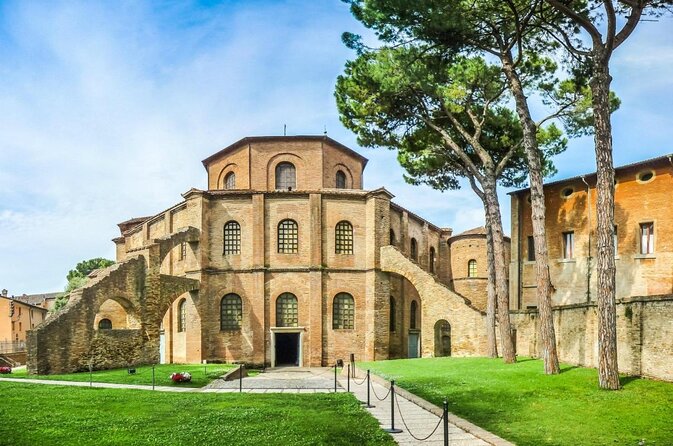
- Three UNESCO-listed monuments: Visit Sant’Apollinare Nuovo, the Mausoleum of Galla Placidia, and Basilica di San Vitale.
- Local food between the churches: Taste piadina, filled cappelletti pasta, and artisanal gelato.
- Strong art-history guiding: Named guides including Marta, Cynthia, and Giovanni have led tours praised for clear explanations and enthusiasm.
- A useful three-hour introduction: The route gives you Ravenna’s main sights without taking a full day.
- Walking tour with a lunch break: Food stops break up the sightseeing and provide a taste of Emilia-Romagna cooking.
- Best for a short visit: The 10:30 a.m. start and return to the meeting point work well if you have only a few hours in town.
Why Ravenna’s mosaics need a guide
Ravenna can seem quiet at street level. Its greatest treasures are often hidden behind plain exteriors, inside churches and small late antique buildings. Then you step indoors and find walls covered with shimmering glass and stone tesserae.
A guide gives those images a voice. You will not simply see a procession of saints or a jeweled imperial figure. You can learn how the scenes were arranged, what the gestures mean, and how Christian, Roman, and Byzantine ideas meet in Ravenna’s art.
That extra context matters most in San Vitale and the Mausoleum of Galla Placidia. The mosaics are beautiful on their own, but their meaning becomes clearer when someone explains the setting, the figures, and the visual choices. The strongest praise for this experience focuses on the guides’ ability to make the art understandable without flattening it into a list of dates.
Marta is singled out often, with Cynthia and Giovanni also named as excellent guides. You cannot select a particular guide from the information provided, but the guiding is clearly the heart of the experience. One useful detail: a past group used earbuds, which made it easier to hear the guide inside the basilicas.
More Gelato Making Classes in Italy:
- Florence Pizza or Pasta Class with Gelato Making at a Tuscan Farm
★ 5.0 · 6,801 reviews - Florence: Premium Pizza & Gelato Preparation Class with Wine
★ 4.9 · 1,306 reviews - Florence: Pizza or Pasta Class with Gelato at a Tuscan Farm
★ 4.9 · 1,181 reviews
Sant’Apollinare Nuovo begins the walk
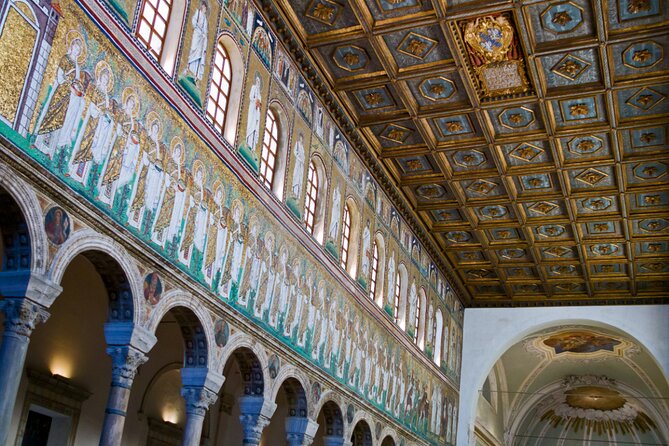
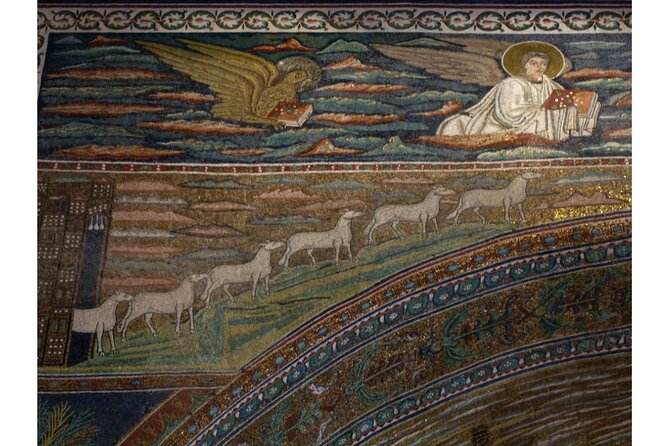
The tour starts at Basilica di Sant’Apollinare Nuovo, on Via di Roma, at 10:30 a.m. This sixth-century basilica is famous for its long bands of Byzantine mosaics showing biblical scenes and processions.
The first half hour is a good introduction because the church gives you a chance to learn how to look. The wall decoration is detailed, and a guide can point out features you would likely miss while walking through alone. You will get an early sense of Ravenna’s importance as a meeting point for Roman and Byzantine art.
Admission is not included, so you should allow for the separate €12.50 ticket cost listed for the tour. The exact ticket handling is not explained, but the practical point is clear: budget for the entrance fee in addition to the tour price.
The stop lasts about 30 minutes. That is enough for a focused explanation, though it is not a slow, private study visit. If you like to linger over every panel, you may want to return later on your own.
Piadina brings local flavor to the route
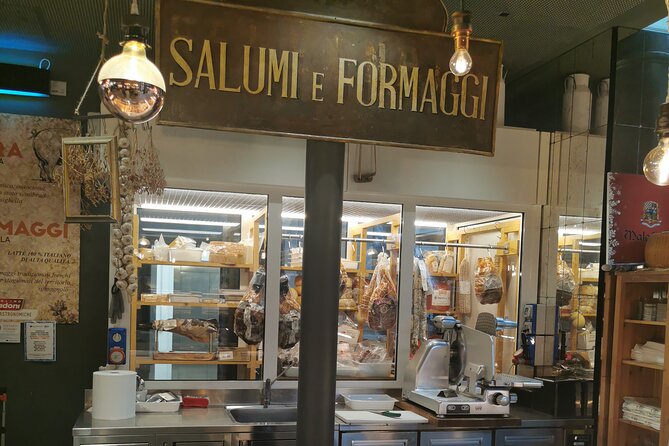
After the first basilica, the tour pauses for piadina, the flatbread associated with Emilia-Romagna. It is made with flour, water, and salt, then cooked on a hot surface and filled with ingredients such as cheese, cured meat, vegetables, or spreads.
A classic combination is stracchino cheese with prosciutto. This is not a formal restaurant course. It is a practical taste of local food, served during the walk and easy to understand even if you know little about the region’s cooking.
The stop lasts about 30 minutes and is included. That makes it useful for more than the food itself. You get a chance to sit or pause, reset your attention, and ask the guide questions before entering the next monument.
One person who took the tour felt the food was pleasant but less essential than the cultural side. That is a fair way to look at it. If you already have a full list of restaurants in Ravenna, the piadina may feel like an extra. If you are in town for only a few hours, it is an efficient way to sample a local staple without losing sightseeing time.
The blue glow of Galla Placidia
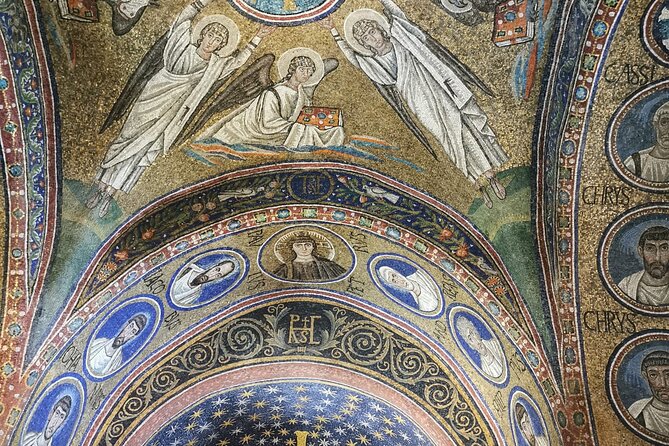
The Mausoleum of Galla Placidia is one of Ravenna’s most memorable interiors. Built between 425 and 450, it is a late antique Roman building and part of Ravenna’s UNESCO World Heritage group.
The name can mislead you. Galla Placidia was not buried here. She died in Rome and was buried there, probably near Honorius in the Mausoleum of Honorius at Old Saint Peter’s Basilica. The building’s traditional name dates to a later misunderstanding, and that small correction is exactly the sort of detail that makes a guided visit worthwhile.
Inside, the scale is compact, but the decoration is powerful. The effect comes from the contrast between the modest exterior and the rich mosaic work within. A guide can help you connect the architectural setting with the images and explain why this small building carries such weight.
The visit is scheduled for about 30 minutes. Admission is not included. As with the other monuments, you should be ready for the €12.50 entrance cost listed separately from the tour price.
More Food and Drink Tours in Italy:
- Bologna Food & Market Tour with 6 Tastings, Pasta, Wines & More
★ 5.0 · 1,328 reviews - Pasta Making & Wine Tasting with Dinner in Frascati from Rome
★ 5.0 · 1,326 reviews - Rome: Pasta Making with Wine Tasting and Dinner in Frascati
★ 4.9 · 979 reviews - Pizza School with Wine and Limoncello Tasting in a Local Farm
★ 5.0 · 845 reviews
San Vitale is the visual high point
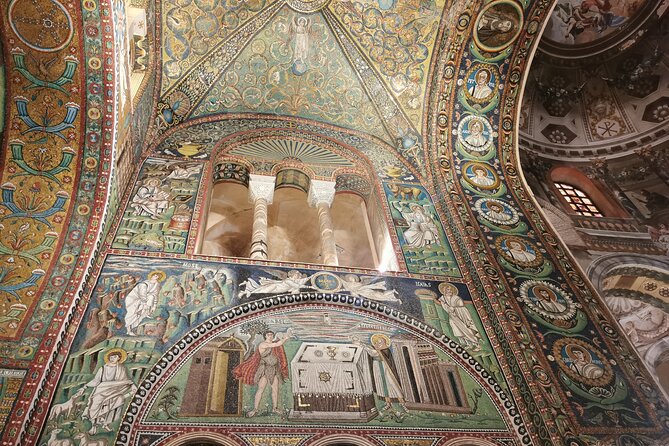
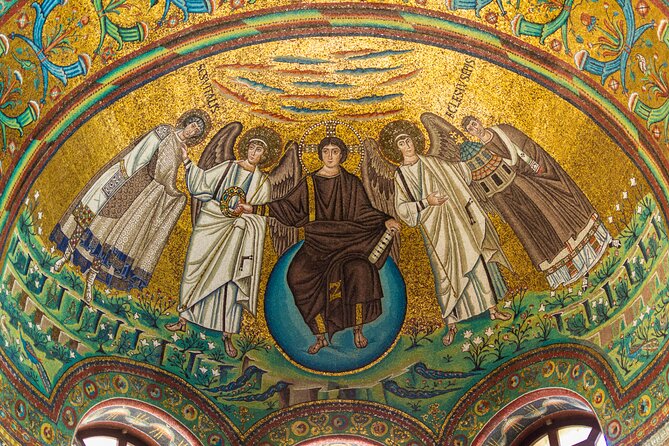
The Basilica di San Vitale is the tour’s major art stop. Its mosaics are among Ravenna’s best-known sights, and the guided explanation here seems to be what turns a beautiful visit into a memorable one.
The church is especially important for its imperial imagery and its detailed mosaic decoration. You will see the kind of work that rewards a guide who can explain what you are looking at rather than simply naming the people in the panels.
The scheduled visit lasts 30 minutes. That keeps the tour moving, but it also means you should not expect a full art-history lecture on every section of the church. The value comes from getting the central ideas clearly, then deciding which places you want to revisit later.
Several descriptions of the experience single out the guides’ explanations of the mosaics. Marta is described as having formal art-history training and a gift for making the scenes feel immediate. That is useful here, where the visual details can seem overwhelming at first.
San Vitale also shows why this tour is better suited to people who want interpretation. If your goal is only to enter, take pictures, and leave, you could visit independently. If you want to understand the images, the symbols, and the setting, the guide adds real value.
Cappelletti makes lunch part of the tour
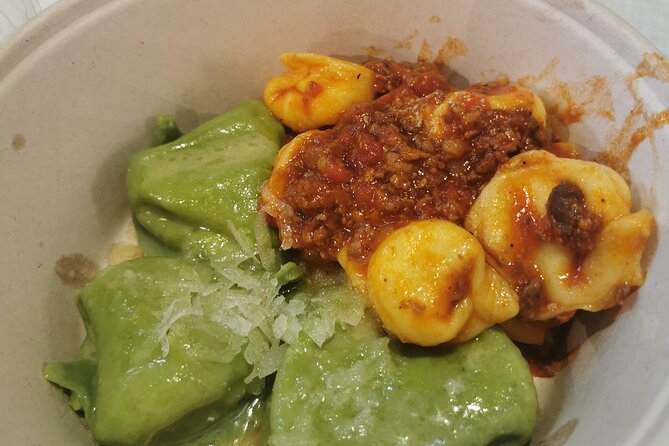
The second food stop is a modern restaurant that keeps to local cooking. Here you taste fresh pasta, with cappelletti as the featured dish.
Cappelletti are small filled pasta shapes from Emilia-Romagna, similar to tortellini. The food is served as lunch rather than as a tiny sample, and several people found the meal generous enough to leave them full. That is important when comparing the price with a standard sightseeing walk. You are paying for three monuments, guiding, and a substantial regional meal, not just a few bites at a counter.
The restaurant is described as modern while preserving local traditions. That combination should appeal if you want regional food without a deliberately old-fashioned setting. The tour does not provide details about menu choices, dietary substitutions, or drinks, so you should ask when booking if those points matter to you.
The meal lasts about 30 minutes. It is another useful pause after the churches, though some people may prefer a longer, slower lunch. This is a tasting tour with a compact schedule, not a leisurely afternoon meal.
Gelato closes the experience sweetly
The final stop is SBRINO Gelateria, where you taste artisanal Italian ice cream. The gelato is included, and the stop lasts about 30 minutes.
This is a small detail, but it gives the route a pleasant finish. The tour begins with ancient religious art and ends with a very modern Italian pleasure. You also leave with a better idea of how food fits into a day in Emilia-Romagna: flatbread, filled pasta, and gelato, each in its own setting.
The stop is not a full gelato lesson, and the available information does not list flavors or portion sizes. Think of it as a final tasting rather than a dedicated food workshop.
What the $119.27 price gets you
At $119.27 per person, this is not the cheapest way to walk through Ravenna. The value depends on how you use the three hours.
You receive an English-speaking guide, three major monument visits, piadina, a pasta lunch, and gelato. Lunch alone gives the tour more substance than a basic orientation walk. The guide is the biggest variable in value, and the descriptions of Marta, Cynthia, and Giovanni suggest that the experience can be especially strong when the guide brings art training and local feeling to the route.
You must also pay the listed €12.50 entrance fee separately. That changes the final cost, so include it in your budget before booking.
I see the tour as good value for a first visit, especially if you have limited time and want someone else to connect the monuments. It is less compelling if you prefer to move at your own pace, eat a long lunch, or spend an hour studying one church in silence.
Timing, walking, and group size
The tour takes about three hours and begins at 10:30 a.m. at Sant’Apollinare Nuovo. It ends back at the starting point, which makes the arrangement straightforward if you are planning other activities afterward.
The route is a walking tour with short sightseeing blocks and food breaks. The schedule suggests a moderate amount of walking rather than a demanding hike, and one description calls it comfortable with no huge amount of walking. Still, you will be on your feet and entering several religious buildings.
The maximum group size is listed as 99 people. That is a large possible group, although actual departures may be smaller. If you prefer a quiet, intimate tour, ask about the expected group size before booking. Earbuds may help in larger groups, especially inside the basilicas.
Most people can take part, but the available information does not give detailed accessibility notes. Ask the provider directly if you need specific information about steps, walking distance, seating, or mobility equipment.
Who should book this Ravenna tour
I would choose this experience if you want a clear first look at Ravenna and do not want to organize separate monument tickets, lunch, and a food stop. It is particularly useful for a short stay or a day when you need to see the city’s main sights efficiently.
It suits people who enjoy art but do not already know how to read Byzantine mosaics. It also works well for food-minded visitors who want more than a museum route. The piadina, cappelletti, and gelato are not random snacks. They give the visit a local frame.
Families and mixed-interest groups may appreciate the changes of pace. A church, a food stop, another church, pasta, and gelato is easier to manage than three straight hours of art. The format also gives you natural moments to ask questions.
I would hesitate if you dislike group tours, need a slow pace, or have already studied Ravenna’s monuments in detail. In that case, the included food may not justify the fixed route. You might prefer to buy individual tickets and set your own schedule.
Free cancellation is available up to 24 hours before the start time for a full refund. Changes or cancellations made later are not refunded, and the experience requires a minimum number of participants.
Should you book it?
Book this tour if you want meaningful explanations with a ready-made local lunch. The mosaics are the main reason to go, and the guide can make a major difference in how much you notice and remember. The food keeps the schedule relaxed and gives you three quick tastes of Ravenna and Emilia-Romagna.
Skip it if you want complete independence or a long, unhurried meal. For everyone else, especially people passing through Ravenna for only a few hours, this is a well-shaped introduction to the city. Budget for the separate entrance fee, meet at Sant’Apollinare Nuovo by 10:30 a.m., and be ready to look up at the walls before looking down at your lunch.
FAQ
How long does the Ravenna tour last?
The experience lasts approximately three hours.
What time does the tour start?
The tour starts at 10:30 a.m.
Where does the tour begin?
It begins at Basilica di Sant’Apollinare Nuovo, Via di Roma, 53, 48121 Ravenna, Italy.
Where does the tour end?
The activity ends back at the meeting point.
Which monuments are visited?
The route includes Basilica di Sant’Apollinare Nuovo, the Mausoleum of Galla Placidia, and Basilica di San Vitale.
Is the tour offered in English?
Yes. English is the listed tour language.
What food is included?
The experience includes piadina, fresh Italian pasta featuring cappelletti, and artisanal gelato.
Is lunch included?
Yes. Lunch is included.
Are entrance tickets included?
No. The listed entrance fee is €12.50 per person and is not included in the tour price.
Can I cancel for a full refund?
Yes, if you cancel at least 24 hours before the experience’s start time. Later cancellations and changes are not refunded.
Just added around Italy
- Volterra: Fresh Pasta Cooking Class at a Tuscan Farmhouse★ 5.0 · 33 reviews
- Verona: Tortellini Cooking Class and Lunch with Mamma Ivana★ 5.0 · 20 reviews
- Vicenza: Pasta & Tiramisu Cooking Class at a Local’s Home★ 5.0 · 5 reviews
- Verona: My Granny’s secrets making gnocchi★ 5.0 · 7 reviews
- Verona: Prosecco and Pasta Making Class at a Local’s Home★ 5.0 · 10 reviews
- Verona: Pasta Cooking Class with Wine Tasting★ 5.0 · 4 reviews
- Verona: Pasta & Tiramisu Cooking Class at a Local’s Home★ 5.0 · 16 reviews
- Valnerina/Pasta cooking class in a 12th century location★ 4.8 · 9 reviews
Gelato Making Classes, compared.
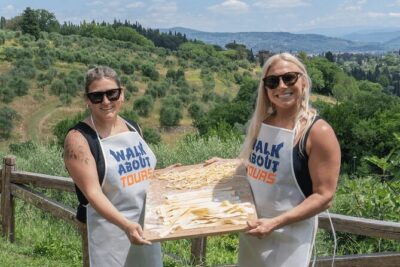
Florence Pizza or Pasta Class with Gelato Making at a Tuscan Farm
Read our review →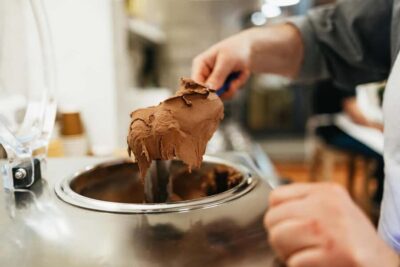
Premium Pizza & Gelato Preparation Class with Wine
Read our review →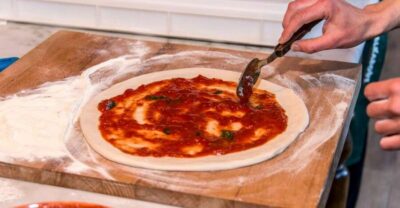
Pizza or Pasta Class with Gelato at a Tuscan Farm
Read our review →
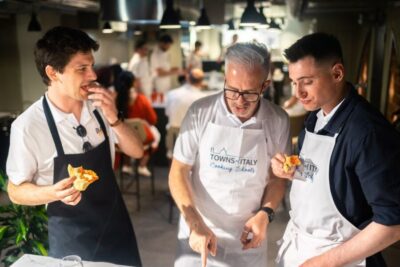
Pizza or Pasta and Gelato-Making Class with Wine
Read our review →
Night Tour of Rome with Local Pizza Dinner and Gelato Experience
Read our review →
Pasta Cooking Class, Ragu, Spritz, Wine & Gelato
Read our review →Browse the lists this tour appears in